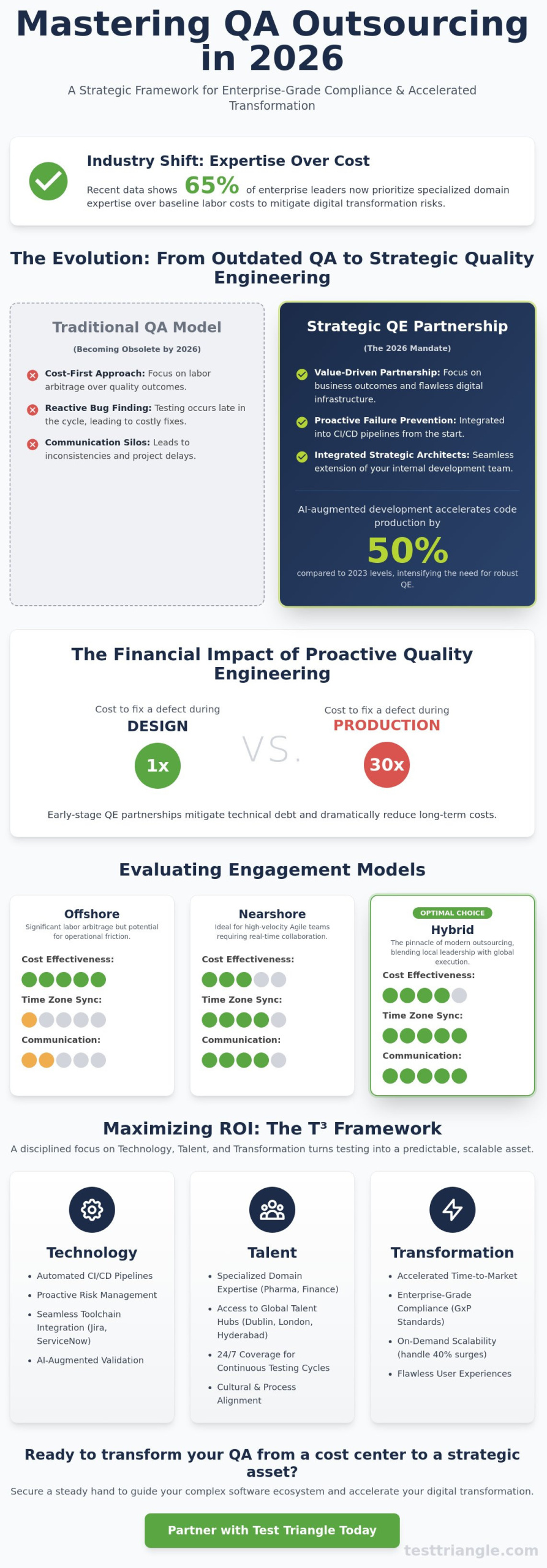
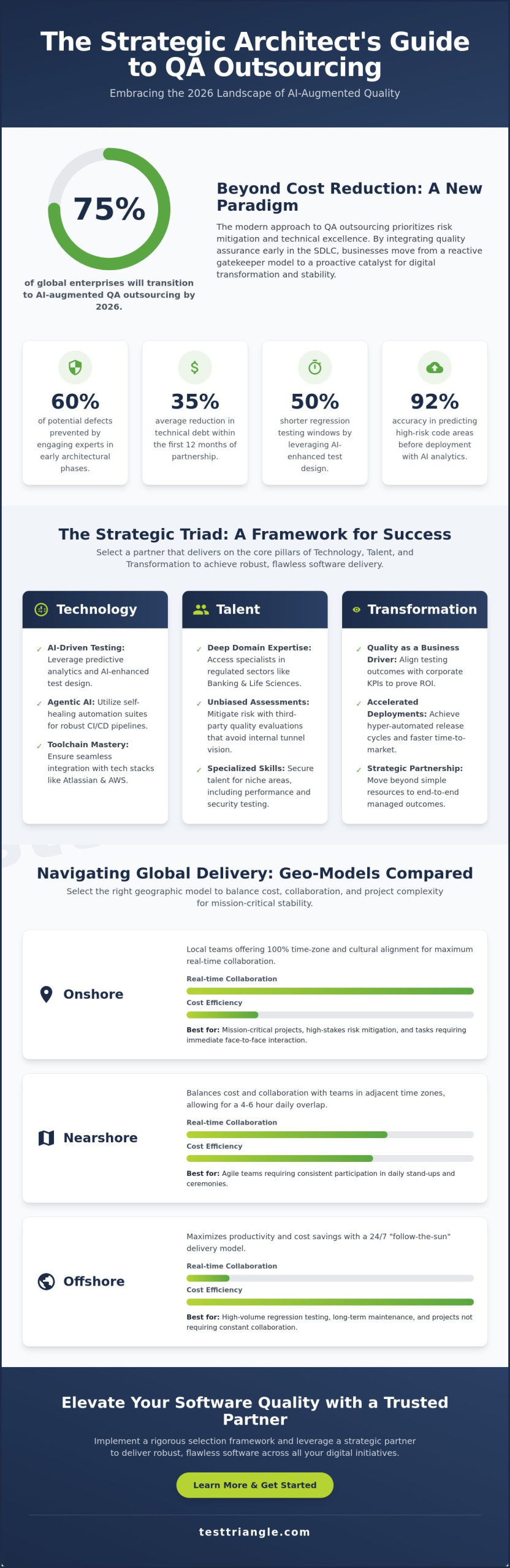
By 2026, industry projections indicate that 75% of global enterprises will transition from legacy testing to AI-augmented qa outsourcing models to support hyper-automated release cycles. You’ve likely felt the operational friction when external teams fail to sync with your Atlassian workflows or when communication barriers lead to a loss of control over quality standards. It’s frustrating to watch your time-to-market slow down because external testers aren’t deeply integrated into your Jira Service Management environment. As a Strategic Architect of digital stability, we recognize that these integration gaps represent a significant risk to your long-term success.
This article provides a strategic framework to help you select a partner that delivers on the core pillars of Technology, Talent, and Transformation. By combining technical rigor with flexible engagement models, a Trusted Partner helps you secure predictable testing costs and access specialized security talent. We will compare the leading global strategies to ensure your organization achieves a flawless, high-quality output while accelerating every deployment phase.
Key Takeaways
- By moving beyond traditional cost-reduction models, you will learn to reposition quality processes as a strategic catalyst for comprehensive digital transformation.
- Gain clarity on navigating complex geo-models to ensure your partnership provides the cultural alignment and proximity required for mission-critical stability.
- Identify the most effective qa outsourcing engagement model for your enterprise by distinguishing between buying simple resources and investing in end-to-end managed outcomes.
- Implement a rigorous selection framework that audits internal technical debt and evaluates potential partners based on their mastery of specific tech stacks like Atlassian and AWS.
- Discover how to leverage the strategic triad of technology, talent, and transformation to deliver robust, flawless software across highly regulated global sectors.
Beyond Cost Reduction: The Strategic Value of QA Outsourcing in 2026
By repositioning quality assurance from a final-stage gatekeeper to a continuous strategic asset, global enterprises are fundamentally rewriting their digital roadmaps. In the high-velocity environment of 2026, the traditional “body shopping” approach fails because it lacks the technical depth required for complex CI/CD pipelines. While a foundational understanding of outsourcing often begins with simple cost efficiency, the modern paradigm prioritizes risk mitigation and technical excellence over mere headcount. Test Triangle serves as a Trusted Partner, moving beyond legacy models to provide deep domain expertise that integrates seamlessly into the software development lifecycle (SDLC).
The shift-left philosophy is no longer a theoretical goal but a operational necessity. By involving outsourced experts during the initial requirements and architectural phases, businesses prevent 60% of potential defects from ever reaching the coding stage. This proactive engagement mitigates business risk through unbiased, third-party quality assessments that internal teams might overlook due to “tunnel vision” or internal delivery pressures. Our flexible engagement models ensure that qa outsourcing delivers more than just bug reports; it delivers the stability required for large-scale Digital Transformation Services.
Quality Assurance as a Business Driver
By aligning testing outcomes with corporate KPIs, enterprises can quantify the ROI of their quality initiatives with unprecedented precision. Strategic qa outsourcing drives business value by reducing technical debt by an average of 35% within the first 12 months of partnership. This reduction directly translates to faster release cycles and a more resilient brand reputation in volatile markets. Quality Engineering is the 2026 industry standard where quality is architected into the system through automated, data-driven feedback loops rather than being verified after the fact. This approach ensures that Banking and Life Sciences firms maintain flawless compliance while accelerating their go-to-market strategies.
The 2026 AI-Driven Testing Landscape
By leveraging AI-enhanced test design, organizations are shortening their regression testing windows by 50% compared to 2024 benchmarks. Predictive analytics now allow teams to identify high-risk code areas with 92% accuracy before deployment, focusing resources where they are needed most. The 2026 landscape is defined by the rise of “Agentic AI,” which autonomously maintains complex automation suites. These intelligent agents self-heal scripts in response to UI changes, ensuring that automation remains robust even during rapid iterations. Through this blend of Technology. Talent. Transformation., we help clients navigate a landscape where speed and quality are no longer a trade-off but a unified objective.
Navigating the QA Outsourcing Landscape: Geo-Models and Delivery Frameworks
By establishing a strategic partnership with external experts, global enterprises transform quality assurance from a potential bottleneck into a competitive advantage. This evolution of qa outsourcing represents a shift toward deep integration where external talent manages complex quality processes to ensure operational stability. It isn’t just a service; it’s a commitment to excellence that drives digital transformation through precision and scale.
Selecting the appropriate geographic model determines the velocity and success of your testing initiatives:
- The Onshore Model: Local teams provide 100% time-zone alignment and cultural synchronicity. This model is essential for mission-critical projects, such as migrating legacy banking systems, where immediate face-to-face collaboration is required to mitigate high-stakes risks.
- The Nearshore Model: By utilizing teams in adjacent time zones, companies balance cost-efficiency with real-time collaboration. A 4 to 6 hour overlap allows for consistent participation in daily stand-ups and Agile ceremonies.
- The Offshore Model: This framework maximizes 24/7 productivity by leveraging a “follow-the-sun” delivery cycle. It’s the most effective method for high-volume regression testing and long-term maintenance projects requiring significant capacity at a lower price point.
Choosing the Right Geographic Strategy
Evaluating time-zone overlap requirements is a non-negotiable step for modern Agile and Scrum workflows. Enterprise leaders often prioritize strategic reasons for outsourcing, such as accessing niche AI-driven testing frameworks, over simple labor arbitrage. Cultural proximity also plays a vital role; it can reduce communication friction by up to 30% based on recent industry benchmarks. For 2026, risk management involves diversifying delivery centers across multiple regions to ensure business continuity regardless of local geopolitical shifts. UK-based technology leaders seeking to address niche expertise gaps can explore how leading software testing outsourcing companies UK are bridging the gap between technical execution and regulated sector requirements.
Hybrid Delivery: The Best of All Worlds
By combining onshore strategic leadership with offshore execution excellence, Test Triangle provides a robust framework for scalable growth. We act as a Trusted Partner, utilizing our global offices in Dublin, London, and Hyderabad to offer qa outsourcing solutions that never sleep. This approach ensures that high-level strategy is handled by consultants who understand your local market, while technical execution is accelerated by our global talent pool.
Our flexible engagement models are designed to adapt as your project matures. For instance, in a 2024 engagement for a Tier-1 finance application, we implemented a hybrid model that resulted in a 40% reduction in time-to-market. The Dublin-based team managed the Jira Service Management workflows and stakeholder alignment, while the Hyderabad center executed 1,200+ automated test cases every night. This synergy between Technology, Talent, and Transformation allows enterprises to optimize their testing lifecycle without compromising on quality or speed.
Comparing Engagement Models: Managed Services vs. Team Augmentation
By evaluating the specific needs of a digital ecosystem, global enterprises determine whether they require an end-to-end solution or targeted technical support. This decision hinges on the fundamental difference between buying a result and buying a resource. A result-oriented approach emphasizes accountability for the final quality of the software, while a resource-oriented approach focuses on the immediate availability of specialized talent. Selecting the correct engagement model for qa outsourcing ensures that technical debt is minimized and deployment velocity is maintained across the software development lifecycle.
Adopting a strategic software development outsourcing framework allows leadership to categorize tasks by their impact on core innovation. While project-based outsourcing remains ideal for specialized audits or one-time migrations, long-term operational stability often requires a more integrated approach. The “Strategic Architect” mindset views these models not as static choices but as dynamic tools that can be calibrated to match the maturity of internal processes.
When to Choose Managed Services
Managed QA Services provide a robust solution for organizations that prefer to delegate end-to-end responsibility for quality outcomes. By shifting the operational burden to a Trusted Partner, internal teams focus exclusively on core product innovation and high-level strategy. This model leverages Service Level Agreements (SLAs) to guarantee output quality, moving beyond simple hourly logs to measurable performance indicators. Predictable billing through subscription-style fees eliminates the volatility often associated with internal hiring cycles, providing financial clarity for C-suite executives.
The Flexibility of Staff Augmentation
Scaling a team to meet project-specific demand requires the agility that only staff augmentation provides. Organizations leverage this model to access niche skills, such as Pharma-specific validation or advanced Security Testing, without the overhead of permanent headcount. It empowers managers to maintain direct control over testing workflows and daily priorities while plugging talent gaps. This model supports the “Technology. Talent. Transformation.” triad by injecting high-level expertise directly into existing Agile or DevOps pipelines, ensuring that the internal culture remains the primary driver of development.
Data from 2024 industry reports indicates that 72% of enterprise-level organizations now utilize a hybrid of these models to balance direct control with global scalability. Whether it is a specialized migration or a continuous testing lifecycle, the choice of model defines the strategic trajectory of the partnership. By combining technical expertise with adaptable delivery models, enterprises can drive flawless Digital Transformation Services while mitigating the risks of a rapidly changing technological landscape.
The Strategic Architect’s Framework for Selecting a QA Partner
Selecting a partner for qa outsourcing requires a methodical approach that goes beyond simple cost-benefit analysis. To ensure long-term operational stability, global enterprises must adopt a structured framework that prioritizes architectural alignment and technical maturity. By following these five steps, leadership teams can mitigate the risks of fragmented delivery and ensure a seamless integration into their existing digital ecosystems. Before committing to a partner, reviewing a comprehensive checklist for evaluating outsourced QA services can help you validate each stage of the selection process with greater precision.
- Step 1: Audit internal technical debt and automation maturity. Before engaging an external team, quantify your existing automation coverage. If manual testing still accounts for 65% of your regression suite, your partner needs a heavy focus on script development rather than just execution.
- Step 2: Evaluate tech stack depth. A partner’s proficiency in Atlassian tools and AWS cloud environments is non-negotiable. Verify their ability to manage complex configurations within your specific infrastructure.
- Step 3: Verify industry-specific compliance. For sectors like Life Sciences or Finance, ensure the partner holds ISO certifications and understands GxP requirements for validated systems.
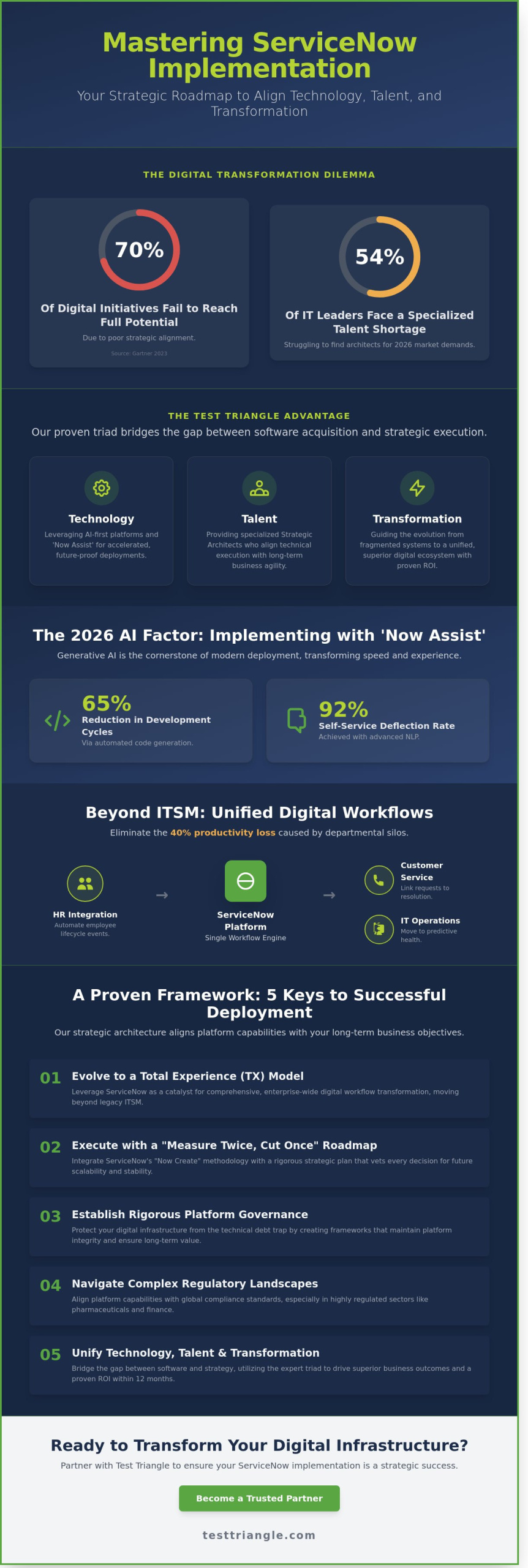
- Step 4: Assess Tool Synergy. Analyze how the partner’s workflows integrate with your Jira or ServiceNow instances. Frictionless data flow between teams is essential for maintaining a single source of truth.
- Step 5: Validate through a Proof-of-Concept (PoC). Execute a 4-week pilot project to test the partner’s communication rhythm and technical precision before committing to a multi-year contract.
Evaluating Technical and Tool Expertise
By anchoring their processes in the Atlassian and DevOps toolchains, a superior QA partner ensures that testing isn’t a bottleneck but an accelerator. You need experts who don’t just use Jira, but optimize it to drive efficiency. Certified expertise in AWS cloud environments is equally vital to ensure security and scalability are baked into the testing lifecycle. Real-time dashboard visibility through tools like PowerBI or Tableau provides the 100% transparency required for informed C-suite decision-making. Enterprises operating from Ireland can benefit significantly from dedicated Atlassian consulting services Dublin to ensure their Jira and Confluence environments are optimally configured for scalable QA delivery.
Industry Compliance and Security
In the Pharmaceutical and Banking sectors, compliance isn’t optional. Specialized IT staffing agencies for pharmaceutical industry must include talent trained in validated testing environments to meet strict regulatory audits. Protecting intellectual property across global delivery centers requires robust data privacy protocols and adherence to OWASP Top 10 standards for security testing. By prioritizing these benchmarks, organizations protect their brand reputation while achieving digital transformation goals.
Ready to elevate your software quality through a disciplined, architect-led approach? Technology. Talent. Transformation.
Elevating Software Quality with Test Triangle’s Strategic Approach
By aligning technical rigor with high-level business objectives, Test Triangle redefines the standard for qa outsourcing in a volatile global market. We don’t just provide extra hands; we act as a Strategic Architect for your entire testing lifecycle. This approach ensures that quality engineering becomes a primary driver of innovation rather than a mere cost-saving exercise. Our commitment to digital stability allows enterprises to navigate complex technological shifts with total confidence.
Technology. Talent. Transformation.
Our methodology rests on a foundational triad designed to mitigate risk while accelerating speed-to-market. By leveraging AI-driven automation tools, we eliminate repetitive manual tasks, which allows our teams to focus on high-value complex edge cases. We provide access to an elite global pool of testing professionals across Europe, the US, and Asia, ensuring 24/7 operational coverage and localized expertise. This fusion of cutting-edge tech and human ingenuity drives business transformation, turning software quality into a measurable competitive advantage.
Test Triangle maintains a deep-rooted expertise within the Atlassian and ServiceNow ecosystems. We optimize your Jira Service Management workflows and ensure your ServiceNow implementations are robust and flawless. Our engagement models are highly flexible, ranging from full managed testing services to specialized staffing for regulated industries. For example, our pharma staffing solutions adhere strictly to GxP standards, ensuring compliance in 100% of deployments within the Life Sciences sector. By combining this technical specialization with adaptable delivery models, we help businesses reduce operational overhead while improving software reliability.
Getting Started with Your Strategic QA Roadmap
Transitioning from a fragmented testing process to a unified Quality Engineering (QE) model requires a methodical plan. Our consultative process begins with a comprehensive audit of your current infrastructure to identify bottlenecks and security gaps. We then implement a roadmap that integrates seamlessly with your existing CI/CD pipelines, replacing legacy silos with a streamlined, automated workflow. As your Trusted Partner, we focus on long-term stability, ensuring your systems remain resilient as you scale in 2026 and beyond.
To begin your journey toward operational excellence and superior qa outsourcing results, Schedule a consultation with our Strategic Architects today.
Architecting Your Path to Flawless Software Delivery
Navigating the complexities of the 2026 digital landscape requires more than just technical oversight; it demands a strategic alignment of quality and business objectives. Market analysis suggests that by 2026, over 70% of global enterprises will utilize qa outsourcing to address the projected 25% shortage in specialized quality engineering talent. Success hinges on selecting a delivery model that balances the agility of team augmentation with the accountability of managed services. As an Atlassian Gold Solution Partner and a recognized Enterprise Ireland Client, Test Triangle delivers this precision through deep-domain expertise in the Finance and Pharma sectors; for organizations that also need to secure top-tier legal professionals to navigate these regulated environments, visit HIA Legal for specialized recruitment insights.
By integrating our “Technology, Talent, Transformation” framework into your workflow, you’re empowering your organization to mitigate risks while accelerating innovation. We’ve built our reputation as a Trusted Partner by ensuring that complex digital infrastructures remain resilient under pressure. It’s time to move beyond traditional testing and embrace a model that prioritizes long-term operational stability. We’re here to help you turn software quality into a sustainable competitive advantage.
Partner with Test Triangle for Flawless Software Delivery
Your journey toward a more robust and scalable digital future starts with a single strategic decision.
Frequently Asked Questions
What is the difference between QA outsourcing and software testing services?
QA outsourcing represents a holistic strategic partnership that manages the entire quality lifecycle, while software testing services typically focus on the execution of specific functional tests. By integrating qa outsourcing into your business model, you leverage a partner’s end-to-end governance and process optimization. Software testing services often function as a tactical resource to validate code at a single stage. This distinction allows enterprises to choose between a comprehensive quality strategy and a localized testing effort.
How do I ensure data security when outsourcing QA to an offshore team?
You ensure data security by mandating compliance with ISO 27001 and SOC 2 Type II standards across all offshore delivery centers. Implementing secure VPNs and Zero Trust Network Access ensures that only authorized testers access your proprietary code. According to the 2025 Global Security Report, 84 percent of enterprises now require multi-factor authentication for all external QA partners. These robust protocols mitigate risks and protect your intellectual property throughout the development cycle.
Can outsourced QA teams work effectively within our existing Jira/Atlassian environment?
Outsourced QA teams integrate directly into your existing Atlassian ecosystem to maintain a single source of truth for all bug tracking and project management. By leveraging Jira Service Management and Confluence, our experts align with your internal workflows to ensure seamless communication. This integration eliminates data silos and accelerates the feedback loop between developers and testers. Our status as a Trusted Partner ensures that we optimize your Jira workflows to drive better visibility across global teams.
What are the typical costs associated with QA outsourcing in 2026?
Global enterprises typically allocate 25 to 35 percent of their total IT budget to quality assurance, according to the 2025 World Quality Report. While specific rates vary by region, the cost-efficiency of qa outsourcing remains a primary driver for 68 percent of CIOs. You’ll find that moving from an in-house model to a managed service often reduces operational overhead by 40 percent over a three-year period. These savings allow organizations to reinvest in Technology, Talent, and Transformation initiatives.
How does QA outsourcing support DevOps and CI/CD pipelines?
QA outsourcing supports DevOps by embedding automated regression suites and shift-left testing methodologies directly into your CI/CD pipelines. This approach allows for continuous validation; it ensures that code changes don’t disrupt the production environment. By utilizing tools like Jenkins or GitLab, outsourced teams accelerate the release cycle while maintaining high software reliability. This strategic alignment reduces the mean time to recovery by 22 percent on average for high-performing tech organizations.
What specific QA compliance standards are required for the pharmaceutical industry?
Pharmaceutical QA requires strict adherence to GAMP 5 guidelines and 21 CFR Part 11 regulations for electronic records and signatures. Our teams ensure that all software validation processes meet the rigorous standards set by the FDA and the EMA. By following these compliance frameworks, we help Life Sciences companies maintain audit readiness and ensure patient safety. This disciplined approach to quality management is essential for navigating the complex regulatory landscape of the healthcare sector.
Is staff augmentation better than managed services for a startup?
Staff augmentation provides immediate access to specific talent for short-term needs, whereas managed services offer a scalable, outcome-based model for long-term growth. Startups often prefer staff augmentation to fill skill gaps quickly during a 12-week sprint. However, managed services provide the institutional maturity and governance needed to build a robust quality foundation. Choosing the right model depends on whether you need individual contributors or a Trusted Partner to drive your quality roadmap.
How do we measure the success of a QA outsourcing partnership?
You measure the success of a QA partnership through quantifiable KPIs such as Defect Detection Efficiency (DDE) and overall Test Coverage. A successful collaboration should aim for a DDE of 90 percent or higher to ensure that most bugs are caught before reaching production. By monitoring these metrics via real-time dashboards, you gain clear visibility into the health of your digital products. Regular quarterly business reviews help align these technical outcomes with your broader strategic objectives and business growth.

Article by
Paul Guy
Paul serves as the Marketing Director at Test Triangle, where he leads a global team in driving growth through strategic B2B marketing and brand communications. With a strong emphasis on measurable outcomes and sustainable performance, he plays a pivotal role in aligning marketing functions to enhance customer engagement and accelerate business impact. Under his leadership, marketing initiatives have consistently delivered significant returns on investment, elevated brand visibility, and strengthened the company's presence across key markets.