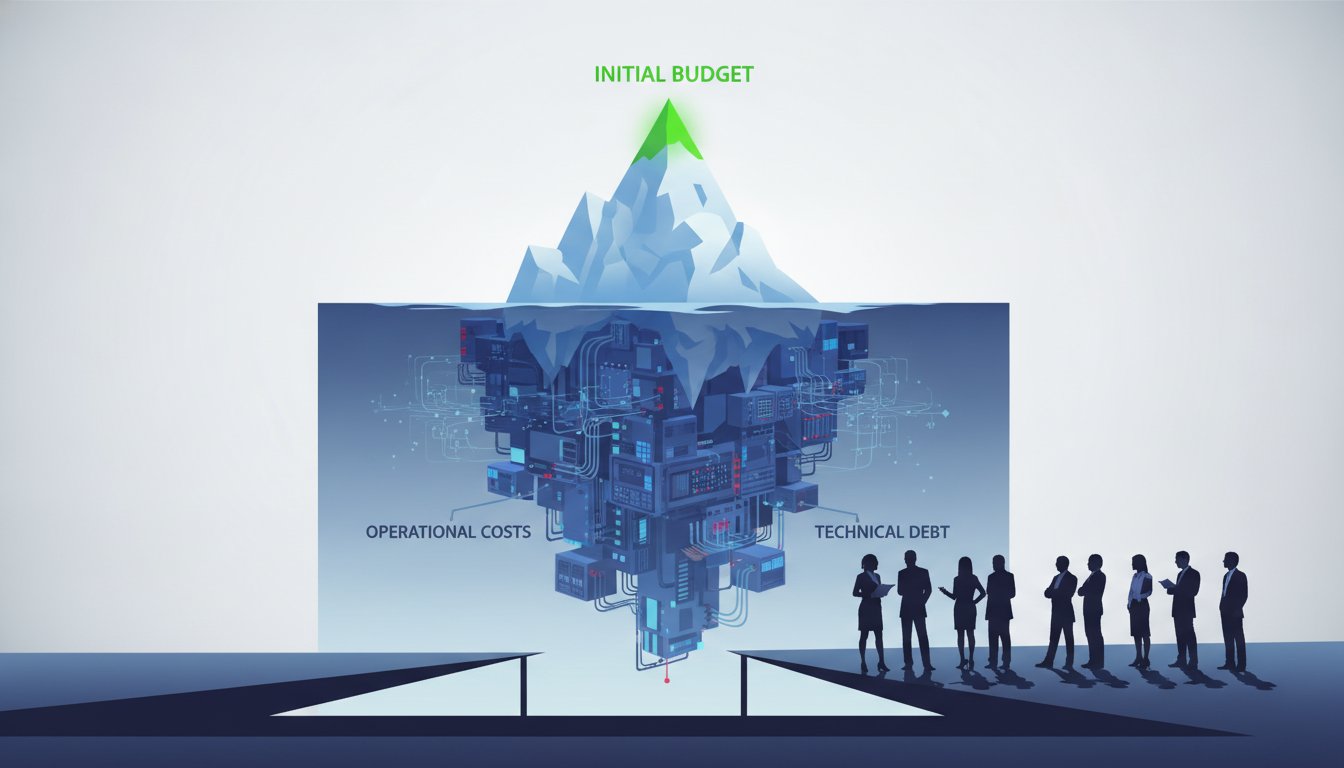
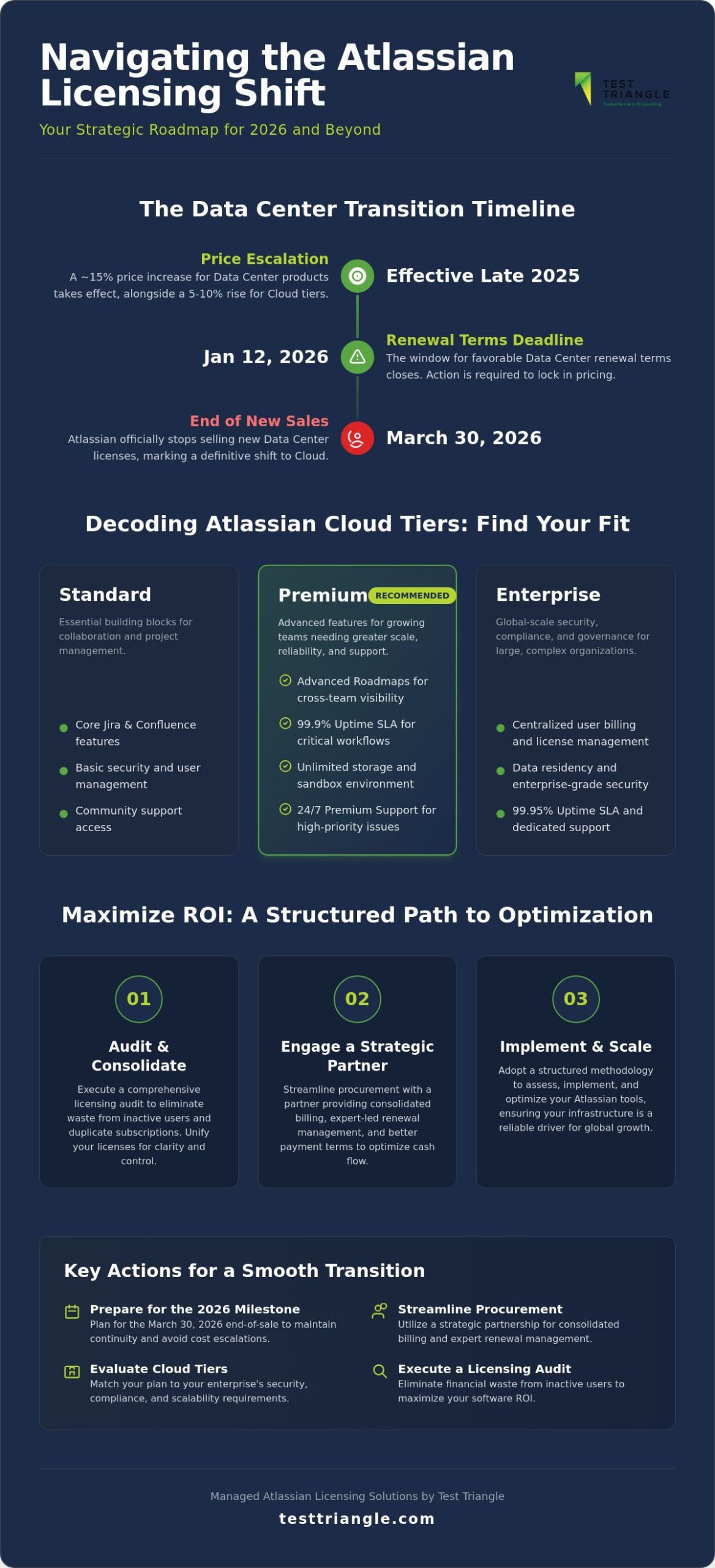
By March 30, 2026, the option to purchase new Atlassian Data Center licenses will officially vanish, marking a definitive shift in how global enterprises must architect their digital ecosystems. You likely recognize the mounting pressure of this transition, particularly as a 15% price increase for Data Center products takes effect while the window for favorable renewal terms narrows toward the January 12, 2026, hard stop. Managing Atlassian Licences across multiple products often leads to technical debt and financial waste, leaving many leadership teams feeling they’re overpaying for underutilized seats without a clear path forward.
This guide empowers you to regain control over your software spend by providing a clear roadmap for license consolidation and strategic growth. You’ll learn how to evaluate the ROI of Premium versus Enterprise tiers, navigate the critical journey from Data Center to Cloud, and leverage expert partnerships to secure better payment terms. We’ll examine the specific steps required to achieve precision, predictability, and performance in your licensing strategy, ensuring your infrastructure remains a catalyst for innovation rather than a budgetary burden.
Key Takeaways
- Prepare for the March 30, 2026, end-of-sale milestone for Data Center products to maintain operational continuity and avoid unnecessary cost escalations.
- Evaluate the functional distinctions between Cloud tiers to ensure your selected plan matches your enterprise’s specific security, compliance, and scale requirements.
- Streamline your procurement of Atlassian Licences through a strategic partnership that provides consolidated billing and expert-led renewal management.
- Execute a comprehensive licensing audit to eliminate waste from inactive users and duplicate subscriptions, maximizing your overall software return on investment.
- Adopt a structured methodology to assess, implement, and optimize your digital tools, transforming your software ecosystem into a reliable driver of global growth.
Navigating the Atlassian Licensing Landscape in 2026
The year 2026 represents a pivotal juncture for enterprise software architecture. As organizations move toward greater operational maturity, Atlassian Licences have evolved from simple software permissions into the essential gateway for enterprise agility and global collaboration. This shift is driven by a fundamental change in how teams interact with their tools. By anchoring your technology stack in a unified licensing framework, you create a stable foundation for Atlassian implementation that scales alongside your business objectives.
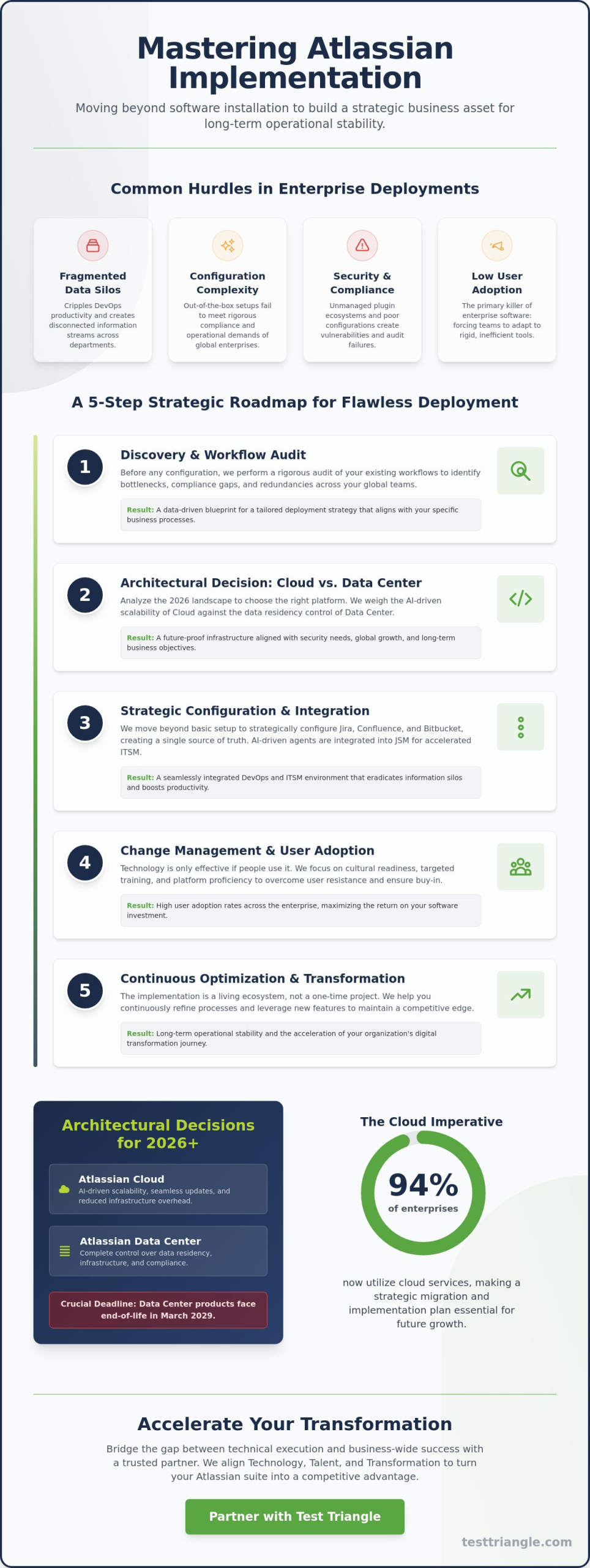
Understanding Atlassian’s corporate history reveals a consistent trajectory toward platform unification. This evolution culminates on March 30, 2026, a critical milestone where new Data Center license sales will cease entirely. For global enterprises, this isn’t merely a procurement deadline; it’s a strategic mandate to modernize. Waiting until the final hour risks operational disruption and creates unnecessary friction in your digital transformation journey. A strategic partner acts as a steady hand during this process, helping you navigate the complexities of Atlassian Licences while ensuring your global software spend remains optimized for maximum ROI.
The 2026 Cloud Mandate
The migration from self-managed infrastructure to high-performance Cloud environments is now a prerequisite for staying competitive. For industries like Life Sciences and Finance, where regulatory oversight is stringent, Atlassian Cloud offers advanced security protocols and automated compliance features that were previously difficult to maintain on-premise. Atlassian Cloud Licensing is a flexible, subscription-based model for modern DevOps. This model allows for rapid scaling and provides immediate access to the latest AI-driven features, ensuring your teams aren’t held back by legacy hardware limitations.
Data Center Transition: Deadlines and Decisions
Organizations still reliant on Data Center infrastructure must act with precision. The roadmap for 2026 requires a clear-eyed assessment of current user tiers and future growth projections. Delaying this transition introduces significant risks, including potential compliance gaps as support for older versions eventually sunsets. To ensure a seamless transition, your approach should focus on Strategy, Security, and Scalability. By mapping out these three pillars early, you avoid the pitfalls of a rushed migration and ensure your infrastructure remains robust during the shift to Cloud.
Decoding Cloud Tiers: Standard, Premium, and Enterprise
Selecting the appropriate tier for Atlassian Licences requires more than a simple comparison of feature lists; it demands a deep alignment with your organization’s operational maturity and long-term roadmap. While the Standard tier provides the essential building blocks for collaboration, the leap to Premium or Enterprise is often necessitated by the need for advanced orchestration and centralized governance. As Atlassian’s commercial strategy continues to prioritize Cloud innovation, enterprises must weigh the 5-10% price increases effective late 2025 against the functional gains in security and automation. Understanding these nuances is critical for technical leaders who must justify software spend while ensuring their teams remain unencumbered by tool limitations.
Standard vs. Premium: When to Upgrade
When does the upgrade become non-negotiable? The primary tipping point usually occurs when cross-team visibility becomes a bottleneck, making the Advanced Roadmaps feature in Jira Software Premium indispensable for complex project tracking. Beyond project management, the Premium tier offers a 99.9% uptime SLA and unlimited storage, providing the reliability required for mission-critical workflows. Managers should evaluate their current environment using this quick checklist:
- Are teams struggling with manual status reporting across multiple projects?
- Do you require a sandbox environment to test configurations before deployment?
- Is your data growth approaching the limits of a Standard subscription?
- Does your team require 24/7 “Premium” support for high-priority incidents?
If you answered yes to more than two, the Standard tier has likely been outgrown.
The Enterprise Advantage: Global Scale and Security
For global organizations managing thousands of users across disparate business units, the Enterprise tier serves as the ultimate catalyst for scale. It introduces multi-site management, allowing administrators to partition data and configurations while maintaining a unified billing and security posture. This tier is also the primary home for advanced AI capabilities like Rovo, which accelerates knowledge discovery across the entire ecosystem. We view this level of investment as a cornerstone of digital transformation services, offering a value proposition built on Peace, Performance, and Partnership.
Central to this scale is Atlassian Guard, which provides the centralized security and user provisioning necessary to mitigate risk in highly regulated environments. Since Guard Standard saw a 5% price adjustment in late 2025, optimizing its deployment within an Enterprise license often yields better consolidated value than managing fragmented security tools across various instances. It’s a strategic move that simplifies compliance while empowering your global workforce. If you’re uncertain which tier aligns with your 2026 growth targets, consulting with a strategic partner can clarify the financial and technical implications of your choice.
The Strategic Advantage of Partner-Led Licensing Procurement
While many procurement departments assume that purchasing directly from a vendor’s portal is the most efficient path, global enterprises often find that this approach lacks the nuance required for complex, multi-region deployments. Direct purchasing frequently forces organizations into rigid payment structures and anonymous support queues that don’t account for the unique operational hurdles of highly regulated sectors. By contrast, securing Atlassian Licences through an authorized partner transforms a routine transaction into a strategic asset. This collaborative model provides the Strategy, Support, and Stability required to ensure your software ecosystem remains resilient amidst shifting market demands. Partners don’t just process orders; they provide a layer of local expertise that bridges the gap between global product roadmaps and specific regional requirements.
Consolidated Billing and Financial Optimization
Managing a fragmented software portfolio across multiple vendors often results in administrative friction and hidden costs. Partner-led procurement alleviates this burden by offering consolidated billing, which simplifies the accounts payable process for diverse IT environments. Because partners often reinvest reselling commissions into value-added services, clients benefit from a more comprehensive support structure without increasing their direct software spend. This financial efficiency is particularly valuable when integrated with managed outsourcing services, as it allows for local currency invoicing and flexible payment terms that align with corporate fiscal cycles. Such adaptability ensures that your technology investments remain predictable, providing a clear methodology for scaling your digital infrastructure without the risk of currency fluctuations or unforeseen budgetary gaps.
Expert Guidance: Beyond the Transaction
The true value of a partner lies in their ability to move beyond the “anonymous portal” experience, acting instead as a dedicated strategic visionary for your technical infrastructure. While Atlassian provides excellent documentation for Decoding Cloud Tiers, a partner applies that information to your specific business context to prevent over-provisioning. This expertise is vital for aligning the procurement of Atlassian Licences with broader Atlassian implementation services, ensuring that every seat purchased is mapped to a functional requirement. For enterprises in Life Sciences and Finance, this seasoned guidance provides a steady hand in navigating compliance and security benchmarks that standard support channels might overlook. By choosing a reliable long-term collaborator, you gain access to a depth of institutional knowledge that secures your operational stability and empowers your teams to focus on core innovation rather than administrative maintenance.
Maximizing ROI: Auditing and Optimizing License Spend
Maintaining the health of your technical ecosystem requires more than just functional updates; it demands rigorous fiscal oversight to prevent budgetary drift. Many enterprises unknowingly leak capital through unoptimized Atlassian Licences, where seat counts often reflect historical peaks or forgotten project teams rather than current active requirements. Establishing a disciplined approach to “License Hygiene” isn’t just a cost-saving exercise; it’s a strategic necessity that ensures your infrastructure remains lean, responsive, and fully aligned with your actual operational reality. By connecting a clear audit methodology to specific decommissioning actions, you transform your software spend from a fixed overhead into a dynamic, ROI-driven asset.
User Management and Seat Optimization
Stale accounts represent one of the most common sources of financial waste in large-scale software deployments. A methodical audit begins by identifying users who haven’t authenticated within the last 90 days, allowing administrators to deactivate those accounts and potentially drop to a more cost-effective user tier. This is particularly critical as organizations prepare for the 15% price increase for Data Center products effective February 17, 2026. Consolidating user tiers across Jira and Confluence further streamlines your billing, ensuring you aren’t paying for high-tier access for personnel who only require basic functionality. License Optimization is a continuous process of aligning seat count with active engagement.
App and Marketplace Audit
The Atlassian Marketplace offers immense functional extensibility, yet it frequently accounts for a significant portion of the total cost of ownership. Because many apps operate on a per-user licensing model, a single underutilized plugin can inflate your annual bill by thousands of dollars. Managers should implement a rigorous evaluation framework that weighs app utility against its recurring cost, often discovering that native Cloud features now fulfill requirements once met by third-party tools. Aligning these audits with your broader IT service management solutions ensures that your entire technical stack is optimized for performance and security. If you’re ready to eliminate waste and reclaim your IT budget, schedule a comprehensive license audit with our experts today.
Scaling with Confidence: Test Triangle’s Managed Licensing Solutions
By positioning our firm as a reliable long-term collaborator, we provide the institutional maturity required to manage complex digital infrastructures with absolute precision. Our methodology follows a rigorous “Assess, Implement, and Optimize” framework, ensuring that every decision regarding your Atlassian Licences is rooted in data-driven insights and strategic foresight. We integrate seasoned human expertise with industry-leading technical tools to bridge the gap between high-level business objectives and technical execution, allowing your organization to achieve scalable growth without compromising operational stability. This commitment to organizational progress ensures that your technology stack remains a catalyst for innovation rather than a source of technical debt.
Our approach is designed to provide the peace of mind that comes from risk reduction and systemic improvement. We recognize that managing a global software spend requires more than just administrative oversight; it requires a strategic visionary who can anticipate market shifts and vendor roadmap changes. Whether you’re navigating the 2026 Data Center milestones or optimizing a massive Cloud Enterprise footprint, our team acts as a steady hand. We ensure your licensing strategy is the foundation for broader digital transformation, aligning your procurement cycles with your actual operational capacity and long-term technical goals.
A Tailored Approach to Enterprise Needs
We adapt our service delivery to match your specific corporate milestones, recognizing that the journey to a modernized Cloud environment is unique for every enterprise. There’s a profound sense of empowerment found in large-scale technological evolution when it’s guided by experts who understand the nuances of highly regulated industries. To understand how we align our resources with your long-term goals, we encourage you to consult our strategic partner guide for deeper insights into our collaborative model.
Getting Started: The Path to Optimization
The journey toward a leaner ecosystem begins with an initial discovery phase to evaluate your current health. This comprehensive check identifies immediate opportunities for cost reduction while mapping out a future-proof architecture for your Atlassian Licences that supports your 2026 growth targets. We facilitate a seamless transition from a general need for improvement to a specific, high-performance technical solution that addresses your unique pain points. We remain dedicated to your success through our core values of Precision, Partnership, and Progress.
Securing Your Enterprise Future in the Atlassian Ecosystem
Navigating the complexities of the 2026 transition requires a proactive stance on technical architecture and procurement strategy. Audit your usage. Select the cloud tier that aligns with your organizational maturity. These actions transform your infrastructure into a lean engine for global growth. The upcoming milestones for Data Center products serve as a vital catalyst to modernize your environment, ensuring your teams have access to high-performance tools while maintaining strict compliance in highly regulated sectors.
As an authorized Atlassian Solution Partner with specialized expertise in Life Sciences and Financial compliance, Test Triangle provides the steady hand necessary to optimize your Atlassian Licences. Our global delivery model and 24/7 support availability ensure that your digital evolution is managed with the highest standards of quality and security. We’re committed to being your reliable long-term collaborator, helping you achieve Stability, Security, and Success in every phase of your software lifecycle.
Optimize your Atlassian Licensing with Test Triangle today and take the first step toward a more predictable and scalable technical future. We look forward to helping you turn these systemic changes into a definitive competitive advantage.
Frequently Asked Questions
How do I buy Atlassian licenses in 2026?
Enterprises can procure Atlassian Licences directly through the vendor’s portal or by collaborating with an authorized solution partner. While direct purchasing is available, partnering with a strategic visionary allows you to align procurement with a comprehensive digital roadmap. This collaborative approach ensures that your license acquisition supports long-term operational stability and provides access to favorable payment terms that aren’t typically available through anonymous self-service portals.
What is the difference between Jira Standard and Premium licenses?
Jira Premium extends the core functionality of the Standard tier by introducing Advanced Roadmaps for cross-project visibility and a 99.9% uptime SLA for mission-critical reliability. Organizations requiring unlimited storage and 24/7 support will find the Premium tier provides the necessary empowerment for large-scale technological evolution. It’s designed for teams that have outgrown basic task management and require sophisticated orchestration across multiple global workstreams.
Can I still purchase Atlassian Data Center licenses after March 2026?
No new Data Center licenses will be available for purchase after the March 30, 2026, end-of-sale deadline. Existing customers maintain the ability to renew their current subscriptions or expand user tiers until March 30, 2028. However, all Data Center products will reach their final end-of-life on March 28, 2029, making it essential to plan your migration to Cloud well before these hard stops occur.
How can I optimize my Atlassian license costs to avoid overpaying?
Optimizing your software spend requires a disciplined methodology that includes deactivating inactive users and auditing the utility of high-cost Marketplace apps. By implementing regular “License Hygiene” checks, you ensure your seat count reflects active engagement rather than historical peaks. This practice prevents the financial waste associated with underutilized assets and allows you to consolidate user tiers across Jira and Confluence for maximum efficiency.
What are the benefits of buying Atlassian licenses through an authorized partner?
Authorized partners provide consolidated billing and local currency invoicing, which simplifies administrative overhead for global procurement teams. Beyond the transaction, a partner acts as a steady hand by offering strategic implementation advice and seasoned expertise in highly regulated industries. This partnership ensures that your Atlassian Licences are managed with precision, providing a layer of support that bridges the gap between technical execution and business outcomes.
Is Atlassian Guard required for all Cloud Enterprise subscriptions?
Atlassian Guard is bundled within the Cloud Enterprise tier to provide the centralized security and user provisioning necessary for managing global scale. While it isn’t a separate requirement for Enterprise users, it serves as the foundational security layer that enables single sign-on (SSO) and automated lifecycle management. This integration simplifies compliance for technical managers while empowering the workforce with secure, seamless access to essential tools.
How much do Atlassian licenses cost for large enterprise teams?
Final costs for enterprise deployments are determined by the specific user tier and the selected Cloud or Data Center plan. Effective late 2025 and early 2026, list prices for Cloud products increased by 5% to 10%, while Data Center products saw a 15% adjustment. Enterprises should consult with a partner to receive a tailored quote that reflects their specific user count and functional requirements.
Can I switch from monthly to annual Atlassian billing for better rates?
Transitioning from monthly to annual billing is a highly effective strategy for securing better rates and ensuring budgetary predictability. Annual subscriptions lock in current pricing for a twelve-month period and typically offer a lower total cost of ownership compared to the cumulative expense of twelve monthly payments. This shift allows financial leadership to plan with confidence while reducing the administrative burden of monthly invoice processing.

Article by
Paul Guy
Paul serves as the Marketing Director at Test Triangle, where he leads a global team in driving growth through strategic B2B marketing and brand communications. With a strong emphasis on measurable outcomes and sustainable performance, he plays a pivotal role in aligning marketing functions to enhance customer engagement and accelerate business impact. Under his leadership, marketing initiatives have consistently delivered significant returns on investment, elevated brand visibility, and strengthened the company's presence across key markets.