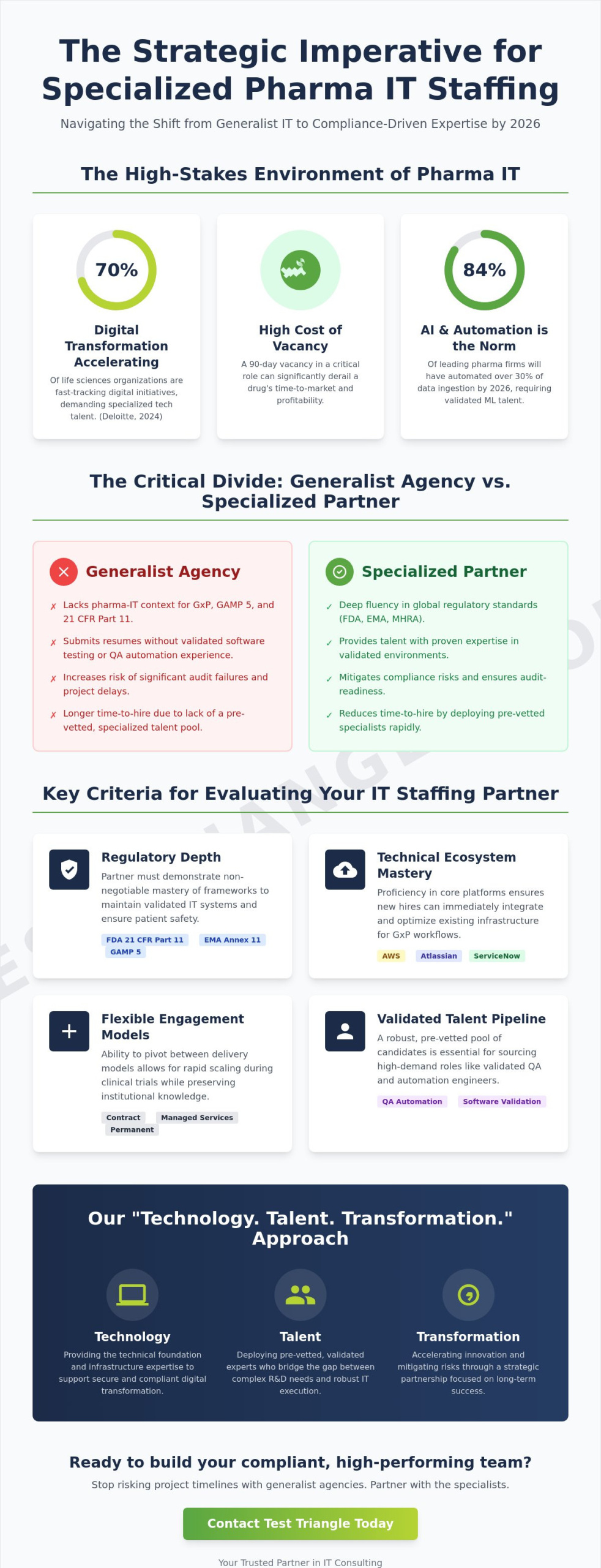
Can your current recruitment partner distinguish between a standard Java developer and an engineer who can validate software under the strict requirements of 21 CFR Part 11? In an era where a 2024 Deloitte Life Sciences report indicates that 70% of organizations are accelerating digital transformation, the cost of a 90 day vacancy in a critical project can significantly derail a drug’s time-to-market. Finding specialized IT staffing agencies for pharmaceutical industry is no longer a luxury. It’s a strategic necessity to ensure your digital infrastructure remains robust, secure, and compliant.
You’ve likely experienced the frustration of generalist agencies providing resumes that lack the specific pharma-IT context required for GAMP 5 standards. This strategic guide helps you identify a Trusted Partner who bridges the gap between advanced technology and rigorous compliance. We’ll show you how to reduce time-to-hire for specialized roles, ensure 100% compliance in software validation, and scale teams through flexible engagement models. Through the synergy of Technology, Talent, and Transformation, we’ll explore how to optimize your workforce to meet the high-stakes demands of 2026.
Key Takeaways
- Gain insights into the 2026 shift from generalist IT to specialized life sciences expertise, ensuring your digital transformation leverages AI and machine learning within a secure pharmaceutical framework.
- Learn to identify the most effective IT staffing agencies for pharmaceutical industry by evaluating their mastery of global regulatory standards like FDA and EMA alongside proficiency in AWS, Atlassian, and ServiceNow.
- Pinpoint the high-demand roles essential for modern pharma, including validated software testing and QA automation engineers capable of streamlining GxP workflows.
- Compare contract, managed services, and permanent placement models to select the flexible delivery strategy that optimizes project scaling and preserves long-term institutional knowledge.
- Understand how a “Technology. Talent. Transformation.” approach provides a robust foundation for mitigating risks and accelerating innovation through strategic technical partnerships.
The Evolution of Pharmaceutical IT Staffing in 2026
By the start of 2026, the role of IT staffing agencies for pharmaceutical industry has shifted from providing generalist support to delivering specialized life sciences technology experts. This evolution is driven by the realization that general IT knowledge is insufficient for the high-stakes environment of drug development. The industry now seeks the “Strategic Architect” persona, a professional who functions as a bridge between complex R&D requirements and robust IT infrastructure. These individuals possess a dual fluency in biological workflows and cloud architecture; they ensure that digital tools serve the ultimate goal of therapeutic innovation rather than creating technical bottlenecks.
The integration of AI and machine learning into digital transformation roadmaps has further accelerated this trend. In 2026, 84% of leading pharmaceutical firms have automated at least 30% of their data ingestion processes, which requires talent capable of training models within a strictly validated environment. Speed and agility in recruitment have become critical benchmarks for success. When a clinical trial timeline is at risk, a delay of even two weeks in securing a specialized database administrator can result in millions of dollars in lost market exclusivity. Rapid deployment of pre-vetted talent is no longer a luxury; it’s a strategic requirement for maintaining a competitive edge.
Digital Transformation as a Driver for Specialized Talent
By migrating legacy systems to AWS and other cloud environments, pharmaceutical companies seek to optimize their “Molecule to Market” workflows. This transition requires niche expertise to ensure that data remains accessible yet secure across global borders. To maintain this balance, many enterprises utilize managed outsourcing services to provide long-term operational stability. This model allows firms to leverage high-level technical talent without the overhead of permanent internal expansion, driving efficiency across the entire product lifecycle and ensuring that digital infrastructure scales alongside research demands.
Regulatory Pressures and the Need for Validated Expertise
The complexity of global compliance standards has intensified, making general IT staffing a risky proposition for modern life sciences firms. By 2026, the distinction between standard IT and GxP-compliant systems is absolute. Generalist agencies often lack the rigor to vet for GAMP 5 knowledge, which exposes companies to significant audit risks. Understanding the broader Health Technology Overview reveals that technical resources must be validated to ensure patient safety and data integrity. Hiring unvetted resources leads to non-compliance costs that frequently exceed the initial project budget, making specialized technical vetting a strategic necessity for any IT staffing agencies for pharmaceutical industry.
Key Criteria for Evaluating Pharma IT Staffing Agencies
Selecting the right IT staffing agencies for pharmaceutical industry projects requires a transition from traditional recruitment metrics toward a focus on regulatory maturity. By aligning technical talent with GxP compliance, organizations can maintain data integrity while accelerating digital transformation. A strategic partner must demonstrate mastery over the FDA 21 CFR Part 11 requirements and EMA Annex 11 standards to ensure that software validation isn’t an afterthought. This proficiency is vital because approximately 75% of pharmaceutical companies now prioritize compliance-by-design in their cloud migrations. Agencies should possess deep expertise in the Atlassian and ServiceNow ecosystems, leveraging these tools to automate documentation and audit trails.
- Regulatory Depth: Extensive knowledge of FDA, EMA, and MHRA frameworks is non-negotiable for maintaining the validated state of IT systems.
- Technical Ecosystems: Proficiency in AWS, Atlassian, and ServiceNow ensures that new hires can immediately optimize existing infrastructure.
- Flexible Engagement Models: The ability to pivot between contract, permanent, and remote offshore talent allows for rapid scaling during clinical trial phases.
- Validation Track Record: Proven experience in Computer System Validation (CSV) and Software Quality Assurance (SQA) specifically for life sciences.
- Pre-qualified Talent: Access to a pool of candidates who already understand the nuances of data integrity and laboratory information management systems (LIMS).
Assessing Technical and Compliance Synergy
To verify an agency’s competence, it’s essential to test their understanding of data integrity principles. Effective IT staffing agencies for pharmaceutical industry partners will demonstrate how they evaluate a candidate’s ability to implement ALCOA+ standards within software development. Addressing Pharmaceutical Labor Shortages requires a partner that doesn’t just fill roles but provides staffing solutions that include continuous training on evolving GxP standards. This ensures that “right-shoring” strategies balance cost-efficiency with the rigorous security demands of the 2026 regulatory environment. Technology. Talent. Transformation.
Vetting the Recruitment Process
The screening process for DevOps and automation roles must be rigorous and technically grounded. Strategic agencies often use their own senior consultants to interview candidates, ensuring that the talent’s practical skills match their theoretical knowledge. This peer-to-peer vetting process reduces the risk of bad hires by 30% in specialized life science roles. Organizations should also look for agencies that offer Functional Service Provider (FSP) capabilities. This model allows for more granular control over specific IT functions while leveraging the agency’s specialized management expertise. By integrating these high-level screening methods, a Trusted Partner ensures that every placement contributes to long-term operational stability. Explore how a tailored recruitment strategy can stabilize your project timelines and improve deployment frequency.
Specialized Roles: Sourcing for the Modern Pharma Ecosystem
By aligning technical talent with rigid regulatory requirements, IT staffing agencies for pharmaceutical industry provide the specialized expertise needed to maintain a competitive edge. A 2024 report from the Center for Strategic and International Studies (CSIS) identifies critical pharmaceutical manufacturing labor shortages, particularly in digital quality control and advanced manufacturing sectors. To bridge this gap, enterprises must source professionals who understand both the technical code and the compliance landscape. This dual-competency is the hallmark of a “Strategic Architect” approach to talent acquisition.
QA and Testing: The Backbone of Pharma IT
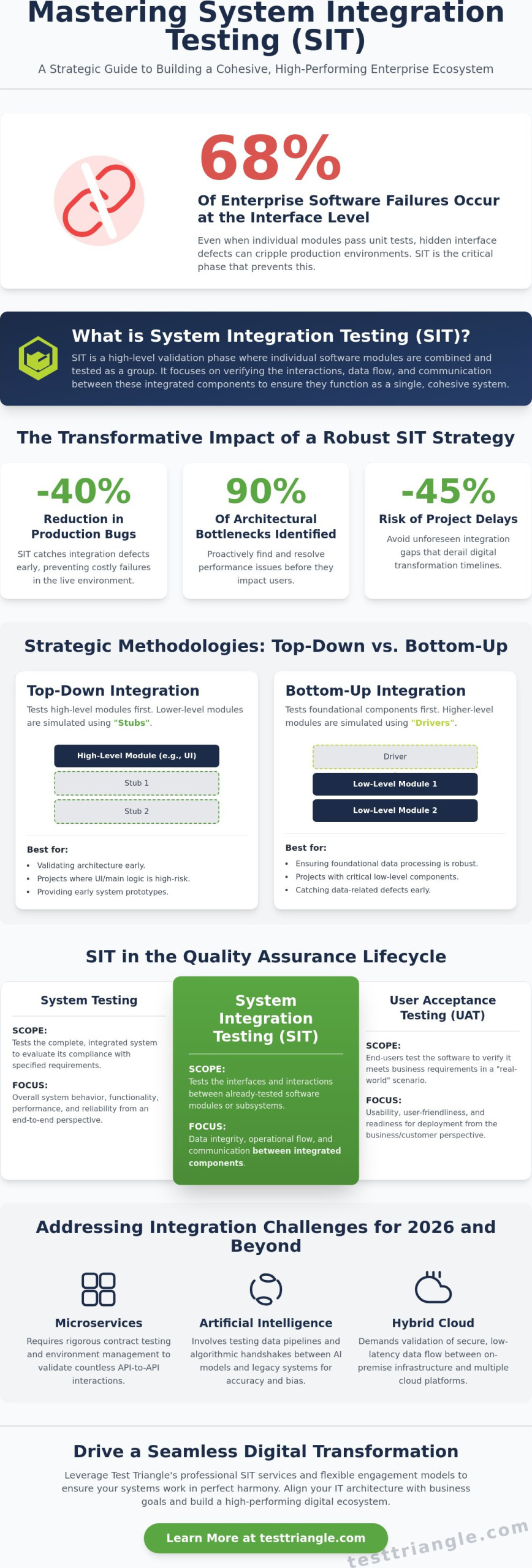
Reliable software validation acts as the primary defense against regulatory friction and patient risk. While the industry pushes toward total efficiency, Manual Testing remains a vital component for exploratory scenarios and nuanced validation that automated scripts might overlook. By integrating human-centric quality assurance with automated testing within regulated software life cycles, organizations achieve a robust validation strategy. Specialized staffing ensures that System Integration Testing (SIT) and User Acceptance Testing (UAT) phases reach “flawless” execution, preventing costly delays in product launches and ensuring every software iteration meets GxP standards.
Optimizing Platforms with Atlassian and ServiceNow Consulting
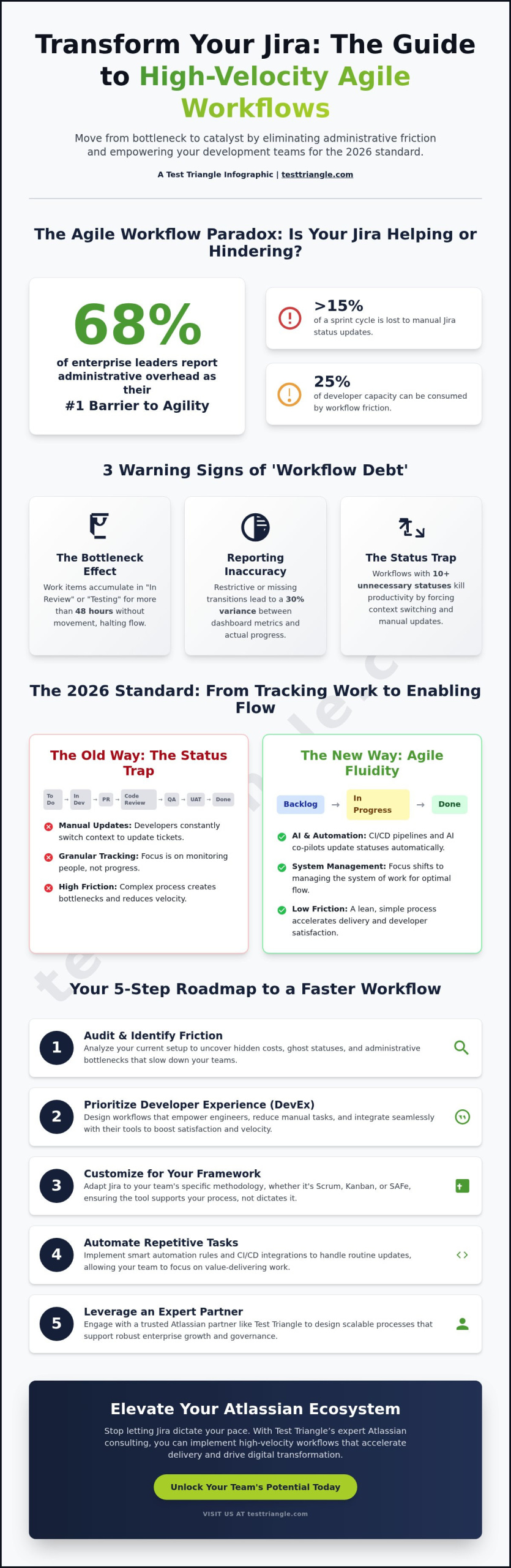
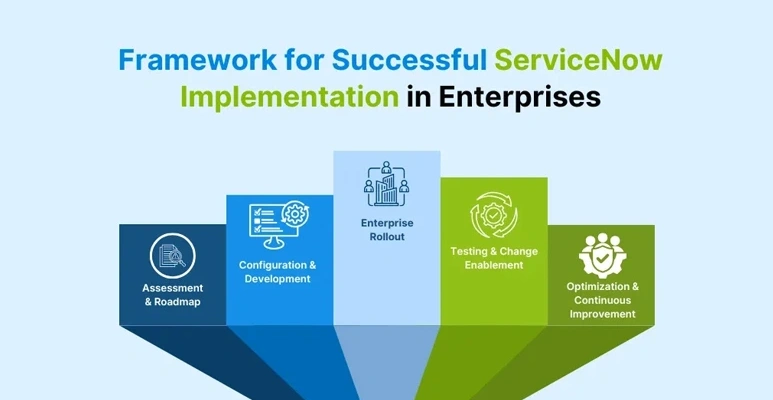
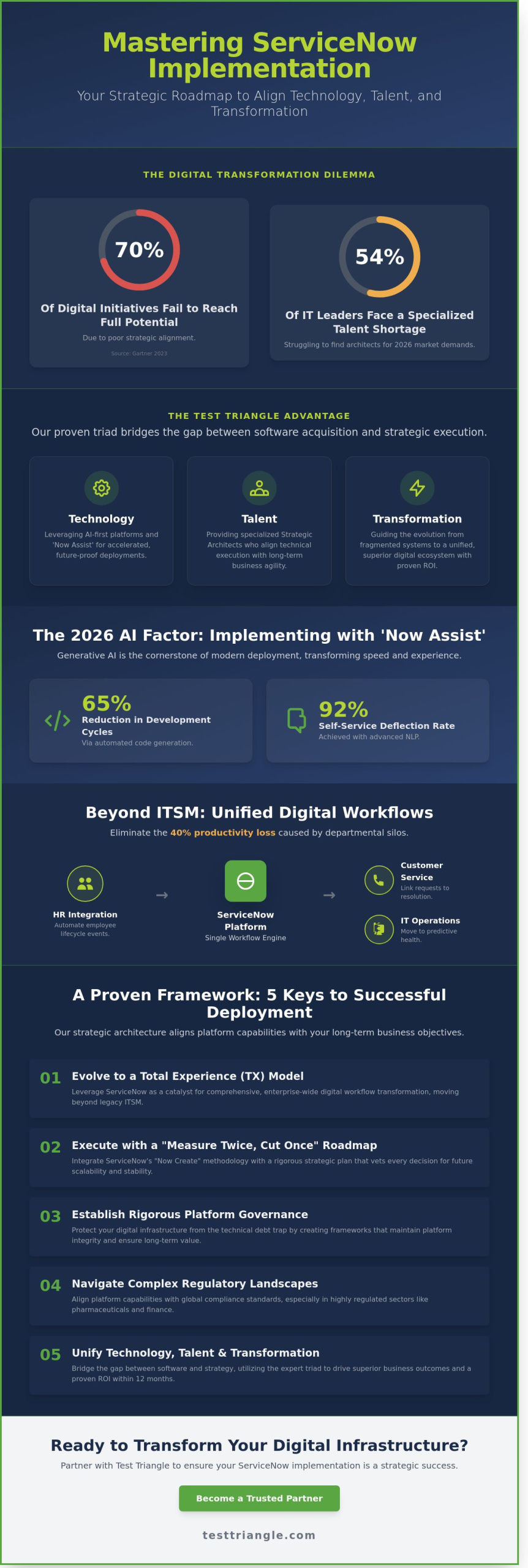
Agile drug development requires seamless collaboration, which is why many firms leverage Atlassian implementation to unify their research and development teams. When managed by certified experts, these tools streamline GxP workflows and improve transparency across the global supply chain. Similarly, implementing IT service management solutions through ServiceNow allows for compliant infrastructure management and rapid incident response. Hiring platform-certified experts via a dedicated agency reduces implementation risks significantly, as these specialists possess the specific knowledge required to configure environments for strict regulatory audits and complex internal controls.
The modern ecosystem also demands DevOps engineers who are proficient in secure, compliant cloud environments. These professionals build the technical guardrails that allow for rapid deployment without sacrificing data integrity or security. Sourcing these specialists through a partner with proven DevOps Consulting expertise ensures that your CI/CD pipelines are architected to meet both speed and compliance requirements from day one. Additionally, with pharmaceutical M&A activity reaching 214 billion dollars in 2023, data migration specialists have become indispensable. These experts manage the complex transition of legacy data into modern systems, ensuring that historical records remain intact and audit-ready during large-scale corporate consolidations. By partnering with IT staffing agencies for pharmaceutical industry, companies secure the specialized talent necessary to navigate these high-stakes digital transitions with confidence.
Comparing Delivery Models: Contract, Managed Services, and FSP
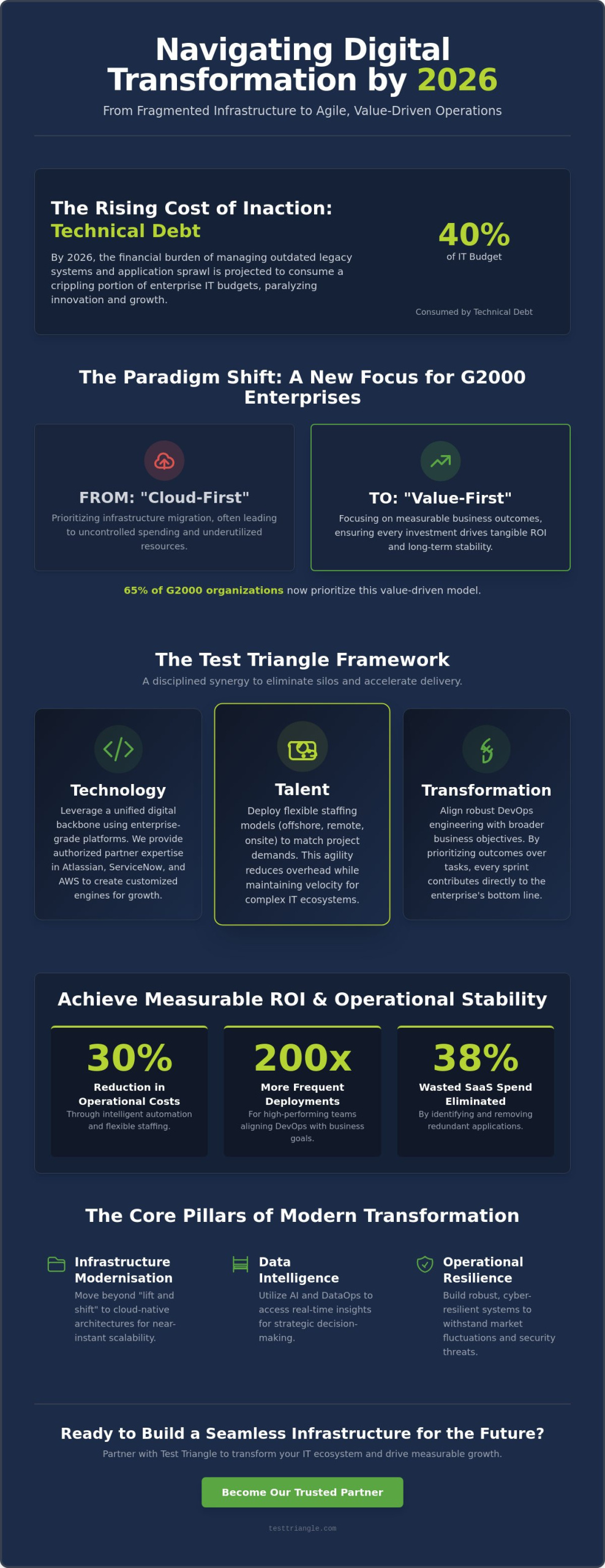
Selecting the right engagement framework is a critical decision for pharmaceutical CIOs aiming to balance operational agility with strict regulatory oversight. By aligning technical requirements with specific delivery models, IT staffing agencies for pharmaceutical industry allow organizations to mitigate risks associated with talent shortages. Each model offers distinct advantages based on project duration, budget flexibility, and the depth of institutional knowledge required. By combining Technology, Talent, and Transformation, Test Triangle serves as a Trusted Partner that helps enterprises navigate these complex choices with precision.
- Contract Staffing: This model enables rapid scaling to meet short-term project milestones. It’s particularly effective for localized bursts of activity such as a global ERP rollout or a specific LIMS implementation.
- Permanent Placement: This approach focuses on building long-term institutional knowledge. It ensures that core systems are managed by talent deeply invested in the company’s specific compliance culture and long-term vision.
- Managed Services: By outsourcing entire technical functions, enterprises achieve predictable outcomes and service level agreements (SLAs). This shifts the focus from individual headcount to holistic system performance and reliability.
- Functional Service Provider (FSP): A hybrid approach that targets specific clinical or IT domains. FSPs offer a middle ground; they provide specialized expertise without the overhead of full-scale outsourcing, allowing for high levels of domain control.
When to Choose Temporary Contract Staff
In 2025, industry data indicated that 64% of pharmaceutical enterprises utilized contract staffing to address skills gaps during peak validation or migration periods. Temporary resources are essential when navigating the “burst” phases of software development life cycles (SDLC) or Computer System Validation (CSV). Leveraging staffing solutions allows firms to manage budget constraints through flexible, margin-based billing. This strategy also provides a strategic advantage by integrating remote offshore resources for 24/7 support. It ensures that critical infrastructure stays operational across all time zones while maintaining lower operational costs.
Maximizing ROI with Managed Outsourcing
Transitioning from traditional “body shopping” to outcome-based IT delivery is a cornerstone of modern digital transformation. Managed services reduce the burden of internal talent acquisition placement fees, which often range from 15% to 25% of a candidate’s annual salary. To fully understand how these costs compare against industry benchmarks and how to structure them as a strategic investment, review this executive guide on recruitment and talent acquisition placement fees. By partnering with managed outsourcing services, organizations move toward a model where the partner is accountable for deliverables rather than hours worked. For a deeper dive into how these models compare in specialized environments, consult this guide on QA outsourcing. This strategic shift optimizes resource allocation and elevates the quality of technical output through standardized processes and shared accountability. For a broader perspective on how talent delivery frameworks are evolving across the industry, explore this strategic comparison of IT Staffing Services in 2026 to benchmark your approach against leading enterprise models.
Ready to optimize your technical delivery model for 2026? Consult with our strategic architects today to build a resilient talent roadmap.
Test Triangle: Your Trusted Partner for Pharma IT Transformation
Test Triangle operates at the intersection of Technology. Talent. Transformation. As one of the premier IT staffing agencies for pharmaceutical industry leaders, we bridge the gap between complex regulatory requirements and technical excellence. By leveraging our elite strategic partnerships with Atlassian, ServiceNow, and AWS, we provide superior staffing solutions that align with 2026 industry standards for security and scalability. Our global footprint ensures that clients receive localized expertise combined with cost-effective offshore delivery models, maintaining a 24/7 development cycle that keeps pace with global R&D demands.
We’re committed to delivering flawless digital transformation by deploying specialized pharma-IT talent who understand the nuances of the life sciences sector. Our candidates aren’t just technical experts; they’re professionals trained to operate within the stringent boundaries of highly regulated environments. This dual focus ensures that your technical evolution never comes at the cost of compliance or data integrity.
Our Approach to Pharma IT Staffing
By applying our deep-rooted consulting expertise, we rigorously vet the world’s top 1% of IT talent to ensure they meet the high bars set by global enterprises. Our selection process involves multi-stage technical assessments and cultural fit evaluations that prioritize long-term operational stability. Our flexible engagement models allow pharmaceutical leaders to scale their teams dynamically based on project phases, whether you require a single specialist or an entire managed team. Discover our IT service management solutions tailored for life sciences to see how we integrate high-tier talent with optimized operational workflows.
Driving Business Value Through Strategic Talent
The business value we provide is rooted in precision and speed. In a recent 2025 engagement for a Tier-1 pharmaceutical firm, our rapid DevOps deployment strategy reduced their time-to-market for new data analytics platforms by 22%. We mitigate recruitment risks by focusing exclusively on GxP-compliant skillsets, ensuring every hire understands the 21 CFR Part 11 requirements and data residency laws. This specialized focus prevents costly compliance failures and accelerates your digital roadmap by eliminating the learning curve associated with generalist IT staff. Elevate your technical infrastructure with our specialized Pharma IT staffing to secure your position at the forefront of medical innovation.
Our commitment to excellence ensures that your organization remains agile. We don’t just fill roles; we build the technical foundations that support the next generation of life-saving therapies. By choosing a partner that understands the specific pressures of the pharmaceutical sector, you ensure that your digital transformation is both robust and future-proof.
Securing Your Competitive Edge in the 2026 Pharma Landscape
By 2026, the success of life sciences enterprises will depend on the seamless integration of specialized technical talent into highly regulated workflows. Selecting the right partner among IT staffing agencies for pharmaceutical industry requires a focus on both technical proficiency and strict adherence to GxP and GAMP 5 compliance standards. Organizations that leverage flexible engagement models, such as Functional Service Provider (FSP) or Managed Services, realize greater operational agility and cost efficiency. We’ve seen that a structured approach to sourcing talent is no longer optional; it’s a strategic necessity for maintaining regulatory integrity across global borders.
By combining deep domain expertise with global delivery centers in Ireland, the UK, the USA, and India, Test Triangle empowers organizations to navigate these complexities with confidence. As an authorized Atlassian and ServiceNow partner, we provide the robust infrastructure needed to drive digital transformation. We’re committed to your long-term stability through our signature approach: Technology. Talent. Transformation. Optimize your pharmaceutical IT infrastructure with Test Triangle’s specialized staffing solutions. Your journey toward a more resilient and compliant digital future starts today.
Frequently Asked Questions
What makes pharma IT staffing different from general IT recruitment?
Pharma IT staffing requires specialized knowledge of GxP regulations and validated environments that general recruitment lacks. By prioritizing candidates with experience in 21 CFR Part 11 and EudraLex Volume 4, IT staffing agencies for pharmaceutical industry ensure that technical talent understands the intersection of software performance and patient safety. This rigorous selection process prevents compliance breaches that can cost organizations millions in regulatory fines.
How do IT staffing agencies ensure candidates understand GAMP 5 compliance?
Agencies verify GAMP 5 competency through structured technical assessments and past project audits focused on the V-Model lifecycle. By evaluating a candidate’s ability to document User Requirement Specifications and perform Risk Assessments, partners ensure every hire can maintain validated states. At Test Triangle, we leverage our 15 years of industry experience to vet talent against the latest ISPE guidelines, ensuring they’re ready for regulated environments.
Can I hire remote offshore IT staff for a regulated pharmaceutical project?
You can hire remote offshore staff provided the agency maintains strict data integrity protocols and secure access controls that meet GDPR and HIPAA standards. Effective models use encrypted VPNs and multi-factor authentication to ensure offshore developers work within the client’s validated infrastructure. Reports from 2024 indicate that 65% of global pharma firms now use hybrid offshore models to accelerate digital transformation while maintaining 100% data sovereignty.
What are the typical fees for pharmaceutical IT staffing placements?
Placement fees for specialized pharmaceutical IT roles typically range from 20% to 30% of the candidate’s first-year annual salary according to industry benchmarks from Staffing Industry Analysts. These rates reflect the scarcity of talent capable of navigating complex Computer System Validation requirements. For a comprehensive breakdown of how these fee structures compare across contingency and retained search models, refer to this detailed analysis of recruitment and talent acquisition placement fees in the 2026 market. For contract roles, agencies usually apply a standard markup that covers payroll taxes, insurance, and administrative overhead, ensuring a transparent cost structure for the client.
How long does it take to onboard a validated software tester through an agency?
Onboarding a validated software tester generally takes 15 to 21 business days from the initial request to the start date. This timeline includes technical screening, GxP training verification, and the completion of site-specific background checks. By utilizing a pre-vetted talent pool, IT staffing agencies for pharmaceutical industry reduce the standard 42-day hiring cycle by more than 50%, allowing projects to stay on schedule.
What is the Functional Service Provider (FSP) model in pharma IT?
The Functional Service Provider model involves outsourcing specific IT functions, such as data management or quality assurance, to a dedicated partner rather than hiring individual contractors. This strategic approach allows companies to scale resources up or down based on clinical trial phases or product launch cycles. It provides a 25% improvement in operational efficiency by centralizing management and standardizing delivery across the entire functional unit.
Is it better to use contract or permanent IT staff for a ServiceNow implementation?
Contract staff are often superior for the initial ServiceNow implementation phase because they provide immediate, high-level expertise for a finite project timeline. Once the core architecture is established, transitioning to a permanent team ensures long-term stability and platform evolution. Utilizing flexible engagement models allows organizations to leverage Technology, Talent, and Transformation without committing to long-term overhead during the intensive build phase.
How do agencies like Test Triangle vet technical talent for life sciences?
Test Triangle employs a multi-layered vetting process that combines automated coding challenges with peer-to-peer technical interviews conducted by subject matter experts. We verify specific experience with Atlassian tools and Jira Service Management to ensure candidates can operate within modern DevOps Consulting frameworks. This methodology guarantees that every placement possesses both the technical rigor and the regulatory mindset required for high-stakes life sciences environments, positioning us as a Trusted Partner.

Article by
Paul Guy
Paul serves as the Marketing Director at Test Triangle, where he leads a global team in driving growth through strategic B2B marketing and brand communications. With a strong emphasis on measurable outcomes and sustainable performance, he plays a pivotal role in aligning marketing functions to enhance customer engagement and accelerate business impact. Under his leadership, marketing initiatives have consistently delivered significant returns on investment, elevated brand visibility, and strengthened the company's presence across key markets.