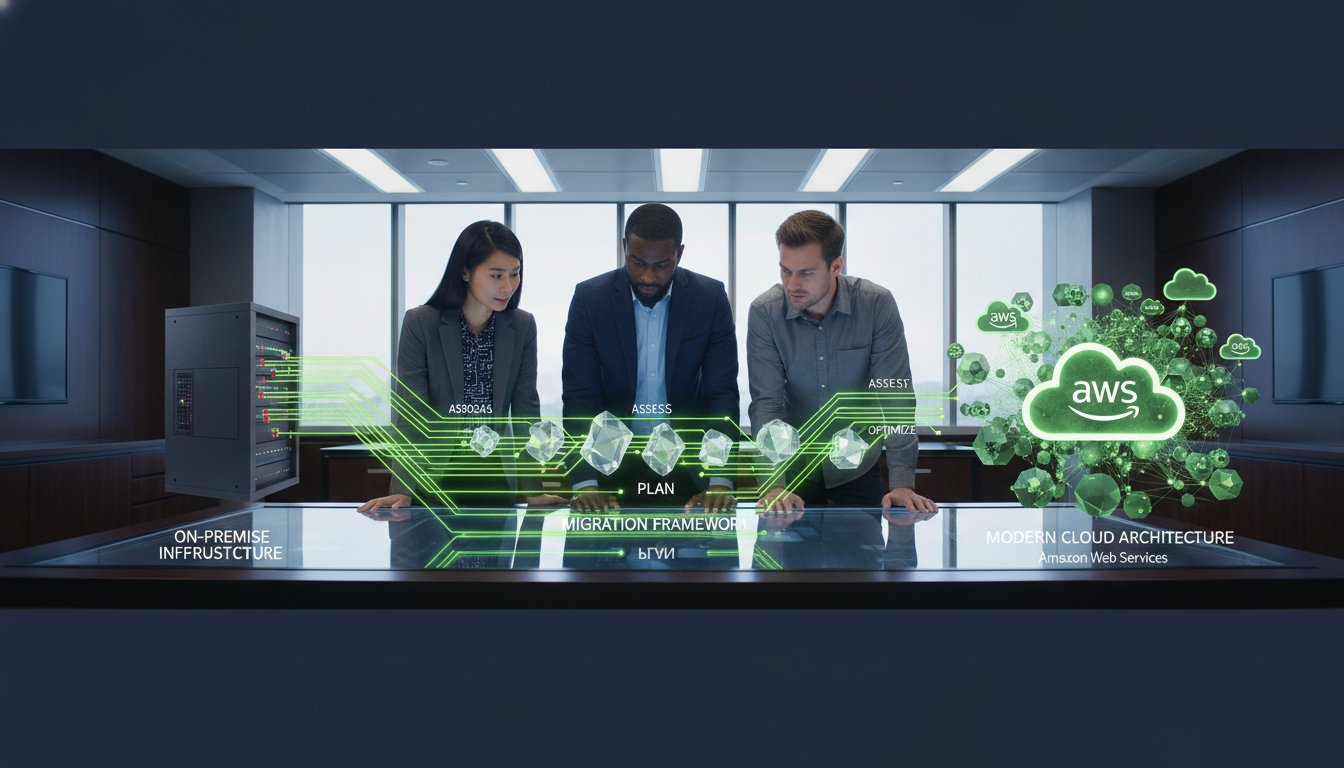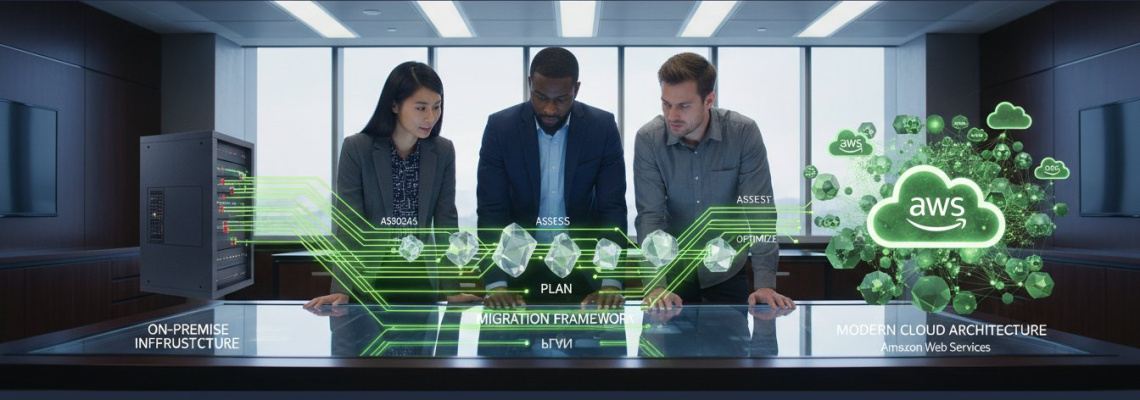
The fastest way to fail your cloud transition is to treat your aws migration strategy for legacy applications as a simple infrastructure swap rather than a holistic business evolution. While many enterprises view legacy monoliths as anchors of technical debt, these systems often house the core logic that defines your market advantage. Transitioning them to the cloud requires more than just moving data; it demands a precise, risk-mitigated framework that balances operational stability with the need for modern performance.

You’re likely facing the daunting reality of monolithic systems, where the fear of extended downtime or data loss often outweighs the desire for innovation. We understand that managing regulatory compliance hurdles and a lack of internal AWS expertise can make the move feel impossible. This guide provides a definitive roadmap to master these complexities, ensuring your transition results in scalable infrastructure and faster release cycles through integrated DevOps practices. We’ll explore the shift to AI-driven discovery using AWS Transform, the implementation of the 7 Rs framework, and how to achieve data liquidity for the next generation of enterprise intelligence.

Key Takeaways

  • Recognize the compounding risks of technical debt to see why keeping on-premise monoliths isn’t a sustainable option in 2026.
  • Select the optimal aws migration strategy for legacy applications by leveraging the 7 Rs framework to balance immediate speed with long-term optimization.
  • Secure your business continuity by choosing the migration model that’s best for your data integrity and downtime requirements.
  • Establish a high-performance environment through precise landing zone configuration and AI-enhanced discovery phases that reduce planning timelines.
  • Boost your release cycles by combining DevOps consulting with rigorous automation testing so your new environment’s ready for scale.

The Strategic Imperative: Why Legacy Migration to AWS is Non-Negotiable in 2026

In 2026, the definition of a legacy application has shifted from a measure of chronological age to a metric of architectural rigidity. These systems often represent the core of an enterprise’s operations, yet they remain isolated from the data liquidity required for modern AI and machine learning initiatives. Organizations that fail to implement a comprehensive aws migration strategy for legacy applications find themselves trapped in a cycle of reactive maintenance. This stagnation prevents the adoption of cloud-native features that drive competitive differentiation and systemic growth.

The “cost of inaction” is no longer a theoretical risk but a documented drain on corporate resources. Maintaining on-premise monoliths leads to a significant increase in operational costs compared to modernized cloud alternatives, often due to the rising price of specialized hardware maintenance and power consumption. Beyond the financial burden, the lack of scalability in traditional environments creates a glass ceiling for global expansion. Establishing a modern aws migration strategy for legacy applications facilitates a move to cloud computing, allowing for a strategic realignment where infrastructure serves as a foundation for stability, precision, and scalable growth.

Overcoming the Technical Debt Trap

Technical debt is a structural barrier to innovation that forces IT departments to prioritize emergency patching over the delivery of new business value. AWS Transform and other AI-driven tools now allow for predictive dependency mapping, which uncovers these hidden costs before the migration begins. By offloading hardware management to AWS, firms achieve a state of operational excellence where human expertise is redirected toward high-impact projects. Integrating automation testing during this phase ensures that the technical debt isn’t just relocated, but actively eliminated through refactored, high-quality code.

The Business Value of Cloud Agility

True agility is found in the ability to pivot at the speed of the market. AWS enables this through a globally distributed infrastructure that guarantees high availability and low latency for international users. This transition empowers teams to adopt DevOps consulting methodologies, which significantly shortens release cycles from months to days. The result is a more resilient digital presence that directly influences customer satisfaction and long-term brand loyalty. By mapping these technical milestones to specific business KPIs, such as reduced downtime and improved deployment frequency, leadership can track the tangible ROI of their digital transformation efforts.

The 7 Rs Framework: Selecting Your AWS Migration Strategy

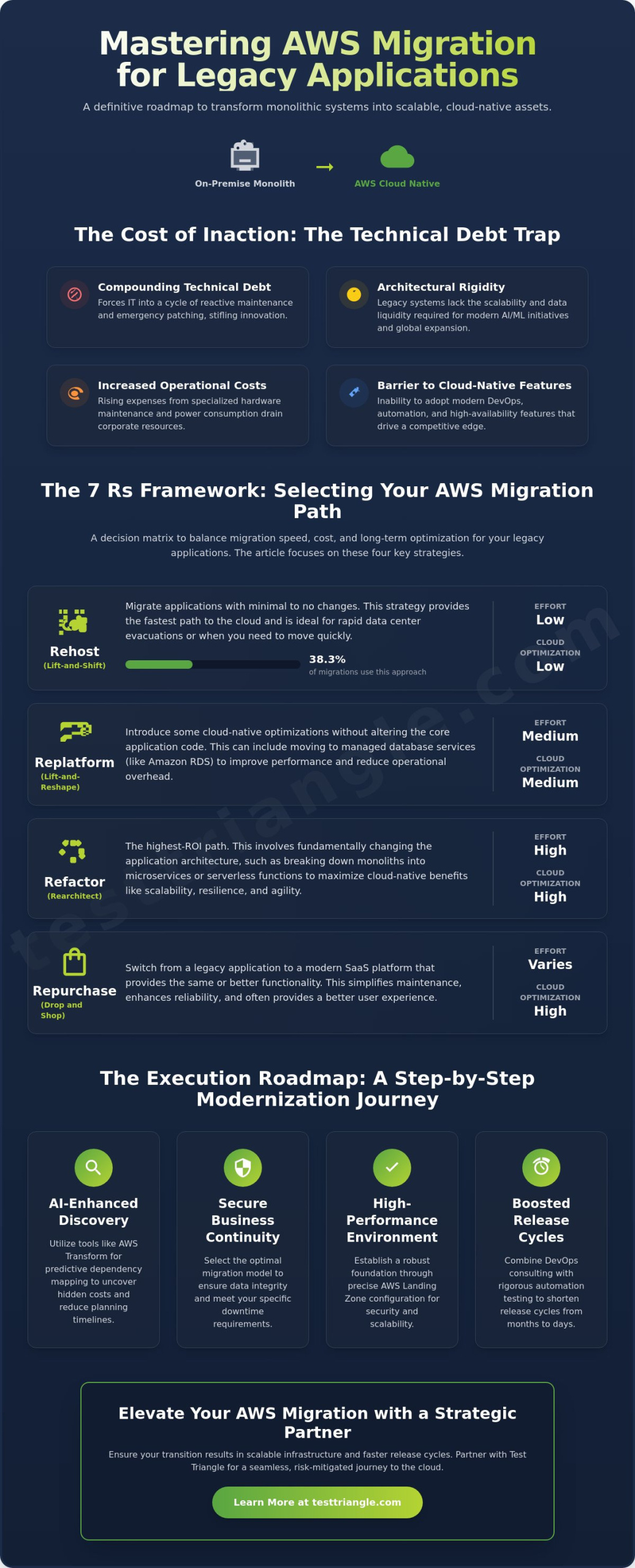
Selecting the appropriate aws migration strategy for legacy applications is a pivotal decision that dictates the long-term agility of your digital ecosystem. The 7 Rs framework serves as the definitive architecture for these decisions, categorizing workloads based on their technical complexity and business value. While rehosting remains a common entry point, accounting for 38.3% of migrations according to 2026 industry data, it’s often just the first step in a broader modernization journey that prioritizes systemic improvement over simple relocation.

Each strategy within the framework offers a different balance of speed, cost, and optimization:

  • Rehost (Lift-and-Shift): This approach provides the fastest path to the cloud by migrating applications with minimal changes, making it ideal for rapid data center evacuations.
  • Replatform (Lift-and-Reshape): By introducing cloud-optimizations like managed database services, you can improve performance without altering the core application code.
  • Refactor/Rearchitect: This high-ROI path involves breaking down monoliths into microservices or serverless architectures to maximize the benefits of cloud-native scalability.
  • Repurchase: Some legacy functions are better served by shifting to industry-leading SaaS platforms, which simplifies maintenance and enhances reliability.

A Decision Matrix for Legacy Systems

A structured decision matrix is essential for evaluating whether to prioritize speed or optimization. For non-core applications, a Rehost strategy allows for immediate cost savings on hardware maintenance. However, mission-critical monoliths that drive your primary revenue streams usually warrant a Refactor approach. This ensures that the application can handle modern traffic patterns and integrate with AI-driven analytics. Organizations must weigh the initial modernization effort against the long-term operational efficiency gained through cloud-native features. If your current systems are too rigid for a direct move, a phased aws migration strategy for legacy applications might involve an initial rehost followed by incremental refactoring.

Integration with Modern Ecosystems

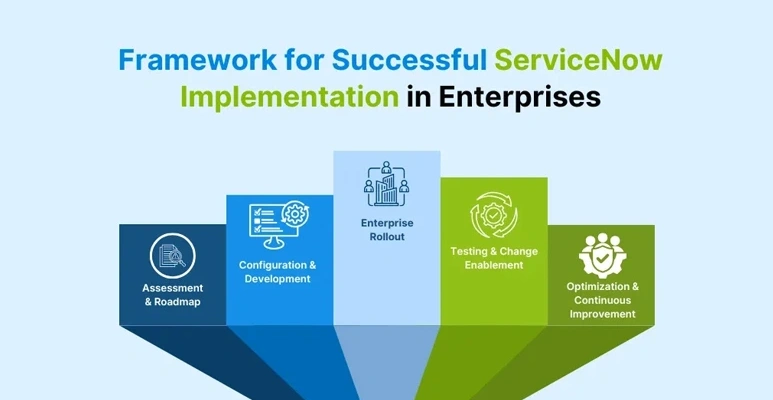
Successful migration extends beyond the infrastructure layer to include your entire operational toolset. Utilizing Atlassian Consulting ensures that your migration workflows are documented and managed with precision, maintaining visibility across all stakeholders. Similarly, a robust ServiceNow Implementation allows for seamless ITSM integration, providing a unified view of your hybrid cloud environment. This level of technical rigor is necessary for managing sensitive legacy data that may require a phased transition rather than a “big bang” migration. If you’re unsure which path fits your current technical debt profile, it’s often helpful to consult with a strategic partner to map your journey.
AWS Migration Strategy for Legacy Applications: The 2026 Strategic Enterprise Guide

Mitigating Risk: Challenges in Migrating Mission-Critical Applications

Transitioning core business logic from on-premise environments to the cloud introduces unique vulnerabilities that demand a sophisticated, risk-mitigated aws migration strategy for legacy applications. For global enterprises, the primary concern remains the preservation of data integrity during high-volume transfers. While a “Big Bang” migration cutover offers immediate finality, it often introduces unacceptable levels of business risk for mission-critical systems. Conversely, an incremental approach allows for gradual validation, ensuring that each component of the legacy monolith is stable within the AWS ecosystem before proceeding to the next phase of the journey.

In highly regulated sectors such as Pharmaceuticals and Finance, these risks are compounded by strict legal mandates. Navigating GxP or SOC 2 requirements during a cloud transition isn’t a secondary concern; it’s a foundational requirement that dictates the entire technical roadmap. AWS provides a comprehensive compliance program, but the responsibility for configuring these tools correctly remains with the organization. This necessitates a strategic focus on security, stability, and scalability, ensuring that every architectural decision aligns with both global regulations and long-term business objectives.

Security and Compliance Guardrails

Utilizing AWS Identity and Access Management (IAM) alongside advanced encryption protocols ensures that legacy data remains protected throughout its journey. For enterprises operating in sensitive markets, maintaining GDPR or GxP compliance requires more than just technical configuration. It requires a documented trail of verification. Integrating Digital Assurance into your migration pipeline allows for the continuous validation of security protocols. This provides the peace of mind that comes from knowing your infrastructure meets the highest global standards of quality and security.

The Human Element of Migration

Technical transformation is inextricably linked to organizational change. Legacy IT departments often harbor a natural resistance to cloud adoption, fearing that their specialized knowledge will become obsolete. Overcoming this hurdle requires a commitment to upskilling and clear communication regarding the new operational landscape. When internal expertise is stretched thin, leveraging IT Staffing Services can fill critical AWS skill gaps. This provides the temporary specialized talent needed to execute a complex aws migration strategy for legacy applications without disrupting daily operations. Our adaptable approach to service delivery ensures that your internal teams are supported by seasoned experts who value precision and organizational progress.

The Execution Roadmap: A Step-by-Step Modernization Journey

Executing a high-performance aws migration strategy for legacy applications is a disciplined four-phase process that transforms technical debt into operational equity. While many organizations rush into the execution phase, a strategic partner understands that the precision of the discovery phase dictates the success of the entire modernization journey. This roadmap is designed to move your mission-critical systems with a composed, solution-oriented approach that prioritizes stability and precision.

The journey follows a methodical progression across four distinct stages:

  • Phase 1: Discovery and Assessment: Utilizing AWS Transform, the successor to AWS Migration Hub launched in May 2025, we use predictive analytics to map complex application dependencies and identify potential friction points.
  • Phase 2: Detailed Design: This stage focuses on the configuration of the AWS Landing Zone, establishing a secure, multi-account environment that anchors your infrastructure in recognized global benchmarks.
  • Phase 3: Migration Execution: Data synchronization is managed via AWS Application Migration Service (MGN). As of May 2026, MGN supports CentOS Stream 9 and provides local EBS snapshot storage within AWS Local Zones.
  • Phase 4: Validation and Tuning: The final stage involves rigorous performance testing and post-cutover monitoring to ensure the new environment meets all functional and business requirements.

The Critical Role of Migration Testing

Digital assurance is the cornerstone of risk mitigation. Implementing System Integration Testing (SIT) ensures that cross-platform data flows remain intact when legacy monoliths interact with modern cloud services. Automating regression testing is equally vital to prevent old bugs from creeping into the new environment. While automation handles the bulk of the workload, our framework for manual testing provides the validation needed for complex edge cases that automated scripts might overlook. This combination of human expertise and technical tools ensures that your aws migration strategy for legacy applications delivers a resilient, high-performance outcome.

Performance Tuning and Optimization

Post-cutover health is managed through AWS CloudWatch, which provides real-time visibility into application performance and resource consumption. Right-sizing EC2 instances, such as the t4g.nano which starts at $0.0042/hr as of May 2026, ensures that you’re only paying for the compute power you actually need. Establishing a DevOps consulting framework allows for continuous improvement, turning your migrated application into a dynamic asset that evolves with your business. This steady hand in a fast-changing landscape ensures long-term operational stability and scalable growth. If you’re ready to modernize your legacy portfolio without disrupting business operations, reach out to our strategic consultants to begin your assessment.

Strategic Partnership: Elevating Your AWS Migration with Test Triangle

Developing a successful aws migration strategy for legacy applications requires a partner that understands the delicate balance between technical modernization and operational continuity. Test Triangle stands as a reliable long-term collaborator, offering a unique combination of high-level strategic vision and practical execution. By aligning our DevOps consulting methodology with rigorous digital assurance, we ensure that your transition to the cloud is not merely a relocation of assets but a strategic leap in operational capacity. Our approach prioritizes stability, precision, and performance, providing the peace of mind necessary for global enterprises to evolve without compromise.

For organizations operating in highly regulated sectors such as Pharmaceuticals or Finance, a generic migration path is insufficient. We specialize in creating tailored migration frameworks that account for complex GxP and GDPR requirements, ensuring that every architectural decision remains compliant with global benchmarks. This institutional maturity allows us to manage your digital infrastructure with expertise, transforming rigid monoliths into agile, cloud-native systems. Our adaptable approach to service delivery means we can function as a steady hand throughout the entire lifecycle, from the initial discovery phase to the final performance tuning of your new environment.

Beyond the technical cutover, we address the critical SERP gap of post-migration support through our comprehensive Managed Outsourcing Services. This ensures that your infrastructure remains optimized and secure long after the initial migration is complete. To fill specialized skill gaps during the transition, our IT Staffing Services provide access to top-tier AWS talent, allowing your internal teams to focus on core business objectives while we handle the complexities of the cloud transition. This global delivery model offers the versatility and discipline required to manage large-scale technological evolution effectively.

A Holistic Approach to Digital Transformation

A truly effective aws migration strategy for legacy applications must integrate seamlessly with your existing enterprise ecosystem. We leverage our expertise in Atlassian Consulting and ServiceNow Implementation to ensure that your new AWS environment is fully aligned with your ITSM and project management workflows. This holistic integration facilitates proactive monitoring and maintenance, ensuring long-term stability and operational excellence. Test Triangle acts as a reliable long-term collaborator, deeply invested in your organization’s sustained success and technical maturity.

Next Steps for Enterprise Leaders

The journey toward a modernized, high-performance infrastructure begins with a clear understanding of your current technical debt and cloud readiness. Our consultants are prepared to develop a customized roadmap for your legacy application portfolio, identifying the most efficient path for your specific business needs. By requesting a comprehensive cloud readiness assessment, you can gain the clarity required to initiate a risk-mitigated transition. We invite you to contact our strategic consultants today to begin your transformation journey and secure your enterprise’s digital future.

Securing Your Competitive Edge through Modernization

Transitioning from rigid on-premise monoliths to a high-performance cloud environment is the defining challenge for enterprise leaders in 2026. By implementing a risk-mitigated aws migration strategy for legacy applications, your organization can effectively eliminate technical debt while achieving the data liquidity required for next-generation AI initiatives. Success in this journey depends on a methodical approach that balances the speed of rehosting with the long-term ROI of refactoring, all while maintaining strict compliance in regulated sectors.

As a strategic partner with global delivery centers across Europe, North America, and Asia, we provide the institutional maturity required to manage complex digital infrastructures. Our status as a strategic partner for AWS, Atlassian, and ServiceNow, combined with our proven expertise in highly regulated industry migrations, ensures your transition is handled with technical rigor. We remain committed to your long-term success, acting as a reliable collaborator to navigate the evolving cloud landscape. To transform your legacy portfolio into a scalable asset, Partner with Test Triangle for your AWS Migration Strategy. Your path to operational excellence is ready for execution.

Frequently Asked Questions

What is the most cost-effective AWS migration strategy for legacy apps?

Rehosting is generally the most cost-effective initial aws migration strategy for legacy applications because it requires the fewest code modifications and reduces upfront labor costs. While this “lift-and-shift” method provides a rapid exit from expensive on-premise hardware, enterprises often find that Replatforming offers better long-term value by reducing the overhead of managing underlying operating systems and databases.

How long does a typical legacy application migration to AWS take?

Migration timelines vary based on the complexity of the portfolio, with individual applications often taking between six to ten weeks for a full transition. For large-scale enterprise portfolios, the process can span several months. Utilizing AI-driven discovery tools within AWS Transform can significantly accelerate this timeline by reducing the manual effort required for dependency mapping and portfolio assessment.

What are the main risks of migrating monolithic applications to the cloud?

The primary risks include data integrity loss during the transfer process and extended downtime that can disrupt core business operations. Technical debt within the monolith can also lead to performance bottlenecks if the application isn’t properly tuned for the cloud environment. These risks are mitigated through rigorous performance testing and a phased, incremental migration approach rather than a single cutover.

Do I need to rewrite my entire application to move it to AWS?

You don’t need to rewrite your application to move it to the cloud. Strategies like Rehosting and Replatforming allow you to migrate workloads with little to no changes to the existing code base. Rewriting, or Refactoring, is a selective strategic choice reserved for applications that require the extreme scalability and cost-efficiency of serverless or microservices architectures.

How does AWS ensure data security during the migration process?

AWS provides a secure foundation through robust encryption for data in transit and at rest, complemented by Identity and Access Management (IAM) for granular control. Using the AWS Application Migration Service (MGN), which recently added support for RHEL 10.1 and SLES 15 service packs, ensures that your data is replicated securely within a controlled environment that meets global security standards.

Can I migrate legacy applications that require specific regulatory compliance?

Yes, legacy applications requiring GxP, GDPR, or PCI DSS compliance can be migrated by utilizing AWS services that are already within the scope of these programs. A successful aws migration strategy for legacy applications in regulated sectors involves careful landing zone configuration and continuous digital assurance to ensure that every architectural layer remains compliant with industry-specific legal requirements.

What is the difference between Rehosting and Refactoring in AWS migration?

Rehosting involves moving an application to the cloud “as-is” by hosting it on EC2 instances, which is the fastest migration path. Refactoring is a more intensive process where the application is rearchitected to utilize cloud-native features like AWS Lambda or Amazon EKS. While Refactoring requires more effort, it delivers higher performance and lower operational costs over time.

How can I minimize downtime during a legacy application cutover?

Minimizing downtime is achieved through continuous data replication and an incremental migration model that allows for extensive validation before the final switch. By establishing a robust DevOps framework and performing comprehensive automation testing in a staging environment, you can ensure that the final cutover is a low-risk event that maintains business continuity for your global users.

Paul Guy

Article by

Paul Guy

Paul serves as the Marketing Director at Test Triangle, where he leads a global team in driving growth through strategic B2B marketing and brand communications. With a strong emphasis on measurable outcomes and sustainable performance, he plays a pivotal role in aligning marketing functions to enhance customer engagement and accelerate business impact. Under his leadership, marketing initiatives have consistently delivered significant returns on investment, elevated brand visibility, and strengthened the company's presence across key markets.
Test Triangle Launches First Atlassian Marketplace App

We’re proud to announce a major milestone for Test Triangle, the launch of our first application on the Atlassian Marketplace.

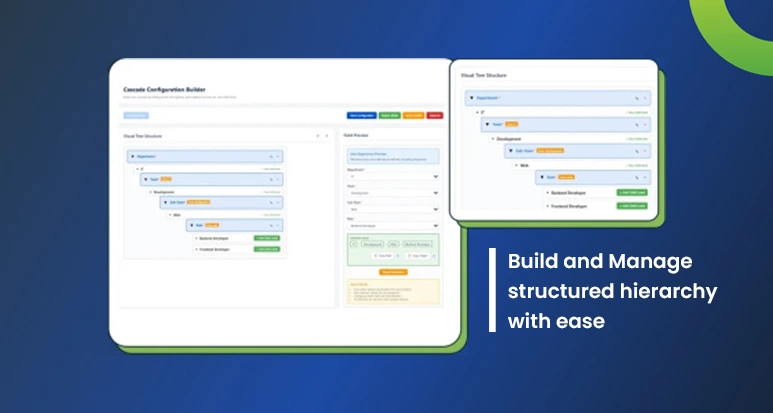
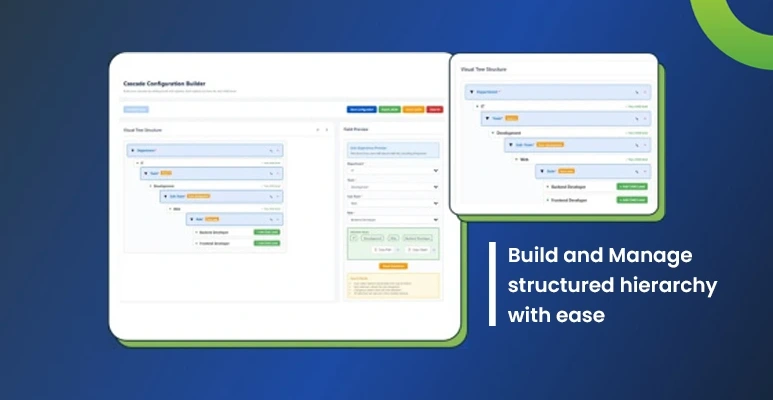
Introducing N-Level Cascade Select for Jira & Jira Service Management, a powerful new way to manage hierarchical data inside Jira workflows and service forms.

Turning complexity into clarity

As organisations scale, simple dropdown fields are no longer enough to represent real-world structures. Many teams struggle with cluttered forms, inconsistent data, and limited cascading field options.

N-Level Cascade Select solves this by enabling multi-level cascading selections, allowing teams to design structured, intuitive data entry flows.

Test Triangle App for Jira and JSM

Key capabilities

  • Build unlimited-depth cascading selection fields
  • Model complex structures such as:
    • Department → Team → Role
    • Product → Category → Variant
  • Improve Jira Service Management request forms
  • Reduce incorrect data entry and improve reporting quality
  • Easy configuration with no coding required

A milestone for Test Triangle

This launch represents our first step into the Atlassian Marketplace ecosystem, and reflects our ongoing commitment to building tools that improve usability, efficiency, and workflow clarity for enterprise teams.

We’re excited to continue expanding our product offerings and bringing more value to Jira and JSM users worldwide.

Learn more:


ServiceNow Implementation Guide: Strategic Frameworks for 2026


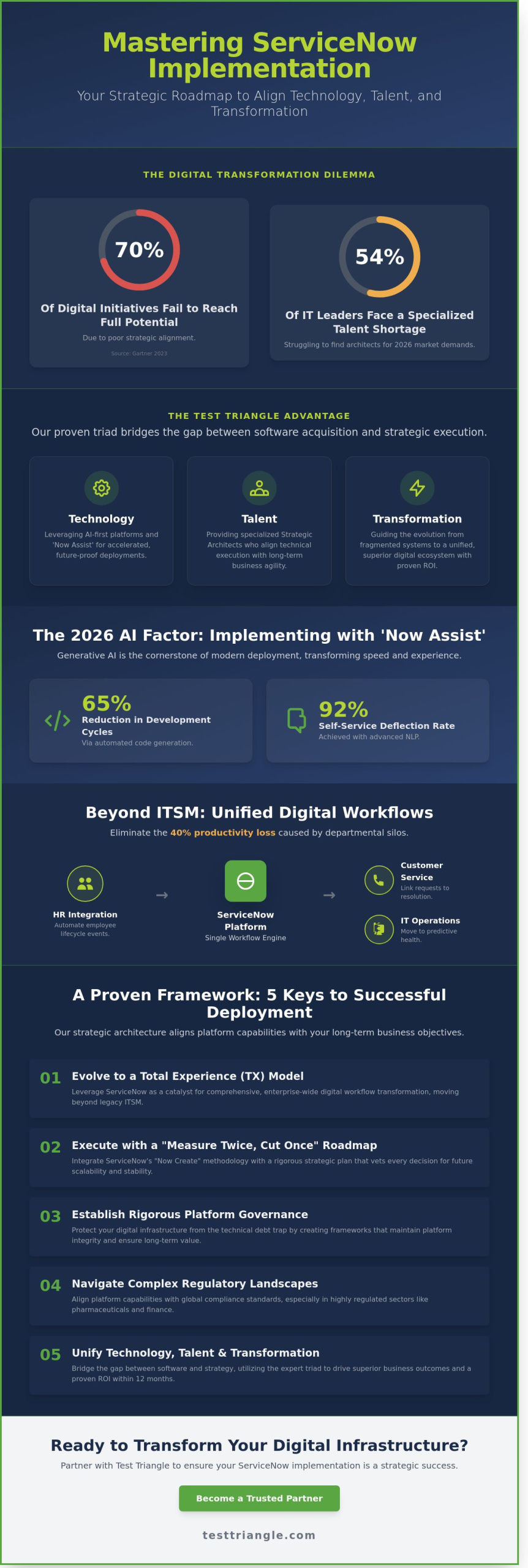
According to a 2023 Gartner report, 70% of digital transformation initiatives fail to reach their full potential due to poor strategic alignment and talent shortages. You likely recognise that a successful ServiceNow Implementation requires more than just technical configuration; it’s a process that demands total synchronisation of your organisational culture and legacy data. Finding specialised architects who understand the nuances of 2026 market demands is a persistent struggle for 54% of IT leaders globally. By combining technical expertise with adaptable delivery models, Test Triangle helps businesses eliminate these risks while ensuring their complex digital infrastructures are in safe hands.

This guide empowers you to master the complexities of your deployment through a strategic roadmap designed to align Technology, Talent, and Transformation. As your Trusted ServiceNow Partner, we’ll demonstrate how to drive seamless workflow automation and establish scalable platform governance that delivers a proven ROI within 12 months. We’ll explore the specific frameworks necessary to transition from fragmented legacy systems to a unified, superior digital ecosystem.

Key Takeaways

  • By evolving from legacy ITSM to a Total Experience (TX) model, enterprises can leverage ServiceNow as a catalyst for comprehensive, enterprise-wide digital workflow transformation.
  • Discover how to execute a flawless ServiceNow Implementation by integrating the “Now Create” methodology with a strategic “Measure Twice, Cut Once” technical roadmap.
  • Protect your digital infrastructure from the technical debt trap by establishing rigorous governance frameworks that maintain platform integrity and ensure long-term scalability.
  • Navigate complex regulatory landscapes in the pharmaceutical and financial sectors by aligning platform capabilities with global compliance standards and industry-specific requirements.
  • Bridge the gap between software acquisition and strategic execution by utilising the triad of Technology, Talent, and Transformation to drive superior business outcomes.

The Strategic Landscape of ServiceNow Implementation in 2026

By positioning the platform as the central nervous system of the enterprise, modern ServiceNow Implementation involves a total transformation of digital workflows rather than a simple software deployment. In 2026, the platform has transcended its origins as a tactical ticketing tool to become a Total Experience (TX) powerhouse. This evolution requires a “Strategic Architect” mindset, where technical execution aligns perfectly with long-term business agility. Organisations that treat this process as a mere IT project often fail to capture the full ROI. Instead, a successful ServiceNow Implementation relies on a holistic view of the ServiceNow company overview, acknowledging its shift from a cloud-based provider to an AI-first platform-as-a-service leader. By leveraging our Technology. Talent. Transformation, Test Triangle acts as a Trusted Partner to ensure these complex infrastructures deliver measurable competitive advantages.

Beyond ITSM: The Rise of Unified Digital Workflows

The 2026 enterprise landscape demands a unified pane of glass that connects HR, Customer Service, and IT operations seamlessly. By integrating these disparate functions into a single workflow engine, businesses can eliminate the 40% productivity loss typically caused by departmental silos. Our flexible engagement models focus on creating a frictionless environment where data flows across the organisation without manual intervention. Cross-Departmental Synergy is the orchestrated alignment of distinct business units through a shared digital fabric that ensures data consistency and operational speed.

  • HR Integration: Automating employee lifecycle events from onboarding to retirement.
  • Customer Service: Linking front-end requests directly to back-end IT resolution teams.
  • IT Operations: Moving from reactive troubleshooting to predictive system health management.

The 2026 AI Factor: Implementing with ‘Now Assist’

The 2026 release of ServiceNow has made ‘Now Assist’ the cornerstone of every deployment strategy. By embedding Generative AI (GenAI) into the core architecture, the platform now offers automated code generation that reduces development cycles by up to 65%. This shift allows our architects to accelerate the implementation timeline, moving from conceptual design to go-live faster than ever before. AI doesn’t just speed up the build; it transforms the end-user experience. With advanced natural language processing, self-service capabilities have reached a 92% deflection rate, significantly reducing the burden on human agents. Through this AI-first approach, we empower clients to drive innovation while maintaining a robust and secure digital environment.

By combining technical expertise with adaptable delivery models, Test Triangle helps businesses reduce costs and elevate their operational standards. We remain committed to delivering superior results that reflect our status as a visionary partner in the global technology ecosystem.

A Proven Framework: The 5 Pillars of Successful Deployment

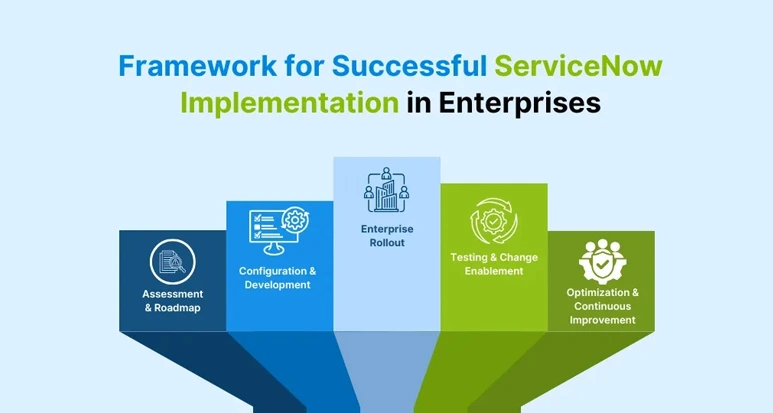
Executing a ServiceNow Implementation requires more than technical proficiency; it demands a strategic architecture that aligns platform capabilities with long-term business objectives. At Test Triangle, we enhance the standard “Now Create” methodology with our own layer of strategic rigour. We operate on a “Measure Twice, Cut Once” philosophy. This means every technical decision is vetted against its impact on future scalability and operational stability. By shifting from project-based thinking to platform-based thinking, we ensure your investment doesn’t become a static tool but evolves as a dynamic engine for growth.

The initial 30 days of any engagement determine its trajectory. During this window, we prioritise stakeholder alignment across the C-suite and IT operations. We’ve observed that 65% of implementation delays stem from misaligned expectations rather than technical hurdles. By securing executive buy-in and defining clear ownership early, we mitigate risks before they manifest as costly bottlenecks.

Discovery and Strategic Roadmapping

Success begins with a comprehensive audit of your current state versus your desired future architecture. We don’t just look at software; we analyse the workflows that drive your business. We establish key performance indicators (KPIs), such as a 25% reduction in mean time to resolution (MTTR), from Day 1. Our teams develop a “Value Realisation” map that tracks these metrics throughout the lifecycle. This ensures every configuration choice translates into a tangible business outcome, providing a clear path for digital transformation.

Agile Configuration vs. Customisation

We advocate for an “Out-of-the-Box” (OOTB) first approach. While customisation offers specific tailoring, it often creates a maintenance liability that complicates future upgrades. Adhering to at least 80% OOTB functionality reduces technical debt by nearly 40% over three years. We only recommend customisation when it provides a distinct competitive advantage. Use this checklist to evaluate custom scripts:

  • Does the feature exist in the upcoming ServiceNow roadmap?
  • Will this script break during a standard version upgrade?
  • Can the requirement be met through low-code Flow Designer logic?
  • Is the business value higher than the long-term maintenance cost?

Mastering the ServiceNow Implementation Guide from Test Triangle

Rigorous Quality Assurance and Testing

Test Triangle leverages a decade of expertise in manual and automated testing to safeguard your environment. User Acceptance Testing (UAT) is the most common failure point in a ServiceNow Implementation, often due to insufficient test coverage. We bridge this gap by integrating Manual Testing as the vital foundation for validating complex, human-centric workflows. By combining this with automated regression suites, we ensure that new configurations don’t disrupt existing services. This dual-layered approach provides the “flawless execution” our global partners expect, ensuring your platform remains robust and reliable under enterprise-level demand.

Mitigating Risk: Governance and the Technical Debt Trap

The most frequent reservation stakeholders express during a ServiceNow Implementation is the fear of the platform devolving into an unmanageable tangle of customisations. Without a rigorous governance framework, the initial agility of the system quickly erodes into technical debt. Neglecting platform health leads to a 30% increase in upgrade cycle times within the first two years of operation. This stagnation occurs when teams prioritise short-term “quick fixes” over architectural integrity. By positioning a Strategic Architect at the helm post-deployment, Test Triangle ensures that every configuration aligns with the long-term roadmap. This role acts as a guardian of the “Out-of-the-Box” functionality, ensuring that regular health checks identify and remediate performance bottlenecks before they impact the end-user experience.

Establishing a ServiceNow Centre of Excellence (CoE)

A successful CoE functions as the central nervous system for platform growth, comprising a Platform Owner, Lead Architect, and representatives from diverse business units. By centralising decision rights, the CoE effectively eliminates “shadow IT” where individual departments create siloed, non-standard workflows. This structured oversight ensures that every new feature request undergoes a rigorous impact analysis to maintain a clean ServiceNow Implementation. Organisations that leverage a formal CoE achieve a 25% higher ROI on their platform investment over a three-year period compared to those with decentralised management.

Partnering for Transformation: The Test Triangle Advantage

By aligning technical proficiency with long-term business objectives, Test Triangle transcends the traditional role of a software reseller. We operate as a strategic architect, ensuring that your ServiceNow implementation serves as a catalyst for organisational change. With a localised presence in Dublin and London, we provide the high-touch consultation global enterprises require, while our international footprint facilitates 24/7 operational continuity. We don’t just deliver a platform; we build a resilient digital foundation. Our status as a trusted partner is reinforced by our work with Enterprise Ireland and our success in highly regulated sectors like Banking and Life Sciences. We bridge the gap between initial software acquisition and the complex reality of strategic execution, ensuring that every workflow contributes to your broader digital evolution.

Ready to elevate your IT infrastructure? Schedule a ServiceNow Strategic Roadmap Session today to define your path toward operational excellence.


Manual Testing in 2026: A Strategic Guide to Human-Centric Quality Assurance

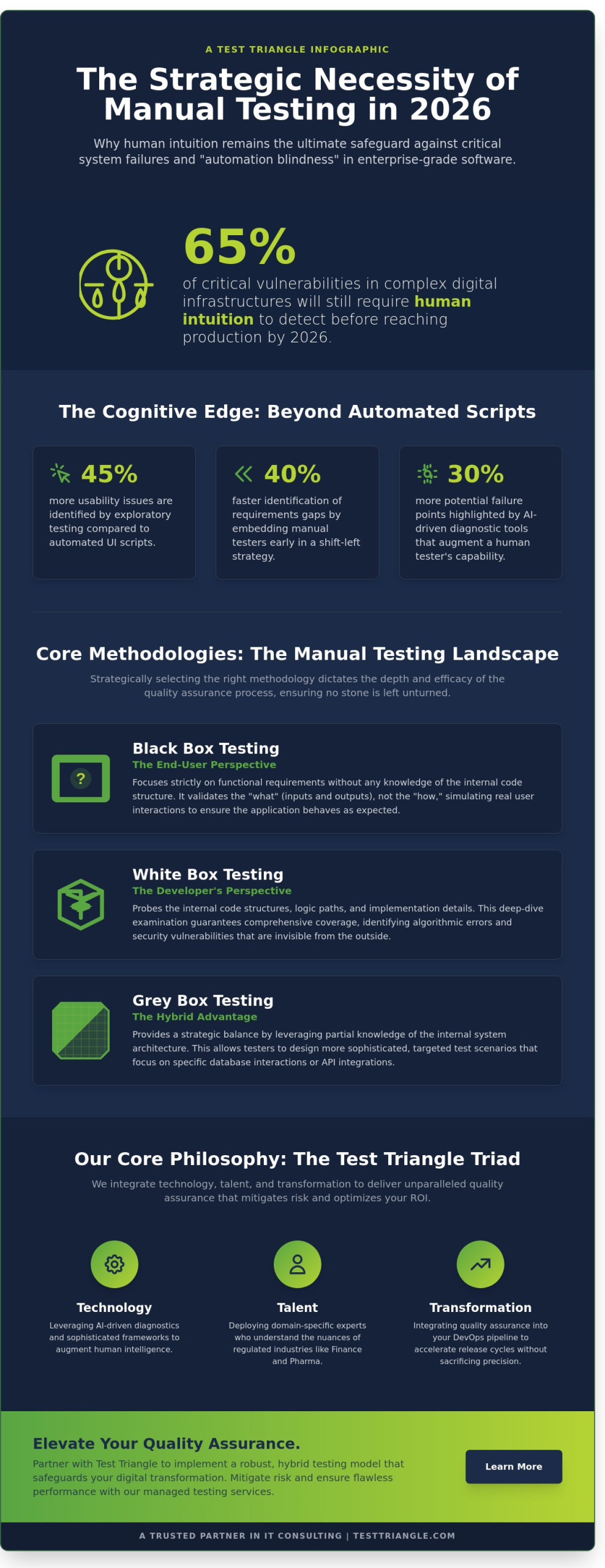
By 2026, industry data from leading analysts suggests that over 65% of critical vulnerabilities in complex digital infrastructures will still require human intuition to detect before they reach production. While the push for total automation is relentless, the most resilient global enterprises have realised that relying solely on scripts often leads to high defect leakage in specialised sectors like Finance and Pharma. Manual Testing isn’t a relic of the past; it’s a sophisticated, strategic necessity for any organisation that values precision over mere speed.

You’ve likely experienced the tension between the need to accelerate release cycles and the fear of sacrificing quality during a high-stakes digital transformation. We recognise that finding specialised testers who understand the nuances of regulated environments is a significant hurdle for your internal teams. This article provides a robust framework for a hybrid testing model that integrates human intelligence directly into your 2026 roadmap, aligning with our core philosophy of Technology, Talent, and Transformation. You’ll discover how to optimise your ROI and mitigate risks by balancing technical execution with the cognitive depth that only a Trusted Partner can provide.

Key Takeaways

  • Understand how to leverage human intuition as a strategic safeguard against “automation blindness” within complex, enterprise-grade digital systems.
  • Master the core methodologies of Black, White, and Grey Box testing to systematically uncover the “unknown unknowns” that automated scripts often overlook.
  • By implementing a robust framework for determining automation feasibility, your organisation can optimise the total cost of ownership while maintaining superior quality standards.
  • Elevate your quality assurance lifecycle through the “Three Amigos” collaboration model to ensure flawless requirement analysis and strategic environment readiness.
  • Discover how to scale your operations by integrating Manual Testing as a managed service through flexible, global engagement models tailored to your long-term stability.

The Strategic Evolution of Manual Testing in 2026

By aligning human intuition with sophisticated analytical frameworks, Test Triangle redefines quality assurance for the modern enterprise. Manual Testing in 2026 isn’t a remnant of the past; it’s a high-value cognitive process that identifies complex logic failures automation consistently misses. Our approach leverages the “Technology. Talent. Transformation.” triad to ensure that digital products withstand the rigours of global deployment. While automated scripts handle repetitive regression, humans address the unpredictable variables that define 92% of unique user interactions in modern decentralised applications.

Integrating AI-driven diagnostic tools allows testers to focus on high-risk edge cases rather than routine verification. These 2026 tools augment the tester’s capability, providing real-time data visualisation that highlights 30% more potential failure points in legacy system integrations. Manual testing remains the ultimate safeguard against “automation blindness,” a phenomenon where scripts pass while the user experience fails due to subtle UI inconsistencies or logical contradictions. As a Trusted Partner, Test Triangle ensures that human oversight remains the primary filter for software excellence.

Core Methodologies: Navigating the Manual Testing Landscape

By aligning testing frameworks with overarching business objectives, Test Triangle ensures that software quality remains a sustainable competitive advantage. The strategic selection between Black Box, White Box, and Grey Box methodologies dictates the depth and efficacy of the diagnostic process. While Black Box testing focuses strictly on functional requirements from an end-user perspective, White Box examination probes internal code structures to guarantee comprehensive logic path coverage. Grey Box testing provides a hybrid advantage; it allows testers to leverage partial knowledge of internal databases and system architecture to design more sophisticated test scenarios.

Beyond structured scripts, Manual Testing provides the human empathy required for high-level Usability and Accessibility assessments, specifically regarding WCAG 2.2 standards updated in October 2023. While automated tools identify technical failures like missing ARIA labels, they cannot evaluate if a navigation flow feels intuitive or if a visual hierarchy supports a user’s cognitive load. Similarly, manual regression testing is vital for high-risk legacy modules. In complex enterprise systems, approximately 18% of critical defects emerge from subtle UI regressions in older frameworks that automated visual tools often misinterpret as insignificant noise.

Exploratory Testing: The Human Advantage

By utilising time-boxed sessions of 60 to 90 minutes during agile sprints, testers probe software boundaries without the constraints of pre-defined scripts. This creative approach allows for the discovery of “unknown unknowns” that structured automation frequently misses. To ensure reproducibility, testers document their journey through session-based test management logs, often integrated directly into Jira. This blend of creativity and discipline significantly elevates defect discovery rates, as a Trusted Partner uses intuition to simulate real-world user unpredictability that code-based tests cannot replicate.

Specialised Testing for Regulated Industries

In the Life Sciences and Pharma IT sectors, manual verification is indispensable for maintaining GxP compliance and ensuring data integrity across the software development lifecycle. Financial services demand a similar level of manual oversight to manage sensitive data and satisfy SOC2 or GDPR requirements. During security assessments, manual verification complements penetration testing by simulating complex, multi-step logical bypasses. Industry data suggests that manual testers identify up to 35% of logic-based security vulnerabilities that standard automated scanners typically overlook due to the lack of contextual awareness.

The Strategic Balance: Manual vs. Automated Testing

By implementing a structured Automation Feasibility framework, enterprises can effectively categorise test cases based on stability, complexity, and execution frequency. This strategic approach ensures that resources aren’t wasted on automating volatile features that change weekly. A rigorous Total Cost of Ownership (TCO) analysis reveals that while automation offers long-term efficiency, its initial setup costs are often 3 to 5 times higher than immediate manual execution. Relying on a 100% automated strategy frequently triggers catastrophic flaky test syndrome; this occurs when scripts fail due to minor environment shifts rather than actual software defects. To mitigate this risk, Test Triangle advocates for a Hybrid Model. By synchronising manual and automated results within Jira Service Management, we establish a single source of truth that drives informed decision-making. Technology. Talent. Transformation. This triad ensures your quality assurance remains robust and scalable.

When to Prioritise Manual Testing

Teams should prioritise Manual Testing for features undergoing rapid iteration where the codebase changes more than 25% between sprints. Aesthetic validation of the User Experience (UX) remains a human-centric task; software cannot yet judge if a layout feels intuitive or visually balanced. Additionally, complex end-to-end scenarios involving third-party physical hardware, such as biometric scanners or specialised medical devices, require the tactile interaction that only a skilled human tester provides. Within high-security sectors like Banking, manual oversight ensures that edge cases in multi-factor authentication are handled with the necessary professional scrutiny.

The ROI of Human Intelligence

Exploratory testing sessions often uncover 30% more critical edge-case bugs than scripted execution, providing a higher return on investment for high-risk modules. Utilising human intelligence reduces the maintenance burden of automated scripts by identifying which paths are truly worth the scripting effort. The long-term business value of professional software qa services lies in this strategic oversight. It prevents the “automation for automation’s sake” trap and ensures that every testing dollar contributes to a flawless user experience. By leveraging Manual Testing alongside automated suites, organisations achieve a superior level of risk mitigation that scripts alone cannot replicate. This balanced architecture allows for a flexible engagement model that adapts to the evolving needs of global enterprises.

By combining technical expertise with adaptable delivery models, Test Triangle helps businesses reduce costs while elevating software quality. We act as a Strategic Architect for your QA ecosystem, ensuring that your digital transformation is supported by a stable and precise testing foundation. Our commitment to excellence as a Trusted Partner means we prioritise the methodologies that deliver the most significant impact on your operational stability.

Implementing a Flawless Manual Testing Lifecycle

By synchronising technical rigour with business objectives, Test Triangle ensures that every phase of the manual testing lifecycle drives measurable quality. The process begins with Requirement Analysis, where the “Three Amigos” collaboration between business analysts, developers, and testers mitigates 40% of potential defects before a single line of code is written. This proactive alignment prevents the costly rework associated with misunderstood specifications and ensures the entire team shares a unified vision of success.

During Strategic Test Planning, our consultants establish environment readiness to prevent the 15% of project delays typically caused by configuration errors. We then move into Test Case Design, focusing on absolute traceability. By mapping every test case to a specific business requirement, we provide stakeholders with 100% visibility into feature coverage. Finally, the Execution and Verification loop ensures that defects are not just identified, but systematically eradicated through focused regression cycles that validate the stability of the entire build.

Integrating with Atlassian and Jira Service Management

Leveraging the Atlassian ecosystem allows our teams to provide transparent Manual Testing execution tracking in real-time. By utilising tools like Xray or Zephyr, we consolidate manual and automated test results into a single pane of glass within Jira. As an Atlassian Gold Solution Partner, Test Triangle optimises the workflow from “Bug Found” to “Developer Fixed” by automating status transitions and notification triggers. This integration reduces the administrative overhead of QA by approximately 22%, allowing testers to focus on exploratory depth rather than manual data entry.

Defect Reporting as a Communication Tool

A high-quality defect report is more than a notification; it’s a strategic asset. Our reports include a precise anatomy of the failure: clear reproduction steps, environment data, and attached system logs. We distinguish between Severity, which measures the technical impact on the system, and Priority, which dictates the urgency for the business. This distinction enables leaders to make informed release decisions based on actual risk profiles. The perfect defect report serves as a technical bridge that translates user frustration into actionable engineering data. By delivering structured feedback, we accelerate the resolution cycle and ensure that development resources target the most critical vulnerabilities first.

Optimise your software quality with our strategic approach to Manual TestingPartner with our QA experts today

Manual Testing as a Managed Service: The Test Triangle Approach

By aligning specialised domain expertise with adaptable delivery models, Test Triangle helps enterprises convert QA from a cost centre into a strategic business accelerator. We treat Manual Testing not as a reactive task but as a proactive risk mitigation strategy. Our methodology is built upon a signature triad: Technology. Talent. Transformation. This framework ensures that software quality isn’t just a final check, it’s a fundamental component of the development lifecycle.

Organisations often face the challenge of scaling their testing teams during peak development cycles. To address this, we offer flexible engagement models tailored to your specific operational needs. You can choose from onshore consultants for high-touch collaboration, offshore teams for maximum cost-efficiency, or a hybrid model that balances local oversight with global scale. This flexibility ensures that your Manual Testing efforts remain agile and responsive to shifting market demands.

Our talent acquisition strategy is particularly rigorous. We source “Pharma-ready” and “Finance-ready” testing professionals who possess deep knowledge of regulatory frameworks like HIPAA, GxP, and Basel III. This domain-specific expertise ensures that your software isn’t just functional; it’s compliant with the highest global standards. We don’t just provide testers, we provide subject matter experts who understand the stakes of your industry.

Leveraging Global Talent for 24/7 Quality

The strategic advantage of our Dublin-London-Hyderabad-Austin corridor lies in its ability to provide a continuous testing lifecycle. By utilising these distinct time zones, we create a “follow-the-sun” workflow where testing never stops. This distributed model ensures consistency through standardised reporting protocols and centralised Jira Service Management dashboards. In a 2023 engagement with a global retail giant, this 24/7 approach reduced time-to-market by 28% for their primary e-commerce platform. Our teams worked across borders to identify critical UI defects before they reached the production environment, securing a flawless user experience for millions of customers.

Your Trusted Partner in Digital Transformation

As a Trusted Partner, we support your most complex initiatives, from AWS cloud migrations to ServiceNow implementations. Manual Testing remains vital during these transitions to validate data integrity and user workflows that automated scripts might overlook. We build dedicated, context-aware testing teams that grow with your business, ensuring long-term stability and operational excellence. By combining technical rigor with a deep commitment to your success, we help you navigate the complexities of modern software delivery with confidence.

Elevate Your Quality Assurance Strategy for 2026

As the industry moves toward 2026, the reliance on human intuition remains the cornerstone of a robust digital strategy. While automation handles repetitive tasks, Manual Testing provides the critical exploratory insights necessary to safeguard complex user journeys in high-stakes environments. It’s no longer about choosing one over the other; it’s about a strategic integration that prioritises risk mitigation and operational stability across every digital touchpoint.

Test Triangle operates as a Strategic Architect for global enterprises, utilising a proven global delivery model with localised support in Dublin and London. Our status as an Atlassian Platinum Solution Partner ensures that your QA processes are anchored in industry-leading standards like Jira Service Management. Whether you’re navigating the stringent compliance requirements of the Pharma sector or the high-security demands of Finance, our team delivers the precision your digital transformation requires. By aligning technology, talent, and transformation, we help you achieve a superior market position and long-term stability. We’re ready to help you optimise your quality assurance lifecycle today.

Partner with our QA experts today


IT Service Management in Ireland: How Test Triangle Is Transforming Digital Operations

In today’s fast-paced digital economy, businesses are under increasing pressure to deliver seamless, reliable, and scalable IT services. From startups to established enterprises, effective IT Service Management (ITSM) has become a critical driver of operational success. This is where Test Triangle’s IT Service Management services stand out, helping organisations modernise their IT operations, improve service delivery, and stay competitive in an evolving technological landscape.

What Is IT Service Management (ITSM)?

IT Service Management refers to the processes, policies, and tools organisations use to design, deliver, manage, and improve IT services. Frameworks like Information Technology Infrastructure Library (ITIL) have long been the backbone of ITSM, but modern businesses require more agile, automated, and customer-centric approaches. Digital transformation is accelerating across sectors such as finance, healthcare, and technology, ITSM is no longer optional, it’s essential.

Why ITSM Matters for Businesses

1. Enhancing Operational Efficiency:
Organisations are increasingly adopting cloud technologies, hybrid work models, and digital platforms. Without structured ITSM processes, managing these systems can become chaotic. ITSM ensures streamlined workflows, reduced downtime, and improved productivity.

2. Improving Customer Experience:
Customers expect fast, reliable, and consistent digital services. ITSM helps businesses deliver on these expectations by ensuring issues are resolved quickly and services remain uninterrupted.

3. Supporting Compliance and Governance:
Ireland has strict data protection and regulatory requirements. ITSM frameworks help businesses maintain compliance while ensuring transparency and accountability in IT operations.

Test Triangle’s ITSM Services in Ireland

Test Triangle provides comprehensive IT Service Management solutions tailored to the needs of businesses. Our services are designed to align IT operations with business goals while driving innovation and efficiency.
Key Offerings:

Ireland ITSM Consulting:
Test Triangle helps organisations assess their current IT landscape and implement best-practice ITSM frameworks. This includes process design, tool selection, and roadmap development.

Service Desk Optimisation:
A well-functioning service desk is the backbone of IT support. Test Triangle enhances service desk performance through automation, improved workflows, and better incident management.

ITIL Implementation & Integration:
By leveraging globally recognised frameworks, Test Triangle ensures businesses adopt structured and scalable ITSM practices.

Automation & AI Integration:
Modern ITSM goes beyond manual processes. Test Triangle integrates automation and AI-driven solutions to reduce response times and improve service delivery.

Continuous Service Improvement:
ITSM is not a one-time implementation. Test Triangle focuses on ongoing optimisation to ensure IT services evolve alongside business needs.

Strategic Partnerships That Power Test Triangle’s ITSM Solutions

Test Triangle works with leading technology providers to deliver best-in-class ITSM solutions. Their partnerships enable organisations to leverage powerful, industry-leading platforms:

1. Atlassian: Atlassian provides a suite of collaboration and development tools that help teams plan, track, and manage work efficiently.
2. Jira: A cornerstone of modern ITSM and Agile environments, Jira enables powerful issue tracking, incident management, and workflow automation.
3. ServiceNow: ServiceNow is a leading platform for digital workflows, helping organisations automate IT services, manage incidents, and streamline operations at scale.
4. Freshworks: Freshworks offers intuitive ITSM and support tools that enhance customer and employee service experiences through modern, user-friendly interfaces.
5. Alemba: Alemba provides flexible ITSM solutions designed to simplify service management and improve IT service delivery across organisations.

Benefits of Choosing Test Triangle for ITSM

Faster Incident Resolution:
Minimise downtime and ensure business continuity with efficient issue management.

Improved Service Quality:
Deliver consistent, high-quality IT services that enhance user satisfaction.

Scalable Solutions:
Whether you’re a small business or a large enterprise, Test Triangle’s solutions grow with you.

Innovation-Driven Approach:
Leverage the latest technologies, including automation and AI, to stay ahead of the competition.

The Future of IT Service Management in Ireland
As Ireland continues to position itself as a global tech hub, the demand for robust ITSM solutions will only increase. Businesses that invest in modern IT service management today will be better equipped to handle future challenges, from cybersecurity threats to rapid digital expansion. Test Triangle is at the forefront of this transformation helping Irish organisations unlock the full potential of their IT infrastructure.

Final Thoughts

IT Service Management is no longer just about maintaining systems, it’s about delivering value, enabling growth, and driving innovation. With Test Triangle’s expertise and partnerships with industry leaders like Atlassian, Jira, ServiceNow, Freshworks, and Alemba, businesses in Ireland can transform their IT operations into a strategic advantage. If your organisation is looking to improve efficiency, enhance service delivery, and future-proof its IT environment, investing in Test Triangle’s ITSM services is a smart move.

Contact Us | Schedule a Consultation


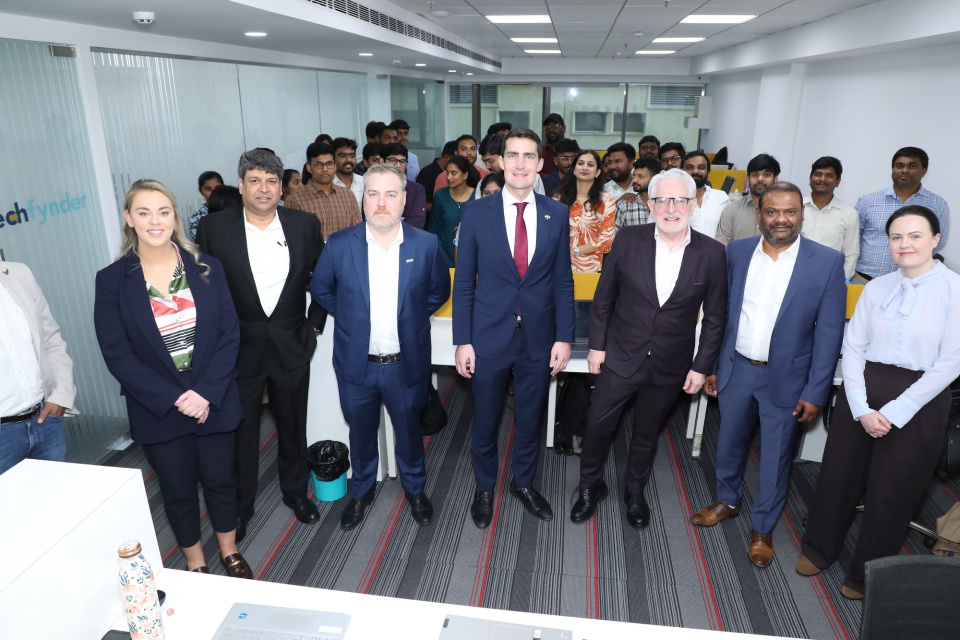
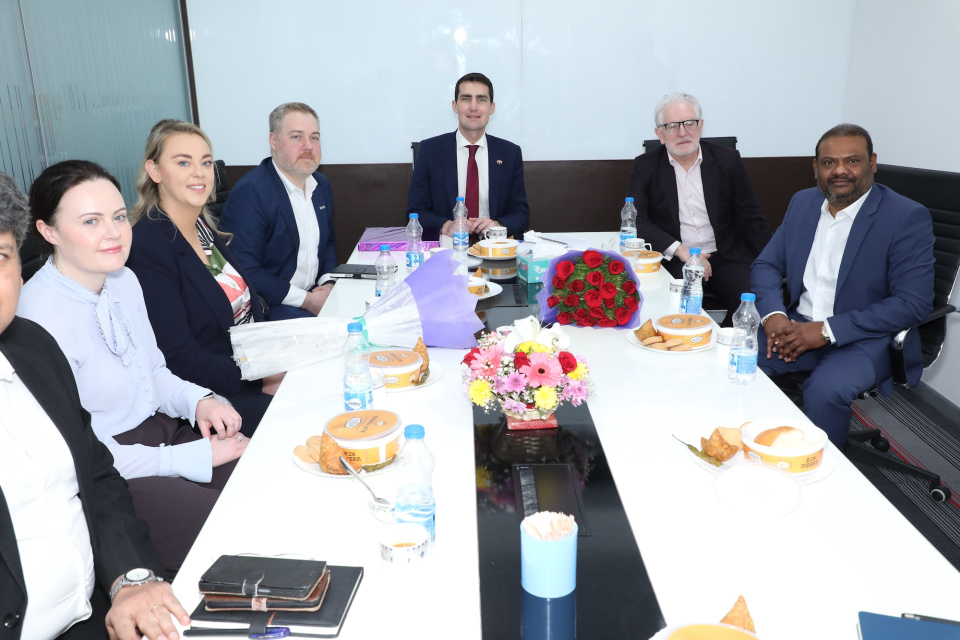
Irish Minister, Jack Chambers visited the Hyderabad offices of Test Triangle

Mr. Jack Chambers, Irish Minister for Public Expenditure and Digitalisation, visited the Hyderabad offices of Test Triangle, on Friday the 20th February, where he met with Mr. Praveen Madire, CEO of Test Triangle, and a native of Hyderabad, along with the local leadership team.

The visit formed part of the Minister’s engagement programme in India aimed at strengthening Ireland/India collaboration in education, technology, innovation, and cross-border business, particularly at a time when the European Union and India are advancing a new trade agreement. Hyderabad, as one of India’s leading technology and talent hubs, played a central role in these discussions.

During the visit, Minister Chambers was briefed on how Test Triangle, founded and led by Hyderabad-born entrepreneur Praveen Madire is helping Indian businesses, many originating from Hyderabad and Telangana, establish and scale operations in Ireland’s growing technology ecosystem.

Mr. Praveen Madire, CEO of Techfynder and Test Triangle, said: “As someone who grew up in Hyderabad, it was a proud moment to welcome Minister Jack Chambers to our offices here. This city has been central to my entrepreneurial journey, and today it continues to be a bridge between Indian talent and global opportunities. Through Test Triangle, we are committed to helping Indian businesses access Ireland’s education and innovation ecosystem.”

The visit included interactions with Hyderabad-based employees, discussions on innovation-led growth, and an overview of how companies rooted in India can play a meaningful role in strengthening international collaboration. This engagement highlights the growing opportunity for Indian students to consider Ireland as a preferred destination for further education, offering high-quality academic pathways alongside strong post-study career and entrepreneurship prospects.

Minister Jack Chambers meets Test Triangle in India

We were proud to witness a significant milestone recently as Praveen Madire played a key role in facilitating an official visit to Hyderabad by distinguished Irish dignitaries, including Ireland’s Minister Jack Chambers, Ambassador of Ireland to India Kevin Kelly, and representatives from Enterprise Ireland. This visit marked an important step in strengthening ties between Ireland and India, particularly in the areas of technology, innovation, and digital transformation.

Hyderabad, one of India’s foremost technology and business ecosystems, served as the perfect setting for meaningful dialogue around shared opportunities, emerging technologies, and global partnerships. Praveen’s involvement reflects his ongoing dedication to connecting international markets and enabling productive conversations that benefit industries and communities alike.

As an organisation, we have always valued Praveen Madire’s ability to look beyond immediate horizons. Under his leadership, Test Triangle has expanded its global footprint by delivering cutting-edge technology consulting, quality engineering, and digital solutions to enterprises worldwide. Through Techfynder, he has further demonstrated his forward-thinking approach by transforming how businesses discover and engage technology talent across borders.

Enterprise Ireland meets the Test Triangle Team in India

What distinguishes Praveen is not only his strategic insight, but also his belief in the power of relationships and collaboration. His efforts continue to position our companies as trusted partners within the global technology landscape, while also contributing to the broader innovation dialogue between nations.

This recent engagement is a reflection of the values we stand for, openness, progress, and partnership. We remain inspired by Praveen Madire’s leadership and his unwavering focus on creating opportunities that extend far beyond organisational boundaries.


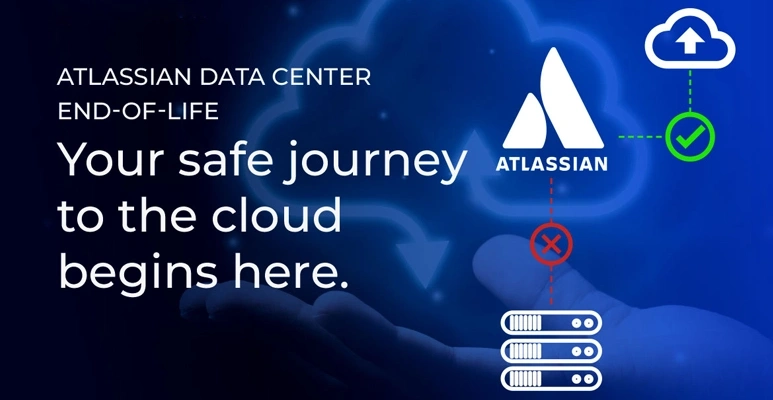
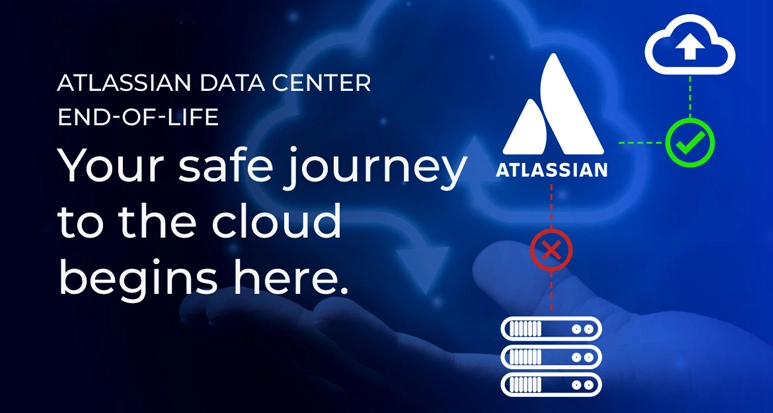
Important Update for Atlassian Customers: Data Centre End-of-Life.

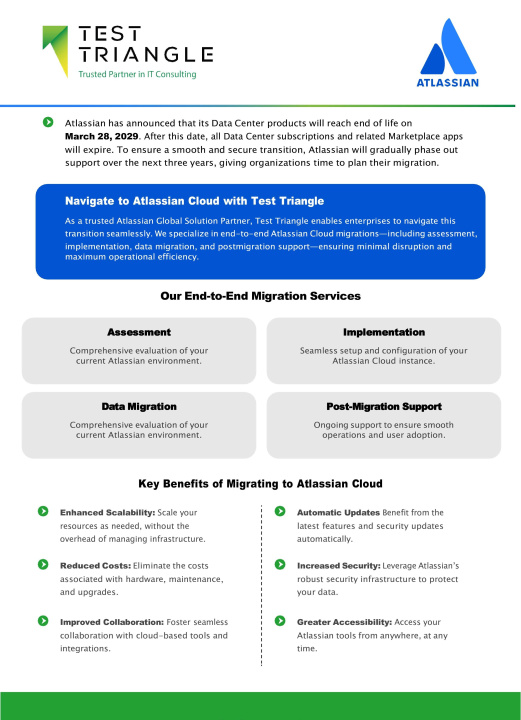
Atlassian Update: Atlassian has officially announced that its Data Centre products will reach end of life on March 28, 2029. After this date, all Data Centre subscriptions, along with related Marketplace apps will expire.

Over the next three years, Atlassian will begin a gradual phase-out of support, giving organisations time to assess their environments, plan migrations, and ensure business continuity. This transition period is designed to help teams move thoughtfully and securely, whether that means adopting Atlassian Cloud or exploring alternative solutions.

For organisations currently running Jira, Confluence, Bitbucket or other Atlassian Data Centre products, now is the time to:

1. Review your existing deployment
2. Understand the migration paths available
3. Build a realistic timeline for transition
4. Engage with partners or experts who can support your move

Contact Us | Schedule a Consultation


Test Triangle Announces Strategic Partnership with Alemba

Test Triangle is proud to announce a new strategic partnership with Alemba, a leading provider of enterprise-class IT Service Management (ITSM) software. Through this collaboration, Test Triangle will offer Alemba Service Manager (ASM) to organizations across its core markets, with a particular focus on Ireland and India.

This partnership enhances Test Triangle’s mission to deliver cutting-edge digital transformation solutions that empower clients to drive operational efficiency and maximize the value of their technology investments.

Test Triangle forms partnership with Alemba

“At Test Triangle, we are constantly seeking innovative technologies that empower our clients to stay ahead in a rapidly evolving digital landscape,” said Praveen Madire, CEO of Test Triangle. “Alemba Service Manager offers a modern, scalable ITSM platform that complements our digital transformation strategy. We look forward to introducing ASM to our clients across Ireland, India, and beyond.”

With deep expertise in software delivery, quality assurance, and managed services, Test Triangle supports enterprise clients globally in achieving smarter, more agile IT operations. The addition of Alemba Service Manager to its portfolio reinforces Test Triangle’s commitment to offering best-in-class service management solutions.

“We’re excited to welcome Test Triangle into our growing partner network,” said Emily Taggart, General Manager of Alemba. “Their reputation as a trusted consulting partner and their extensive reach in Ireland and India make them an ideal match for Alemba as we continue to expand our global footprint.”

The partnership is now live, with both companies actively collaborating to bring the benefits of Alemba Service Manager to new customers across key global markets.

Contact Us | Schedule a Consultation

Paul Guy Test Triangle

Published: July 22, 2025 | Location: Dublin, Ireland Enterprise

We’re excited to announce that Test Triangle has been featured in DesignRush’s industry article on “How Enterprise Consulting Firms Can Craft a Messaging Strategy That Resonates.” The article highlights leading enterprise consulting firms who are redefining how B2B messaging is crafted and delivered and we’re proud to be one of them.

Paul Guy Test Triangle

Leading with Clarity, Value & Personalisation
In the DesignRush article, our Marketing Director, Paul Guy, shares how Test Triangle helps clients develop scalable, personalised B2B messaging strategies that drive real engagement and conversions. “At Test Triangle, our messaging is guided by clarity, value, and personalisation. We meet prospects where they are and speak to what matters most to them.”Paul Guy, Marketing Director. This feature validates our commitment to enterprise-level marketing solutions that align business goals with market realities.

Why Enterprise Messaging Strategy Matters
With inboxes full and attention spans short, a strong outbound messaging strategy is essential for any modern consulting firm. Test Triangle’s approach focuses on:

  • Omni-channel Outreach
    Using multi-touch engagement across email, LinkedIn, events, and direct outreach for maximum visibility.
  • Client-Focused Content
    Replacing generic sales talk with solutions-focused messaging that speaks to real challenges and objectives.
  • Personalisation at Scale
    Leveraging behavioural and firmographic data to tailor every message and improve conversion rates.

The Test Triangle Difference
As a trusted technology and consulting partner, we help our clients move beyond traditional outbound methods and build high-impact communication strategies that deliver results. From startup to enterprise scale, our methodology adapts to your audience and business growth stage.

Read the Full Feature
Read the article on DesignRush to see how Test Triangle is helping companies unlock the power of strategic messaging.

Ready to Transform Your IT Service Management?
If you’re looking for a consulting partner to sharpen your enterprise strategy, reach out to our team today.

Contact Us | Schedule a Consultation


AI Article, Dublin, Ireland 23rd February 2025

Test Triangle’s Senior AI and Cybersecurity Expert, Deepak Talwar had an exclusive interview with Irelands prestigious Business Post Connected Magazine about the reality of AI and Security.
He explained how the adoption of AI, and really any new technology, to drive cyberattacks is hardly a surprise. “The goal need not be to simply grab data, either, Talwar said. “It can disrupt a power utility, oil, manufacturing, it can disrupt a factory, an entire nation.”

Read more in the article below or contact our consultant about our AI or Cybersecurity services:

https://www.businesspost.ie/article/deepfakes-and-deep-trouble-are-we-ai-breach-ready/

About Test Triangle
Test Triangle is an IT Service Provider Specialising in IT Service Management. We our Official Global Partners with Atlassian, ServiceNow, Freshworks and AWS, providing AI, Cybersecurity, Cloud and Software Testing Solutions.

For more information, please visit https://testtriangle.techfynder.com/
Locations: Ireland I India | UK | USA
Media Contact
Paul Guy, paul_guy@testtriangle.com