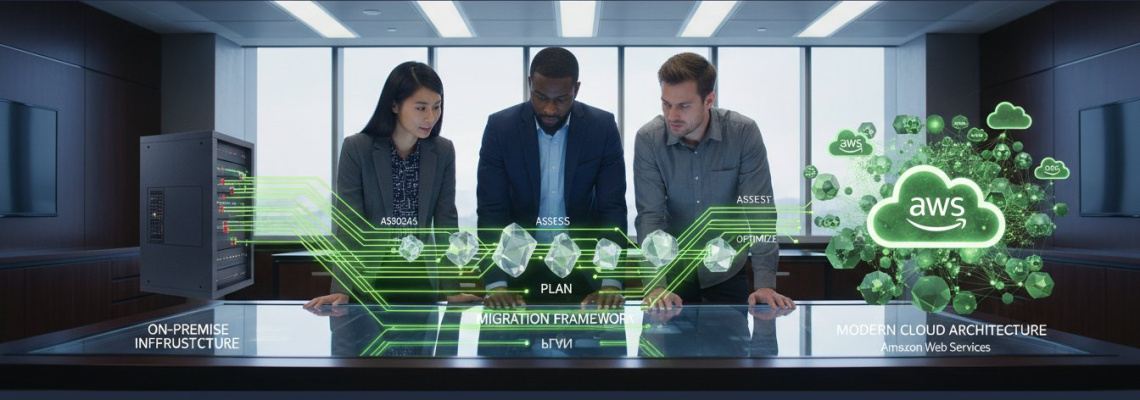
The fastest way to fail your cloud transition is to treat your aws migration strategy for legacy applications as a simple infrastructure swap rather than a holistic business evolution. While many enterprises view legacy monoliths as anchors of technical debt, these systems often house the core logic that defines your market advantage. Transitioning them to the cloud requires more than just moving data; it demands a precise, risk-mitigated framework that balances operational stability with the need for modern performance.

You’re likely facing the daunting reality of monolithic systems, where the fear of extended downtime or data loss often outweighs the desire for innovation. We understand that managing regulatory compliance hurdles and a lack of internal AWS expertise can make the move feel impossible. This guide provides a definitive roadmap to master these complexities, ensuring your transition results in scalable infrastructure and faster release cycles through integrated DevOps practices. We’ll explore the shift to AI-driven discovery using AWS Transform, the implementation of the 7 Rs framework, and how to achieve data liquidity for the next generation of enterprise intelligence.

Key Takeaways

  • Recognize the compounding risks of technical debt to see why keeping on-premise monoliths isn’t a sustainable option in 2026.
  • Select the optimal aws migration strategy for legacy applications by leveraging the 7 Rs framework to balance immediate speed with long-term optimization.
  • Secure your business continuity by choosing the migration model that’s best for your data integrity and downtime requirements.
  • Establish a high-performance environment through precise landing zone configuration and AI-enhanced discovery phases that reduce planning timelines.
  • Boost your release cycles by combining DevOps consulting with rigorous automation testing so your new environment’s ready for scale.

The Strategic Imperative: Why Legacy Migration to AWS is Non-Negotiable in 2026

In 2026, the definition of a legacy application has shifted from a measure of chronological age to a metric of architectural rigidity. These systems often represent the core of an enterprise’s operations, yet they remain isolated from the data liquidity required for modern AI and machine learning initiatives. Organizations that fail to implement a comprehensive aws migration strategy for legacy applications find themselves trapped in a cycle of reactive maintenance. This stagnation prevents the adoption of cloud-native features that drive competitive differentiation and systemic growth.

The “cost of inaction” is no longer a theoretical risk but a documented drain on corporate resources. Maintaining on-premise monoliths leads to a significant increase in operational costs compared to modernized cloud alternatives, often due to the rising price of specialized hardware maintenance and power consumption. Beyond the financial burden, the lack of scalability in traditional environments creates a glass ceiling for global expansion. Establishing a modern aws migration strategy for legacy applications facilitates a move to cloud computing, allowing for a strategic realignment where infrastructure serves as a foundation for stability, precision, and scalable growth.

Overcoming the Technical Debt Trap

Technical debt is a structural barrier to innovation that forces IT departments to prioritize emergency patching over the delivery of new business value. AWS Transform and other AI-driven tools now allow for predictive dependency mapping, which uncovers these hidden costs before the migration begins. By offloading hardware management to AWS, firms achieve a state of operational excellence where human expertise is redirected toward high-impact projects. Integrating automation testing during this phase ensures that the technical debt isn’t just relocated, but actively eliminated through refactored, high-quality code.

The Business Value of Cloud Agility

True agility is found in the ability to pivot at the speed of the market. AWS enables this through a globally distributed infrastructure that guarantees high availability and low latency for international users. This transition empowers teams to adopt DevOps consulting methodologies, which significantly shortens release cycles from months to days. The result is a more resilient digital presence that directly influences customer satisfaction and long-term brand loyalty. By mapping these technical milestones to specific business KPIs, such as reduced downtime and improved deployment frequency, leadership can track the tangible ROI of their digital transformation efforts.

The 7 Rs Framework: Selecting Your AWS Migration Strategy

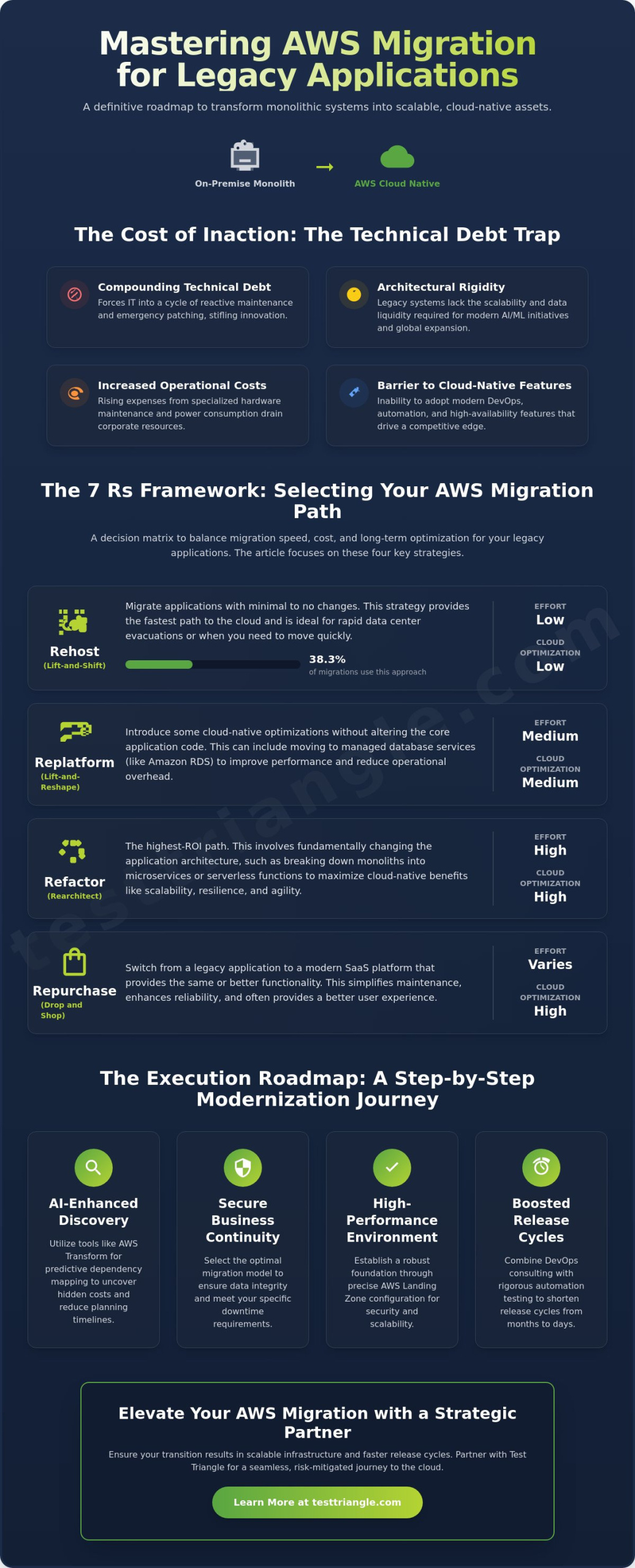
Selecting the appropriate aws migration strategy for legacy applications is a pivotal decision that dictates the long-term agility of your digital ecosystem. The 7 Rs framework serves as the definitive architecture for these decisions, categorizing workloads based on their technical complexity and business value. While rehosting remains a common entry point, accounting for 38.3% of migrations according to 2026 industry data, it’s often just the first step in a broader modernization journey that prioritizes systemic improvement over simple relocation.

Each strategy within the framework offers a different balance of speed, cost, and optimization:

  • Rehost (Lift-and-Shift): This approach provides the fastest path to the cloud by migrating applications with minimal changes, making it ideal for rapid data center evacuations.
  • Replatform (Lift-and-Reshape): By introducing cloud-optimizations like managed database services, you can improve performance without altering the core application code.
  • Refactor/Rearchitect: This high-ROI path involves breaking down monoliths into microservices or serverless architectures to maximize the benefits of cloud-native scalability.
  • Repurchase: Some legacy functions are better served by shifting to industry-leading SaaS platforms, which simplifies maintenance and enhances reliability.

A Decision Matrix for Legacy Systems

A structured decision matrix is essential for evaluating whether to prioritize speed or optimization. For non-core applications, a Rehost strategy allows for immediate cost savings on hardware maintenance. However, mission-critical monoliths that drive your primary revenue streams usually warrant a Refactor approach. This ensures that the application can handle modern traffic patterns and integrate with AI-driven analytics. Organizations must weigh the initial modernization effort against the long-term operational efficiency gained through cloud-native features. If your current systems are too rigid for a direct move, a phased aws migration strategy for legacy applications might involve an initial rehost followed by incremental refactoring.

Integration with Modern Ecosystems

Successful migration extends beyond the infrastructure layer to include your entire operational toolset. Utilizing Atlassian Consulting ensures that your migration workflows are documented and managed with precision, maintaining visibility across all stakeholders. Similarly, a robust ServiceNow Implementation allows for seamless ITSM integration, providing a unified view of your hybrid cloud environment. This level of technical rigor is necessary for managing sensitive legacy data that may require a phased transition rather than a “big bang” migration. If you’re unsure which path fits your current technical debt profile, it’s often helpful to consult with a strategic partner to map your journey.
AWS Migration Strategy for Legacy Applications: The 2026 Strategic Enterprise Guide

Mitigating Risk: Challenges in Migrating Mission-Critical Applications

Transitioning core business logic from on-premise environments to the cloud introduces unique vulnerabilities that demand a sophisticated, risk-mitigated aws migration strategy for legacy applications. For global enterprises, the primary concern remains the preservation of data integrity during high-volume transfers. While a “Big Bang” migration cutover offers immediate finality, it often introduces unacceptable levels of business risk for mission-critical systems. Conversely, an incremental approach allows for gradual validation, ensuring that each component of the legacy monolith is stable within the AWS ecosystem before proceeding to the next phase of the journey.

In highly regulated sectors such as Pharmaceuticals and Finance, these risks are compounded by strict legal mandates. Navigating GxP or SOC 2 requirements during a cloud transition isn’t a secondary concern; it’s a foundational requirement that dictates the entire technical roadmap. AWS provides a comprehensive compliance program, but the responsibility for configuring these tools correctly remains with the organization. This necessitates a strategic focus on security, stability, and scalability, ensuring that every architectural decision aligns with both global regulations and long-term business objectives.

Security and Compliance Guardrails

Utilizing AWS Identity and Access Management (IAM) alongside advanced encryption protocols ensures that legacy data remains protected throughout its journey. For enterprises operating in sensitive markets, maintaining GDPR or GxP compliance requires more than just technical configuration. It requires a documented trail of verification. Integrating Digital Assurance into your migration pipeline allows for the continuous validation of security protocols. This provides the peace of mind that comes from knowing your infrastructure meets the highest global standards of quality and security.

The Human Element of Migration

Technical transformation is inextricably linked to organizational change. Legacy IT departments often harbor a natural resistance to cloud adoption, fearing that their specialized knowledge will become obsolete. Overcoming this hurdle requires a commitment to upskilling and clear communication regarding the new operational landscape. When internal expertise is stretched thin, leveraging IT Staffing Services can fill critical AWS skill gaps. This provides the temporary specialized talent needed to execute a complex aws migration strategy for legacy applications without disrupting daily operations. Our adaptable approach to service delivery ensures that your internal teams are supported by seasoned experts who value precision and organizational progress.

The Execution Roadmap: A Step-by-Step Modernization Journey

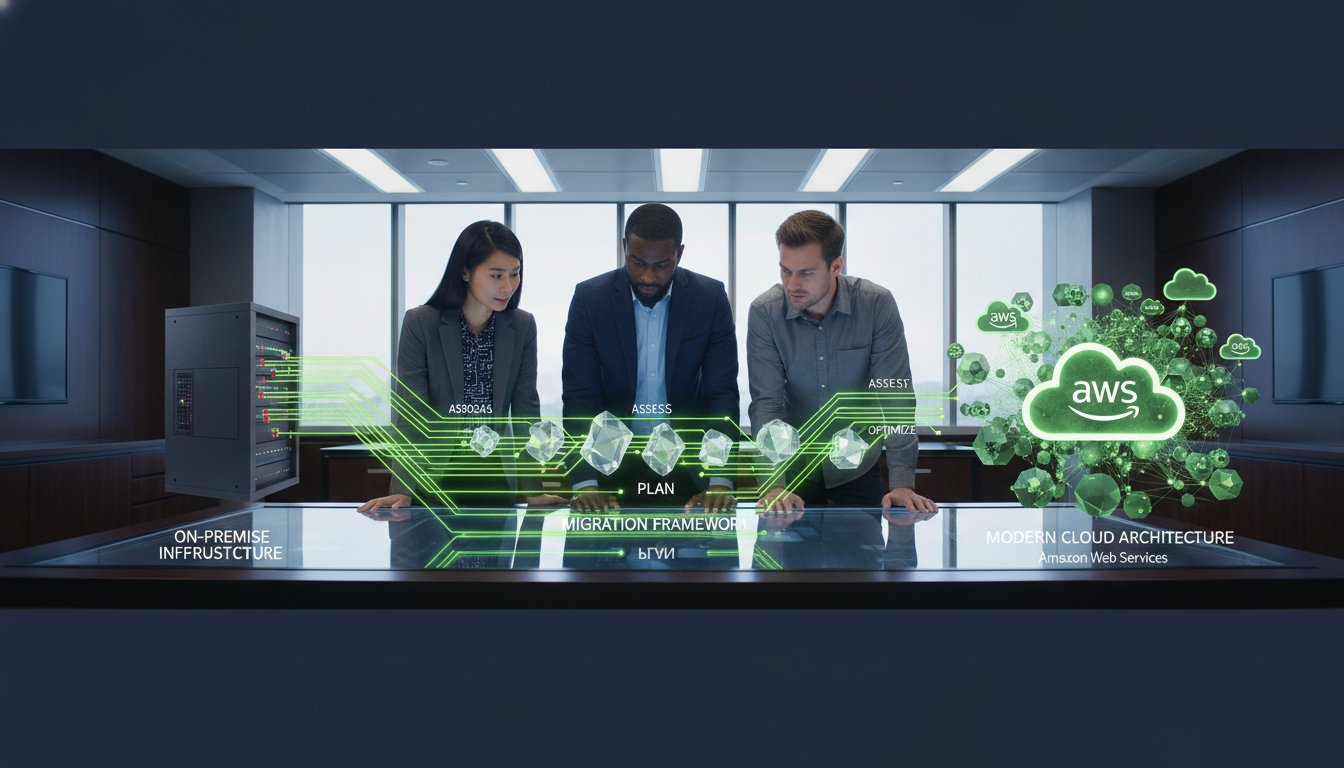
Executing a high-performance aws migration strategy for legacy applications is a disciplined four-phase process that transforms technical debt into operational equity. While many organizations rush into the execution phase, a strategic partner understands that the precision of the discovery phase dictates the success of the entire modernization journey. This roadmap is designed to move your mission-critical systems with a composed, solution-oriented approach that prioritizes stability and precision.

The journey follows a methodical progression across four distinct stages:

  • Phase 1: Discovery and Assessment: Utilizing AWS Transform, the successor to AWS Migration Hub launched in May 2025, we use predictive analytics to map complex application dependencies and identify potential friction points.
  • Phase 2: Detailed Design: This stage focuses on the configuration of the AWS Landing Zone, establishing a secure, multi-account environment that anchors your infrastructure in recognized global benchmarks.
  • Phase 3: Migration Execution: Data synchronization is managed via AWS Application Migration Service (MGN). As of May 2026, MGN supports CentOS Stream 9 and provides local EBS snapshot storage within AWS Local Zones.
  • Phase 4: Validation and Tuning: The final stage involves rigorous performance testing and post-cutover monitoring to ensure the new environment meets all functional and business requirements.

The Critical Role of Migration Testing

Digital assurance is the cornerstone of risk mitigation. Implementing System Integration Testing (SIT) ensures that cross-platform data flows remain intact when legacy monoliths interact with modern cloud services. Automating regression testing is equally vital to prevent old bugs from creeping into the new environment. While automation handles the bulk of the workload, our framework for manual testing provides the validation needed for complex edge cases that automated scripts might overlook. This combination of human expertise and technical tools ensures that your aws migration strategy for legacy applications delivers a resilient, high-performance outcome.

Performance Tuning and Optimization

Post-cutover health is managed through AWS CloudWatch, which provides real-time visibility into application performance and resource consumption. Right-sizing EC2 instances, such as the t4g.nano which starts at $0.0042/hr as of May 2026, ensures that you’re only paying for the compute power you actually need. Establishing a DevOps consulting framework allows for continuous improvement, turning your migrated application into a dynamic asset that evolves with your business. This steady hand in a fast-changing landscape ensures long-term operational stability and scalable growth. If you’re ready to modernize your legacy portfolio without disrupting business operations, reach out to our strategic consultants to begin your assessment.

Strategic Partnership: Elevating Your AWS Migration with Test Triangle

Developing a successful aws migration strategy for legacy applications requires a partner that understands the delicate balance between technical modernization and operational continuity. Test Triangle stands as a reliable long-term collaborator, offering a unique combination of high-level strategic vision and practical execution. By aligning our DevOps consulting methodology with rigorous digital assurance, we ensure that your transition to the cloud is not merely a relocation of assets but a strategic leap in operational capacity. Our approach prioritizes stability, precision, and performance, providing the peace of mind necessary for global enterprises to evolve without compromise.

For organizations operating in highly regulated sectors such as Pharmaceuticals or Finance, a generic migration path is insufficient. We specialize in creating tailored migration frameworks that account for complex GxP and GDPR requirements, ensuring that every architectural decision remains compliant with global benchmarks. This institutional maturity allows us to manage your digital infrastructure with expertise, transforming rigid monoliths into agile, cloud-native systems. Our adaptable approach to service delivery means we can function as a steady hand throughout the entire lifecycle, from the initial discovery phase to the final performance tuning of your new environment.

Beyond the technical cutover, we address the critical SERP gap of post-migration support through our comprehensive Managed Outsourcing Services. This ensures that your infrastructure remains optimized and secure long after the initial migration is complete. To fill specialized skill gaps during the transition, our IT Staffing Services provide access to top-tier AWS talent, allowing your internal teams to focus on core business objectives while we handle the complexities of the cloud transition. This global delivery model offers the versatility and discipline required to manage large-scale technological evolution effectively.

A Holistic Approach to Digital Transformation

A truly effective aws migration strategy for legacy applications must integrate seamlessly with your existing enterprise ecosystem. We leverage our expertise in Atlassian Consulting and ServiceNow Implementation to ensure that your new AWS environment is fully aligned with your ITSM and project management workflows. This holistic integration facilitates proactive monitoring and maintenance, ensuring long-term stability and operational excellence. Test Triangle acts as a reliable long-term collaborator, deeply invested in your organization’s sustained success and technical maturity.

Next Steps for Enterprise Leaders

The journey toward a modernized, high-performance infrastructure begins with a clear understanding of your current technical debt and cloud readiness. Our consultants are prepared to develop a customized roadmap for your legacy application portfolio, identifying the most efficient path for your specific business needs. By requesting a comprehensive cloud readiness assessment, you can gain the clarity required to initiate a risk-mitigated transition. We invite you to contact our strategic consultants today to begin your transformation journey and secure your enterprise’s digital future.

Securing Your Competitive Edge through Modernization

Transitioning from rigid on-premise monoliths to a high-performance cloud environment is the defining challenge for enterprise leaders in 2026. By implementing a risk-mitigated aws migration strategy for legacy applications, your organization can effectively eliminate technical debt while achieving the data liquidity required for next-generation AI initiatives. Success in this journey depends on a methodical approach that balances the speed of rehosting with the long-term ROI of refactoring, all while maintaining strict compliance in regulated sectors.

As a strategic partner with global delivery centers across Europe, North America, and Asia, we provide the institutional maturity required to manage complex digital infrastructures. Our status as a strategic partner for AWS, Atlassian, and ServiceNow, combined with our proven expertise in highly regulated industry migrations, ensures your transition is handled with technical rigor. We remain committed to your long-term success, acting as a reliable collaborator to navigate the evolving cloud landscape. To transform your legacy portfolio into a scalable asset, Partner with Test Triangle for your AWS Migration Strategy. Your path to operational excellence is ready for execution.

Frequently Asked Questions

What is the most cost-effective AWS migration strategy for legacy apps?

Rehosting is generally the most cost-effective initial aws migration strategy for legacy applications because it requires the fewest code modifications and reduces upfront labor costs. While this “lift-and-shift” method provides a rapid exit from expensive on-premise hardware, enterprises often find that Replatforming offers better long-term value by reducing the overhead of managing underlying operating systems and databases.

How long does a typical legacy application migration to AWS take?

Migration timelines vary based on the complexity of the portfolio, with individual applications often taking between six to ten weeks for a full transition. For large-scale enterprise portfolios, the process can span several months. Utilizing AI-driven discovery tools within AWS Transform can significantly accelerate this timeline by reducing the manual effort required for dependency mapping and portfolio assessment.

What are the main risks of migrating monolithic applications to the cloud?

The primary risks include data integrity loss during the transfer process and extended downtime that can disrupt core business operations. Technical debt within the monolith can also lead to performance bottlenecks if the application isn’t properly tuned for the cloud environment. These risks are mitigated through rigorous performance testing and a phased, incremental migration approach rather than a single cutover.

Do I need to rewrite my entire application to move it to AWS?

You don’t need to rewrite your application to move it to the cloud. Strategies like Rehosting and Replatforming allow you to migrate workloads with little to no changes to the existing code base. Rewriting, or Refactoring, is a selective strategic choice reserved for applications that require the extreme scalability and cost-efficiency of serverless or microservices architectures.

How does AWS ensure data security during the migration process?

AWS provides a secure foundation through robust encryption for data in transit and at rest, complemented by Identity and Access Management (IAM) for granular control. Using the AWS Application Migration Service (MGN), which recently added support for RHEL 10.1 and SLES 15 service packs, ensures that your data is replicated securely within a controlled environment that meets global security standards.

Can I migrate legacy applications that require specific regulatory compliance?

Yes, legacy applications requiring GxP, GDPR, or PCI DSS compliance can be migrated by utilizing AWS services that are already within the scope of these programs. A successful aws migration strategy for legacy applications in regulated sectors involves careful landing zone configuration and continuous digital assurance to ensure that every architectural layer remains compliant with industry-specific legal requirements.

What is the difference between Rehosting and Refactoring in AWS migration?

Rehosting involves moving an application to the cloud “as-is” by hosting it on EC2 instances, which is the fastest migration path. Refactoring is a more intensive process where the application is rearchitected to utilize cloud-native features like AWS Lambda or Amazon EKS. While Refactoring requires more effort, it delivers higher performance and lower operational costs over time.

How can I minimize downtime during a legacy application cutover?

Minimizing downtime is achieved through continuous data replication and an incremental migration model that allows for extensive validation before the final switch. By establishing a robust DevOps framework and performing comprehensive automation testing in a staging environment, you can ensure that the final cutover is a low-risk event that maintains business continuity for your global users.

Paul Guy

Article by

Paul Guy

Paul serves as the Marketing Director at Test Triangle, where he leads a global team in driving growth through strategic B2B marketing and brand communications. With a strong emphasis on measurable outcomes and sustainable performance, he plays a pivotal role in aligning marketing functions to enhance customer engagement and accelerate business impact. Under his leadership, marketing initiatives have consistently delivered significant returns on investment, elevated brand visibility, and strengthened the company's presence across key markets.
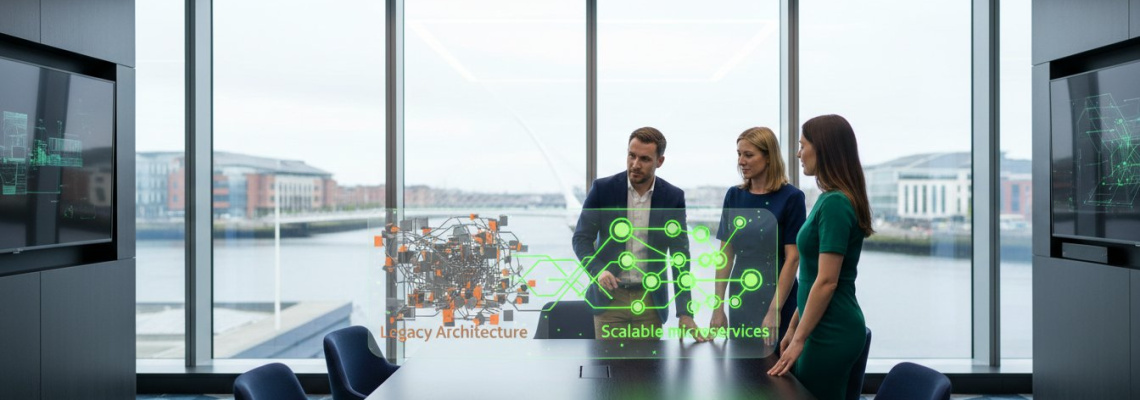
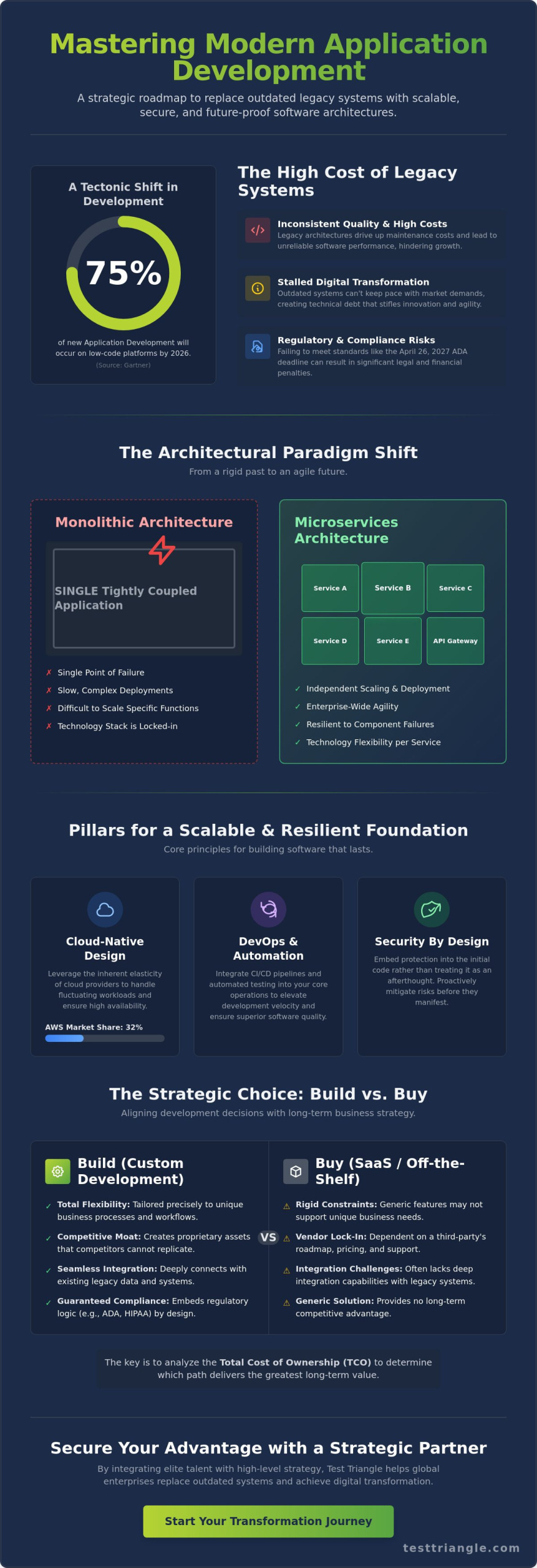
By the end of 2026, Gartner projects that 75% of new Application Development will occur on low-code platforms, yet many enterprises remain tethered to legacy architectures that stifle this very agility. You likely feel the constant pressure of finding specialized talent while managing inconsistent software quality that drives up maintenance costs. It’s a common frustration to see digital transformation stall because your current systems can’t keep pace with a market where AWS holds a 32% share and Vue.js has reached version 3.5.33. We understand that the relief of mitigating risks only comes when your technical debt is finally addressed through a steady, expert hand.

To bridge the gap between these choices, many enterprises are turning to flexible staffing models as a way to maintain control without the overhead of a massive permanent workforce. This approach allows you to own the intellectual property of a custom build while leveraging external expertise and Remote Tech Talent Placement to accelerate delivery. It’s a method that provides the relief of mitigating risks while empowering your internal teams to focus on high-level strategic architecture rather than just writing code.

By integrating elite talent with high-level strategy, Test Triangle helps global enterprises replace outdated legacy systems with scalable, secure software architectures. This guide provides a clear roadmap to master the complexities of modern development through a lens that balances cutting-edge technology with flexible engagement models. You’ll learn how to leverage the triad of Technology, Talent, and Transformation to ensure your digital infrastructure remains compliant with the April 26, 2027 ADA accessibility standards while driving long-term operational stability as a strategic partner in your success.

Key Takeaways

  • Transition from viewing software as a cost center to a strategic asset by adopting microservices-based architectures that drive enterprise-wide agility.
  • Implement Cloud-Native designs and seamless API integrations to build a resilient infrastructure capable of evolving alongside global technological standards.
  • Master the Build vs. Buy debate by analyzing the long-term Total Cost of Ownership for custom Application Development against standard SaaS licensing models.
  • Elevate development velocity and ensure superior software quality by integrating DevOps consulting and automated testing into the core of your operational heartbeat.
  • Secure a competitive advantage by utilizing flexible engagement models that provide access to elite talent through a trusted partner committed to your digital transformation.

Modern Application Development has transitioned from a back-office technical function to a primary driver of enterprise value. By 2026, global organizations have realized that viewing software as a mere cost center leads to stagnation and high maintenance costs. Instead, successful leaders treat their software ecosystem as a strategic asset that requires a “Strategic Architect” approach. This perspective ensures that every technical decision aligns with long-term business goals, effectively mitigating the technical debt that often accumulates when speed is prioritized over architectural integrity.

The technological landscape in 2026 is defined by a decisive shift from monolithic structures to microservices-based architectures. While monolithic systems provided simplicity in the past, they now act as anchors that slow down digital transformation. By leveraging microservices, enterprises gain the ability to scale specific components of their infrastructure independently, ensuring that a surge in user demand doesn’t compromise the entire system’s stability. Custom software provides a distinct competitive moat that generic SaaS products cannot replicate. While SaaS offers rapid deployment, it often lacks the flexibility required to support unique business processes or integrate deeply with existing legacy data.

The Evolution of the Software Development Life Cycle (SDLC)

The industry has moved beyond the rigid constraints of Waterfall and the sometimes chaotic speed of pure Agile toward a model of Continuous Development. Modern enterprises now utilize a hybrid approach that combines the structured planning of traditional methods with the rapid iteration of DevOps. This balance allows for the stability required in high-stakes environments while maintaining the velocity needed to respond to market shifts. The software development lifecycle serves as a structured framework for systematic risk mitigation and consistent value delivery throughout the functional lifespan of an enterprise asset.

Why Custom Application Development Matters in 2026

In highly regulated sectors like Finance and Pharma, “off-the-shelf” solutions frequently fail to meet stringent compliance and security requirements. Custom Application Development allows for the embedding of specific regulatory logic directly into the software, ensuring that data privacy and audit trails are flawless by design. As organizations prepare for the April 26, 2027 ADA accessibility deadline, custom builds offer the precision needed to meet WCAG 2.1 Level AA standards across all platforms. Integrating robust IT Service Management solutions ensures that these custom applications are supported by a reliable service desk and clear operational workflows, bridging the gap between technical execution and superior business outcomes.

Architectural Pillars: Building for Scalability and Resilience

Establishing a robust architectural foundation requires more than technical skill; it demands a visionary perspective on how software interacts with global infrastructure. By prioritizing cloud-native designs, enterprises leverage the inherent elasticity of providers like AWS, which currently holds 32% of the market, to handle fluctuating workloads without manual intervention. This shift ensures that Application Development projects result in software that is not just functional but inherently resilient against the system-wide failures common in older, monolithic setups. When evaluating the Build vs. Buy paradigm, the architectural flexibility of a custom cloud-native build often outweighs the rigid constraints of generic SaaS platforms, and a well-executed AWS Cloud Migration is frequently the critical first step in achieving that flexibility.

Security by Design has become a non-negotiable requirement in 2026. With new regulations like the Texas App Store Accountability Act now in effect, protection must be embedded into the initial code rather than treated as a final layer. This proactive stance mitigates risks before they manifest, providing the “flawless” security that global enterprises demand. Furthermore, robust database management acts as the engine for data-centric business decisions. By ensuring high availability and low latency in data retrieval, organizations can optimize their operations in real-time, turning raw information into a superior strategic advantage.

Microservices and Containerisation

Breaking down a monolith into microservices accelerates deployment cycles by allowing teams to update individual components without risking the entire ecosystem. Docker and Kubernetes have emerged as the industry standards for managing these complex environments, providing the orchestration needed for flawless performance at scale. Enterprises should consider this transition when legacy maintenance costs begin to exceed the investment required for modernization. This modular approach improves fault tolerance, as the failure of one service doesn’t lead to a total system blackout. It’s a disciplined way to ensure your digital infrastructure remains versatile and globally competitive.

API-First Strategy and Integration

A modern application must be built to “talk” to existing IT ecosystems, including ServiceNow, Atlassian, and hybrid cloud environments. An API-first strategy ensures that your software acts as a connective tissue rather than an isolated silo. A strategic Atlassian Implementation ensures that these APIs drive real-world workflow automation, allowing Jira and other tools to sync perfectly with your custom builds. This level of integration maintains data integrity across diverse platforms, ensuring that both IT managers and C-suite executives have access to a single, reliable version of truth. If you’re ready to align your architecture with your business goals, speak with our strategic architects today to explore a tailored roadmap.

Application Development: A Strategic Guide to Enterprise Scalability in 2026

The Build vs. Buy Debate: Aligning Development with Business Strategy

Deciding between purchasing a subscription and investing in custom Application Development is a pivotal moment in any digital transformation strategy. While SaaS offers an immediate solution, it often imposes a “feature rigidity” that limits your ability to innovate beyond the vendor’s roadmap. By contrast, custom development provides the strategic flexibility needed to build unique competitive advantages that competitors cannot simply buy off the shelf. However, the Total Cost of Ownership (TCO) extends far beyond the initial build. You must account for long-term maintenance, security updates, and the potential for vendor lock-in that often accompanies proprietary platforms. A disciplined approach evaluates these factors against the specific business outcomes required for long-term operational stability.

To bridge the gap between these choices, many enterprises are turning to flexible staffing models as a way to maintain control without the overhead of a massive permanent workforce. This approach allows you to own the intellectual property of a custom build while leveraging external expertise to accelerate delivery. It’s a method that provides the relief of mitigating risks while empowering your internal teams to focus on high-level strategic architecture rather than just writing code.

Flexible Talent Models: Contract, Remote, and Offshore

By utilizing specialized staffing solutions, organizations can scale their technical teams within 14 days rather than the standard 45-day recruitment cycle. This agility is essential when facing a sudden surge in project scope or a shift in technological requirements. Comparing the ROI of permanent placements against remote offshore resources reveals that a hybrid model often yields the highest efficiency; you get the stability of core internal leads combined with the cost-effectiveness of global talent that can reduce overhead by 40%. For highly regulated sectors, such as Life Sciences, Pharma IT Staffing ensures that developers possess the necessary compliance knowledge to navigate GxP and data integrity standards flawlessly.

Low-Code vs. Custom Code: A Hybrid Future

Low-code platforms are excellent for rapid prototyping and internal administrative tools where speed outweighs uniqueness. As noted previously, while low-code may account for 75% of new builds by late 2026, core business logic and customer-facing features should remain within a custom-developed, proprietary environment to prevent competitors from easily replicating your service model. By employing Managed Outsourcing Services, you can effectively maintain these hybrid codebases. This ensures that your low-code experiments integrate seamlessly with your robust, custom-built core, allowing for a steady hand in a fast-changing technological landscape.

Optimising the Development Lifecycle: DevOps, Testing, and AI

Integrating DevOps consulting into your operational framework acts as the high-velocity engine that drives modern Application Development. This strategic alignment ensures that software is no longer a static deliverable but a living asset that evolves alongside market demands. Quality assurance serves as the silent partner in this process, providing the essential guardrails that prevent technical debt from compromising your digital transformation. By leveraging automated testing, enterprises can reduce their time-to-market while maintaining the robust stability required for global operations. It’s a disciplined approach that moves beyond simple coding to focus on long-term operational excellence.

The successful integration of these methodologies provides the relief of mitigating risks before they reach the production environment. Instead of treating security and performance as final hurdles, a strategic architect embeds them into the core of the lifecycle. This proactive stance ensures that your digital infrastructure remains secure, scalable, and superior to generic, off-the-shelf alternatives.

The DevOps Engine: CI/CD and Automation

Continuous Integration and Continuous Deployment (CI/CD) protocols eliminate the manual bottlenecks that historically delayed software releases by weeks. Implementing a shift-left approach allows teams to identify security vulnerabilities and performance lags during the initial coding phase rather than at the finish line. This methodology ensures that every code commit is automatically validated, providing immediate feedback to developers and accelerating the overall delivery rhythm. DevOps transforms development from a temporary project into a continuous product mindset that prioritizes long-term scalability.

QA and Testing: Beyond the Basics

Even with the rise of sophisticated automation, Manual Testing in 2026 remains vital for ensuring a human-centric user experience that scripts might overlook. For global enterprises managing massive validation projects, QA Outsourcing provides the specialized talent needed to maintain flawless quality across diverse platforms. Performance and security testing are no longer optional extras; they’re the primary shields protecting your enterprise reputation in an era of increasing cyber threats. It’s about ensuring that every release meets the highest standards of precision and reliability.

Leveraging AI for Intelligent Development

Strategic use of Artificial Intelligence Services enables teams to refactor legacy code and generate UI variations at unprecedented speeds. However, AI-generated code carries inherent risks that demand human oversight and rigorous testing to avoid subtle logic flaws. By using AI-driven analytics for predictive maintenance, enterprises can identify potential application failures before they impact the end-user. This intelligent layer adds a new dimension to your digital infrastructure, allowing for a steady hand in a fast-changing technological landscape. To see how these tools can elevate your specific projects, schedule a strategic DevOps consultation with our team today.

Strategic Partnerships: Elevating Development through Technology and Talent

By synthesizing technical rigor with a deep understanding of business objectives, Test Triangle positions itself as more than a service provider; we operate as a Strategic Architect for your digital future. Our core philosophy—Technology. Talent. Transformation.—serves as the foundation for every Application Development project we undertake. This holistic approach ensures that your software isn’t just a functional tool but a scalable asset designed for long-term operational stability. As a Trusted Partner, we bridge the gap between complex technical execution and high-level business strategy, providing the relief of mitigating risks while empowering your organization to innovate at scale.

By leveraging partner-aligned expertise in Atlassian, ServiceNow, and AWS, we anchor our solutions in recognized global standards. Utilizing specialized Atlassian implementation strategies allows us to optimize Jira Service Management to act as the central nervous system for your development teams. This integration ensures that your workflows are rhythmic, methodical, and highly structured, mirroring the efficiency we bring to every client engagement. To begin your digital transformation journey, we recommend a strategic assessment that evaluates your current technical debt against your 2026 growth targets.

Partnering for Global Success

Operating as a proud client of Enterprise Ireland, Test Triangle provides a global footprint that supports enterprises across Europe, North America, and Asia. Our flexible engagement models allow for the rapid scaling of specialized teams, ensuring that your projects remain on track regardless of geographic complexity. In a recent transformation project for a Tier-1 banking institution, we reduced system downtime by 22% by modernizing their legacy middleware with a cloud-native architecture. This real-world impact demonstrates how strategic partnership elevates technical projects into drivers of enterprise efficiency. By combining technical expertise with adaptable managed outsourcing services, we help businesses reduce costs while elevating the quality of their software output.

The Road Ahead: Future-Proofing Your Applications

Future-proofing your applications requires looking beyond current trends toward the next wave of innovation, including quantum computing and advanced edge development. As these technologies mature, the importance of continuous learning and training for development teams cannot be overstated. By investing in the ongoing professional development of your talent, you ensure that your digital assets remain superior in performance and security. A steady hand in a fast-changing technological landscape is essential for maintaining a competitive moat. To begin your journey toward a robust, scalable future, contact Test Triangle for a Strategic Technology Roadmap today and secure your position as a digital leader.

Architecting a Resilient Digital Future

Success in modern Application Development requires a disciplined alignment of architectural precision and elite talent models. By transitioning from rigid monolithic systems to flexible cloud-native designs, enterprises secure the scalability needed to thrive in a global market. Integrating DevOps automation with human-centric manual testing ensures that your software remains robust while accelerating delivery cycles. This strategic approach effectively mitigates technical debt and positions your digital infrastructure as a long-term value driver.

As an Enterprise Ireland client and an authorized partner for Atlassian and ServiceNow, Test Triangle provides the steady hand required to lead your next phase of growth. By leveraging our signature triad of Technology. Talent. Transformation., we help you optimize every stage of the software lifecycle. It’s time to elevate your operations through a relationship with a Trusted Partner dedicated to your long-term stability and success. Partner with Test Triangle for Strategic Application Development and begin building a superior digital moat today. Your roadmap to flawless transformation starts with a single strategic assessment.

Frequently Asked Questions

What is the primary difference between custom application development and SaaS?

Custom Application Development provides enterprises with full ownership of their intellectual property and the strategic flexibility to build unique competitive moats that generic SaaS platforms cannot replicate. While SaaS offers a rapid initial setup, it often imposes feature rigidity and vendor lock-in that can stifle long-term innovation. By investing in a custom build, you ensure the software aligns perfectly with your specific business processes and integrates seamlessly with your existing digital infrastructure.

How much does enterprise application development typically cost in 2026?

Total investment for enterprise software is primarily influenced by the complexity of the architecture and the scale of the required talent pool. Organizations must also account for recurring infrastructure costs, such as AWS S3 storage at $0.023 per GB or Azure Blob Storage at $0.018 per GB, to maintain their operational heartbeat. A strategic architect optimizes these expenditures by implementing FinOps practices that ensure technical execution remains cost-effective and superior in performance.

How long does it take to build a custom enterprise-level application?

Developing a production-ready Minimum Viable Product (MVP) for a complex enterprise environment typically requires a timeline of 120 to 240 days. This duration allows for the methodical execution of the discovery phase, architectural design, and the rigorous security testing necessary for global compliance. By utilizing flexible engagement models, enterprises can scale their teams to meet tight deadlines without sacrificing the precision or stability of the final deliverable.

What are the most popular programming languages for application development today?

React continues to lead the market with a 44.7% usage rate among developers, followed by Angular at 18.2% and Vue.js at 17.6%, which reached version 3.5.33 in April 2026. For high-performance, cloud-native systems, languages like Go and Rust are increasingly leveraged to drive efficiency within microservices architectures. Selecting the right stack is a strategic decision that impacts your ability to recruit elite talent and maintain the software over its functional lifespan.

Can I outsource application development without losing control of my project?

Maintaining project control during outsourcing is achieved by establishing a transparent governance framework supported by industry-leading tools like Jira Service Management. By partnering with a Trusted Partner who emphasizes clear communication and methodical reporting, you retain full oversight of the strategic roadmap while leveraging external technical expertise. This approach provides the relief of mitigating risks while ensuring that your internal standards for quality and security are met flawlessly.

How does DevOps improve the application development process?

DevOps accelerates the development rhythm by eliminating manual bottlenecks through the implementation of Continuous Integration and Continuous Deployment (CI/CD) pipelines. By adopting a shift-left strategy, teams identify performance lags and security vulnerabilities early in the lifecycle, which significantly reduces the cost of late-stage remediation. This transformation ensures that the software remains robust and resilient, providing a steady hand in a fast-changing technological landscape.

What role does AI play in modern application development workflows?

AI serves as an intelligent layer that optimizes workflows by automating routine tasks such as code refactoring and the generation of UI variations. While low-code platforms are projected to account for 75% of new development by late 2026, human oversight remains essential to validate the logic and security of AI-generated components. Predictive analytics also leverage AI to identify potential system failures before they impact the end-user, ensuring long-term operational stability.

How do I choose the right application development partner for my business?

Selecting the ideal partner requires evaluating their institutional maturity and their ability to operate across diverse sectors like Banking and Life Sciences. You should prioritize an Enterprise Ireland client with authorized expertise in global standards such as Atlassian and ServiceNow. A superior partner acts as a Strategic Architect, embodying the triad of Technology, Talent, and Transformation to ensure your digital infrastructure is secure, scalable, and built for future growth.

Paul Guy

Article by

Paul Guy

Paul serves as the Marketing Director at Test Triangle, where he leads a global team in driving growth through strategic B2B marketing and brand communications. With a strong emphasis on measurable outcomes and sustainable performance, he plays a pivotal role in aligning marketing functions to enhance customer engagement and accelerate business impact. Under his leadership, marketing initiatives have consistently delivered significant returns on investment, elevated brand visibility, and strengthened the company's presence across key markets.