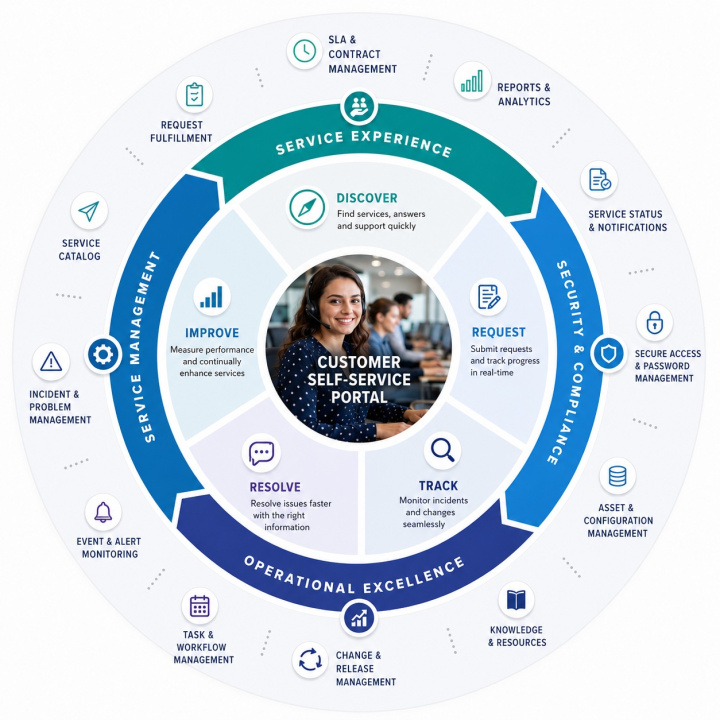
Enterprise Service Management Explained: Enterprise Service Management (ESM) extends IT Service Management (ITSM) principles beyond IT to departments such as HR, Finance, Facilities, Legal and Procurement. Using a single service platform, organisations can automate requests, improve collaboration and deliver better employee experiences.
Why Organisations Choose ESM
Instead of every department using different systems and manual processes, ESM provides one central platform to:
Automate service requests
Improve employee experience
Standardise processes
Increase visibility and reporting
Reduce costs
Speed up service delivery
Departments That Benefit
Human Resources
Finance
Facilities
Legal
Procurement
Marketing
Operations
Information Technology
How ESM Works
Employees submit requests through a self-service portal. The request is automatically routed to the correct team, approved if required, tracked through to completion and measured using dashboards and reports.
Benefits of Enterprise Service Management
Faster response times
Better customer and employee satisfaction
Reduced manual work
Improved compliance
AI-powered automation
Self-service portals
Central knowledge base
Better reporting and analytics
ESM Platforms We Support
Test Triangle helps organisations implement Enterprise Service Management using: Atlassian Jira Service Management, ServiceNow, Freshservice, Alemba
We provide: Consulting, Implementation, Migration, Integration, AI automation, Managed Support, Training
Why Choose Test Triangle?
Test Triangle helps organisations across Ireland and the UK modernise service delivery with Enterprise Service Management solutions that improve efficiency, automate workflows and enhance the employee experience. Our consultants work across Atlassian, ServiceNow, Freshservice and Alemba to deliver scalable, secure and future-ready service management solutions.
Frequently Asked Questions
What is Enterprise Service Management? Enterprise Service Management extends IT Service Management across the entire organisation.
What is the difference between ITSM and ESM? ITSM focuses on IT services. ESM applies the same practices to all business departments.
Which departments use ESM? HR, Finance, Legal, Facilities, Procurement, Marketing, Operations and IT.
Which ESM platform is best? Popular platforms include Jira Service Management, ServiceNow, Freshservice and Alemba.
How long does an ESM implementation take? Most projects take between 6 and 16 weeks depending on the organisation.
Can AI be used in ESM? Yes. AI can categorise requests, suggest knowledge articles, automate workflows and power virtual agents.
Ready to transform service delivery across your organisation?
Talk to Test Triangle about implementing Enterprise Service Management with Atlassian, ServiceNow, Freshservice or Alemba.
Beyond Jira’s Two-Level Limit: Why Every Growing Organisation Needs Multi-Level Cascading Field
As organisations become larger and more complex, so do the processes they manage inside Jira.
What starts as a simple project management platform often evolves into the operational backbone of the business, supporting IT Service Management (ITSM), HR, procurement, facilities, software development, compliance, asset management, customer support and much more.
Yet many organisations eventually encounter the same limitation.
Jira’s native Cascade Select field only supports two levels.
For modern enterprises managing complex services and hierarchical data, that simply isn’t enough. Atlassian itself documents that the native cascading select field is limited to parent and child selections, meaning organisations needing deeper hierarchies must rely on third-party solutions.
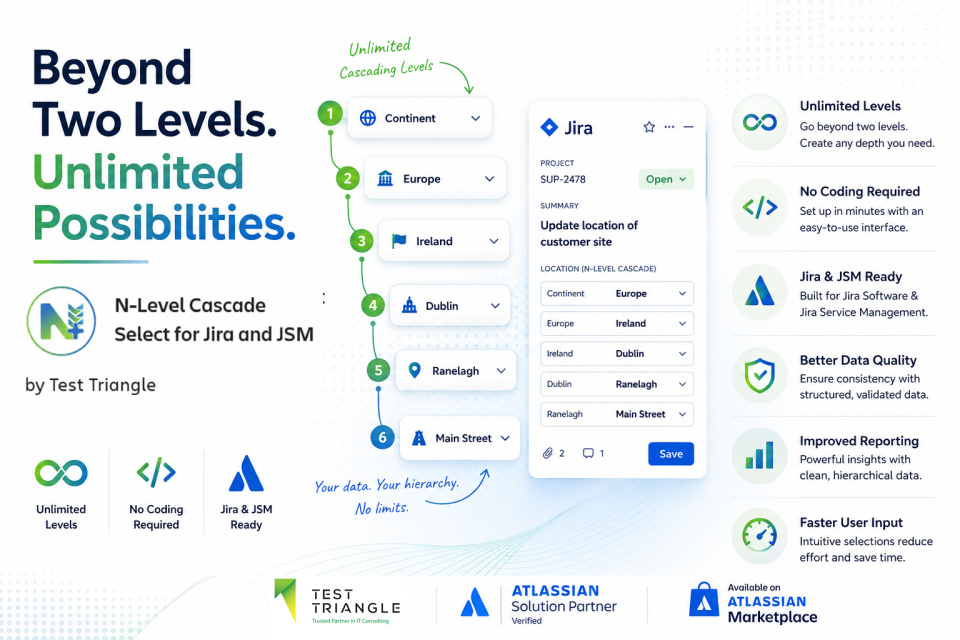
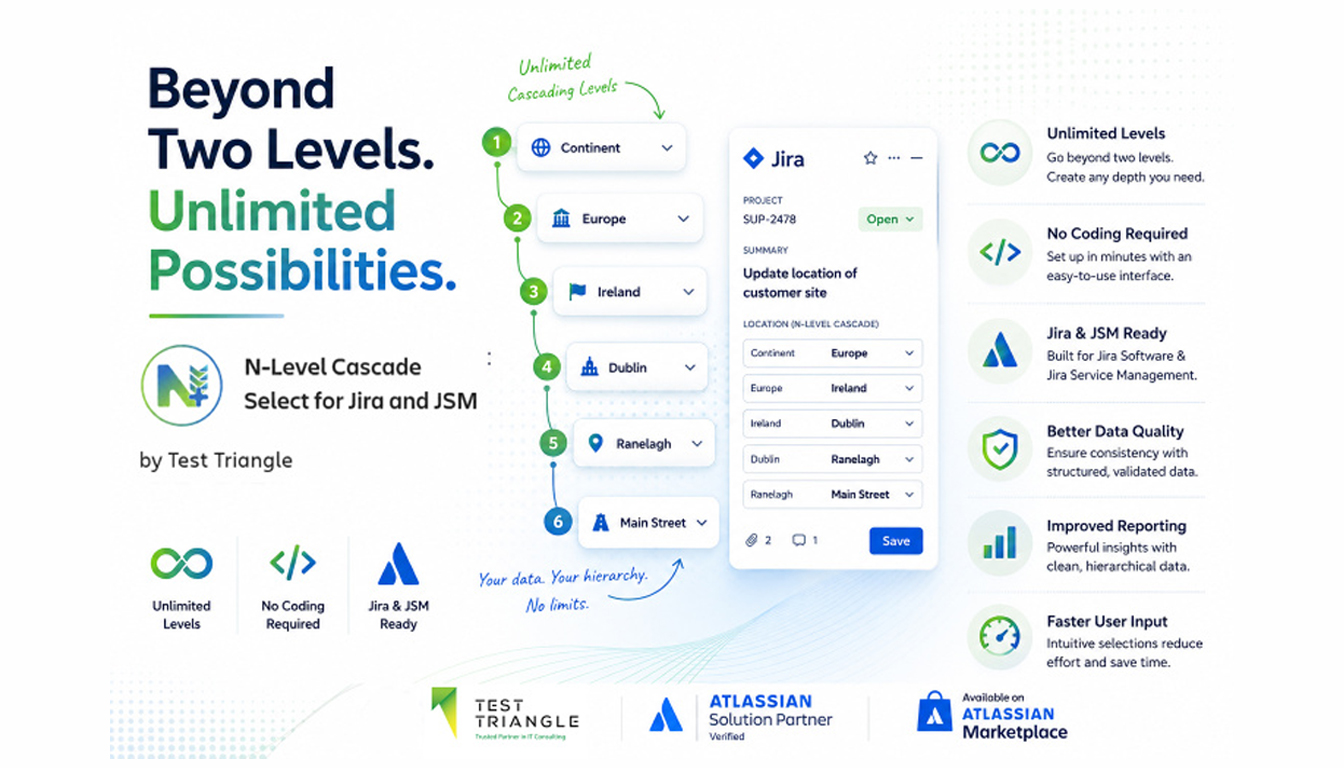
That’s why Test Triangle developed N-Level Cascade Select for Jira & Jira Service Management, a powerful Atlassian Marketplace app that removes this restriction and allows organisations to create cascading drop downs with virtually unlimited levels. The app is built on Atlassian Forge and is designed for Jira Cloud environments.
Jira excels at workflow management, but today’s organisations rarely work with simple two-level classifications.
Consider a few everyday business examples.
IT Service Management
Service Category
→ Application
→ Module
→ Component
→ Environment
→ Priority
→ SLA
Global Organisations
Continent
→ Country
→ Region
→ City
→ Office
→ Department
→ Team
Product Management
Product Family
→ Product
→ Version
→ Module
→ Feature
→ Enhancement
Human Resources
Business Unit
→ Department
→ Team
→ Role
→ Employment Type
→ Location
Each represents a natural business hierarchy.
Trying to squeeze these into only two levels creates unnecessary complexity and often results in poor-quality data.
The Hidden Cost of Poor Data Capture
Many organisations compensate for Jira’s limitation by introducing workarounds.
These often include:
Hundreds of values inside a single dropdown
Multiple disconnected custom fields
Manual validation
Complex Jira Automation rules
Marketplace apps designed for unrelated purposes
Custom scripting and maintenance
Initially these approaches appear manageable.
Over time they become expensive.
Users select incorrect values.
Reports become unreliable.
Automation breaks.
Administrators spend more time maintaining workflows than improving them.
Most importantly, decision-makers lose confidence in the quality of their Jira data.
Introducing N-Level Cascade Select
N-Level Cascade Select extends Jira by allowing organisations to build structured cascading selections with unlimited depth.
Instead of stopping at two levels, organisations can create:
3 levels
5 levels
10 levels
20 levels
Any hierarchy required by the business
Each user selection intelligently filters the next available options, creating a guided experience that is faster, simpler and significantly more accurate.
Real Business Examples
IT Service Desk
Instead of asking users to search through hundreds of systems, the request naturally guides them.
Infrastructure
→ Servers
→ Windows
→ Production
→ Database Server
→ SQL Cluster
Support teams immediately know exactly what the issue relates to.
HR Request Portal
People Operations
→ Recruitment
→ Permanent Employee
→ Technical
→ Software Engineer
→ Dublin
Every request arrives fully classified before an agent even opens the ticket.
Facilities Management
Building
→ Floor
→ Room
→ Equipment
→ Asset Type
→ Maintenance Category
Instead of chasing users for additional information, maintenance teams receive complete and accurate requests.
Product Support
Hardware
→ Laptop
→ Manufacturer
→ Model
→ Operating System
→ Version
Perfect for organisations supporting thousands of products across multiple regions.
Designed for Jira Service Management
One of the biggest advantages of N-Level Cascade Select is its seamless integration with Jira Service Management.
The app works directly inside customer request forms, allowing organisations to capture highly structured information before tickets are created. This reduces back-and-forth communication, improves ticket routing and helps service teams resolve issues faster.
For organisations processing hundreds or thousands of requests each day, this can dramatically improve operational efficiency.
Built for Enterprise Administration
Large organisations often maintain thousands of categories.
Manually creating them isn’t practical.
N-Level Cascade Select includes:
Visual hierarchy builder
JSON Builder
JSON Import
JSON Export
Real-time preview
Workflow transition support
Administrators can build or update extensive classification structures in minutes instead of hours. Recent releases have also expanded storage capacity and added workflow conditions and inline editing capabilities.
Built on Atlassian Forge
Security is critical.
N-Level Cascade Select is developed using Atlassian Forge, meaning it operates within Atlassian’s cloud platform architecture and keeps app data within the Jira environment rather than sending it to external infrastructure.
For organisations with strict governance and compliance requirements, this provides greater confidence in how data is managed.
Better Data Creates Better Decisions
The quality of dashboards, automation, reporting and AI depends entirely on the quality of the underlying data.
Structured information enables organisations to:
Improve reporting accuracy
Automate workflows with confidence
Reduce user error
Standardise classifications globally
Simplify administration
Improve customer experience
Increase service desk productivity
Instead of cleaning data afterwards, organisations capture it correctly from the beginning.
More Than an App
N-Level Cascade Select is part of Test Triangle’s wider Atlassian practice.
As an Atlassian Gold Solution Partner, Test Triangle provides:
Atlassian Consulting
Jira Software implementation
Jira Service Management implementation
Cloud migration
Managed Services
Platform optimisation
Licensing and renewals
Enterprise support
The app was developed from real customer challenges encountered during enterprise Jira implementations, making it a practical solution to a common operational problem.
Who Can Benefit?
N-Level Cascade Select is ideal for organisations using Jira across:
IT Service Management
Software Development
Human Resources
Finance
Procurement
Healthcare
Pharmaceutical
Government
Education
Manufacturing
Asset Management
Facilities Management
Customer Support
If your organisation captures structured business information inside Jira, deeper cascading fields can significantly improve usability and data quality.
Transform the Way You Capture Data in Jira
Jira is one of the world’s most powerful collaboration and workflow platforms. But as organisations grow, the need for richer, more structured data becomes essential. N-Level Cascade Select removes one of Jira’s most common limitations by allowing organisations to build intuitive, unlimited-depth cascading fields that mirror real business structures. The result is cleaner forms, better user experiences, more reliable reporting and stronger governance across your Jira environment. Whether you’re managing IT services, enterprise projects, HR processes or customer support, N-Level Cascade Select helps you capture the right information the first time.
Start your free trial today on the Atlassian Marketplace and discover how multi-level cascading fields can transform the way your organisation uses Jira. If your business relies on complex hierarchical data, N-Level Cascade Select provides a scalable and intuitive solution built specifically for Jira and Jira Service Management.
Beyond Two Levels: How N-Level Cascade Select Transforms Data Capture in Jira Jira Cascade Select Limitations: Why Two Levels Aren’t Enough
Jira is trusted by organisations worldwide to manage projects, service requests, software development, HR processes, procurement workflows and more. However, one limitation continues to challenge teams across industries: Jira’s native Cascade Select field only supports two levels of hierarchy. For many organisations, data structures are far more complex.
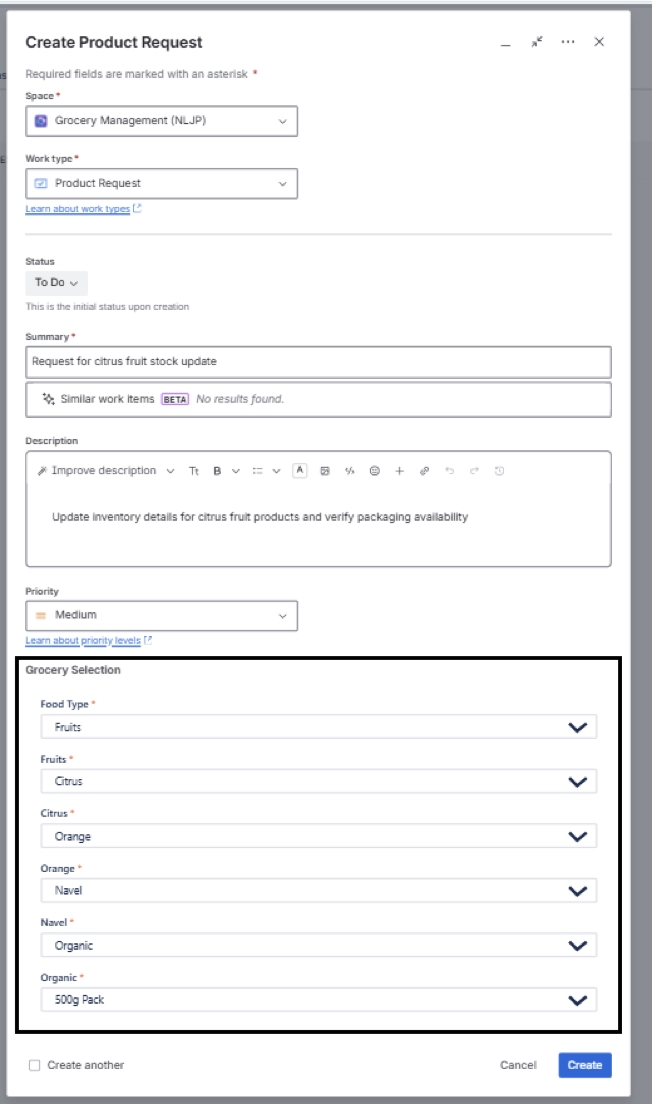
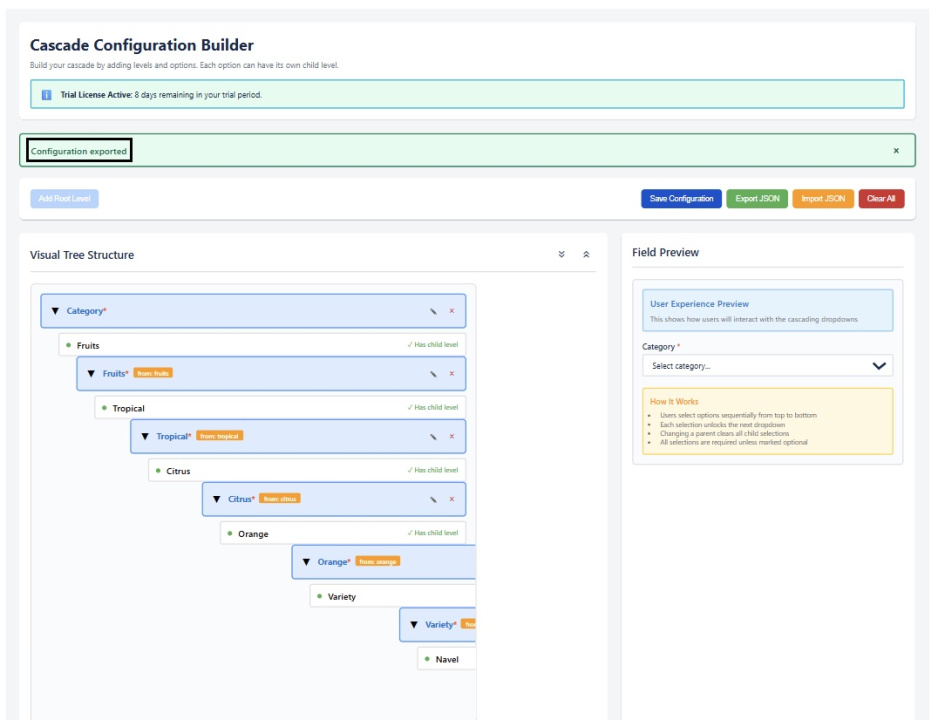
Consider a simple classification hierarchy: Food Type → Fruits → Tropical → Citrus → Orange → Navel Orange → Organic
Or a location structure: Continent → Country → State → City → District → Area
These are natural, logical hierarchies that businesses use every day. Yet Jira’s standard field configuration stops at a parent and child selection. As organisations scale, this limitation often leads to workarounds, inconsistent data capture and reporting challenges.
When Jira’s native fields cannot represent real-world data structures, teams often resort to:
Large dropdown lists containing hundreds of options
Multiple disconnected custom fields
Complex automation rules
Manual data validation processes
Custom development and scripting
While these approaches may work temporarily, they frequently create new challenges:
Poor user experience
Inconsistent data entry
Reduced reporting accuracy
Increased administration overhead
Greater risk of user error
The result is often messy data and inefficient workflows. Businesses need a better way to capture structured information without sacrificing usability.
What is N-Level Cascade Select for Jira?
N-Level Cascade Select extends Jira’s native capabilities by allowing organisations to create cascading dropdown fields with virtually unlimited depth. Instead of being restricted to two levels, teams can create:
3-level hierarchies
5-level hierarchies
10-level hierarchies
Any structure required by the business
Each selection dynamically filters the available options at the next level, creating a guided and intuitive user experience. For example: Food Type → Fruits → Citrus → Orange → Navel Orange → Organic
Each choice narrows the next set of options, ensuring users only see relevant selections.The result is cleaner data, faster form completion and significantly improved reporting accuracy.
Key Features of N-Level Cascade Select
1. Dynamic Labels at Every Level
One of the most powerful features of N-Level Cascade Select is the ability to display unique labels at every stage of the hierarchy. Rather than presenting users with generic dropdown menus, each level clearly communicates what information is required.
Example:
Food Type → Fruits
Fruit Category → Citrus
Citrus Type → Orange
Orange Variety → Navel
Production Method → Organic
Packaging Size → 500g
Users always understand where they are in the selection process, even across six or more levels.
Benefits:
Improved user experience
Reduced data entry mistakes
Faster form completion
Better adoption by end users
2. Native Integration with Jira Service Management Request Types
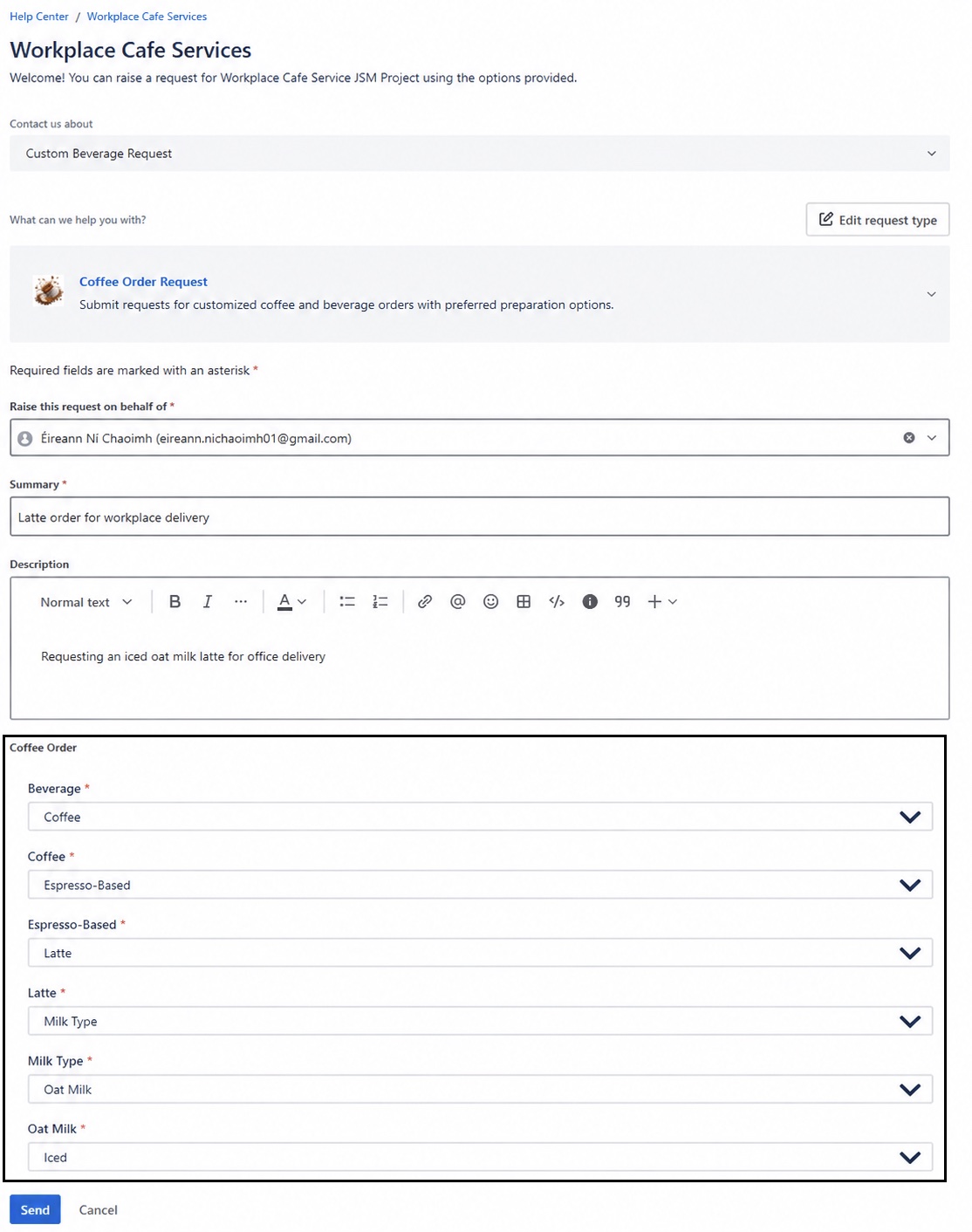
N-Level Cascade Select works directly within Jira Service Management (JSM) Request Types and customer portals. This enables organisations to capture highly detailed information before a ticket is even created.
Example Customer Request:
Beverage
Coffee
Espresso-Based
Latte
Milk Type
Oat Milk
Iced
Instead of relying on follow-up questions from support agents, the entire request is captured during intake.
Benefits
Higher quality requests
Reduced triage effort
Faster resolution times
Improved customer experience
For service desk teams managing large request volumes, structured intake can dramatically improve efficiency.
3. Real-Time Configuration Preview
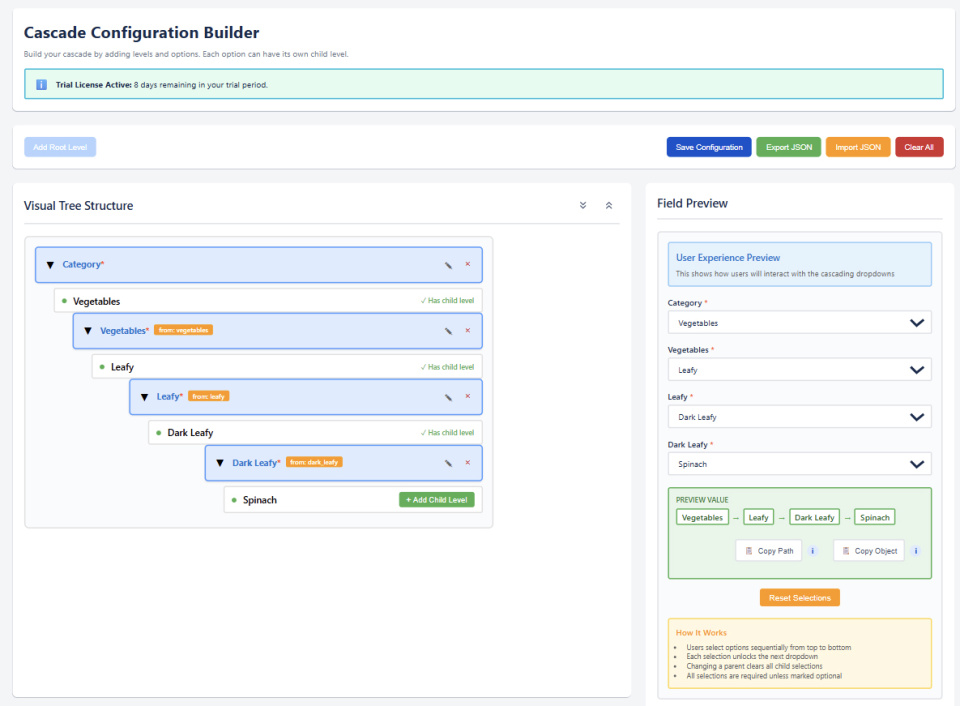
Building complex hierarchies can be challenging without visibility into the final user experience. That’s why N-Level Cascade Select includes a live preview panel within the configuration interface. As administrators build their hierarchy, they can immediately see how the field will behave for end users.
Example – As you create:
Category
Vegetables
Leafy
Dark Leafy
Spinach
Baby Spinach
Organic
The preview updates instantly. This removes guesswork from the configuration process and significantly reduces setup time.
Benefits
Faster configuration
Improved accuracy
Easier administration
Reduced testing cycles
4. JSON Import and Export Capabilities
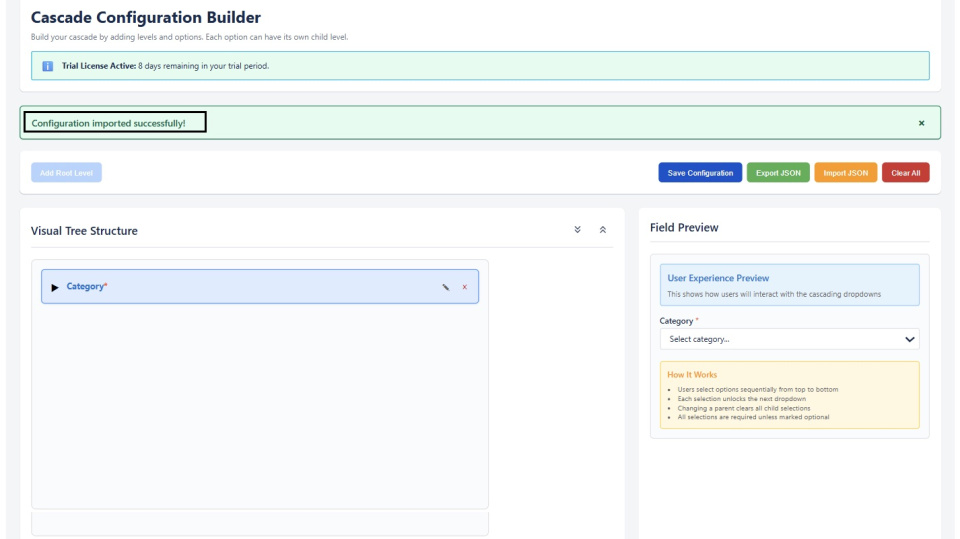
Many organisations already maintain structured classifications outside Jira. N-Level Cascade Select supports full hierarchy import and export using JSON.
Import Use Cases
Product catalogues
Asset structures
Location hierarchies
Service catalogues
Department structures
Instead of manually creating hundreds or thousands of options, administrators can import complete hierarchies in seconds.
Export Use Cases
Backup configurations
Replicate structures across environments
Update existing hierarchies
Version control
This capability makes the solution highly scalable for enterprise environments.
5. Workflow Transition Screen Support
Unlike many field extensions, N-Level Cascade Select also works on Jira workflow transition screens. When issues move between statuses, users can complete structured selections without leaving the transition process.
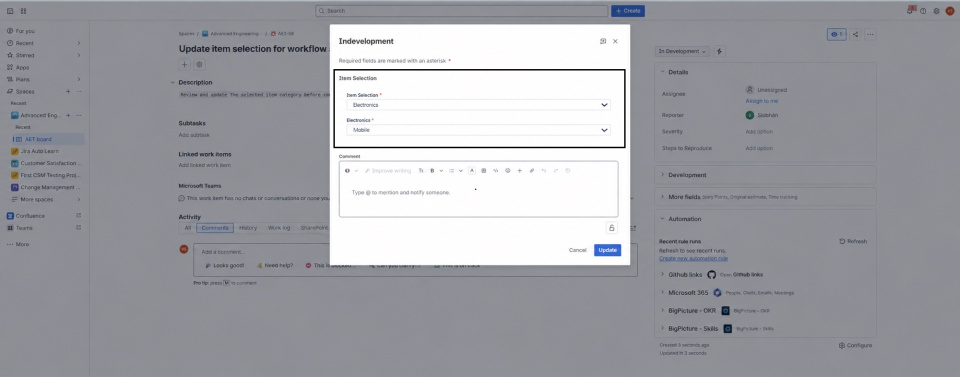
Example: A hardware support ticket moves from: Open → In Development During the transition, users can select: Electronics → Mobile Devices → Smartphones → Android → Samsung → Galaxy Series The selected value is stored directly against the issue.
Benefits
Better workflow governance
Improved process compliance
Accurate classification at key workflow stages
Built on Atlassian Forge for Enterprise Security
Security and compliance are critical for modern organisations. N-Level Cascade Select was built entirely on Atlassian Forge, Atlassian’s cloud-native development platform.
This means:
Data remains within Atlassian infrastructure
No external servers are required
No third-party hosting environments
Simplified compliance requirements
Enhanced security controls
For organisations operating in regulated sectors such as:
Healthcare
Financial Services
Government
Legal Services
Education
Forge-native architecture provides confidence that data remains within the Atlassian ecosystem.
Cloud Migration Ready As organisations continue moving from Jira Server and Data Centre to Atlassian Cloud, Forge apps provide future-ready compatibility and alignment with Atlassian’s long-term cloud strategy.
Use Cases Across Every Department
IT Service Management Teams. Capture detailed request information:
Issue Type → System → Component → Sub-Component → Priority → SLA Tier
Benefits:
Faster triage
Better routing
Improved reporting
HR Teams
Structure onboarding and employee requests:
Division → Department → Team → Role Level → Employment Type → Location
Benefits:
Consistent HR processes
Improved employee experience
Reduced administrative effort
Finance & Procurement
Classify expenses accurately:
Company → Cost Centre → Budget Category → Expense Type → Vendor Type → Currency
Benefits:
Improved financial reporting
Better budget governance
Reduced manual corrections
Legal & Compliance
Capture regulatory information:
Contract Type → Jurisdiction → Country → Regulatory Body → Standard → Review Status
Benefits:
Better audit readiness
Improved compliance tracking
Easier record retrieval
Product & Engineering Teams
Mirror product architecture directly within Jira:
Product Line → Module → Feature → Sub-Feature → Release Version → Priority
Benefits:
Cleaner backlog management
Better reporting
Improved product governance
Why Structured Data Matters in Jira
The quality of reporting, automation and decision-making in Jira depends on the quality of the data being captured. Flat drop downs and disconnected fields often result in:
Duplicate values
Inconsistent classifications
Reporting inaccuracies
Increased administration effort
N-Level Cascade Select ensures data is captured consistently and logically from the beginning. The deeper the hierarchy, the more valuable structured data becomes.
Getting Started with N-Level Cascade Select
N-Level Cascade Select is available on the Atlassian Marketplace with a free trial. We recommend testing the app using a real business classification structure rather than a simple demonstration hierarchy. This provides the fastest way to evaluate how the solution will perform within your environment. Comprehensive documentation is available covering:
Installation
Configuration
JSON Import and Export
Jira Service Management Integration
Best Practices
The Test Triangle team is also available to assist with implementation, configuration and support.
Conclusion
Jira is one of the world’s most powerful workflow platforms, but many organisations require deeper classification structures than native Cascade Select fields can provide. N-Level Cascade Select removes the two-level limitation and enables businesses to capture structured data exactly as their processes require. Whether you’re managing service requests, HR workflows, procurement processes, compliance records or product development, the app helps deliver:
Better data quality
Improved user experience
Faster reporting
Reduced administrative overhead
Stronger governance
If your business relies on complex hierarchical data, N-Level Cascade Select provides a scalable and intuitive solution built specifically for Jira and Jira Service Management.
Start Your Free Trial Today. Ready to go beyond two levels?
In today’s digital-first business environment, organisations rely heavily on technology to deliver services, support employees, and serve customers efficiently. As IT environments become increasingly complex, businesses need modern tools that can streamline service delivery, automate workflows, and improve visibility across IT operations.
This is where Atlassian and Jira Service Management (JSM) play a critical role.
Atlassian is a global software company that develops collaboration, project management, and service management solutions used by organisations of all sizes. Atlassian products help teams plan, track, manage, and support work across IT, software development, operations, HR, finance, and business functions.
Some of Atlassian’s most popular products include:
Jira Software
Jira Service Management (JSM)
Confluence
Bitbucket
Jira Product Discovery
Atlas
Today, Atlassian solutions are used by hundreds of thousands of organisations worldwide, including many of the world’s largest enterprises, government agencies, financial institutions, healthcare providers, and technology companies.
What is Jira Service Management (JSM)?
Jira Service Management is Atlassian’s modern IT Service Management (ITSM) platform designed to help organisations deliver high-quality IT services while improving efficiency, visibility, and collaboration.
Built on the Jira platform, JSM provides a powerful solution for managing:
Incident Management
Service Requests
Problem Management
Change Management
Asset Management
Knowledge Management
Service Level Agreements (SLAs)
Customer and Employee Support
Unlike traditional ITSM tools that can be complex and expensive to maintain, Jira Service Management offers a flexible, cloud-based solution that is easy to configure, scale, and integrate.
What is ITSM?
IT Service Management (ITSM) refers to the processes, policies, and technologies used by organisations to design, deliver, manage, and improve IT services. The goal of ITSM is to ensure that technology services support business objectives while providing a positive experience for users and customers.
Common ITSM practices include:
Incident Management: Resolving service interruptions as quickly as possible to minimise business impact.
Problem Management: Identifying and addressing root causes to prevent recurring incidents.
Change Management: Managing system changes in a controlled and auditable manner.
Service Request Management: Providing users with a structured process to request IT services and support.
Asset Management: Tracking hardware, software, licenses, and infrastructure assets throughout their lifecycle.
Why Organisations Choose Jira Service Management
1. Faster Incident Resolution
Jira Service Management enables IT teams to quickly identify, prioritise, and resolve incidents through automated workflows, escalation rules, and real-time collaboration.
Benefits include:
Reduced downtime
Faster response times
Improved SLA performance
Better customer satisfaction
2. Streamlined Change Management
JSM incorporates ITIL-aligned change management capabilities that help organisations reduce risk while accelerating innovation.
Features include:
Automated approval workflows
Change calendars
Risk assessments
Deployment integrations
Audit trails
This enables teams to implement changes confidently while maintaining governance and compliance.
3. Self-Service Portals
Users can easily submit requests through intuitive service portals without needing to contact the IT team directly.
Examples include:
Password resets
Software access requests
New starter onboarding
Hardware requests
Facilities support requests
This improves user experience while reducing administrative workloads.
4. Powerful Automation
One of Jira Service Management’s greatest strengths is automation.
Organisations can automate:
Ticket assignment
SLA escalations
Approval processes
Incident notifications
Service request fulfilment
Change approvals
Jira Service Management and DevOps
Modern organisations require stronger collaboration between IT operations and development teams.
Because Jira Service Management is built on the same platform as Jira Software, development and support teams can work together seamlessly.
Benefits include:
Faster incident resolution
Improved release management
Enhanced visibility
Better communication
Reduced operational silos
This makes Jira Service Management an ideal solution for organisations embracing DevOps and Agile methodologies.
Jira Service Management for Enterprise Organisations
JSM is trusted by enterprises across industries including:
Government and Public Sector
Financial Services
Healthcare
Telecommunications
Education
Retail
Manufacturing
Enterprise capabilities include:
Advanced security controls
Enterprise-grade scalability
Multi-team service management
High availability
Compliance reporting
Integration with existing business systems
Cloud vs Data Center
Atlassian offers Jira Service Management through both Cloud and Data Center deployments.
Jira Service Management Cloud
Ideal for organisations seeking:
Faster implementation
Lower infrastructure costs
Automatic updates
Scalability
Reduced administration
Jira Service Management Data Center
Suitable for organisations requiring:
Greater infrastructure control
Specific compliance requirements
Custom hosting environments
Advanced data governance
Many organisations are now migrating from on-premise environments to Atlassian Cloud to take advantage of ongoing innovation and reduced operational overhead.
How Test Triangle Helps Organisations Succeed with Atlassian ITSM
As an Atlassian Gold Solution Partner, Test Triangle helps organisations maximise the value of Jira Service Management through:
Consulting and Strategy
Assessing existing service management processes and designing future-state ITSM operating models.
Jira Service Management Implementations
Deploying and configuring Jira Service Management aligned to organisational requirements and ITIL best practices.
Cloud Migrations
Supporting seamless migration from legacy ITSM platforms and on-premise Jira environments to Atlassian Cloud.
Integrations
Connecting Jira Service Management with enterprise systems including:
Microsoft 365
Azure
AWS
ServiceNow
HR systems
Identity and Access Management platforms
Managed Services
Providing ongoing administration, optimisation, support, governance, and continuous improvement services.
Training and Adoption
Helping teams accelerate user adoption and maximise platform utilisation.
Final Thoughts
Atlassian Jira Service Management has become one of the leading ITSM platforms for organisations seeking a modern, agile, and scalable approach to service management. By combining powerful automation, ITIL-aligned processes, asset management, and seamless collaboration capabilities, Jira Service Management enables organisations to deliver exceptional IT services while improving operational efficiency.
Whether you are looking to modernise your service desk, migrate from a legacy ITSM platform, or implement enterprise-wide service management, Jira Service Management provides the flexibility and scalability needed to support your digital transformation journey.
With extensive experience delivering Atlassian solutions across public and private sector organisations, Test Triangle helps clients design, implement, optimise, and support Jira Service Management environments that drive measurable business outcomes.
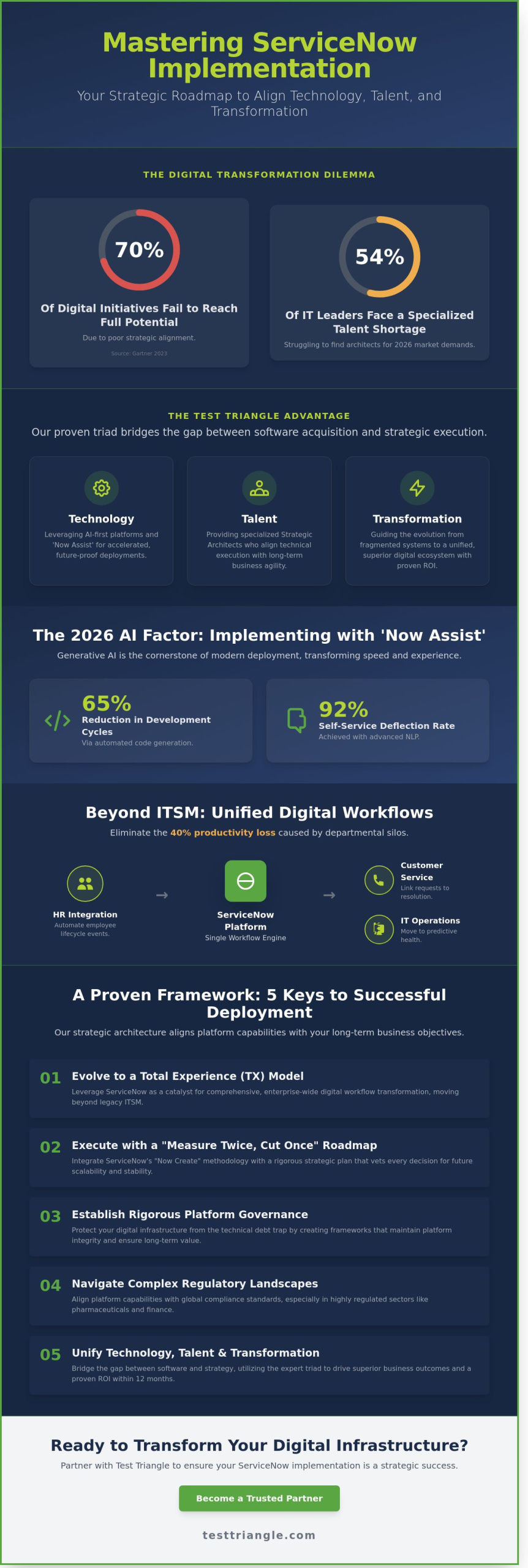
ServiceNow Implementation Guide: Strategic Frameworks for 2026
According to a 2023 Gartner report, 70% of digital transformation initiatives fail to reach their full potential due to poor strategic alignment and talent shortages. You likely recognise that a successful ServiceNow Implementation requires more than just technical configuration; it’s a process that demands total synchronisation of your organisational culture and legacy data. Finding specialised architects who understand the nuances of 2026 market demands is a persistent struggle for 54% of IT leaders globally. By combining technical expertise with adaptable delivery models, Test Triangle helps businesses eliminate these risks while ensuring their complex digital infrastructures are in safe hands.
This guide empowers you to master the complexities of your deployment through a strategic roadmap designed to align Technology, Talent, and Transformation. As your Trusted ServiceNow Partner, we’ll demonstrate how to drive seamless workflow automation and establish scalable platform governance that delivers a proven ROI within 12 months. We’ll explore the specific frameworks necessary to transition from fragmented legacy systems to a unified, superior digital ecosystem.
Key Takeaways
By evolving from legacy ITSM to a Total Experience (TX) model, enterprises can leverage ServiceNow as a catalyst for comprehensive, enterprise-wide digital workflow transformation.
Discover how to execute a flawless ServiceNow Implementation by integrating the “Now Create” methodology with a strategic “Measure Twice, Cut Once” technical roadmap.
Protect your digital infrastructure from the technical debt trap by establishing rigorous governance frameworks that maintain platform integrity and ensure long-term scalability.
Navigate complex regulatory landscapes in the pharmaceutical and financial sectors by aligning platform capabilities with global compliance standards and industry-specific requirements.
Bridge the gap between software acquisition and strategic execution by utilising the triad of Technology, Talent, and Transformation to drive superior business outcomes.
The Strategic Landscape of ServiceNow Implementation in 2026
By positioning the platform as the central nervous system of the enterprise, modern ServiceNow Implementation involves a total transformation of digital workflows rather than a simple software deployment. In 2026, the platform has transcended its origins as a tactical ticketing tool to become a Total Experience (TX) powerhouse. This evolution requires a “Strategic Architect” mindset, where technical execution aligns perfectly with long-term business agility. Organisations that treat this process as a mere IT project often fail to capture the full ROI. Instead, a successful ServiceNow Implementation relies on a holistic view of the ServiceNow company overview, acknowledging its shift from a cloud-based provider to an AI-first platform-as-a-service leader. By leveraging our Technology. Talent. Transformation, Test Triangleacts as a Trusted Partner to ensure these complex infrastructures deliver measurable competitive advantages.
Beyond ITSM: The Rise of Unified Digital Workflows
The 2026 enterprise landscape demands a unified pane of glass that connects HR, Customer Service, and IT operations seamlessly. By integrating these disparate functions into a single workflow engine, businesses can eliminate the 40% productivity loss typically caused by departmental silos. Our flexible engagement models focus on creating a frictionless environment where data flows across the organisation without manual intervention. Cross-Departmental Synergy is the orchestrated alignment of distinct business units through a shared digital fabric that ensures data consistency and operational speed.
HR Integration: Automating employee lifecycle events from onboarding to retirement.
Customer Service: Linking front-end requests directly to back-end IT resolution teams.
IT Operations: Moving from reactive troubleshooting to predictive system health management.
The 2026 AI Factor: Implementing with ‘Now Assist’
The 2026 release of ServiceNow has made ‘Now Assist’ the cornerstone of every deployment strategy. By embedding Generative AI (GenAI) into the core architecture, the platform now offers automated code generation that reduces development cycles by up to 65%. This shift allows our architects to accelerate the implementation timeline, moving from conceptual design to go-live faster than ever before. AI doesn’t just speed up the build; it transforms the end-user experience. With advanced natural language processing, self-service capabilities have reached a 92% deflection rate, significantly reducing the burden on human agents. Through this AI-first approach, we empower clients to drive innovation while maintaining a robust and secure digital environment.
By combining technical expertise with adaptable delivery models, Test Triangle helps businesses reduce costs and elevate their operational standards. We remain committed to delivering superior results that reflect our status as a visionary partner in the global technology ecosystem.
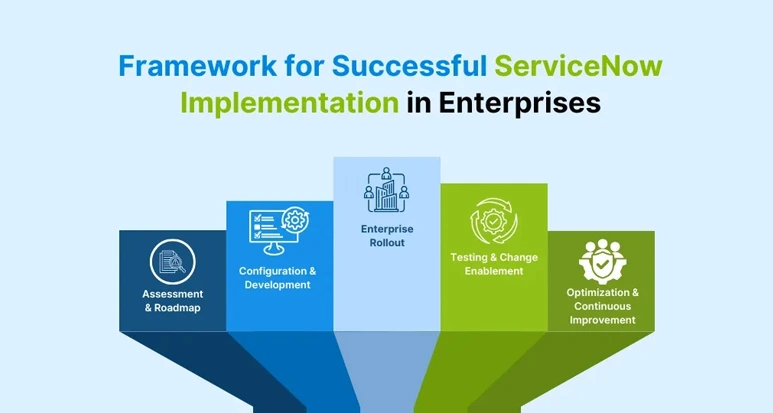
A Proven Framework: The 5 Pillars of Successful Deployment
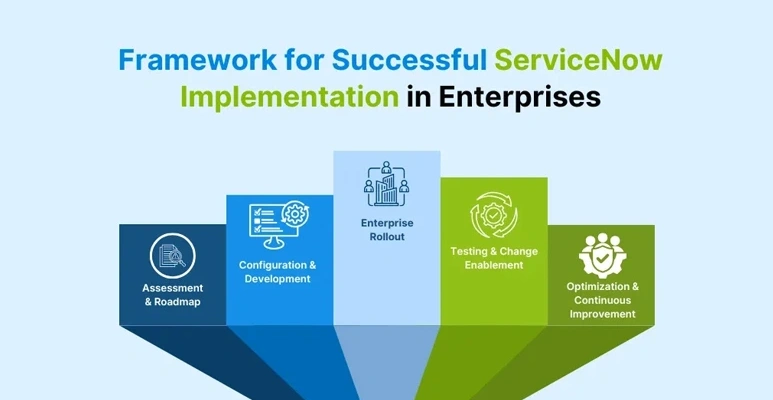
Executing a ServiceNow Implementation requires more than technical proficiency; it demands a strategic architecture that aligns platform capabilities with long-term business objectives. At Test Triangle, we enhance the standard “Now Create” methodology with our own layer of strategic rigour. We operate on a “Measure Twice, Cut Once” philosophy. This means every technical decision is vetted against its impact on future scalability and operational stability. By shifting from project-based thinking to platform-based thinking, we ensure your investment doesn’t become a static tool but evolves as a dynamic engine for growth.
The initial 30 days of any engagement determine its trajectory. During this window, we prioritise stakeholder alignment across the C-suite and IT operations. We’ve observed that 65% of implementation delays stem from misaligned expectations rather than technical hurdles. By securing executive buy-in and defining clear ownership early, we mitigate risks before they manifest as costly bottlenecks.
Discovery and Strategic Roadmapping
Success begins with a comprehensive audit of your current state versus your desired future architecture. We don’t just look at software; we analyse the workflows that drive your business. We establish key performance indicators (KPIs), such as a 25% reduction in mean time to resolution (MTTR), from Day 1. Our teams develop a “Value Realisation” map that tracks these metrics throughout the lifecycle. This ensures every configuration choice translates into a tangible business outcome, providing a clear path for digital transformation.
Agile Configuration vs. Customisation
We advocate for an “Out-of-the-Box” (OOTB) first approach. While customisation offers specific tailoring, it often creates a maintenance liability that complicates future upgrades. Adhering to at least 80% OOTB functionality reduces technical debt by nearly 40% over three years. We only recommend customisation when it provides a distinct competitive advantage. Use this checklist to evaluate custom scripts:
Does the feature exist in the upcoming ServiceNow roadmap?
Will this script break during a standard version upgrade?
Can the requirement be met through low-code Flow Designer logic?
Is the business value higher than the long-term maintenance cost?
Rigorous Quality Assurance and Testing
Test Triangle leverages a decade of expertise in manual and automated testing to safeguard your environment. User Acceptance Testing (UAT) is the most common failure point in a ServiceNow Implementation, often due to insufficient test coverage. We bridge this gap by integrating Manual Testing as the vital foundation for validating complex, human-centric workflows. By combining this with automated regression suites, we ensure that new configurations don’t disrupt existing services. This dual-layered approach provides the “flawless execution” our global partners expect, ensuring your platform remains robust and reliable under enterprise-level demand.
Mitigating Risk: Governance and the Technical Debt Trap
The most frequent reservation stakeholders express during a ServiceNow Implementation is the fear of the platform devolving into an unmanageable tangle of customisations. Without a rigorous governance framework, the initial agility of the system quickly erodes into technical debt. Neglecting platform health leads to a 30% increase in upgrade cycle times within the first two years of operation. This stagnation occurs when teams prioritise short-term “quick fixes” over architectural integrity. By positioning a Strategic Architect at the helm post-deployment, Test Triangle ensures that every configuration aligns with the long-term roadmap. This role acts as a guardian of the “Out-of-the-Box” functionality, ensuring that regular health checks identify and remediate performance bottlenecks before they impact the end-user experience.
Establishing a ServiceNow Centre of Excellence (CoE)
A successful CoE functions as the central nervous system for platform growth, comprising a Platform Owner, Lead Architect, and representatives from diverse business units. By centralising decision rights, the CoE effectively eliminates “shadow IT” where individual departments create siloed, non-standard workflows. This structured oversight ensures that every new feature request undergoes a rigorous impact analysis to maintain a clean ServiceNow Implementation. Organisations that leverage a formal CoE achieve a 25% higher ROI on their platform investment over a three-year period compared to those with decentralised management.
Partnering for Transformation: The Test Triangle Advantage
By aligning technical proficiency with long-term business objectives, Test Triangle transcends the traditional role of a software reseller. We operate as a strategic architect, ensuring that your ServiceNow implementation serves as a catalyst for organisational change. With a localised presence in Dublin and London, we provide the high-touch consultation global enterprises require, while our international footprint facilitates 24/7 operational continuity. We don’t just deliver a platform; we build a resilient digital foundation. Our status as a trusted partner is reinforced by our work with Enterprise Ireland and our success in highly regulated sectors like Banking and Life Sciences. We bridge the gap between initial software acquisition and the complex reality of strategic execution, ensuring that every workflow contributes to your broader digital evolution.
Manual Testing in 2026: A Strategic Guide to Human-Centric Quality Assurance
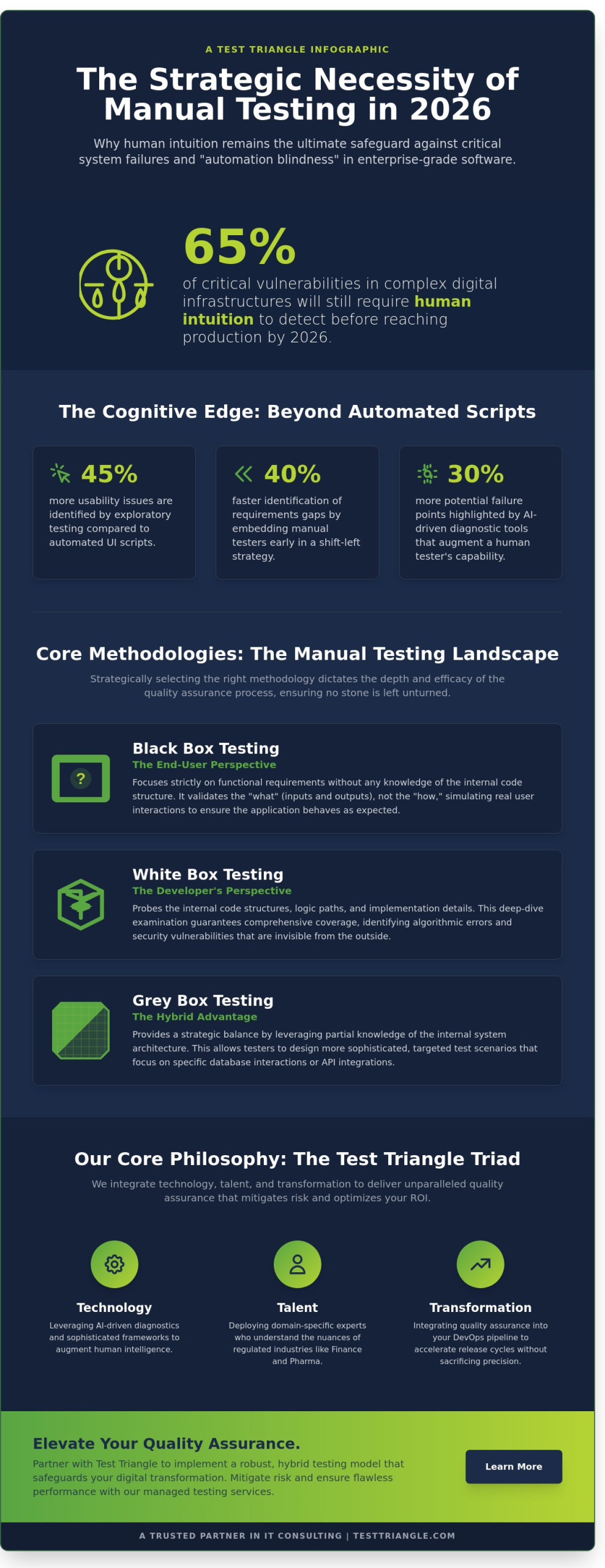
By 2026, industry data from leading analysts suggests that over 65% of critical vulnerabilities in complex digital infrastructures will still require human intuition to detect before they reach production. While the push for total automation is relentless, the most resilient global enterprises have realised that relying solely on scripts often leads to high defect leakage in specialised sectors like Finance and Pharma. Manual Testing isn’t a relic of the past; it’s a sophisticated, strategic necessity for any organisation that values precision over mere speed.
You’ve likely experienced the tension between the need to accelerate release cycles and the fear of sacrificing quality during a high-stakes digital transformation. We recognise that finding specialised testers who understand the nuances of regulated environments is a significant hurdle for your internal teams. This article provides a robust framework for a hybrid testing model that integrates human intelligence directly into your 2026 roadmap, aligning with our core philosophy of Technology, Talent, and Transformation. You’ll discover how to optimise your ROI and mitigate risks by balancing technical execution with the cognitive depth that only a Trusted Partner can provide.
Key Takeaways
Understand how to leverage human intuition as a strategic safeguard against “automation blindness” within complex, enterprise-grade digital systems.
Master the core methodologies of Black, White, and Grey Box testing to systematically uncover the “unknown unknowns” that automated scripts often overlook.
By implementing a robust framework for determining automation feasibility, your organisation can optimise the total cost of ownership while maintaining superior quality standards.
Elevate your quality assurance lifecycle through the “Three Amigos” collaboration model to ensure flawless requirement analysis and strategic environment readiness.
Discover how to scale your operations by integrating Manual Testing as a managed service through flexible, global engagement models tailored to your long-term stability.
The Strategic Evolution of Manual Testing in 2026
By aligning human intuition with sophisticated analytical frameworks, Test Triangle redefines quality assurance for the modern enterprise. Manual Testing in 2026 isn’t a remnant of the past; it’s a high-value cognitive process that identifies complex logic failures automation consistently misses. Our approach leverages the “Technology. Talent. Transformation.” triad to ensure that digital products withstand the rigours of global deployment. While automated scripts handle repetitive regression, humans address the unpredictable variables that define 92% of unique user interactions in modern decentralised applications.
Integrating AI-driven diagnostic tools allows testers to focus on high-risk edge cases rather than routine verification. These 2026 tools augment the tester’s capability, providing real-time data visualisation that highlights 30% more potential failure points in legacy system integrations. Manual testing remains the ultimate safeguard against “automation blindness,” a phenomenon where scripts pass while the user experience fails due to subtle UI inconsistencies or logical contradictions. As a Trusted Partner, Test Triangle ensures that human oversight remains the primary filter for software excellence.
Core Methodologies: Navigating the Manual Testing Landscape
By aligning testing frameworks with overarching business objectives, Test Triangle ensures that software quality remains a sustainable competitive advantage. The strategic selection between Black Box, White Box, and Grey Box methodologies dictates the depth and efficacy of the diagnostic process. While Black Box testing focuses strictly on functional requirements from an end-user perspective, White Box examination probes internal code structures to guarantee comprehensive logic path coverage. Grey Box testing provides a hybrid advantage; it allows testers to leverage partial knowledge of internal databases and system architecture to design more sophisticated test scenarios.
Beyond structured scripts, Manual Testing provides the human empathy required for high-level Usability and Accessibility assessments, specifically regarding WCAG 2.2 standards updated in October 2023. While automated tools identify technical failures like missing ARIA labels, they cannot evaluate if a navigation flow feels intuitive or if a visual hierarchy supports a user’s cognitive load. Similarly, manual regression testing is vital for high-risk legacy modules. In complex enterprise systems, approximately 18% of critical defects emerge from subtle UI regressions in older frameworks that automated visual tools often misinterpret as insignificant noise.
Exploratory Testing: The Human Advantage
By utilising time-boxed sessions of 60 to 90 minutes during agile sprints, testers probe software boundaries without the constraints of pre-defined scripts. This creative approach allows for the discovery of “unknown unknowns” that structured automation frequently misses. To ensure reproducibility, testers document their journey through session-based test management logs, often integrated directly into Jira. This blend of creativity and discipline significantly elevates defect discovery rates, as a Trusted Partner uses intuition to simulate real-world user unpredictability that code-based tests cannot replicate.
Specialised Testing for Regulated Industries
In the Life Sciences and Pharma IT sectors, manual verification is indispensable for maintaining GxP compliance and ensuring data integrity across the software development lifecycle. Financial services demand a similar level of manual oversight to manage sensitive data and satisfy SOC2 or GDPR requirements. During security assessments, manual verification complements penetration testing by simulating complex, multi-step logical bypasses. Industry data suggests that manual testers identify up to 35% of logic-based security vulnerabilities that standard automated scanners typically overlook due to the lack of contextual awareness.
The Strategic Balance: Manual vs. Automated Testing
By implementing a structured Automation Feasibility framework, enterprises can effectively categorise test cases based on stability, complexity, and execution frequency. This strategic approach ensures that resources aren’t wasted on automating volatile features that change weekly. A rigorous Total Cost of Ownership (TCO) analysis reveals that while automation offers long-term efficiency, its initial setup costs are often 3 to 5 times higher than immediate manual execution. Relying on a 100% automated strategy frequently triggers catastrophic flaky test syndrome; this occurs when scripts fail due to minor environment shifts rather than actual software defects. To mitigate this risk, Test Triangle advocates for a Hybrid Model. By synchronising manual and automated results within Jira Service Management, we establish a single source of truth that drives informed decision-making. Technology. Talent. Transformation. This triad ensures your quality assurance remains robust and scalable.
When to Prioritise Manual Testing
Teams should prioritise Manual Testing for features undergoing rapid iteration where the codebase changes more than 25% between sprints. Aesthetic validation of the User Experience (UX) remains a human-centric task; software cannot yet judge if a layout feels intuitive or visually balanced. Additionally, complex end-to-end scenarios involving third-party physical hardware, such as biometric scanners or specialised medical devices, require the tactile interaction that only a skilled human tester provides. Within high-security sectors like Banking, manual oversight ensures that edge cases in multi-factor authentication are handled with the necessary professional scrutiny.
The ROI of Human Intelligence
Exploratory testing sessions often uncover 30% more critical edge-case bugs than scripted execution, providing a higher return on investment for high-risk modules. Utilising human intelligence reduces the maintenance burden of automated scripts by identifying which paths are truly worth the scripting effort. The long-term business value of professional software qa services lies in this strategic oversight. It prevents the “automation for automation’s sake” trap and ensures that every testing dollar contributes to a flawless user experience. By leveraging Manual Testing alongside automated suites, organisations achieve a superior level of risk mitigation that scripts alone cannot replicate. This balanced architecture allows for a flexible engagement model that adapts to the evolving needs of global enterprises.
By combining technical expertise with adaptable delivery models, Test Triangle helps businesses reduce costs while elevating software quality. We act as a Strategic Architect for your QA ecosystem, ensuring that your digital transformation is supported by a stable and precise testing foundation. Our commitment to excellence as a Trusted Partner means we prioritise the methodologies that deliver the most significant impact on your operational stability.
Implementing a Flawless Manual Testing Lifecycle
By synchronising technical rigour with business objectives, Test Triangle ensures that every phase of the manual testing lifecycle drives measurable quality. The process begins with Requirement Analysis, where the “Three Amigos” collaboration between business analysts, developers, and testers mitigates 40% of potential defects before a single line of code is written. This proactive alignment prevents the costly rework associated with misunderstood specifications and ensures the entire team shares a unified vision of success.
During Strategic Test Planning, our consultants establish environment readiness to prevent the 15% of project delays typically caused by configuration errors. We then move into Test Case Design, focusing on absolute traceability. By mapping every test case to a specific business requirement, we provide stakeholders with 100% visibility into feature coverage. Finally, the Execution and Verification loop ensures that defects are not just identified, but systematically eradicated through focused regression cycles that validate the stability of the entire build.
Integrating with Atlassian and Jira Service Management
Leveraging the Atlassian ecosystem allows our teams to provide transparent Manual Testing execution tracking in real-time. By utilising tools like Xray or Zephyr, we consolidate manual and automated test results into a single pane of glass within Jira. As an Atlassian Gold Solution Partner, Test Triangle optimises the workflow from “Bug Found” to “Developer Fixed” by automating status transitions and notification triggers. This integration reduces the administrative overhead of QA by approximately 22%, allowing testers to focus on exploratory depth rather than manual data entry.
Defect Reporting as a Communication Tool
A high-quality defect report is more than a notification; it’s a strategic asset. Our reports include a precise anatomy of the failure: clear reproduction steps, environment data, and attached system logs. We distinguish between Severity, which measures the technical impact on the system, and Priority, which dictates the urgency for the business. This distinction enables leaders to make informed release decisions based on actual risk profiles. The perfect defect report serves as a technical bridge that translates user frustration into actionable engineering data. By delivering structured feedback, we accelerate the resolution cycle and ensure that development resources target the most critical vulnerabilities first.
Manual Testing as a Managed Service: The Test Triangle Approach
By aligning specialised domain expertise with adaptable delivery models, Test Triangle helps enterprises convert QA from a cost centre into a strategic business accelerator. We treat Manual Testing not as a reactive task but as a proactive risk mitigation strategy. Our methodology is built upon a signature triad: Technology. Talent. Transformation. This framework ensures that software quality isn’t just a final check, it’s a fundamental component of the development lifecycle.
Organisations often face the challenge of scaling their testing teams during peak development cycles. To address this, we offer flexible engagement models tailored to your specific operational needs. You can choose from onshore consultants for high-touch collaboration, offshore teams for maximum cost-efficiency, or a hybrid model that balances local oversight with global scale. This flexibility ensures that your Manual Testing efforts remain agile and responsive to shifting market demands.
Our talent acquisition strategy is particularly rigorous. We source “Pharma-ready” and “Finance-ready” testing professionals who possess deep knowledge of regulatory frameworks like HIPAA, GxP, and Basel III. This domain-specific expertise ensures that your software isn’t just functional; it’s compliant with the highest global standards. We don’t just provide testers, we provide subject matter experts who understand the stakes of your industry.
Leveraging Global Talent for 24/7 Quality
The strategic advantage of our Dublin-London-Hyderabad-Austin corridor lies in its ability to provide a continuous testing lifecycle. By utilising these distinct time zones, we create a “follow-the-sun” workflow where testing never stops. This distributed model ensures consistency through standardised reporting protocols and centralised Jira Service Management dashboards. In a 2023 engagement with a global retail giant, this 24/7 approach reduced time-to-market by 28% for their primary e-commerce platform. Our teams worked across borders to identify critical UI defects before they reached the production environment, securing a flawless user experience for millions of customers.
Your Trusted Partner in Digital Transformation
As a Trusted Partner, we support your most complex initiatives, from AWS cloud migrations to ServiceNow implementations. Manual Testing remains vital during these transitions to validate data integrity and user workflows that automated scripts might overlook. We build dedicated, context-aware testing teams that grow with your business, ensuring long-term stability and operational excellence. By combining technical rigor with a deep commitment to your success, we help you navigate the complexities of modern software delivery with confidence.
Elevate Your Quality Assurance Strategy for 2026
As the industry moves toward 2026, the reliance on human intuition remains the cornerstone of a robust digital strategy. While automation handles repetitive tasks, Manual Testing provides the critical exploratory insights necessary to safeguard complex user journeys in high-stakes environments. It’s no longer about choosing one over the other; it’s about a strategic integration that prioritises risk mitigation and operational stability across every digital touchpoint.
Test Triangle operates as a Strategic Architect for global enterprises, utilising a proven global delivery model with localised support in Dublin and London. Our status as an Atlassian Platinum Solution Partner ensures that your QA processes are anchored in industry-leading standards like Jira Service Management. Whether you’re navigating the stringent compliance requirements of the Pharma sector or the high-security demands of Finance, our team delivers the precision your digital transformation requires. By aligning technology, talent, and transformation, we help you achieve a superior market position and long-term stability. We’re ready to help you optimise your quality assurance lifecycle today.
IT Service Management in Ireland: How Test Triangle Is Transforming Digital Operations
In today’s fast-paced digital economy, businesses are under increasing pressure to deliver seamless, reliable, and scalable IT services. From startups to established enterprises, effective IT Service Management (ITSM) has become a critical driver of operational success. This is where Test Triangle’s IT Service Management services stand out, helping organisations modernise their IT operations, improve service delivery, and stay competitive in an evolving technological landscape.
What Is IT Service Management (ITSM)?
IT Service Management refers to the processes, policies, and tools organisations use to design, deliver, manage, and improve IT services. Frameworks like Information Technology Infrastructure Library (ITIL) have long been the backbone of ITSM, but modern businesses require more agile, automated, and customer-centric approaches. Digital transformation is accelerating across sectors such as finance, healthcare, and technology, ITSM is no longer optional, it’s essential.
Why ITSM Matters for Businesses
1. Enhancing Operational Efficiency: Organisations are increasingly adopting cloud technologies, hybrid work models, and digital platforms. Without structured ITSM processes, managing these systems can become chaotic. ITSM ensures streamlined workflows, reduced downtime, and improved productivity.
2. Improving Customer Experience: Customers expect fast, reliable, and consistent digital services. ITSM helps businesses deliver on these expectations by ensuring issues are resolved quickly and services remain uninterrupted.
3. Supporting Compliance and Governance: Ireland has strict data protection and regulatory requirements. ITSM frameworks help businesses maintain compliance while ensuring transparency and accountability in IT operations.
Test Triangle’s ITSM Services in Ireland
Test Triangle provides comprehensive IT Service Management solutions tailored to the needs of businesses. Our services are designed to align IT operations with business goals while driving innovation and efficiency. Key Offerings:
Ireland ITSM Consulting: Test Triangle helps organisations assess their current IT landscape and implement best-practice ITSM frameworks. This includes process design, tool selection, and roadmap development. Service Desk Optimisation: A well-functioning service desk is the backbone of IT support. Test Triangle enhances service desk performance through automation, improved workflows, and better incident management. ITIL Implementation & Integration: By leveraging globally recognised frameworks, Test Triangle ensures businesses adopt structured and scalable ITSM practices. Automation & AI Integration: Modern ITSM goes beyond manual processes. Test Triangle integrates automation and AI-driven solutions to reduce response times and improve service delivery. Continuous Service Improvement: ITSM is not a one-time implementation. Test Triangle focuses on ongoing optimisation to ensure IT services evolve alongside business needs.
Strategic Partnerships That Power Test Triangle’s ITSM Solutions
Test Triangle works with leading technology providers to deliver best-in-class ITSM solutions. Their partnerships enable organisations to leverage powerful, industry-leading platforms:
1. Atlassian: Atlassian provides a suite of collaboration and development tools that help teams plan, track, and manage work efficiently. 2. Jira: A cornerstone of modern ITSM and Agile environments, Jira enables powerful issue tracking, incident management, and workflow automation. 3. ServiceNow: ServiceNow is a leading platform for digital workflows, helping organisations automate IT services, manage incidents, and streamline operations at scale. 4. Freshworks: Freshworks offers intuitive ITSM and support tools that enhance customer and employee service experiences through modern, user-friendly interfaces. 5. Alemba: Alemba provides flexible ITSM solutions designed to simplify service management and improve IT service delivery across organisations.
Atlassian
Test Triangle, as a trusted Atlassian Consulting Partner, leverages the Atlassian suite of collaboration and project management tools offered by Atlassian. We specialise in providing Atlassian support and guidance.
Simplify your business processes with tailored ServiceNow solutions. Our expert team ensures a seamless implementation journey, reducing downtime and accelerating your return on investment (ROI).
Discover how Freshdesk’s comprehensive suite of customer service solutions can elevate your customer interactions, streamline support processes, and boost customer satisfaction.
Test Triangle helps organisations unlock the full potential of Alemba Service Manager, a powerful, ITIL-compliant IT Service Management (ITSM) platform designed to automate and transform your IT operations.
Faster Incident Resolution: Minimise downtime and ensure business continuity with efficient issue management.
Improved Service Quality: Deliver consistent, high-quality IT services that enhance user satisfaction.
Scalable Solutions: Whether you’re a small business or a large enterprise, Test Triangle’s solutions grow with you.
Innovation-Driven Approach: Leverage the latest technologies, including automation and AI, to stay ahead of the competition.
The Future of IT Service Management in Ireland As Ireland continues to position itself as a global tech hub, the demand for robust ITSM solutions will only increase. Businesses that invest in modern IT service management today will be better equipped to handle future challenges, from cybersecurity threats to rapid digital expansion. Test Triangle is at the forefront of this transformation helping Irish organisations unlock the full potential of their IT infrastructure.
Final Thoughts
IT Service Management is no longer just about maintaining systems, it’s about delivering value, enabling growth, and driving innovation. With Test Triangle’s expertise and partnerships with industry leaders like Atlassian, Jira, ServiceNow, Freshworks, and Alemba, businesses in Ireland can transform their IT operations into a strategic advantage. If your organisation is looking to improve efficiency, enhance service delivery, and future-proof its IT environment, investing in Test Triangle’s ITSM services is a smart move.
Irish Minister, Jack Chambers visited the Hyderabad offices of Test Triangle
Mr. Jack Chambers, Irish Minister for Public Expenditure and Digitalisation, visited the Hyderabad offices of Test Triangle, on Friday the 20th February, where he met with Mr. Praveen Madire, CEO of Test Triangle, and a native of Hyderabad, along with the local leadership team.
The visit formed part of the Minister’s engagement programme in India aimed at strengthening Ireland/India collaboration in education, technology, innovation, and cross-border business, particularly at a time when the European Union and India are advancing a new trade agreement. Hyderabad, as one of India’s leading technology and talent hubs, played a central role in these discussions.
During the visit, Minister Chambers was briefed on how Test Triangle, founded and led by Hyderabad-born entrepreneur Praveen Madire is helping Indian businesses, many originating from Hyderabad and Telangana, establish and scale operations in Ireland’s growing technology ecosystem.
Mr. Praveen Madire, CEO of Techfynder and Test Triangle, said: “As someone who grew up in Hyderabad, it was a proud moment to welcome Minister Jack Chambers to our offices here. This city has been central to my entrepreneurial journey, and today it continues to be a bridge between Indian talent and global opportunities. Through Test Triangle, we are committed to helping Indian businesses access Ireland’s education and innovation ecosystem.”
The visit included interactions with Hyderabad-based employees, discussions on innovation-led growth, and an overview of how companies rooted in India can play a meaningful role in strengthening international collaboration. This engagement highlights the growing opportunity for Indian students to consider Ireland as a preferred destination for further education, offering high-quality academic pathways alongside strong post-study career and entrepreneurship prospects.
We were proud to witness a significant milestone recently as Praveen Madire played a key role in facilitating an official visit to Hyderabad by distinguished Irish dignitaries, including Ireland’s Minister Jack Chambers, Ambassador of Ireland to India Kevin Kelly, and representatives from Enterprise Ireland. This visit marked an important step in strengthening ties between Ireland and India, particularly in the areas of technology, innovation, and digital transformation.
Hyderabad, one of India’s foremost technology and business ecosystems, served as the perfect setting for meaningful dialogue around shared opportunities, emerging technologies, and global partnerships. Praveen’s involvement reflects his ongoing dedication to connecting international markets and enabling productive conversations that benefit industries and communities alike.
As an organisation, we have always valued Praveen Madire’s ability to look beyond immediate horizons. Under his leadership, Test Triangle has expanded its global footprint by delivering cutting-edge technology consulting, quality engineering, and digital solutions to enterprises worldwide. Through Techfynder, he has further demonstrated his forward-thinking approach by transforming how businesses discover and engage technology talent across borders.
What distinguishes Praveen is not only his strategic insight, but also his belief in the power of relationships and collaboration. His efforts continue to position our companies as trusted partners within the global technology landscape, while also contributing to the broader innovation dialogue between nations.
This recent engagement is a reflection of the values we stand for, openness, progress, and partnership. We remain inspired by Praveen Madire’s leadership and his unwavering focus on creating opportunities that extend far beyond organisational boundaries.
Important Update for Atlassian Customers: Data Centre End-of-Life.
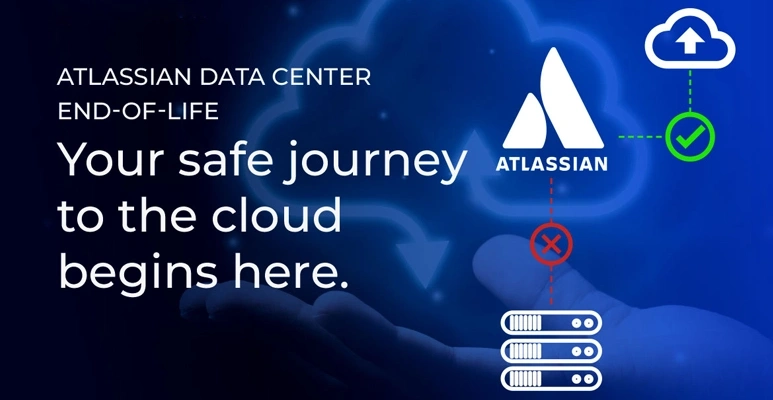
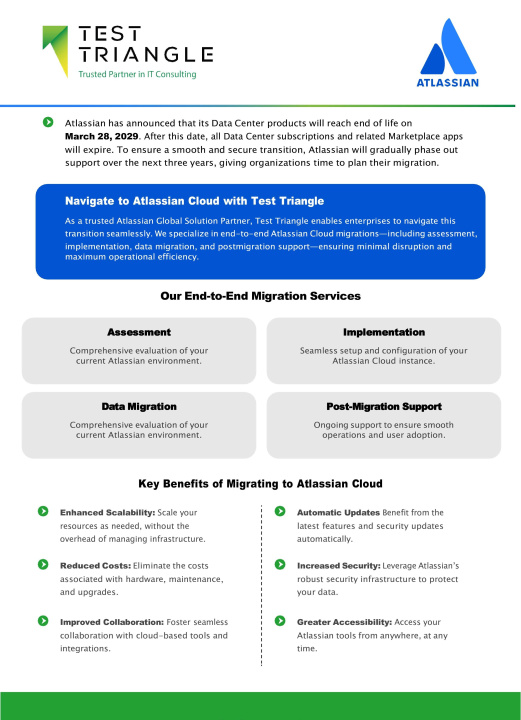
Atlassian Update: Atlassian has officially announced that its Data Centre products will reach end of life on March 28, 2029. After this date, all Data Centre subscriptions, along with related Marketplace apps will expire.
Over the next three years, Atlassian will begin a gradual phase-out of support, giving organisations time to assess their environments, plan migrations, and ensure business continuity. This transition period is designed to help teams move thoughtfully and securely, whether that means adopting Atlassian Cloud or exploring alternative solutions.
For organisations currently running Jira, Confluence, Bitbucket or other Atlassian Data Centre products, now is the time to:
1. Review your existing deployment 2. Understand the migration paths available 3. Build a realistic timeline for transition 4. Engage with partners or experts who can support your move
Test Triangle Announces Strategic Partnership with Alemba
Test Triangle is proud to announce a new strategic partnership with Alemba, a leading provider of enterprise-class IT Service Management (ITSM) software. Through this collaboration, Test Triangle will offer Alemba Service Manager (ASM) to organizations across its core markets, with a particular focus on Ireland and India.
This partnership enhances Test Triangle’s mission to deliver cutting-edge digital transformation solutions that empower clients to drive operational efficiency and maximize the value of their technology investments.
“At Test Triangle, we are constantly seeking innovative technologies that empower our clients to stay ahead in a rapidly evolving digital landscape,” said Praveen Madire, CEO of Test Triangle. “Alemba Service Manager offers a modern, scalable ITSM platform that complements our digital transformation strategy. We look forward to introducing ASM to our clients across Ireland, India, and beyond.”
With deep expertise in software delivery, quality assurance, and managed services, Test Triangle supports enterprise clients globally in achieving smarter, more agile IT operations. The addition of Alemba Service Manager to its portfolio reinforces Test Triangle’s commitment to offering best-in-class service management solutions.
“We’re excited to welcome Test Triangle into our growing partner network,” said Emily Taggart, General Manager of Alemba. “Their reputation as a trusted consulting partner and their extensive reach in Ireland and India make them an ideal match for Alemba as we continue to expand our global footprint.”
The partnership is now live, with both companies actively collaborating to bring the benefits of Alemba Service Manager to new customers across key global markets.
We use cookies to improve your experience on the website. By consenting, you agree that we use third party cookies to improve your browsing experience. Read More about our Privacy Statement. Accept
Privacy & Cookies Policy
Privacy Overview
This website uses cookies to improve your experience while you navigate through the website. Out of these, the cookies that are categorized as necessary are stored on your browser as they are essential for the working of basic functionalities of the website. We also use third-party cookies that help us analyze and understand how you use this website. These cookies will be stored in your browser only with your consent. You also have the option to opt-out of these cookies. But opting out of some of these cookies may affect your browsing experience.
Necessary cookies are absolutely essential for the website to function properly. This category only includes cookies that ensures basic functionalities and security features of the website. These cookies do not store any personal information.
Any cookies that may not be particularly necessary for the website to function and is used specifically to collect user personal data via analytics, ads, other embedded contents are termed as non-necessary cookies. It is mandatory to procure user consent prior to running these cookies on your website.