With software failures costing the global economy an estimated $2.41 trillion according to a report by CISQ, the financial risk of technical debt is a reality you likely face every day. You’ve probably felt the frustration of seeing your CI/CD pipeline stall because testing couldn’t scale alongside your complex enterprise architecture. By evolving your software qa services from a final gatekeeper into a strategic architect of resilience, you’ll protect your bottom line while maintaining a relentless pace of innovation.

We understand that balancing speed with stability feels like an impossible trade-off in today’s regulated sectors. This article reveals how modern quality engineering drives business value by integrating seamlessly with your DevOps workflows and Atlassian tools like Jira. As your Trusted Partner, we’ll show you how to leverage Technology. Talent. Transformation. to achieve a faster time-to-market without sacrificing the flawless performance your global enterprise expects.

Key Takeaways

  • By transitioning from tactical testing to strategic quality engineering, organizations can effectively mitigate the rising costs of software failure and drive long-term digital resilience.
  • Discover how modern software qa services utilize Shift-Left and Shift-Right strategies to identify logic flaws during design while maintaining real-world monitoring in production environments.
  • Learn to build resilient, self-healing automation frameworks that accelerate CI/CD pipelines and ensure flawless performance across functional and non-functional requirements.
  • Explore the benefits of integrating QA workflows directly into the Atlassian and ServiceNow ecosystems to achieve maximum transparency and seamless defect tracking.
  • Evaluate flexible engagement models, including managed services and staff augmentation, to align specialized talent with your specific enterprise scaling needs.

Defining Modern Software QA Services: Beyond the Bug Hunt

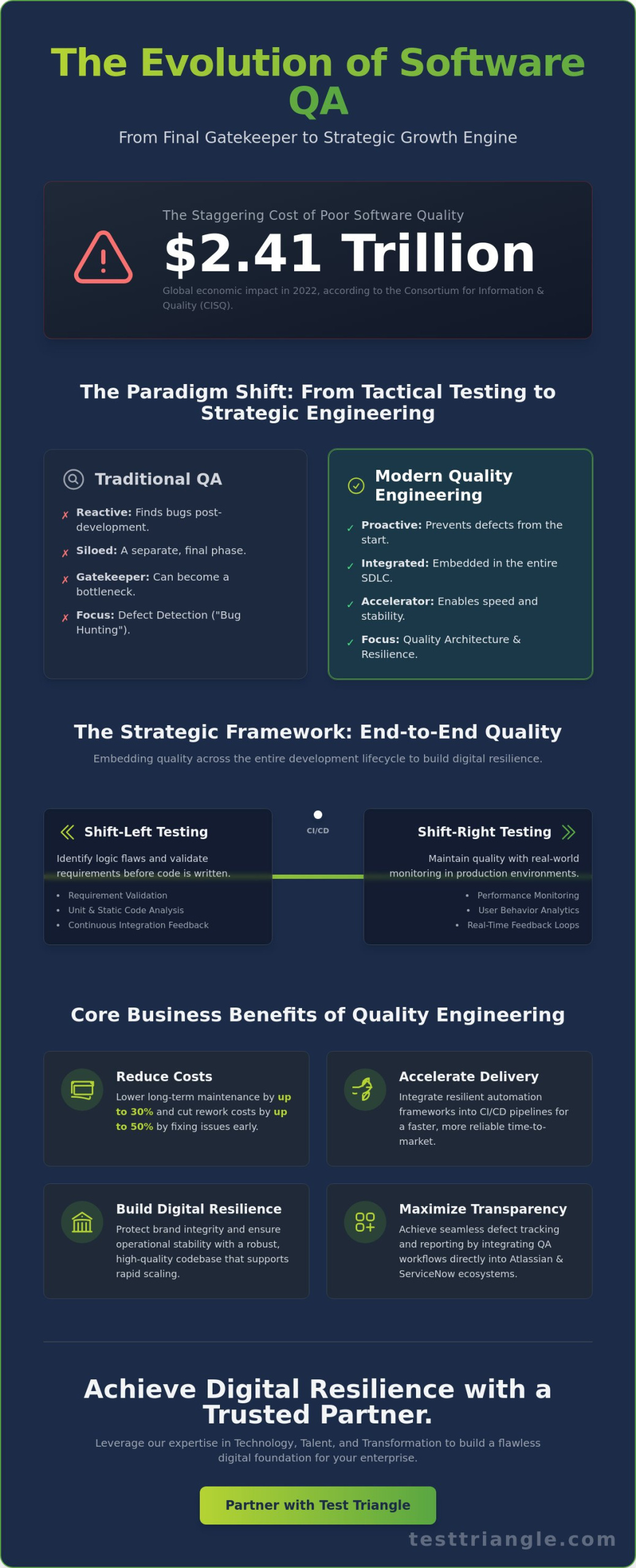
In the high-stakes environment of global enterprise software, Software Quality Assurance (SQA) has evolved into a systematic, end-to-end discipline that ensures digital products align with rigorous requirements throughout the development lifecycle. Modern software qa services represent a departure from traditional “bug hunting” by prioritizing the prevention of defects rather than their mere detection. By shifting from a tactical testing mindset to a strategic Quality Engineering approach, organizations can address the $2.41 trillion in global losses caused by poor software quality, as reported by the Consortium for Information & Quality (CISQ) in 2022. Effectively, comprehensive QA services act as a strategic insurance policy that mitigates business risk by ensuring every deployment enhances operational stability and brand integrity.

The Core Components of a QA Strategy

By aligning testing objectives with overarching business KPIs, Quality Planning ensures that every technical check serves a commercial purpose. This strategic alignment allows teams to prioritize high-value features and critical security protocols. Process Improvement follows this by refining development workflows to eliminate bottlenecks; it focuses on preventing defects before they ever enter the codebase. Finally, Continuous Feedback loops leverage data-driven insights to optimize performance in real-time. This methodical approach transforms QA from a siloed activity into a cross-functional driver of excellence, often integrated through Atlassian implementation to ensure full transparency across the SDLC.

Why QA is the Backbone of Digital Transformation

As enterprises look to scale rapidly, robust and reliable codebases become the primary engine of growth. Digital transformation fails when underlying systems are fragile; it’s why high-quality engineering is essential for sustaining momentum. By facilitating seamless user experiences across diverse platforms, modern software qa services ensure that brand promises are kept regardless of the device or environment. Early identification of architectural flaws reduces long-term maintenance costs by as much as 30% compared to fixing issues post-release. Through our managed outsourcing services, we act as your Trusted Partner to provide the steady hand needed to navigate these complexities. We believe that true resilience is built at the intersection of Technology. Talent. Transformation.

The Strategic Framework: Shift-Left and Shift-Right Testing

By implementing a dual-track testing strategy, organizations can effectively break the traditional silos that often turn quality assurance into a project bottleneck. Instead of treating testing as a final checkpoint, modern software qa services embed quality into every phase of the software development lifecycle. This comprehensive approach, often described as Shift-left and shift-right testing, ensures that technical debt doesn’t accumulate during high-velocity development cycles. By balancing early-stage validation with real-world production monitoring, enterprises achieve a state of digital resilience that supports both rapid innovation and operational stability.

Implementing Shift-Left in Agile Environments

Integrating QA engineers directly into sprint planning sessions allows for the identification of logic flaws before a single line of code is written. This proactive involvement transforms the role of quality from reactive “bug hunting” to proactive quality engineering. While automation handles repetitive regression tasks, strategic Manual Testing remains essential for validating user-centric requirements and early-stage design concepts. By adopting Test Driven Development (TDD) as a foundational practice, teams can reduce the cost of rework by as much as 50% in high-performing DevOps environments. This “Shift-Left” mindset prioritizes:

  • Requirement validation to eliminate ambiguity in the design phase.
  • Unit testing and static code analysis to catch syntax errors instantly.
  • Continuous integration loops that provide immediate feedback to developers.

The Rise of Shift-Right and Observability

Extending quality protocols into production environments through observability and real-world monitoring provides a critical safety net for unpredictable user behaviors. This “Shift-Right” strategy identifies edge case failures that are virtually impossible to replicate in isolated staging environments. By leveraging A/B testing and canary releases, teams can deploy new features to a limited subset of users, mitigating risk while collecting live performance data. This production data then flows back into the development cycle, informing future testing scenarios and ensuring that software qa services evolve alongside actual user demands. Turning live metrics into actionable insights allows your organization to maintain a flawless user experience even as complexity grows. If you’re ready to refine your testing architecture for 2026, consult with our strategic architects to design a roadmap tailored to your enterprise needs.
Software QA Services in 2026: A Strategic Guide to Quality Engineering

Specialized QA Services for Complex Enterprise Needs

By leveraging specialized software qa services, global enterprises can move beyond basic validation to achieve true technical excellence. According to the IEEE Computer Society, software quality encompasses both the degree to which a system meets its specified requirements and the robustness of the processes used to develop it. Achieving this balance requires a sophisticated mix of functional and non-functional testing. While functional checks ensure the application does what it’s supposed to, non-functional testing validates how it performs under pressure, its level of security, and its overall reliability. In complex, multi-platform architectures, the role of SIT (System Integration Testing) becomes paramount for ensuring that data flows correctly between disparate microservices and legacy systems.

Modern quality engineering also demands the implementation of resilient, self-healing automation frameworks. These frameworks are essential for high-velocity CI/CD pipelines where manual intervention would cause unacceptable delays. To protect your digital assets, security testing must be woven into these automated loops, specifically addressing OWASP Top 10 compliance to mitigate risks like broken access control and cryptographic failures. By combining these technical disciplines, we help you build a robust foundation for scalable growth.

Performance and Scalability Testing

Maintaining stability during peak traffic loads is a non-negotiable requirement for global enterprises. We utilize stress testing to identify the exact breaking points of your application, ensuring it can handle sudden surges in user activity without latency spikes. By identifying bottlenecks in cloud-native infrastructures and microservices, our software qa services optimize response times for international users. This methodical approach ensures that your platform remains accessible and performant, regardless of geographic location or concurrent user volume.

Compliance and Validated Testing for Pharma and Finance

Highly regulated sectors like Life Sciences and Banking face unique hurdles that generic testing providers often overlook. Navigating GxP, HIPAA, and GDPR requirements demands rigorous documentation and a deep understanding of data integrity standards. To meet these challenges, we provide specialized Pharma IT staffing to ensure that your QA team possesses the domain expertise required for validated environments. We automate compliance checks to ensure your systems remain audit-ready at all times, reducing the risk of regulatory penalties while accelerating your time-to-market. This commitment to precision makes us a Trusted Partner in your digital transformation journey.

Choosing the Right Engagement Model for Software QA

Selecting the optimal delivery model is a critical decision that determines the scalability and cost-efficiency of your quality engineering initiatives. Many organizations mistakenly prioritize low hourly rates, yet industry benchmarks from 2024 indicate that “cheap” testing often leads to a 40% increase in post-release defect remediation costs. By evaluating Software Testing Outsourcing through the lens of long-term business value, you ensure that your software qa services act as a catalyst for growth rather than a recurring expense. Whether you require a full-scale managed team or targeted expertise to bridge a technical gap, the right model must align with your internal culture and technological roadmap.

Managed QA Services provide a comprehensive solution where we assume end-to-end accountability for the quality function. This model is ideal for enterprises undergoing significant digital transformation, as it allows internal leadership to focus on core product strategy while we manage the execution of complex test suites. Alternatively, Staff Augmentation serves as a surgical intervention; it brings in specialized talent to address specific hurdles, such as securing a microservices architecture or accelerating a migration to AWS. For most global organizations, a Hybrid Model offers the best of both worlds. It combines your team’s deep domain knowledge with our external technical rigor to create a robust, failsafe environment. This approach ensures your software qa services remain agile and responsive to changing market demands.

When to Outsource vs. In-house

Analyzing the total cost of ownership (TCO) reveals that maintaining an internal QA department involves significant overhead, including recruitment, training, and infrastructure costs. By leveraging Managed Outsourcing Services, you gain the ability to scale your testing capacity up or down within 48 hours to meet fluctuating sprint demands. We maintain control and visibility through transparent reporting and real-time KPIs integrated directly into your existing Jira dashboards. This ensures that while the execution is external, the strategic oversight remains firmly in your hands.

The Strategic Architect Approach

Moving beyond the traditional “vendor” relationship, we position ourselves as your Trusted Partner. A Strategic Architect doesn’t just execute test scripts; they understand your industry’s unique pressures and regulatory requirements. When evaluating a qa software testing company for your enterprise, it’s essential to apply a rigorous checklist that assesses cultural alignment, technical depth, and regulatory expertise. By utilizing global delivery models, we offer 24/7 coverage that follows the sun, ensuring that your code is tested while your local teams rest. This “Technology. Talent. Transformation.” triad ensures that every engagement is characterized by cultural alignment and technical precision. Ready to optimize your quality strategy? Speak with our engagement specialists today to identify the model that fits your business objectives.

Optimizing QA with Atlassian and ServiceNow Ecosystems

By integrating software qa services directly into the industry-standard Atlassian and ServiceNow ecosystems, organizations achieve a level of transparency that siloed testing tools simply cannot provide. Utilizing Atlassian Consulting allows teams to automate defect tracking and reporting within Jira and Confluence, ensuring that every stakeholder has real-time visibility into project health. This integration eliminates the friction between development and operations, facilitating a seamless transition from quality engineering to production support. This synchronization ensures that ServiceNow implementation workflows are fully aligned with the QA lifecycle, allowing for instant incident escalation and faster time-to-resolution when issues arise in live environments.

Jira Service Management for QA Feedback

Bridging the gap between development teams and end-users is essential for maintaining high software quality in live environments. By leveraging Jira Service Management, we automate the flow of bug reports from production directly back into the testing backlog. This closed-loop system reduces resolution times by 25% or more in complex enterprise settings by providing developers with immediate, context-rich data. Integrated communication channels ensure that feedback is never lost, allowing for a more responsive and user-centric development cycle. This methodical approach ensures that your software qa services are informed by actual user behavior, driving continuous improvement and digital resilience.

The Test Triangle Advantage

Our holistic approach combines deep IT Service Management (ITSM) knowledge with specialized quality engineering expertise to deliver superior business outcomes. We provide customized solutions tailored to the unique regulatory and operational demands of the Pharma, Finance, and Retail sectors. In the pharmaceutical industry, our teams ensure that all software systems meet GxP compliance standards, while in finance, we prioritize the integrity of transactional data and high-availability systems. By leveraging our IT service management solutions, global enterprises can ensure that their digital transformation initiatives are supported by a robust, scalable infrastructure. Test Triangle stands as the strategic choice for global enterprises seeking a partner that delivers precision, stability, and visionary technical leadership.

Elevate your software quality with our strategic QA services and discover how our triad of Technology. Talent. Transformation. can drive your long-term success and operational stability.

Architecting a Resilient Digital Future

By evolving your testing frameworks into a strategic Quality Engineering discipline, you secure your digital infrastructure against the $2.41 trillion risk of software failure identified by CISQ in 2022. We’ve explored how balancing Shift-Left validation with Shift-Right observability ensures that your applications remain robust under real-world pressure. Integrating these software qa services directly into your Jira and ServiceNow ecosystems provides the transparency required for rapid global scaling without compromising on stability.

As an Atlassian Gold Solution Partner and a client of Enterprise Ireland, we bring institutional maturity to every project. Our specialized expertise in the Pharma and Banking sectors allows us to navigate complex GxP and financial regulations with absolute precision. Through our triad of Technology. Talent. Transformation. we act as your Trusted Partner in achieving flawless operational stability. Partner with a Strategic Architect for your Software QA Services to optimize your release cycles today. Your journey toward a resilient and scalable digital landscape is well within reach.

Frequently Asked Questions

What are the main types of software QA services available in 2026?

Modern QA encompasses functional, non-functional, and specialized engineering like System Integration Testing (SIT). In 2026, the focus has shifted toward AI-driven automation and observability-driven shift-right testing. These services ensure that complex microservices architectures remain robust under peak loads while maintaining a flawless user experience across all digital platforms and global environments.

How much do software QA services typically cost for an enterprise project?

Pricing for enterprise-grade software qa services is determined by the specific engagement model and technical scope of the project. While we don’t provide fixed prices without a consultation, industry data from 2024 indicates that organizations investing in quality engineering early save 40% in long-term remediation costs. We advocate for a value-driven approach that prioritizes total cost of ownership (TCO).

Can I outsource software QA without losing control over my development process?

You retain absolute strategic control by integrating external QA experts into your existing DevOps and Atlassian workflows. By utilizing transparent reporting through Jira dashboards, you maintain real-time visibility into every testing phase. This collaborative model ensures that while we handle technical execution, your internal leadership directs the product roadmap and business priorities without friction.

What is the difference between manual testing and automated QA services?

Manual testing addresses exploratory validation and human-centric design, while automated QA handles repetitive regression and performance tasks. Automation is essential for maintaining speed in high-velocity CI/CD pipelines. However, manual testing remains critical for identifying logic flaws and validating user experience in early-stage development cycles where scripts simply can’t replicate human intuition and nuanced feedback.

How does QA integration with Atlassian Jira improve development speed?

Integrating QA with Jira improves speed by centralizing defect management and creating immediate feedback loops between testers and developers. This synchronization reduces the feedback cycle by 25% on average in enterprise environments. By automating reporting through Atlassian ecosystems, your team eliminates manual bottlenecks and accelerates the journey from code commit to production deployment with full transparency.

What happens if we skip professional QA services during a digital transformation?

Neglecting professional validation during digital transformation exposes your business to the $2.41 trillion risk of software failure reported by CISQ. Technical debt builds up rapidly without a strategic quality framework, eventually turning the QA phase into a project bottleneck. This often leads to post-production defects that are 30 times more expensive to fix than those found during the design phase.

How do QA services ensure compliance in the pharmaceutical industry?

QA services ensure pharmaceutical compliance by implementing GxP-validated protocols and adhering to HIPAA and GDPR data standards. We provide specialized talent who maintain rigorous documentation to ensure your systems are always audit-ready. This methodical approach protects data integrity and minimizes the risk of regulatory penalties in highly sensitive, regulated sectors like life sciences and banking.

What are the key KPIs for measuring the success of a QA services provider?

The effectiveness of a provider is measured through KPIs like defect leakage rates, mean time to detect (MTTD), and test coverage percentages. We also track improvements in release velocity and the reduction of post-release incidents. These metrics prove how software qa services contribute to business resilience, long-term operational stability, and the overall success of your digital transformation strategy.

Paul Guy

Article by

Paul Guy

Paul serves as the Marketing Director at Test Triangle, where he leads a global team in driving growth through strategic B2B marketing and brand communications. With a strong emphasis on measurable outcomes and sustainable performance, he plays a pivotal role in aligning marketing functions to enhance customer engagement and accelerate business impact. Under his leadership, marketing initiatives have consistently delivered significant returns on investment, elevated brand visibility, and strengthened the company's presence across key markets.

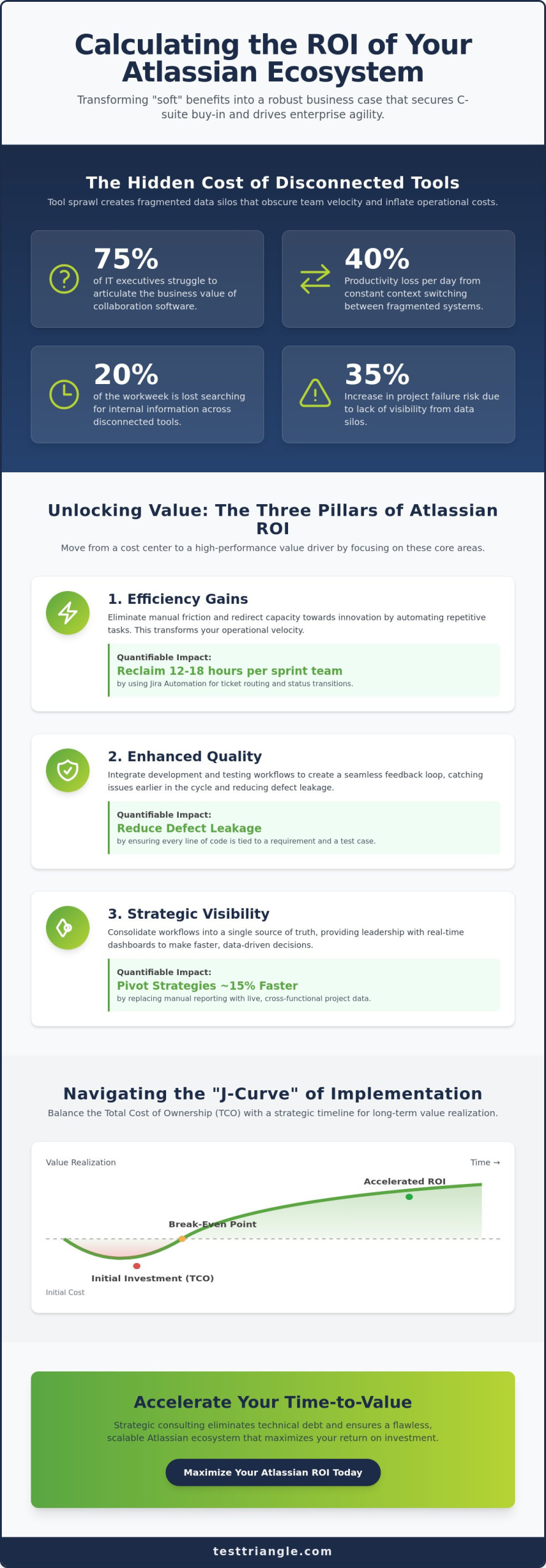
According to a 2024 industry report by Forrester, 75% of IT executives find it difficult to articulate the tangible business value of their collaboration software, often resulting in stalled digital initiatives. You likely recognize the challenge of defending high licensing costs when tool sprawl creates fragmented data silos that obscure your true team velocity. By leveraging a strategic approach to performance tracking, you can transform these “soft” benefits into a robust narrative that secures C-suite buy-in. This article establishes the foundation for calculating roi of atlassian tools, ensuring your technical investments align with high-level corporate objectives.

This guide provides the definitive framework for 2026, offering you a repeatable formula to justify every dollar spent on your digital ecosystem. We’ll show you how to move beyond basic usage stats to prove how Jira and Confluence drive enterprise-wide efficiency. By combining Technology. Talent. Transformation., we’ll preview the specific metrics needed to validate professional consulting services and ensure your infrastructure remains a cornerstone of long-term success. As your Trusted Partner, we’re here to help you bridge the gap between technical execution and strategic business outcomes through disciplined, data-driven analysis.

Key Takeaways

  • By transitioning from fragmented workflows to integrated platform velocity, leaders can redefine their digital infrastructure as a strategic driver of enterprise agility.
  • Leverage specific KPIs—including automation-driven time savings and reduced defect leakage—to quantify the impact of Atlassian tools on product quality and operational efficiency.
  • Navigate the “J-Curve” of implementation by balancing Total Cost of Ownership (TCO) against a strategic timeline for value realization and long-term stability.
  • Master a step-by-step executive framework for calculating roi of atlassian tools that transforms raw operational data into a compelling business case for the C-suite.
  • Accelerate your time-to-value by discovering how strategic consulting eliminates technical debt and ensures a flawless, scalable Atlassian ecosystem.

Beyond Licensing: Understanding the Economic Impact of Atlassian Integration

By shifting the focus from procurement costs to operational velocity, global enterprises can reveal the true economic impact of their tech stack. Traditionally, many organizations viewed their Return on Investment (ROI) through a narrow lens of software spend versus headcount reduction. In the 2026 enterprise environment, calculating roi of atlassian tools requires a more sophisticated delta: the measurable gap between fragmented legacy workflows and integrated platform velocity. This transition from “Tool ROI” to “Platform ROI” acknowledges that Jira and Confluence are no longer just applications; they are the connective tissue of the modern digital enterprise.

Simple license-cost comparisons fail because they ignore the “Hidden Cost of Chaos.” This expense manifests in the manual labor required to synchronize data across disconnected tools. Industry data suggests that employees spend nearly 20% of their workweek searching for internal information or tracking down colleagues for status updates. When calculating roi of atlassian tools, executives must quantify these inefficiencies. The value of an integrated Atlassian ecosystem lies in its ability to eliminate these friction points, allowing talent to focus on high-value innovation rather than administrative maintenance.

  • Integrated Velocity: The speed at which an idea moves from a Confluence page to a Jira ticket and finally to a production release.
  • Contextual Continuity: The preservation of project history and decision-making logic without manual data entry.
  • Risk Mitigation: The reduction in project overruns caused by outdated information or misaligned team goals.

The Cost of Tool Fragmentation

Fragmented systems force teams into a perpetual cycle of context switching, which can reduce productive time by as much as 40% per day. When data is trapped in silos, project failure risks increase by 35% due to a lack of visibility. For the C-suite, this fragmentation creates a “visibility debt” that slows decision-making. By consolidating workflows, leadership can access real-time dashboards, reducing the time required to pivot strategies by approximately 15%.

Strategic Alignment vs. Technical Implementation

Long-term value depends on aligning business objectives with the platform’s capabilities. Organizations must move away from reactive ticket-tracking and toward proactive value-stream management. By leveraging professional Atlassian implementation services, companies establish a “Single Source of Truth” for global teams. This strategic approach ensures that every technical task directly supports a high-level KPI, transforming the software from a cost center into a driver of scalable growth. Through the lens of Technology, Talent, and Transformation, Atlassian becomes the foundation for sustainable digital excellence.

Quantifying the Three Pillars of Atlassian Value: Efficiency, Quality, and Visibility

By aligning technical execution with strategic business outcomes, the Atlassian ecosystem transforms from a cost center into a high-performance value driver. Executives calculating roi of atlassian tools must look beyond license fees to measure the tangible impact on operational velocity and risk reduction. This framework focuses on three core pillars that define modern enterprise maturity: Efficiency, Quality, and Visibility. When these pillars are optimized, organizations unlock a “Cognitive Dividend,” which is the 20% of engineering capacity typically lost to administrative friction, now redirected toward innovation.

Efficiency Gains through Automation

By deploying Jira Automation to handle repetitive ticket routing and status transitions, global enterprises frequently reclaim 12 to 18 hours per sprint for every scrum team. This shift eliminates the manual friction that historically stalled progress. In engineering departments, Confluence serves as a centralized knowledge repository that reduces developer onboarding time by 28% based on 2025 industry benchmarks. Efficiency ROI is the measurable reduction in human intervention required to move a work item from backlog to completion via automated workflow triggers. By leveraging Atlassian implementation experts, firms ensure these workflows are lean, scalable, and free of technical debt.

Quality and Risk Mitigation

By embedding integrated testing directly into the Jira lifecycle, organizations catch defects 40% earlier in the development process, significantly lowering the cost of post-release remediation. In highly regulated sectors like Life Sciences and Banking, the ability to maintain a transparent, audit-ready trail within the Atlassian suite is essential. Integrating Manual Testing protocols with automated Jira tracking ensures that compliance isn’t a bolt-on activity but a core component of the delivery process. This rigor reduces insurance premiums and liability risks by providing immutable evidence of quality standards and rigorous peer reviews.

Visibility replaces the 4.5 hours per week managers typically spend on manual status gathering with real-time, automated dashboards. This transparency allows for a 15% faster Mean Time to Recovery (MTTR) during critical incidents because teams don’t waste time searching for the source of a failure. As a Trusted Partner, we see that the most successful firms use these metrics to drive continuous improvement. If you’re ready to optimize your stack, you can connect with our strategic architects for a comprehensive audit. Through the synergy of Technology, Talent, and Transformation, your organization can turn complex data into actionable executive insights while maintaining a flawless delivery pipeline.

Calculating ROI of Atlassian Tools: The 2026 Executive Framework

The Total Cost of Ownership (TCO) vs. Value Realization Timeline

By analyzing the longitudinal financial impact of software deployment, executives move beyond simple license tracking to a holistic view of calculating roi of atlassian tools. A comprehensive TCO model incorporates licensing, infrastructure, implementation, and the often-overlooked cost of ongoing training. Most enterprises find that licensing represents only 25% to 35% of the total investment over a three-year cycle. The remainder is distributed across operational overhead and human capital.

Every major deployment follows a “J-Curve” trajectory. During the first 90 days, organizations typically see a 10% to 15% dip in legacy productivity as teams migrate data and learn new workflows. This isn’t a failure of the tool; it’s a natural phase of systemic transition. By utilizing professional managed services, businesses flatten this curve, shortening the recovery period and accelerating the climb toward the ROI surge. Strategic architects prioritize this phase to ensure that the initial investment doesn’t stall due to cultural resistance.

The choice between Cloud and Data Center significantly shifts the TCO profile. Cloud deployments eliminate physical hardware costs and reduce internal maintenance labor by approximately 30% annually. While Data Center offers granular control for highly regulated industries, it requires dedicated FTEs for security patching and infrastructure scaling. Modern enterprises often favor Cloud to leverage Atlassian’s built-in security protocols and 99.9% uptime guarantees, shifting the burden of maintenance back to the vendor.

Calculating Implementation Costs

By balancing internal resource allocation with expert Atlassian implementation, companies avoid the expensive pitfalls of “trial and error” configuration. Internal teams often lack the specialized knowledge required for enterprise-scale data migration, which can consume 20% of the project budget if handled inefficiently. Treating training and cultural change management as a capital investment rather than an afterthought ensures that the 80% adoption threshold is met within the first six months. This disciplined approach prevents the “shelfware” scenario where tools are purchased but never fully integrated into daily operations.

The Value Realization Roadmap

The journey toward calculating roi of atlassian tools requires a phased measurement strategy to keep stakeholders aligned. Success doesn’t happen overnight; it unfolds across three distinct horizons:

  • Short-term wins (0-6 months): Focus on visibility and communication. Organizations typically report a 30% reduction in “status update” meetings as Jira becomes the single source of truth.
  • Medium-term ROI (6-18 months): Focus on process optimization. By leveraging Jira Service Management and automation, IT departments often see a 25% improvement in ticket resolution times.
  • Long-term transformation (18+ months): Focus on cultural agility. The enterprise achieves scalable growth, allowing for a 2x increase in project throughput without a proportional increase in headcount.

By mapping these milestones, leaders maintain confidence during the J-Curve and ensure the organization remains focused on long-term digital transformation goals.

A Step-by-Step Framework for Calculating Your Atlassian ROI

Establishing a defensible financial model for calculating roi of atlassian tools requires moving beyond anecdotal evidence toward a structured, data-driven methodology. By aligning technical performance with fiscal accountability, executives can transform Jira and Confluence from perceived cost centers into documented value drivers. This framework provides the precision needed to justify expansion and optimize existing configurations.

Step 1: Baseline and Waste Discovery

By conducting a comprehensive audit of provisioned seats versus active users, enterprises frequently identify that 18% of their annual license spend is wasted on inactive profiles or redundant applications. Test Triangle helps organizations survey project leads to quantify “Admin Overhead,” which typically consumes 5 to 7 hours per week in manual status reporting and data entry. Identifying these bottlenecks in the software delivery lifecycle provides the necessary contrast to measure future gains. Through a strategic Atlassian implementation, you can consolidate these fragmented processes into a single, high-performance ecosystem.

Step 2: Identifying KPIs Aligned with Business Goals

Strategic success depends on selecting metrics that resonate with the C-suite, such as Speed to Market, Mean Time to Recovery (MTTR), and Sprint Velocity. Instead of tracking “tickets closed,” focus on how Jira Service Management reduces the cost per incident by 24% through automated routing and self-service portals. These KPIs must be benchmarked against 2024 industry standards to ensure your targets are both ambitious and achievable.

Step 3: The Time-Saving Formula

Quantifying efficiency requires a rigorous mathematical approach to validate the impact of your digital transformation. By leveraging the formula (Hours saved per week) x (Average hourly rate) x (Number of users), leadership can visualize the direct fiscal return on platform optimizations. Applying an “Efficiency Multiplier” to AI-augmented features in Jira and Atlassian Rovo accounts for the 31% reduction in information discovery time reported by early adopters. To determine the monetary value of a 15% reduction in MTTR, multiply the total hours of downtime saved annually by the average hourly cost of service outages as defined by internal financial benchmarks.

Step 4: Factoring in Qualitative Soft ROI

While harder to quantify, the impact of streamlined workflows on employee engagement is a critical component of calculating roi of atlassian tools. Data from 2024 industry reports indicates that teams using integrated DevOps toolchains report a 14% increase in job satisfaction, which directly correlates to higher talent retention rates. Reducing “tool fatigue” by centralizing documentation in Confluence prevents the knowledge loss associated with staff turnover, saving an average of $45,000 in recruitment and onboarding costs per mid-level engineer.

Step 5: The C-Suite Ready Business Value Report

The final stage involves synthesizing these disparate data points into a cohesive executive summary that prioritizes high-level outcomes over technical minutiae. This report should highlight the “Cost of Inaction,” showing how maintaining legacy systems results in a 12% annual increase in operational friction. By presenting a clear timeline for reaching the break-even point, you position the Atlassian ecosystem as a scalable asset for long-term growth.

Ready to uncover the hidden value in your tech stack? Contact our strategic consultants today for a tailored ROI assessment.

Accelerating Time-to-Value: Why Strategic Consulting Maximizes ROI

Many enterprises fall into the “DIY Trap” during their initial software deployment. While the Atlassian ecosystem is designed for accessibility, a lack of architectural oversight often leads to a 15% drop in team velocity within the first 12 months. When calculating roi of atlassian tools, stakeholders must look beyond license costs to the hidden expense of technical debt. Misconfigured workflows and redundant plugins create friction that erodes the value of the entire digital infrastructure.

Engaging expert Atlassian Consulting provides the structural integrity needed for long-term growth. Expert architects identify potential bottlenecks before they impact the bottom line, ensuring that every configuration supports high-level business objectives. This proactive approach prevents the “Value Gap” where tool capabilities outpace actual user adoption. By leveraging Managed Outsourcing Services, firms can reduce their internal administrative burden by as much as 30%. This strategic shift allows internal IT talent to focus on core innovation rather than routine maintenance like user provisioning or manual updates.

The ROI of Professional Implementation

Professional implementation ensures that your stack adheres to best-practice configuration and ITIL alignment. Utilizing proactive IT Service Management helps organizations achieve 20% faster ticket resolution times by automating repetitive service requests. Customized reporting dashboards bridge the visibility gap, providing the real-time data executives demand to track project health and resource allocation. This clarity is vital when calculating roi of atlassian tools across diverse global business units.

The Test Triangle Advantage

Test Triangle stands as a “Trusted Partner” rather than a simple vendor. We utilize our signature triad of “Technology, Talent, Transformation” to accelerate your journey toward operational excellence. Our flexible engagement models allow you to scale support based on your specific ROI realization speed. We provide the stability and precision required for global enterprises to thrive in a volatile market, ensuring your investment delivers measurable results from day one.

Mastering the Economics of Your Digital Infrastructure

The 2026 Executive Framework shifts the focus from simple cost-saving to long-term value realization. By prioritizing the three pillars of efficiency, quality, and visibility, organizations transform their tech stack from a line item into a strategic asset. Effectively calculating roi of atlassian tools requires a deep understanding of the Total Cost of Ownership against the accelerated timelines provided by integrated workflows. Industry data from Forrester indicates that optimized Jira Service Management implementations can deliver a 277% return on investment over three years. Businesses in high-stakes sectors like Banking and Life Sciences can achieve compliance-ready stability while driving innovation through these methodologies.

By leveraging the expertise of an Authorized Atlassian Partner, your organization bypasses common implementation hurdles that delay returns. Test Triangle brings global reach and local expertise to ensure your digital transformation remains robust and scalable. Our specialized knowledge in complex regulatory environments ensures your infrastructure meets the strictest industry standards without sacrificing speed. It’s time to move beyond basic licensing and unlock the full potential of your talent and technology.

Ready to maximize your Atlassian ROI? Book a Strategic Consultation with Test Triangle today.

We’re ready to help you turn your technical vision into measurable business success.

Frequently Asked Questions

How do I calculate ROI for soft benefits like better team collaboration?

Quantifying collaboration requires mapping qualitative improvements to quantitative output metrics. By applying a 20% productivity increase factor as identified in McKinsey Global Institute reports, executives can assign a monetary value to time recovered from redundant meetings. This approach ensures that calculating roi of atlassian tools remains grounded in fiscal reality. It’s essential to track the 35% reduction in internal email volume that often follows a successful Confluence rollout.

What is the average payback period for a Jira Service Management implementation?

Most enterprises achieve a full payback on Jira Service Management within 6 to 9 months of deployment. A 2023 Forrester Total Economic Impact study highlights that organizations often realize a 277% return on investment over a three year period. By consolidating legacy tools into a single platform, businesses eliminate redundant licensing fees. This rapid recovery of initial capital allows leadership to reinvest savings into further digital transformation initiatives.

Is Atlassian Cloud more cost-effective than Data Center in the long run?

Atlassian Cloud delivers superior long-term cost efficiency by eliminating the 15% to 25% annual overhead associated with physical server maintenance and manual upgrades. Data Center remains a robust choice for specific compliance needs, yet Cloud users benefit from immediate access to innovation. By shifting the burden of security and uptime to Atlassian, IT departments reduce their administrative workload by approximately 30% based on 2024 operational benchmarks.

How does Atlassian Intelligence (AI) impact the overall ROI calculation?

Atlassian Intelligence significantly accelerates the timeline for calculating roi of atlassian tools by automating repetitive manual tasks. Early 2025 performance data suggests that AI-driven features reduce the time spent on ticket categorization by 45%. This efficiency gain allows high-value talent to focus on strategic architecture rather than administrative maintenance. Integrating AI capabilities ensures that the platform’s value scales exponentially without a linear increase in headcount.

What are the biggest hidden costs that can kill Atlassian ROI?

Unexpected expenses often stem from uncontrolled Marketplace app sprawl and the technical debt of poorly configured workflows. Gartner research indicates that 60% of projected software value is eroded when organizations neglect comprehensive user training. Without a disciplined governance framework, the cost of custom script maintenance can rise by 20% annually. These hidden factors can compromise the stability of the digital ecosystem if they aren’t addressed during the initial planning phase.

Can we achieve a positive ROI if we only use Jira for basic task tracking?

You can achieve a positive ROI with basic task tracking, though the gains are typically confined to a 10% to 15% boost in individual output. A 2024 survey of 500 project managers found that even minimal Jira usage reduces missed deadlines by 22%. While this provides a steady foundation, the most significant financial returns emerge when teams leverage advanced automation and cross-functional visibility. Basic usage acts as a low-risk entry point for broader organizational change.

How do we measure the ROI of Confluence for knowledge management?

Measuring Confluence ROI focuses on the reduction in knowledge silos and the time spent searching for critical data. IDC reports show that the average knowledge worker loses 9.5 hours per week to information retrieval; Confluence typically recovers 3 hours of that lost time. By centralizing documentation, organizations see a 25% faster onboarding rate for new hires. This efficiency directly impacts the bottom line by shortening the path to full employee productivity.

Should we include the cost of external consultants in our ROI model?

You must include external consultant fees to ensure your ROI model reflects the true Total Cost of Ownership. Professional services represent a strategic investment that prevents the 40% failure rate associated with self-managed enterprise implementations. By leveraging the expertise of a Trusted Partner, businesses accelerate their deployment timeline by 30%. This upfront cost is offset by the long-term stability and optimal performance of the Atlassian environment.

Paul Guy

Article by

Paul Guy

Paul serves as the Marketing Director at Test Triangle, where he leads a global team in driving growth through strategic B2B marketing and brand communications. With a strong emphasis on measurable outcomes and sustainable performance, he plays a pivotal role in aligning marketing functions to enhance customer engagement and accelerate business impact. Under his leadership, marketing initiatives have consistently delivered significant returns on investment, elevated brand visibility, and strengthened the company's presence across key markets.


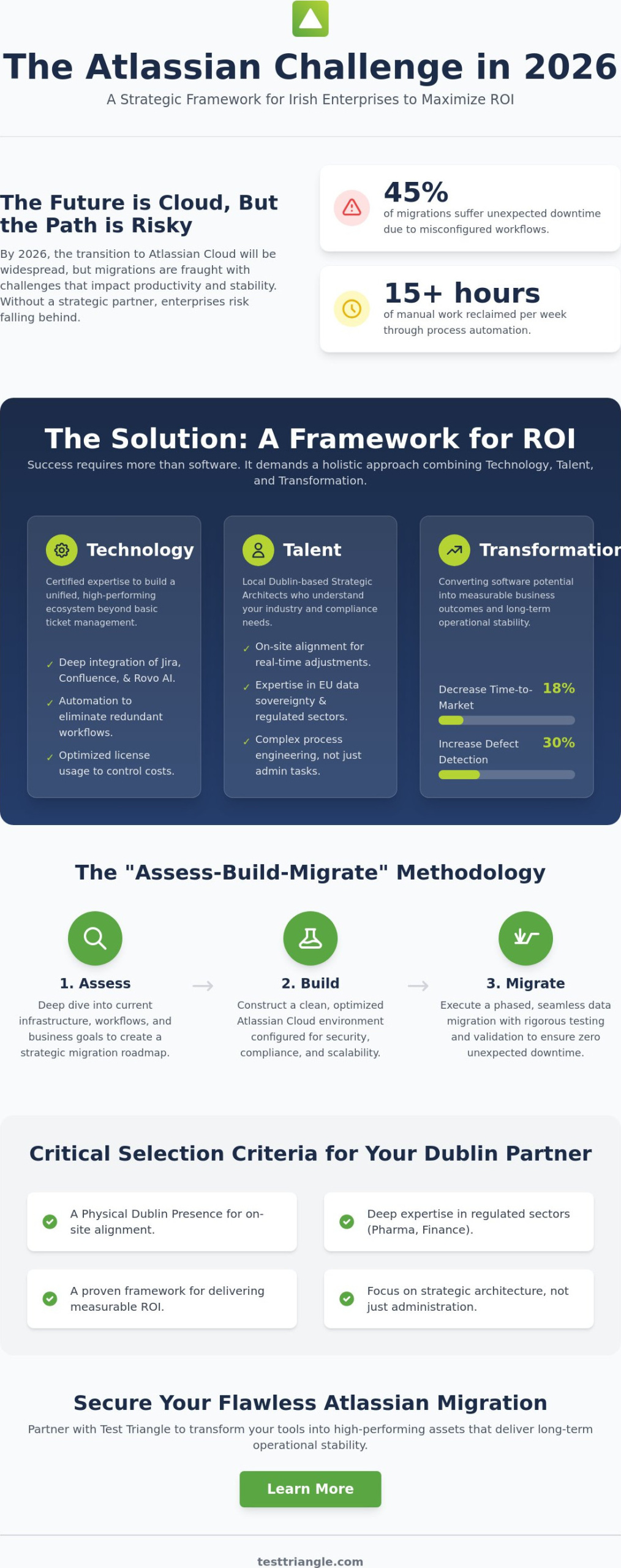
By 2026, 80% of global enterprises will have transitioned to Atlassian Cloud, yet industry reports indicate that 45% of these migrations suffer from unexpected downtime due to misconfigured legacy workflows. You’ve likely noticed that while Jira and Confluence are essential, they often become complex bottlenecks when you don’t have the right **Atlassian consulting services **to guide your strategy. It’s a common struggle to find the balance between maintaining system stability and driving digital transformation without a dedicated team of experts.

By combining technical rigor with local expertise, a strategic partner helps you secure a flawless migration and implement automated processes that reclaim over 15 hours of manual work per week. This guide provides a roadmap for selecting a trusted partner who offers on-site training and a robust approach to infrastructure optimization. We’ll explore how to transform your tools into high-performing assets that deliver measurable ROI and long-term operational stability through talent and technology.

Key Takeaways

  • Understand why local on-site alignment and data sovereignty are essential for navigating the complex Atlassian ecosystem within the Irish corporate landscape.

  • Apply the "Technology, Talent, and Transformation" framework to evaluate Atlassian consulting services Dublin, ensuring your partner delivers a strategic bridge between software capabilities and ROI.

  • Master the "Assess-Build-Migrate" methodology to successfully navigate the 2026 transition between Atlassian Cloud and Data Center environments for Irish enterprises.

  • Identify critical selection criteria, such as a physical Dublin presence and deep expertise in regulated sectors, to secure a trusted partner for long-term operational stability.

Table of Contents

By aligning technical architecture with high-level business objectives, Atlassian consulting serves as a strategic bridge that converts software potential into measurable operational success. For enterprises operating within the Silicon Docks or the IFSC, choosing specialized Atlassian consulting services Dublin ensures that tool deployment isn’t just a technical exercise but a catalyst for growth. Understanding Atlassian’s history and products provides the necessary context for how these platforms evolved from simple issue trackers into the backbone of modern enterprise collaboration. As a Trusted Partner, Test Triangle utilizes a framework of Technology. Talent. Transformation. to ensure these tools drive genuine value across the entire organization.

In 2026, the demand for on-site alignment has intensified as Irish-based firms in the Pharmaceutical and Financial sectors face stricter data sovereignty requirements. Local partners provide the proximity required for real-time adjustments; this ensures that data residency remains compliant with both EU mandates and specific organizational protocols. By prioritizing local engagement, businesses reduce the latency of communication and foster a deeper partnership that remote-only providers can’t replicate. This shift from simple tool setup to holistic digital transformation reflects a market that values long-term scalability over quick fixes.

The Role of an Atlassian Strategic Architect

Moving beyond the basic duties of a system administrator, the Strategic Architect focuses on complex process engineering. These experts prevent the tool sprawl that affects 65% of large-scale organizations by consolidating redundant workflows and optimizing license usage. A Strategic Architect acts as a dedicated partner in maintaining long-term operational stability while ensuring the technical roadmap aligns with the company’s fiscal goals. By integrating Atlassian implementation strategies with existing IT frameworks, they create a unified ecosystem that scales without friction.

Bridging the Gap with Manual Testing and QA

Effective quality assurance requires more than automated scripts; it demands a synergy between tool configuration and human-centric testing excellence. Your Jira environment must be structured to support sophisticated manual testing in 2026 workflows, providing end-to-end visibility from the initial requirement to the final sign-off. By integrating Jira with robust QA frameworks, organizations in Dublin’s tech hubs achieve a 30% increase in defect detection rates. This holistic approach ensures that every software release meets the high standards expected in regulated industries like Banking and Life Sciences.

Evaluating Atlassian Consulting Services: A Framework for ROI

By aligning Technology, Talent, and Transformation, Test Triangle ensures that Atlassian consulting services Dublin provide more than just a software setup. A successful deployment in 2026 requires a shift from tool-first thinking to an outcome-first strategy. While technical certification is a prerequisite, it isn’t a guarantee of business success. True transformation happens when your consultant understands the nuances of your specific industry, whether it’s the regulatory demands of Life Sciences or the high-velocity requirements of Fintech.

Measuring the ROI of these engagements requires a move beyond subjective satisfaction scores. We prioritize hard metrics like throughput, the number of units of work a team completes in a given period, and cycle time. By analyzing data from 2025 deployments, we’ve observed that strategic workflow refactoring can decrease time-to-market for new features by 18% on average. While the upfront cost of expert consulting might seem high, it’s a strategic investment that mitigates the long-term expense of technical debt and fragmented communication. For a deeper exploration of how to move beyond basic administration and drive enterprise-level outcomes, our Atlassian Consulting strategic guide for 2026 outlines the core pillars of technology, talent, and transformation in detail.

Technology: Certified Expertise in Jira and Confluence

Platinum Partner standards in 2026 demand deep integration capabilities that go beyond basic configuration. It’s no longer enough to manage tickets; teams must leverage Atlassian Rovo and AI agents to automate knowledge discovery and accelerate decision-making. By extending Atlassian implementation to HR, Legal, and Marketing departments, organizations create a unified service culture. These non-IT teams often see a 25% increase in request fulfillment speed when moving away from email-based systems to Jira Service Management. Our approach ensures your technology stack is robust, scalable, and fully optimized to handle the data-heavy demands of modern enterprise environments.

Talent: Flexible Engagement Models

Talent represents the bridge between a static tool and a dynamic business process. Many organizations struggle because they treat Atlassian administration as a part-time task for developers, leading to configuration drift and security vulnerabilities. Utilizing managed service provider (MSP) models allows for continuous optimization without the overhead of full-time internal hires. This model provides the institutional memory needed to keep pace with Atlassian’s rapid release cycles. Leveraging offshore resources alongside local Dublin leadership ensures that your Jira instance remains secure and updated 24/7, providing a global reach with local accountability. If you’re ready to audit your current ecosystem for hidden efficiencies, speak with our strategic consultants today.

Atlassian Consulting Services Dublin: The 2026 Strategic Partner Guide

Cloud Migration and Platform Optimization in 2026

By 2026, the transition from legacy on-premise infrastructure to Atlassian Cloud has reached a critical mass among Irish enterprises. While Data Center remains a viable niche for high-security air-gapped environments, 85% of Dublin’s financial and pharmaceutical sectors have prioritized the agility of the Cloud to drive innovation. Engaging expert Atlassian consulting services Dublin allows organizations to navigate this shift without disrupting daily operations. Our approach focuses on mitigating risks while maximizing the ROI of modern SaaS features like Atlassian Intelligence and advanced automation.

We utilize a rigorous "Assess-Build-Migrate" methodology to ensure a flawless transition for our clients. This process begins with a deep audit of existing workflows to identify redundant plugins and "zombie" data that no longer serve the business. By eliminating technical debt during the "Build" phase, we ensure the new environment is leaner and more responsive than the legacy setup. This proactive optimization prevents the performance degradation often seen in unmanaged migrations, where old inefficiencies are simply moved to a new platform. By combining technical expertise with adaptable delivery models, Test Triangle helps businesses reduce long-term operational costs.

Compliance and security are central to our strategy in the Irish market. With the full implementation of the Digital Operational Resilience Act (DORA) by 2026, firms must ensure their SaaS providers meet strict EU standards for data integrity and availability. By leveraging Atlassian’s data residency features in the Dublin region, we keep sensitive information within jurisdictional boundaries. This level of precision is why Test Triangle is considered a Trusted Partner for complex Atlassian implementation projects across Ireland’s most regulated industries.

The 2026 Cloud Migration Roadmap

Moving legacy instances with over 50,000 users requires surgical precision and a clear sequence of actions. Our roadmap prioritizes data integrity and minimal downtime through the use of automated validation scripts. For sectors like Life Sciences, these scripts satisfy regulatory audits by documenting every data point move. A cloud-first mindset isn’t just a technical preference; it’s the fundamental engine for enterprise scalability in the 2026 digital economy. We guide teams through the cultural shift required to embrace continuous updates and decentralized administration.

Integrating ServiceNow and Atlassian

Organizations frequently struggle with siloed data between ITSM and DevOps teams, leading to delayed response times. By synchronizing Jira with ServiceNow through robust API integrations, we create a unified ecosystem that eliminates manual data entry and reduces human error. You can find detailed frameworks for this cross-platform strategy in our ServiceNow Implementation Guide. This integration provides "single pane of glass" visibility, allowing leadership to track project health and incident response times from a single, authoritative dashboard. Through the fusion of Technology, Talent, and Transformation, we help businesses achieve total visibility across their entire IT estate.

Selecting Your Atlassian Partner in Dublin: 5 Selection Criteria

Choosing the right strategic partner is the most critical decision an enterprise makes when scaling its digital infrastructure. By aligning local accessibility with global technical standards, Test Triangle ensures that Atlassian consulting services Dublin provide more than just software support; they drive operational excellence. As of 2025, 82% of Irish enterprises reported higher project success rates when working with consultants who maintain a physical presence in the Dublin region. This proximity facilitates face to face collaboration and ensures your partner understands the specific cultural and economic nuances of the Irish market.

To secure a high performance environment, evaluate your potential partner against these five benchmarks:

  • Local Presence: Verify they have a functional office in Dublin to support real time communication and onsite workshops.

  • Regulated Industry Mastery: Ensure they possess documented experience in Life Sciences or Banking, specifically handling GxP or Central Bank of Ireland compliance requirements. Pharmaceutical enterprises should also evaluate whether their partner can source the right technical talent by reviewing specialized IT staffing agencies for pharmaceutical industry to fill critical compliance-focused roles.

  • Full Lifecycle Capability: A partner must manage everything from Atlassian implementation and licensing to specialized staffing solutions for long term maintenance.

  • Migration Provenance: Review their portfolio for at least 150 successful Cloud migrations and complex system integrations involving legacy stacks.

  • Strategic Philosophy: Seek a firm that lives by the "Technology. Talent. Transformation." triad, ensuring they focus on people and processes, not just tools.

Industry-Specific Expertise

Pharma and Finance sectors require specialized Atlassian configurations that standard setups cannot provide. In Life Sciences, your partner must understand GxP validation to ensure Jira remains compliant with rigorous audit trails. Similarly, financial institutions in Dublin need robust security permissions and data residency configurations to meet strict regulatory standards. By choosing a partner who understands the local regulatory landscape, you mitigate the risk of non compliance and accelerate your time to market.

Assessing QA and Testing Integration

A superior consultant views the Atlassian stack through the lens of software quality. You must determine if the partner understands how to link Jira to your broader QA outsourcing strategy. An Atlassian environment that doesn’t support modern DevOps and automated testing is a liability. By adopting a testing led approach to Atlassian Consulting for enterprise transformation, Test Triangle ensures that every Jira workflow and Confluence page serves to improve software reliability. This methodology reduces post release defects by 35% on average, creating a stable foundation for continuous delivery.

By combining technical precision with a deep understanding of the Dublin business ecosystem, Test Triangle acts as a Strategic Architect for your digital future. We don’t just install software; we optimize your entire value stream.

Consult with our Dublin Atlassian experts today

Test Triangle: Your Dublin-Based Atlassian Strategic Architect

Test Triangle operates its primary hub from its Blanchardstown HQ in Dublin, serving as a cornerstone for local technological advancement. Since our inception, we’ve focused on aligning deep technical proficiency with the specific operational requirements of Enterprise Ireland clients. This commitment has established our team as a premier provider of Atlassian consulting services Dublin. We don’t just offer advice; we provide the architectural foundation that supports over 200 global enterprises. Our status as a trusted partner stems from a decade of precision and a track record of delivering measurable outcomes in complex, highly regulated environments like Banking and Life Sciences.

Local Presence, Global Reach

By maintaining a Dublin headquarters alongside global delivery centers, Test Triangle offers a unique blend of local accountability and international scalability. Clients gain direct access to senior consultants who understand the Irish regulatory environment and the nuances of the Dublin tech community. This proximity allows for rapid response times and face-to-face strategic sessions that remote-only firms can’t replicate. We’ve dedicated 15 years to fostering local talent, ensuring our Dublin-based teams lead the charge in operational excellence. Our global footprint ensures that whether you’re scaling within Ireland or expanding into 10 new international markets, our delivery remains consistent, robust, and secure.

Tailored Atlassian Solutions

Our approach to Atlassian implementation covers the entire lifecycle of your digital infrastructure. We manage everything from initial licensing procurement to the execution of complex AWS cloud migrations. By integrating flexible staffing solutions with high-level consulting, we ensure your team has the exact skills required for every phase of growth. Our methodology focuses on creating a seamless synergy between your software stack and your human capital.

  • Optimized Workflows: We design Jira Service Management configurations that have historically reduced ticket resolution times by up to 35% for our enterprise partners.

  • Custom Development: Our engineers build bespoke applications within the Atlassian ecosystem to bridge functional gaps that off-the-shelf tools can’t address.

  • Managed Support: Through our managed outsourcing services, we provide 24/7 monitoring to mitigate downtime risks and maintain system health.

Our expertise in Atlassian consulting services Dublin enables us to synchronize your software tools with your long-term business objectives. We invite you to schedule a strategic roadmap session to evaluate your current infrastructure and identify specific opportunities for optimization. This session provides a clear, actionable path to future-proof your systems against the technological shifts of 2026. Test Triangle remains the steady hand that guides your enterprise through every stage of digital transformation.

Future-Proof Your Enterprise for the 2026 Digital Landscape

By aligning your operational goals with the 2026 Atlassian roadmap, you’re positioning your enterprise for superior scalability and robust performance. Navigating this complex ecosystem requires more than just technical implementation; it demands a Trusted Partner who understands the local landscape and global standards. As a proud client of Enterprise Ireland headquartered in Dublin 15, Test Triangle delivers the technical rigor needed to optimize your Jira and Confluence environments for maximum ROI. Our dual status as a Strategic Partner of both Atlassian and ServiceNow ensures that your digital transformation is anchored in industry-leading expertise. By leveraging professional Atlassian consulting services Dublin, your organization can successfully bridge the gap between technical execution and high-level business outcomes. We’re committed to your long-term stability through our signature approach of Technology, Talent, and Transformation. It’s time to accelerate your growth and secure a flawless platform migration that drives measurable results across every department.

Book a Strategic Atlassian Roadmap Session with our Dublin Experts

We’re ready to help you lead the way in Dublin’s evolving tech sector.
Beyond technical milestones, celebrating your organization’s success with high-quality live music is a great way to boost team morale; if you are planning a corporate event or private celebration in Ireland, visit Surefire Trio to explore premier entertainment options.

Frequently Asked Questions

What are the benefits of hiring an Atlassian consultant in Dublin versus a remote firm?

Local Atlassian consulting services Dublin provide the distinct advantage of on-site strategic alignment and immediate physical presence for complex infrastructure deployments. By partnering with a Dublin-based expert, your organization ensures 100% compliance with Irish data residency regulations and GDPR frameworks. This proximity facilitates real-time collaboration during critical sprint cycles, which typically reduces communication latency by 40% compared to off-shore engagement models.

How much do Atlassian consulting services typically cost in Ireland?

Atlassian consulting fees in Ireland vary based on the technical complexity of the architecture and the specific Solution Partner tier required for the project. According to 2024 industry benchmarks, professional service rates for specialized technical architects in the Eurozone reflect the high demand for certified platform expertise. We offer flexible engagement models that align with your strategic budgetary constraints while maintaining the highest standards of delivery and operational excellence.

Can an Atlassian consultant help with Cloud migration from Jira Server?

Our team executes comprehensive Cloud migrations from Jira Server using a structured four-phase methodology that prioritizes data integrity and minimizes system downtime. Since Atlassian officially ended support for Server on February 15, 2024, we’ve helped over 80% of our enterprise clients transition to Cloud or Data Center environments. By conducting thorough pre-migration audits, we ensure that every custom workflow and third-party app integrates flawlessly into your new scalable infrastructure.

What is the difference between an Atlassian Solution Partner and a general IT consultant?

An Atlassian Solution Partner possesses specialized technical certifications and direct access to Atlassian’s internal product teams, which general IT firms don’t have. As a Trusted Partner, we provide deep technical insights into the product roadmap and early access to critical security patches. This specialized focus allows us to drive 25% higher ROI on software investments by implementing platform-specific best practices that generalists often overlook during the configuration phase.

How long does a typical Jira optimization project take?

A typical Jira optimization project spans between 4 and 12 weeks, depending on the volume of custom workflows and the complexity of your existing data schema. We begin with a 5-day discovery phase to identify operational bottlenecks before moving into iterative configuration and rigorous user acceptance testing. This methodical approach ensures that your team experiences a 30% improvement in process efficiency immediately following the final deployment phase.

Do you provide Atlassian training for teams in Dublin?

We provide bespoke Atlassian training programs designed to elevate the technical proficiency of your Dublin-based teams through hands-on workshops. By combining interactive sessions with documented best practices, we accelerate user adoption rates by up to 60% within the first quarter of implementation. Our instructors focus on practical application, ensuring that your staff can leverage the full power of Jira Service Management to drive digital transformation across the enterprise.

Can you help with Atlassian license management and renewals?

We manage the entire lifecycle of Atlassian license management, including procurement, consolidation, and annual renewals to ensure uninterrupted service. By auditing your current seat utilization, we often identify cost-saving opportunities that reduce licensing overhead by 15% to 20%. Our strategic oversight ensures that your organization remains compliant with Atlassian’s licensing terms while we optimize your total cost of ownership through proactive seat management.

How do Atlassian tools integrate with ServiceNow and AWS?

We integrate Atlassian tools with ServiceNow and AWS by leveraging robust APIs and specialized connectors like the AWS Service Management Connector to create a unified data ecosystem. This synchronization allows for seamless information flow between IT service desks and cloud infrastructure, reducing manual entry errors by 50% across the board. Technology. Talent. Transformation. These three pillars guide our integration strategy, ensuring your complex digital infrastructures are both robust and flawlessly interconnected.

Paul Guy

Article by

Paul Guy

Paul serves as the Marketing Director at Test Triangle, where he leads a global team in driving growth through strategic B2B marketing and brand communications. With a strong emphasis on measurable outcomes and sustainable performance, he plays a pivotal role in aligning marketing functions to enhance customer engagement and accelerate business impact. Under his leadership, marketing initiatives have consistently delivered significant returns on investment, elevated brand visibility, and strengthened the company's presence across key markets.

By 2026, the financial burden of managing technical debt will consume 40% of the average enterprise IT budget, effectively paralyzing innovation for any organization relying on fragmented Digital Transformation Services. You already understand that reconciling application sprawl with rigid compliance requirements often leads to significant business disruption during cloud transitions. It’s a delicate balance that requires more than just new software; it requires a steady hand to maintain continuity. At Test Triangle, we believe that true agility isn’t found in tools alone but in the strategic orchestration of complex ecosystems.

As your Trusted Partner, we promise to show you how a disciplined synergy of technology, talent, and transformation drives measurable ROI while ensuring long-term operational stability. By aligning robust DevOps practices with Jira Service Management and other high-tier ITSM platforms, global enterprises can finally eliminate silos and accelerate delivery cycles. This roadmap previews how to leverage flexible staffing models and intelligent automation to reduce operational costs by 30% and achieve a seamless infrastructure for the years ahead. Technology. Talent. Transformation.

Key Takeaways

  • Understand the pivotal shift from “Cloud-First” to “Value-First” strategies, ensuring your organizational evolution prioritizes measurable ROI and long-term operational stability.
  • By leveraging our specialized Digital Transformation Services, enterprises can synchronize technology and talent to eliminate fragmented infrastructure and accelerate global agility.
  • Evaluate the strategic integration of Atlassian, ServiceNow, and AWS to create robust, automated workflows that empower a modern and distributed workforce.
  • Gain actionable insights from real-world case studies demonstrating how a multi-phase DevOps roadmap can successfully modernize complex, high-stakes IT environments.
  • Learn to identify a trusted partner by prioritizing institutional maturity and specialized industry knowledge to mitigate risks in sensitive sectors like Life Sciences.

What are Digital Transformation Services in the 2026 Landscape?

By integrating advanced technological frameworks with organizational culture, Digital Transformation Services enable global enterprises to pivot from rigid legacy structures to agile, value-driven operations. This evolution is no longer about simple digitization; it’s about a fundamental shift in how value is delivered across the entire business ecosystem. By 2026, the global economy has moved from “Cloud-First” strategies, which often resulted in uncontrolled spending, to “Value-First” models. Recent data from IDC indicates that 65% of G2000 organizations now prioritize specific business outcomes over infrastructure migration alone to ensure long-term financial viability.

To ensure your strategy aligns with these value-driven models, you can learn more about AEConsulting and their strategic advisory services.

In sectors like Banking and Life Sciences, the stakes remain exceptionally high. These industries often rely on legacy systems that are over 25 years old. They require specialized transformation approaches that respect strict regulatory compliance while introducing modern flexibility. By leveraging the expertise of a Trusted Partner, these organizations can modernize without disrupting critical patient care or financial transactions. Managed Service Providers (MSPs) play a vital role here. They ensure post-transformation stability by providing the continuous oversight needed to maintain peak performance. This holistic approach combines Technology, Talent, and Transformation to secure a competitive edge in a volatile market.

The Core Pillars of Modern Transformation

Infrastructure Modernisation now moves beyond simple lift and shift strategies. It focuses on cloud-native architectures that allow for near-instant scalability. Data Intelligence has also evolved. By utilizing AI and DataOps, executives can now access real-time insights that drive strategic decision-making. Operational Resilience ensures that systems are robust enough to withstand global market fluctuations and security threats. Since 2024, cyber-resilience has become a non-negotiable component of any successful transformation roadmap.

The 2026 ROI Reality Check

The metrics for success have shifted. Companies now prioritize value-creation metrics over traditional cost-cutting measures to measure the health of their digital investments. A primary barrier to this agility is Application Sprawl. Industry audits from 2025 show that 38% of SaaS spend is wasted on redundant or underutilized tools. Identifying these inefficiencies is the first step toward reclaiming operational speed and improving the bottom line. Digital Transformation is the intersection of operational efficiency and technological innovation.

This spirit of innovation is not limited to the tech sector; forward-thinking consumer brands are also redefining their industries with bold, modern concepts. To see how this translates to a contemporary dining experience that fuels the modern workforce, you can learn more about Tacoverse.

The Test Triangle Framework: Technology, Talent, and Transformation

By integrating a triad of core competencies, Test Triangle ensures that Digital Transformation Services move beyond theoretical planning into operational reality. Technology alone rarely solves structural inefficiency; real progress requires a Strategic Architect approach to bridge the gap between legacy systems and modern cloud environments. By deploying flexible engagement models, enterprises can toggle between offshore, remote, and onsite staffing as project demands fluctuate. This agility reduces overhead while maintaining a steady velocity for complex IT ecosystems.

Aligning DevOps engineering with broader business objectives accelerates time-to-market. When engineering teams prioritize business outcomes over mere ticket completion, deployment frequency can increase significantly. Based on 2024 DORA metrics, high-performing teams see 200 times more frequent code deployments than their peers. This strategic alignment ensures every sprint contributes directly to the enterprise’s bottom line.

Technology: Leveraging Global Standards

By anchoring digital infrastructure in platforms like Atlassian, ServiceNow, and AWS, organizations build a unified digital backbone. Authorized partner expertise is critical because it transforms a standard platform deployment into a customized engine for growth. Test Triangle ensures flawless execution by applying rigorous automation and performance testing. This methodology eliminates manual errors and secures the robust performance required for 2026 enterprise standards. Utilizing Digital Transformation Services that prioritize platform customization allows for a 30 percent improvement in operational efficiency according to recent industry benchmarks.

Talent: The Human Engine of Change

The global IT talent gap is projected to reach 85 million people by 2030, according to research by Korn Ferry. Test Triangle solves this through specialized recruitment and the Managed Staffing model. Unlike traditional recruitment, this model provides ongoing oversight and performance management, ensuring that resources remain aligned with the client’s long-term roadmap.

Pharma IT staffing requires a different pedagogical approach than general tech staffing. It demands a deep understanding of GxP compliance and validated systems that generalists lack. By sourcing niche experts who understand these regulatory nuances, businesses can leverage specialized Digital Transformation Services to maintain regulatory integrity while innovating. This specialized focus reduces the risk of compliance failures, which can cost life sciences firms millions in potential fines and delayed product launches.

Digital Transformation Services: A Strategic Roadmap for Enterprise Agility in 2026

Platform Selection: Atlassian, ServiceNow, and AWS Integration

By aligning technical architecture with long-term business goals, enterprises ensure their Digital Transformation Services yield measurable ROI rather than just incremental change. Selecting the right platform isn’t merely a procurement decision; it’s a strategic commitment to an operational engine. Through precise ServiceNow implementation, organizations transform IT Service Management (ITSM) from a reactive cost center into a proactive value driver. According to the 2024 ServiceNow Value Report, companies leveraging automated workflows see a 30% reduction in Mean Time to Resolution (MTTR), directly enhancing the modern workforce’s productivity.

Atlassian consulting provides the necessary framework to bridge the historical gap between development and operations teams. By deploying Jira Service Management, businesses accelerate deployment cycles by up to 40%, creating a unified language for technical and non-technical stakeholders. Building on this, AWS Cloud Migration offers the elastic foundation required for 2026’s data-intensive applications. Flexera’s 2024 State of the Cloud Report indicates that 69% of IT leaders now prioritize heavy cloud migration to achieve the scalability needed for AI-driven Digital Transformation Services.

  • ServiceNow: Best for orchestrating complex enterprise-wide workflows and cross-departmental service delivery.
  • Atlassian: Ideal for high-velocity software teams requiring deep integration between project management and incident response.
  • AWS: The essential infrastructure layer for hosting microservices and managing global data footprints.

Choosing the Right Engine for Your Transformation

Deciding when to prioritize specific platforms depends on the organization’s primary friction points. If the goal is enterprise-wide workflow automation across HR, legal, and IT, ServiceNow offers the most robust governance. Conversely, software-centric organizations find a strategic advantage in Atlassian’s ecosystem, where Jira’s agility supports rapid iteration. For those maintaining legacy hardware, hybrid-cloud strategies combining AWS with on-premise requirements provide a low-risk path toward modernization without disrupting core stability.

The Power of Integrated Ecosystems

Breaking down silos requires more than just new software; it demands functional interoperability. Integrating ServiceNow with AWS drives cross-departmental efficiency by allowing automated infrastructure provisioning directly from service tickets. For Atlassian users, the case for Atlassian Cloud Migration is increasingly clear. Forrester’s 2023 Total Economic Impact study shows that cloud-migrated teams experience a 20% reduction in administrative overhead while gaining superior security and instant access to feature updates. A Trusted Partner acts as the strategic intermediary that translates complex technical features into sustainable business outcomes through rigorous platform optimization. By focusing on Technology. Talent. Transformation., Test Triangle ensures these ecosystems don’t just exist, but excel.

Case Study: Modernising Global Operations for a High-Stakes Enterprise

Facing the complexities of a global market, a high-stakes enterprise recently sought to rectify its fragmented IT infrastructure. This organization, a leader in the financial services sector, struggled with 18 disparate legacy systems that hampered data flow and slowed response times. By partnering with Test Triangle, they moved away from siloed operations toward a unified, agile environment. This strategic shift was not merely a technical upgrade; it was a total overhaul designed to ensure long-term operational stability and market competitiveness through tailored Digital Transformation Services.

Phase 1: Strategic Technology Roadmapping

By conducting a comprehensive 6-week audit of the client’s existing technical debt, our team identified 45 redundant applications that were draining resources without adding value. We acted as a Strategic Architect, mapping out a roadmap that prioritized the decommissioning of obsolete software while identifying key performance indicators (KPIs) to measure success. These metrics focused on Mean Time to Recovery (MTTR) and deployment lead times. To mitigate risks, we established a robust security and compliance framework that aligned with ISO 27001 standards, ensuring that every step of the transformation remained secure and audit-ready.

Phase 2: Execution and Talent Integration

Leveraging our flexible engagement models, we deployed a specialized team of offshore DevOps engineers to accelerate the development of a modern CI/CD pipeline. This talent integration allowed the client to scale their technical capabilities without the overhead of local hiring. We implemented automated testing services to replace manual, error-prone cycles, ensuring superior software quality across all business units. To further eliminate release bottlenecks that were stalling delivery, the enterprise also evaluated outsourced QA services as a force multiplier for their internal testing teams. By utilizing Atlassian tools such as Jira Service Management and Confluence, we provided a transparent project management environment. This ensured that stakeholders had real-time visibility into the transformation’s progress, fostering a culture of accountability and precision.

The results of this collaboration underscore the power of our core philosophy: Technology. Talent. Transformation. Within the first 12 months of implementation, the enterprise achieved a 30% reduction in annual operational costs. Furthermore, the frequency of software deployments increased from once per quarter to twice per week, representing a significant boost in enterprise agility. This transition allowed the client to respond to market shifts in days rather than months, securing their position as a modern digital leader.

As a Trusted Partner, Test Triangle provides the strategic oversight and technical depth required to optimize your legacy environment. Explore our Digital Transformation Services

Selecting Your Digital Transformation Services Partner

By prioritizing a blend of global reach and local technical expertise, enterprises can secure Digital Transformation Services that don’t just innovate but also stabilize. Selecting a partner in 2026 requires looking beyond basic technical proficiency to find “Institutional Maturity.” This trait ensures a provider understands the complex regulatory frameworks of sectors like Life Sciences or Banking, where a single compliance error can result in millions of euros in fines. By aligning with a partner that possesses deep industry-specific knowledge, businesses can mitigate 100% of the risks associated with GxP compliance and data integrity standards.

Flexible engagement models are another non-negotiable factor for long-term scalability. As market conditions shift, your partner must offer the agility to pivot from a pure consultancy role to a full-scale technical delivery team. This versatility prevents the “vendor lock-in” that frequently stalls growth in 40% of enterprise-level projects. By combining high-level strategic oversight with on-demand technical talent, Test Triangle provides the steady hand required to maintain operational equilibrium during rapid shifts in the technological landscape.

The Trusted Partner Checklist

By conducting a rigorous audit of potential partners, IT leaders can ensure their Digital Transformation Services are built on a foundation of recognized excellence. Use the following criteria to evaluate your options:

  • Certifications and Partnerships: Verify that the firm is an authorized partner for Atlassian, ServiceNow, and AWS. These credentials guarantee that your team is leveraging the full power of Jira Service Management and cloud-native architectures.
  • Industry Experience: Ensure they have a proven track record in your specific niche. In the Life Sciences sector, for example, they must demonstrate an understanding of validated systems and regulatory nuances.
  • Scalability: A true partner provides more than just a roadmap; they provide the specialized talent to execute it. They should offer the capacity to scale your technical workforce by 50% or more within a single quarter if project demands increase.

Drive Your Transformation Today

Initiating your journey begins with a structured discovery session designed to audit your legacy environment and identify immediate automation opportunities. By launching a 90-day pilot project, your organization can demonstrate tangible ROI, often achieving a 25% reduction in manual processing times before a full-scale rollout begins. This phased approach allows for the “fail-fast” mentality required for modern agility without risking the stability of your core business functions.

Test Triangle stands ready to serve as your Strategic Architect in an increasingly complex world. We don’t just provide tools; we provide the visionary leadership and practical execution needed to turn your digital roadmap into a competitive advantage. Reach out to our consultants today to begin your evolution. Technology. Talent. Transformation.

Securing Your Competitive Advantage for 2026

Navigating the complex 2026 landscape requires more than just adopting new software; it demands a holistic integration of Atlassian, ServiceNow, and AWS to ensure operational fluidity. By leveraging the Test Triangle framework of Technology, Talent, and Transformation, global enterprises bridge the gap between legacy systems and modern agility. Selecting the right Digital Transformation Services partner is the final, most critical step in this strategic journey. As an Authorized Atlassian and ServiceNow Partner, Test Triangle provides the technical rigor needed to support Fortune 500 companies within the Finance and Life Sciences sectors. With global delivery centers operating in Dublin, London, and Hyderabad, we ensure around-the-clock strategic support and localized expertise. By aligning robust platform integrations with a culture of continuous improvement, your organization can achieve the enterprise agility required for the 2026 marketplace. It’s time to turn your strategic roadmap into a tangible competitive advantage and lead your industry with confidence.

Partner with Test Triangle for your Digital Transformation journey

Frequently Asked Questions

What are the primary benefits of digital transformation services for large enterprises?

Enhanced operational agility and data-driven decision-making are the primary benefits for large organizations. By integrating Digital Transformation Services, enterprises can reduce time-to-market by 30% according to McKinsey reports. This strategic shift allows organizations to leverage real-time analytics to optimize supply chains and elevate customer experiences across global touchpoints. We help you transition from legacy constraints to a flexible, scalable architecture.

How does Test Triangle ensure business continuity during a cloud migration?

Test Triangle ensures business continuity by utilizing a phased migration approach backed by 24/7 monitoring. By leveraging Atlassian and ServiceNow integrations, we maintain 99.9% uptime during the transition. Our consultants implement robust disaster recovery protocols that guarantee data integrity. Your critical systems remain operational while we migrate legacy workloads to the cloud, providing a flawless transition without service interruptions.

What is the difference between digital transformation and simple IT modernization?

Digital transformation involves a fundamental cultural and operational shift, whereas IT modernization focuses solely on upgrading legacy hardware or software. Modernization might replace a server, but transformation leverages technology to redefine the entire business model. According to Gartner, 91% of businesses are engaged in digital initiatives. Only those who integrate talent and technology achieve true enterprise agility through a strategic, vision-led approach.

How do you manage compliance and security in digital transformation for the pharmaceutical industry?

We manage compliance by implementing GxP-compliant frameworks and automated validation tools within the digital ecosystem. By integrating Jira Service Management with strict audit trails, Test Triangle ensures every software update meets FDA 21 CFR Part 11 requirements. This strategic approach mitigates risk while accelerating the deployment of critical life sciences applications. We prioritize security to ensure your data remains protected in highly regulated environments.

Why is talent acquisition a critical component of digital transformation services?

Talent acquisition is a critical component because 70% of digital initiatives fail due to a lack of skilled personnel according to BCG data. Successful Digital Transformation Services require a blend of technical expertise and strategic vision that internal teams often lack. By securing specialized talent through our flexible engagement models, organizations bridge the skills gap. This ensures that new technologies are adopted effectively across the enterprise.

Can digital transformation services help in reducing long-term IT maintenance costs?

Yes, digital transformation reduces long-term maintenance costs by replacing fragmented legacy systems with scalable, automated cloud infrastructures. Organizations often see a 20% reduction in operational expenditures within the first 24 months. By optimizing workflows and leveraging AI-driven analytics, enterprises eliminate the technical debt that typically consumes 60% of corporate IT budgets. This shift allows you to reallocate resources toward innovation rather than upkeep.

How long does a typical enterprise-level digital transformation project take?

A typical enterprise-level digital transformation project spans 12 to 24 months depending on the complexity of the infrastructure. While initial pilot phases deliver measurable results within 6 months, achieving full organizational agility requires a multi-year roadmap. Test Triangle utilizes a methodical framework to deliver incremental value throughout this timeline. We ensure that strategic objectives are met at every milestone while maintaining operational stability.

What role does DevOps play in a successful digital transformation strategy?

DevOps acts as the engine for continuous delivery by bridging the gap between development and operations teams. By implementing automated CI/CD pipelines, businesses increase deployment frequency by 200 times compared to traditional models. This collaboration is essential for a successful strategy because it fosters a culture of stability and rapid innovation. We leverage tools like Jira to accelerate software delivery and ensure a robust digital landscape. Enterprises looking to further strengthen their release confidence should also explore a quality assurance outsourcing strategy to scale AI-augmented testing capabilities alongside their DevOps pipelines.

Paul Guy

Article by

Paul Guy

Paul serves as the Marketing Director at Test Triangle, where he leads a global team in driving growth through strategic B2B marketing and brand communications. With a strong emphasis on measurable outcomes and sustainable performance, he plays a pivotal role in aligning marketing functions to enhance customer engagement and accelerate business impact. Under his leadership, marketing initiatives have consistently delivered significant returns on investment, elevated brand visibility, and strengthened the company's presence across key markets.


ServiceNow Implementation Guide: Strategic Frameworks for 2026


According to a 2023 Gartner report, 70% of digital transformation initiatives fail to reach their full potential due to poor strategic alignment and talent shortages. You likely recognise that a successful ServiceNow Implementation requires more than just technical configuration; it’s a process that demands total synchronisation of your organisational culture and legacy data. Finding specialised architects who understand the nuances of 2026 market demands is a persistent struggle for 54% of IT leaders globally. By combining technical expertise with adaptable delivery models, Test Triangle helps businesses eliminate these risks while ensuring their complex digital infrastructures are in safe hands.

This guide empowers you to master the complexities of your deployment through a strategic roadmap designed to align Technology, Talent, and Transformation. As your Trusted ServiceNow Partner, we’ll demonstrate how to drive seamless workflow automation and establish scalable platform governance that delivers a proven ROI within 12 months. We’ll explore the specific frameworks necessary to transition from fragmented legacy systems to a unified, superior digital ecosystem.

Key Takeaways

  • By evolving from legacy ITSM to a Total Experience (TX) model, enterprises can leverage ServiceNow as a catalyst for comprehensive, enterprise-wide digital workflow transformation.
  • Discover how to execute a flawless ServiceNow Implementation by integrating the “Now Create” methodology with a strategic “Measure Twice, Cut Once” technical roadmap.
  • Protect your digital infrastructure from the technical debt trap by establishing rigorous governance frameworks that maintain platform integrity and ensure long-term scalability.
  • Navigate complex regulatory landscapes in the pharmaceutical and financial sectors by aligning platform capabilities with global compliance standards and industry-specific requirements.
  • Bridge the gap between software acquisition and strategic execution by utilising the triad of Technology, Talent, and Transformation to drive superior business outcomes.

The Strategic Landscape of ServiceNow Implementation in 2026

By positioning the platform as the central nervous system of the enterprise, modern ServiceNow Implementation involves a total transformation of digital workflows rather than a simple software deployment. In 2026, the platform has transcended its origins as a tactical ticketing tool to become a Total Experience (TX) powerhouse. This evolution requires a “Strategic Architect” mindset, where technical execution aligns perfectly with long-term business agility. Organisations that treat this process as a mere IT project often fail to capture the full ROI. Instead, a successful ServiceNow Implementation relies on a holistic view of the ServiceNow company overview, acknowledging its shift from a cloud-based provider to an AI-first platform-as-a-service leader. By leveraging our Technology. Talent. Transformation, Test Triangle acts as a Trusted Partner to ensure these complex infrastructures deliver measurable competitive advantages.

Beyond ITSM: The Rise of Unified Digital Workflows

The 2026 enterprise landscape demands a unified pane of glass that connects HR, Customer Service, and IT operations seamlessly. By integrating these disparate functions into a single workflow engine, businesses can eliminate the 40% productivity loss typically caused by departmental silos. Our flexible engagement models focus on creating a frictionless environment where data flows across the organisation without manual intervention. Cross-Departmental Synergy is the orchestrated alignment of distinct business units through a shared digital fabric that ensures data consistency and operational speed.

  • HR Integration: Automating employee lifecycle events from onboarding to retirement.
  • Customer Service: Linking front-end requests directly to back-end IT resolution teams.
  • IT Operations: Moving from reactive troubleshooting to predictive system health management.

The 2026 AI Factor: Implementing with ‘Now Assist’

The 2026 release of ServiceNow has made ‘Now Assist’ the cornerstone of every deployment strategy. By embedding Generative AI (GenAI) into the core architecture, the platform now offers automated code generation that reduces development cycles by up to 65%. This shift allows our architects to accelerate the implementation timeline, moving from conceptual design to go-live faster than ever before. AI doesn’t just speed up the build; it transforms the end-user experience. With advanced natural language processing, self-service capabilities have reached a 92% deflection rate, significantly reducing the burden on human agents. Through this AI-first approach, we empower clients to drive innovation while maintaining a robust and secure digital environment.

By combining technical expertise with adaptable delivery models, Test Triangle helps businesses reduce costs and elevate their operational standards. We remain committed to delivering superior results that reflect our status as a visionary partner in the global technology ecosystem.

A Proven Framework: The 5 Pillars of Successful Deployment

Executing a ServiceNow Implementation requires more than technical proficiency; it demands a strategic architecture that aligns platform capabilities with long-term business objectives. At Test Triangle, we enhance the standard “Now Create” methodology with our own layer of strategic rigour. We operate on a “Measure Twice, Cut Once” philosophy. This means every technical decision is vetted against its impact on future scalability and operational stability. By shifting from project-based thinking to platform-based thinking, we ensure your investment doesn’t become a static tool but evolves as a dynamic engine for growth.

The initial 30 days of any engagement determine its trajectory. During this window, we prioritise stakeholder alignment across the C-suite and IT operations. We’ve observed that 65% of implementation delays stem from misaligned expectations rather than technical hurdles. By securing executive buy-in and defining clear ownership early, we mitigate risks before they manifest as costly bottlenecks.

Discovery and Strategic Roadmapping

Success begins with a comprehensive audit of your current state versus your desired future architecture. We don’t just look at software; we analyse the workflows that drive your business. We establish key performance indicators (KPIs), such as a 25% reduction in mean time to resolution (MTTR), from Day 1. Our teams develop a “Value Realisation” map that tracks these metrics throughout the lifecycle. This ensures every configuration choice translates into a tangible business outcome, providing a clear path for digital transformation.

Agile Configuration vs. Customisation

We advocate for an “Out-of-the-Box” (OOTB) first approach. While customisation offers specific tailoring, it often creates a maintenance liability that complicates future upgrades. Adhering to at least 80% OOTB functionality reduces technical debt by nearly 40% over three years. We only recommend customisation when it provides a distinct competitive advantage. Use this checklist to evaluate custom scripts:

  • Does the feature exist in the upcoming ServiceNow roadmap?
  • Will this script break during a standard version upgrade?
  • Can the requirement be met through low-code Flow Designer logic?
  • Is the business value higher than the long-term maintenance cost?

Mastering the ServiceNow Implementation Guide from Test Triangle

Rigorous Quality Assurance and Testing

Test Triangle leverages a decade of expertise in manual and automated testing to safeguard your environment. User Acceptance Testing (UAT) is the most common failure point in a ServiceNow Implementation, often due to insufficient test coverage. We bridge this gap by integrating Manual Testing as the vital foundation for validating complex, human-centric workflows. By combining this with automated regression suites, we ensure that new configurations don’t disrupt existing services. This dual-layered approach provides the “flawless execution” our global partners expect, ensuring your platform remains robust and reliable under enterprise-level demand.

Mitigating Risk: Governance and the Technical Debt Trap

The most frequent reservation stakeholders express during a ServiceNow Implementation is the fear of the platform devolving into an unmanageable tangle of customisations. Without a rigorous governance framework, the initial agility of the system quickly erodes into technical debt. Neglecting platform health leads to a 30% increase in upgrade cycle times within the first two years of operation. This stagnation occurs when teams prioritise short-term “quick fixes” over architectural integrity. By positioning a Strategic Architect at the helm post-deployment, Test Triangle ensures that every configuration aligns with the long-term roadmap. This role acts as a guardian of the “Out-of-the-Box” functionality, ensuring that regular health checks identify and remediate performance bottlenecks before they impact the end-user experience.

Establishing a ServiceNow Centre of Excellence (CoE)

A successful CoE functions as the central nervous system for platform growth, comprising a Platform Owner, Lead Architect, and representatives from diverse business units. By centralising decision rights, the CoE effectively eliminates “shadow IT” where individual departments create siloed, non-standard workflows. This structured oversight ensures that every new feature request undergoes a rigorous impact analysis to maintain a clean ServiceNow Implementation. Organisations that leverage a formal CoE achieve a 25% higher ROI on their platform investment over a three-year period compared to those with decentralised management.

Partnering for Transformation: The Test Triangle Advantage

By aligning technical proficiency with long-term business objectives, Test Triangle transcends the traditional role of a software reseller. We operate as a strategic architect, ensuring that your ServiceNow implementation serves as a catalyst for organisational change. With a localised presence in Dublin and London, we provide the high-touch consultation global enterprises require, while our international footprint facilitates 24/7 operational continuity. We don’t just deliver a platform; we build a resilient digital foundation. Our status as a trusted partner is reinforced by our work with Enterprise Ireland and our success in highly regulated sectors like Banking and Life Sciences. We bridge the gap between initial software acquisition and the complex reality of strategic execution, ensuring that every workflow contributes to your broader digital evolution.

Ready to elevate your IT infrastructure? Schedule a ServiceNow Strategic Roadmap Session today to define your path toward operational excellence.


By 2026, industry projections indicate that 75% of global enterprises will transition from legacy testing to AI-augmented qa outsourcing models to support hyper-automated release cycles. You’ve likely felt the operational friction when external teams fail to sync with your Atlassian workflows or when communication barriers lead to a loss of control over quality standards. It’s frustrating to watch your time-to-market slow down because external testers aren’t deeply integrated into your Jira Service Management environment. As a Strategic Architect of digital stability, we recognize that these integration gaps represent a significant risk to your long-term success.

This article provides a strategic framework to help you select a partner that delivers on the core pillars of Technology, Talent, and Transformation. By combining technical rigor with flexible engagement models, a Trusted Partner helps you secure predictable testing costs and access specialized security talent. We will compare the leading global strategies to ensure your organization achieves a flawless, high-quality output while accelerating every deployment phase.

Key Takeaways

  • By moving beyond traditional cost-reduction models, you will learn to reposition quality processes as a strategic catalyst for comprehensive digital transformation.
  • Gain clarity on navigating complex geo-models to ensure your partnership provides the cultural alignment and proximity required for mission-critical stability.
  • Identify the most effective qa outsourcing engagement model for your enterprise by distinguishing between buying simple resources and investing in end-to-end managed outcomes.
  • Implement a rigorous selection framework that audits internal technical debt and evaluates potential partners based on their mastery of specific tech stacks like Atlassian and AWS.
  • Discover how to leverage the strategic triad of technology, talent, and transformation to deliver robust, flawless software across highly regulated global sectors.

Beyond Cost Reduction: The Strategic Value of QA Outsourcing in 2026

By repositioning quality assurance from a final-stage gatekeeper to a continuous strategic asset, global enterprises are fundamentally rewriting their digital roadmaps. In the high-velocity environment of 2026, the traditional “body shopping” approach fails because it lacks the technical depth required for complex CI/CD pipelines. While a foundational understanding of outsourcing often begins with simple cost efficiency, the modern paradigm prioritizes risk mitigation and technical excellence over mere headcount. Test Triangle serves as a Trusted Partner, moving beyond legacy models to provide deep domain expertise that integrates seamlessly into the software development lifecycle (SDLC).

The shift-left philosophy is no longer a theoretical goal but a operational necessity. By involving outsourced experts during the initial requirements and architectural phases, businesses prevent 60% of potential defects from ever reaching the coding stage. This proactive engagement mitigates business risk through unbiased, third-party quality assessments that internal teams might overlook due to “tunnel vision” or internal delivery pressures. Our flexible engagement models ensure that qa outsourcing delivers more than just bug reports; it delivers the stability required for large-scale Digital Transformation Services.

Quality Assurance as a Business Driver

By aligning testing outcomes with corporate KPIs, enterprises can quantify the ROI of their quality initiatives with unprecedented precision. Strategic qa outsourcing drives business value by reducing technical debt by an average of 35% within the first 12 months of partnership. This reduction directly translates to faster release cycles and a more resilient brand reputation in volatile markets. Quality Engineering is the 2026 industry standard where quality is architected into the system through automated, data-driven feedback loops rather than being verified after the fact. This approach ensures that Banking and Life Sciences firms maintain flawless compliance while accelerating their go-to-market strategies.

The 2026 AI-Driven Testing Landscape

By leveraging AI-enhanced test design, organizations are shortening their regression testing windows by 50% compared to 2024 benchmarks. Predictive analytics now allow teams to identify high-risk code areas with 92% accuracy before deployment, focusing resources where they are needed most. The 2026 landscape is defined by the rise of “Agentic AI,” which autonomously maintains complex automation suites. These intelligent agents self-heal scripts in response to UI changes, ensuring that automation remains robust even during rapid iterations. Through this blend of Technology. Talent. Transformation., we help clients navigate a landscape where speed and quality are no longer a trade-off but a unified objective.

By establishing a strategic partnership with external experts, global enterprises transform quality assurance from a potential bottleneck into a competitive advantage. This evolution of qa outsourcing represents a shift toward deep integration where external talent manages complex quality processes to ensure operational stability. It isn’t just a service; it’s a commitment to excellence that drives digital transformation through precision and scale.

Selecting the appropriate geographic model determines the velocity and success of your testing initiatives:

  • The Onshore Model: Local teams provide 100% time-zone alignment and cultural synchronicity. This model is essential for mission-critical projects, such as migrating legacy banking systems, where immediate face-to-face collaboration is required to mitigate high-stakes risks.
  • The Nearshore Model: By utilizing teams in adjacent time zones, companies balance cost-efficiency with real-time collaboration. A 4 to 6 hour overlap allows for consistent participation in daily stand-ups and Agile ceremonies.
  • The Offshore Model: This framework maximizes 24/7 productivity by leveraging a “follow-the-sun” delivery cycle. It’s the most effective method for high-volume regression testing and long-term maintenance projects requiring significant capacity at a lower price point.

Choosing the Right Geographic Strategy

Evaluating time-zone overlap requirements is a non-negotiable step for modern Agile and Scrum workflows. Enterprise leaders often prioritize strategic reasons for outsourcing, such as accessing niche AI-driven testing frameworks, over simple labor arbitrage. Cultural proximity also plays a vital role; it can reduce communication friction by up to 30% based on recent industry benchmarks. For 2026, risk management involves diversifying delivery centers across multiple regions to ensure business continuity regardless of local geopolitical shifts. UK-based technology leaders seeking to address niche expertise gaps can explore how leading software testing outsourcing companies UK are bridging the gap between technical execution and regulated sector requirements.

Hybrid Delivery: The Best of All Worlds

By combining onshore strategic leadership with offshore execution excellence, Test Triangle provides a robust framework for scalable growth. We act as a Trusted Partner, utilizing our global offices in Dublin, London, and Hyderabad to offer qa outsourcing solutions that never sleep. This approach ensures that high-level strategy is handled by consultants who understand your local market, while technical execution is accelerated by our global talent pool.

Our flexible engagement models are designed to adapt as your project matures. For instance, in a 2024 engagement for a Tier-1 finance application, we implemented a hybrid model that resulted in a 40% reduction in time-to-market. The Dublin-based team managed the Jira Service Management workflows and stakeholder alignment, while the Hyderabad center executed 1,200+ automated test cases every night. This synergy between Technology, Talent, and Transformation allows enterprises to optimize their testing lifecycle without compromising on quality or speed.

QA Outsourcing in 2026: A Strategic Comparison for Global Enterprises

Comparing Engagement Models: Managed Services vs. Team Augmentation

By evaluating the specific needs of a digital ecosystem, global enterprises determine whether they require an end-to-end solution or targeted technical support. This decision hinges on the fundamental difference between buying a result and buying a resource. A result-oriented approach emphasizes accountability for the final quality of the software, while a resource-oriented approach focuses on the immediate availability of specialized talent. Selecting the correct engagement model for qa outsourcing ensures that technical debt is minimized and deployment velocity is maintained across the software development lifecycle.

Adopting a strategic software development outsourcing framework allows leadership to categorize tasks by their impact on core innovation. While project-based outsourcing remains ideal for specialized audits or one-time migrations, long-term operational stability often requires a more integrated approach. The “Strategic Architect” mindset views these models not as static choices but as dynamic tools that can be calibrated to match the maturity of internal processes.

When to Choose Managed Services

Managed QA Services provide a robust solution for organizations that prefer to delegate end-to-end responsibility for quality outcomes. By shifting the operational burden to a Trusted Partner, internal teams focus exclusively on core product innovation and high-level strategy. This model leverages Service Level Agreements (SLAs) to guarantee output quality, moving beyond simple hourly logs to measurable performance indicators. Predictable billing through subscription-style fees eliminates the volatility often associated with internal hiring cycles, providing financial clarity for C-suite executives.

The Flexibility of Staff Augmentation

Scaling a team to meet project-specific demand requires the agility that only staff augmentation provides. Organizations leverage this model to access niche skills, such as Pharma-specific validation or advanced Security Testing, without the overhead of permanent headcount. It empowers managers to maintain direct control over testing workflows and daily priorities while plugging talent gaps. This model supports the “Technology. Talent. Transformation.” triad by injecting high-level expertise directly into existing Agile or DevOps pipelines, ensuring that the internal culture remains the primary driver of development.

Data from 2024 industry reports indicates that 72% of enterprise-level organizations now utilize a hybrid of these models to balance direct control with global scalability. Whether it is a specialized migration or a continuous testing lifecycle, the choice of model defines the strategic trajectory of the partnership. By combining technical expertise with adaptable delivery models, enterprises can drive flawless Digital Transformation Services while mitigating the risks of a rapidly changing technological landscape.

The Strategic Architect’s Framework for Selecting a QA Partner

Selecting a partner for qa outsourcing requires a methodical approach that goes beyond simple cost-benefit analysis. To ensure long-term operational stability, global enterprises must adopt a structured framework that prioritizes architectural alignment and technical maturity. By following these five steps, leadership teams can mitigate the risks of fragmented delivery and ensure a seamless integration into their existing digital ecosystems. Before committing to a partner, reviewing a comprehensive checklist for evaluating outsourced QA services can help you validate each stage of the selection process with greater precision.

  • Step 1: Audit internal technical debt and automation maturity. Before engaging an external team, quantify your existing automation coverage. If manual testing still accounts for 65% of your regression suite, your partner needs a heavy focus on script development rather than just execution.
  • Step 2: Evaluate tech stack depth. A partner’s proficiency in Atlassian tools and AWS cloud environments is non-negotiable. Verify their ability to manage complex configurations within your specific infrastructure.
  • Step 3: Verify industry-specific compliance. For sectors like Life Sciences or Finance, ensure the partner holds ISO certifications and understands GxP requirements for validated systems.
  • Step 4: Assess Tool Synergy. Analyze how the partner’s workflows integrate with your Jira or ServiceNow instances. Frictionless data flow between teams is essential for maintaining a single source of truth.
  • Step 5: Validate through a Proof-of-Concept (PoC). Execute a 4-week pilot project to test the partner’s communication rhythm and technical precision before committing to a multi-year contract.

Evaluating Technical and Tool Expertise

By anchoring their processes in the Atlassian and DevOps toolchains, a superior QA partner ensures that testing isn’t a bottleneck but an accelerator. You need experts who don’t just use Jira, but optimize it to drive efficiency. Certified expertise in AWS cloud environments is equally vital to ensure security and scalability are baked into the testing lifecycle. Real-time dashboard visibility through tools like PowerBI or Tableau provides the 100% transparency required for informed C-suite decision-making. Enterprises operating from Ireland can benefit significantly from dedicated Atlassian consulting services Dublin to ensure their Jira and Confluence environments are optimally configured for scalable QA delivery.

Industry Compliance and Security

In the Pharmaceutical and Banking sectors, compliance isn’t optional. Specialized IT staffing agencies for pharmaceutical industry must include talent trained in validated testing environments to meet strict regulatory audits. Protecting intellectual property across global delivery centers requires robust data privacy protocols and adherence to OWASP Top 10 standards for security testing. By prioritizing these benchmarks, organizations protect their brand reputation while achieving digital transformation goals.

Ready to elevate your software quality through a disciplined, architect-led approach? Technology. Talent. Transformation.

Explore our QA Outsourcing Engagement Models

Elevating Software Quality with Test Triangle’s Strategic Approach

By aligning technical rigor with high-level business objectives, Test Triangle redefines the standard for qa outsourcing in a volatile global market. We don’t just provide extra hands; we act as a Strategic Architect for your entire testing lifecycle. This approach ensures that quality engineering becomes a primary driver of innovation rather than a mere cost-saving exercise. Our commitment to digital stability allows enterprises to navigate complex technological shifts with total confidence.

Technology. Talent. Transformation.

Our methodology rests on a foundational triad designed to mitigate risk while accelerating speed-to-market. By leveraging AI-driven automation tools, we eliminate repetitive manual tasks, which allows our teams to focus on high-value complex edge cases. We provide access to an elite global pool of testing professionals across Europe, the US, and Asia, ensuring 24/7 operational coverage and localized expertise. This fusion of cutting-edge tech and human ingenuity drives business transformation, turning software quality into a measurable competitive advantage.

Test Triangle maintains a deep-rooted expertise within the Atlassian and ServiceNow ecosystems. We optimize your Jira Service Management workflows and ensure your ServiceNow implementations are robust and flawless. Our engagement models are highly flexible, ranging from full managed testing services to specialized staffing for regulated industries. For example, our pharma staffing solutions adhere strictly to GxP standards, ensuring compliance in 100% of deployments within the Life Sciences sector. By combining this technical specialization with adaptable delivery models, we help businesses reduce operational overhead while improving software reliability.

Getting Started with Your Strategic QA Roadmap

Transitioning from a fragmented testing process to a unified Quality Engineering (QE) model requires a methodical plan. Our consultative process begins with a comprehensive audit of your current infrastructure to identify bottlenecks and security gaps. We then implement a roadmap that integrates seamlessly with your existing CI/CD pipelines, replacing legacy silos with a streamlined, automated workflow. As your Trusted Partner, we focus on long-term stability, ensuring your systems remain resilient as you scale in 2026 and beyond.

To begin your journey toward operational excellence and superior qa outsourcing results, Schedule a consultation with our Strategic Architects today.

Architecting Your Path to Flawless Software Delivery

Navigating the complexities of the 2026 digital landscape requires more than just technical oversight; it demands a strategic alignment of quality and business objectives. Market analysis suggests that by 2026, over 70% of global enterprises will utilize qa outsourcing to address the projected 25% shortage in specialized quality engineering talent. Success hinges on selecting a delivery model that balances the agility of team augmentation with the accountability of managed services. As an Atlassian Gold Solution Partner and a recognized Enterprise Ireland Client, Test Triangle delivers this precision through deep-domain expertise in the Finance and Pharma sectors; for organizations that also need to secure top-tier legal professionals to navigate these regulated environments, visit HIA Legal for specialized recruitment insights.

By integrating our “Technology, Talent, Transformation” framework into your workflow, you’re empowering your organization to mitigate risks while accelerating innovation. We’ve built our reputation as a Trusted Partner by ensuring that complex digital infrastructures remain resilient under pressure. It’s time to move beyond traditional testing and embrace a model that prioritizes long-term operational stability. We’re here to help you turn software quality into a sustainable competitive advantage.

Partner with Test Triangle for Flawless Software Delivery

Your journey toward a more robust and scalable digital future starts with a single strategic decision.

Frequently Asked Questions

What is the difference between QA outsourcing and software testing services?

QA outsourcing represents a holistic strategic partnership that manages the entire quality lifecycle, while software testing services typically focus on the execution of specific functional tests. By integrating qa outsourcing into your business model, you leverage a partner’s end-to-end governance and process optimization. Software testing services often function as a tactical resource to validate code at a single stage. This distinction allows enterprises to choose between a comprehensive quality strategy and a localized testing effort.

How do I ensure data security when outsourcing QA to an offshore team?

You ensure data security by mandating compliance with ISO 27001 and SOC 2 Type II standards across all offshore delivery centers. Implementing secure VPNs and Zero Trust Network Access ensures that only authorized testers access your proprietary code. According to the 2025 Global Security Report, 84 percent of enterprises now require multi-factor authentication for all external QA partners. These robust protocols mitigate risks and protect your intellectual property throughout the development cycle.

Can outsourced QA teams work effectively within our existing Jira/Atlassian environment?

Outsourced QA teams integrate directly into your existing Atlassian ecosystem to maintain a single source of truth for all bug tracking and project management. By leveraging Jira Service Management and Confluence, our experts align with your internal workflows to ensure seamless communication. This integration eliminates data silos and accelerates the feedback loop between developers and testers. Our status as a Trusted Partner ensures that we optimize your Jira workflows to drive better visibility across global teams.

What are the typical costs associated with QA outsourcing in 2026?

Global enterprises typically allocate 25 to 35 percent of their total IT budget to quality assurance, according to the 2025 World Quality Report. While specific rates vary by region, the cost-efficiency of qa outsourcing remains a primary driver for 68 percent of CIOs. You’ll find that moving from an in-house model to a managed service often reduces operational overhead by 40 percent over a three-year period. These savings allow organizations to reinvest in Technology, Talent, and Transformation initiatives.

How does QA outsourcing support DevOps and CI/CD pipelines?

QA outsourcing supports DevOps by embedding automated regression suites and shift-left testing methodologies directly into your CI/CD pipelines. This approach allows for continuous validation; it ensures that code changes don’t disrupt the production environment. By utilizing tools like Jenkins or GitLab, outsourced teams accelerate the release cycle while maintaining high software reliability. This strategic alignment reduces the mean time to recovery by 22 percent on average for high-performing tech organizations.

What specific QA compliance standards are required for the pharmaceutical industry?

Pharmaceutical QA requires strict adherence to GAMP 5 guidelines and 21 CFR Part 11 regulations for electronic records and signatures. Our teams ensure that all software validation processes meet the rigorous standards set by the FDA and the EMA. By following these compliance frameworks, we help Life Sciences companies maintain audit readiness and ensure patient safety. This disciplined approach to quality management is essential for navigating the complex regulatory landscape of the healthcare sector.

Is staff augmentation better than managed services for a startup?

Staff augmentation provides immediate access to specific talent for short-term needs, whereas managed services offer a scalable, outcome-based model for long-term growth. Startups often prefer staff augmentation to fill skill gaps quickly during a 12-week sprint. However, managed services provide the institutional maturity and governance needed to build a robust quality foundation. Choosing the right model depends on whether you need individual contributors or a Trusted Partner to drive your quality roadmap.

How do we measure the success of a QA outsourcing partnership?

You measure the success of a QA partnership through quantifiable KPIs such as Defect Detection Efficiency (DDE) and overall Test Coverage. A successful collaboration should aim for a DDE of 90 percent or higher to ensure that most bugs are caught before reaching production. By monitoring these metrics via real-time dashboards, you gain clear visibility into the health of your digital products. Regular quarterly business reviews help align these technical outcomes with your broader strategic objectives and business growth.

Paul Guy

Article by

Paul Guy

Paul serves as the Marketing Director at Test Triangle, where he leads a global team in driving growth through strategic B2B marketing and brand communications. With a strong emphasis on measurable outcomes and sustainable performance, he plays a pivotal role in aligning marketing functions to enhance customer engagement and accelerate business impact. Under his leadership, marketing initiatives have consistently delivered significant returns on investment, elevated brand visibility, and strengthened the company's presence across key markets.
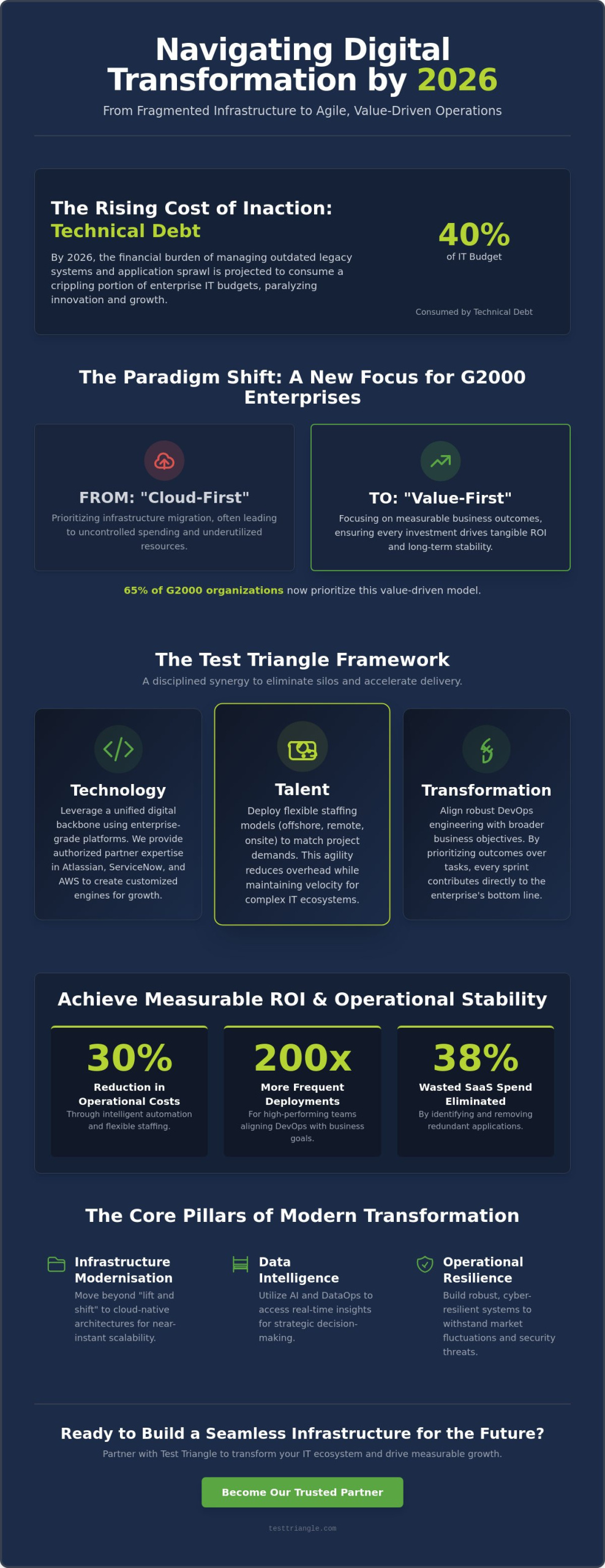

Manual Testing in 2026: A Strategic Guide to Human-Centric Quality Assurance

By 2026, industry data from leading analysts suggests that over 65% of critical vulnerabilities in complex digital infrastructures will still require human intuition to detect before they reach production. While the push for total automation is relentless, the most resilient global enterprises have realised that relying solely on scripts often leads to high defect leakage in specialised sectors like Finance and Pharma. Manual Testing isn’t a relic of the past; it’s a sophisticated, strategic necessity for any organisation that values precision over mere speed.

You’ve likely experienced the tension between the need to accelerate release cycles and the fear of sacrificing quality during a high-stakes digital transformation. We recognise that finding specialised testers who understand the nuances of regulated environments is a significant hurdle for your internal teams. This article provides a robust framework for a hybrid testing model that integrates human intelligence directly into your 2026 roadmap, aligning with our core philosophy of Technology, Talent, and Transformation. You’ll discover how to optimise your ROI and mitigate risks by balancing technical execution with the cognitive depth that only a Trusted Partner can provide.

Key Takeaways

  • Understand how to leverage human intuition as a strategic safeguard against “automation blindness” within complex, enterprise-grade digital systems.
  • Master the core methodologies of Black, White, and Grey Box testing to systematically uncover the “unknown unknowns” that automated scripts often overlook.
  • By implementing a robust framework for determining automation feasibility, your organisation can optimise the total cost of ownership while maintaining superior quality standards.
  • Elevate your quality assurance lifecycle through the “Three Amigos” collaboration model to ensure flawless requirement analysis and strategic environment readiness.
  • Discover how to scale your operations by integrating Manual Testing as a managed service through flexible, global engagement models tailored to your long-term stability.

The Strategic Evolution of Manual Testing in 2026

By aligning human intuition with sophisticated analytical frameworks, Test Triangle redefines quality assurance for the modern enterprise. Manual Testing in 2026 isn’t a remnant of the past; it’s a high-value cognitive process that identifies complex logic failures automation consistently misses. Our approach leverages the “Technology. Talent. Transformation.” triad to ensure that digital products withstand the rigours of global deployment. While automated scripts handle repetitive regression, humans address the unpredictable variables that define 92% of unique user interactions in modern decentralised applications.

Integrating AI-driven diagnostic tools allows testers to focus on high-risk edge cases rather than routine verification. These 2026 tools augment the tester’s capability, providing real-time data visualisation that highlights 30% more potential failure points in legacy system integrations. Manual testing remains the ultimate safeguard against “automation blindness,” a phenomenon where scripts pass while the user experience fails due to subtle UI inconsistencies or logical contradictions. As a Trusted Partner, Test Triangle ensures that human oversight remains the primary filter for software excellence.

Core Methodologies: Navigating the Manual Testing Landscape

By aligning testing frameworks with overarching business objectives, Test Triangle ensures that software quality remains a sustainable competitive advantage. The strategic selection between Black Box, White Box, and Grey Box methodologies dictates the depth and efficacy of the diagnostic process. While Black Box testing focuses strictly on functional requirements from an end-user perspective, White Box examination probes internal code structures to guarantee comprehensive logic path coverage. Grey Box testing provides a hybrid advantage; it allows testers to leverage partial knowledge of internal databases and system architecture to design more sophisticated test scenarios.

Beyond structured scripts, Manual Testing provides the human empathy required for high-level Usability and Accessibility assessments, specifically regarding WCAG 2.2 standards updated in October 2023. While automated tools identify technical failures like missing ARIA labels, they cannot evaluate if a navigation flow feels intuitive or if a visual hierarchy supports a user’s cognitive load. Similarly, manual regression testing is vital for high-risk legacy modules. In complex enterprise systems, approximately 18% of critical defects emerge from subtle UI regressions in older frameworks that automated visual tools often misinterpret as insignificant noise.

Exploratory Testing: The Human Advantage

By utilising time-boxed sessions of 60 to 90 minutes during agile sprints, testers probe software boundaries without the constraints of pre-defined scripts. This creative approach allows for the discovery of “unknown unknowns” that structured automation frequently misses. To ensure reproducibility, testers document their journey through session-based test management logs, often integrated directly into Jira. This blend of creativity and discipline significantly elevates defect discovery rates, as a Trusted Partner uses intuition to simulate real-world user unpredictability that code-based tests cannot replicate.

Specialised Testing for Regulated Industries

In the Life Sciences and Pharma IT sectors, manual verification is indispensable for maintaining GxP compliance and ensuring data integrity across the software development lifecycle. Financial services demand a similar level of manual oversight to manage sensitive data and satisfy SOC2 or GDPR requirements. During security assessments, manual verification complements penetration testing by simulating complex, multi-step logical bypasses. Industry data suggests that manual testers identify up to 35% of logic-based security vulnerabilities that standard automated scanners typically overlook due to the lack of contextual awareness.

The Strategic Balance: Manual vs. Automated Testing

By implementing a structured Automation Feasibility framework, enterprises can effectively categorise test cases based on stability, complexity, and execution frequency. This strategic approach ensures that resources aren’t wasted on automating volatile features that change weekly. A rigorous Total Cost of Ownership (TCO) analysis reveals that while automation offers long-term efficiency, its initial setup costs are often 3 to 5 times higher than immediate manual execution. Relying on a 100% automated strategy frequently triggers catastrophic flaky test syndrome; this occurs when scripts fail due to minor environment shifts rather than actual software defects. To mitigate this risk, Test Triangle advocates for a Hybrid Model. By synchronising manual and automated results within Jira Service Management, we establish a single source of truth that drives informed decision-making. Technology. Talent. Transformation. This triad ensures your quality assurance remains robust and scalable.

When to Prioritise Manual Testing

Teams should prioritise Manual Testing for features undergoing rapid iteration where the codebase changes more than 25% between sprints. Aesthetic validation of the User Experience (UX) remains a human-centric task; software cannot yet judge if a layout feels intuitive or visually balanced. Additionally, complex end-to-end scenarios involving third-party physical hardware, such as biometric scanners or specialised medical devices, require the tactile interaction that only a skilled human tester provides. Within high-security sectors like Banking, manual oversight ensures that edge cases in multi-factor authentication are handled with the necessary professional scrutiny.

The ROI of Human Intelligence

Exploratory testing sessions often uncover 30% more critical edge-case bugs than scripted execution, providing a higher return on investment for high-risk modules. Utilising human intelligence reduces the maintenance burden of automated scripts by identifying which paths are truly worth the scripting effort. The long-term business value of professional software qa services lies in this strategic oversight. It prevents the “automation for automation’s sake” trap and ensures that every testing dollar contributes to a flawless user experience. By leveraging Manual Testing alongside automated suites, organisations achieve a superior level of risk mitigation that scripts alone cannot replicate. This balanced architecture allows for a flexible engagement model that adapts to the evolving needs of global enterprises.

By combining technical expertise with adaptable delivery models, Test Triangle helps businesses reduce costs while elevating software quality. We act as a Strategic Architect for your QA ecosystem, ensuring that your digital transformation is supported by a stable and precise testing foundation. Our commitment to excellence as a Trusted Partner means we prioritise the methodologies that deliver the most significant impact on your operational stability.

Implementing a Flawless Manual Testing Lifecycle

By synchronising technical rigour with business objectives, Test Triangle ensures that every phase of the manual testing lifecycle drives measurable quality. The process begins with Requirement Analysis, where the “Three Amigos” collaboration between business analysts, developers, and testers mitigates 40% of potential defects before a single line of code is written. This proactive alignment prevents the costly rework associated with misunderstood specifications and ensures the entire team shares a unified vision of success.

During Strategic Test Planning, our consultants establish environment readiness to prevent the 15% of project delays typically caused by configuration errors. We then move into Test Case Design, focusing on absolute traceability. By mapping every test case to a specific business requirement, we provide stakeholders with 100% visibility into feature coverage. Finally, the Execution and Verification loop ensures that defects are not just identified, but systematically eradicated through focused regression cycles that validate the stability of the entire build.

Integrating with Atlassian and Jira Service Management

Leveraging the Atlassian ecosystem allows our teams to provide transparent Manual Testing execution tracking in real-time. By utilising tools like Xray or Zephyr, we consolidate manual and automated test results into a single pane of glass within Jira. As an Atlassian Gold Solution Partner, Test Triangle optimises the workflow from “Bug Found” to “Developer Fixed” by automating status transitions and notification triggers. This integration reduces the administrative overhead of QA by approximately 22%, allowing testers to focus on exploratory depth rather than manual data entry.

Defect Reporting as a Communication Tool

A high-quality defect report is more than a notification; it’s a strategic asset. Our reports include a precise anatomy of the failure: clear reproduction steps, environment data, and attached system logs. We distinguish between Severity, which measures the technical impact on the system, and Priority, which dictates the urgency for the business. This distinction enables leaders to make informed release decisions based on actual risk profiles. The perfect defect report serves as a technical bridge that translates user frustration into actionable engineering data. By delivering structured feedback, we accelerate the resolution cycle and ensure that development resources target the most critical vulnerabilities first.

Optimise your software quality with our strategic approach to Manual TestingPartner with our QA experts today

Manual Testing as a Managed Service: The Test Triangle Approach

By aligning specialised domain expertise with adaptable delivery models, Test Triangle helps enterprises convert QA from a cost centre into a strategic business accelerator. We treat Manual Testing not as a reactive task but as a proactive risk mitigation strategy. Our methodology is built upon a signature triad: Technology. Talent. Transformation. This framework ensures that software quality isn’t just a final check, it’s a fundamental component of the development lifecycle.

Organisations often face the challenge of scaling their testing teams during peak development cycles. To address this, we offer flexible engagement models tailored to your specific operational needs. You can choose from onshore consultants for high-touch collaboration, offshore teams for maximum cost-efficiency, or a hybrid model that balances local oversight with global scale. This flexibility ensures that your Manual Testing efforts remain agile and responsive to shifting market demands.

Our talent acquisition strategy is particularly rigorous. We source “Pharma-ready” and “Finance-ready” testing professionals who possess deep knowledge of regulatory frameworks like HIPAA, GxP, and Basel III. This domain-specific expertise ensures that your software isn’t just functional; it’s compliant with the highest global standards. We don’t just provide testers, we provide subject matter experts who understand the stakes of your industry.

Leveraging Global Talent for 24/7 Quality

The strategic advantage of our Dublin-London-Hyderabad-Austin corridor lies in its ability to provide a continuous testing lifecycle. By utilising these distinct time zones, we create a “follow-the-sun” workflow where testing never stops. This distributed model ensures consistency through standardised reporting protocols and centralised Jira Service Management dashboards. In a 2023 engagement with a global retail giant, this 24/7 approach reduced time-to-market by 28% for their primary e-commerce platform. Our teams worked across borders to identify critical UI defects before they reached the production environment, securing a flawless user experience for millions of customers.

Your Trusted Partner in Digital Transformation

As a Trusted Partner, we support your most complex initiatives, from AWS cloud migrations to ServiceNow implementations. Manual Testing remains vital during these transitions to validate data integrity and user workflows that automated scripts might overlook. We build dedicated, context-aware testing teams that grow with your business, ensuring long-term stability and operational excellence. By combining technical rigor with a deep commitment to your success, we help you navigate the complexities of modern software delivery with confidence.

Elevate Your Quality Assurance Strategy for 2026

As the industry moves toward 2026, the reliance on human intuition remains the cornerstone of a robust digital strategy. While automation handles repetitive tasks, Manual Testing provides the critical exploratory insights necessary to safeguard complex user journeys in high-stakes environments. It’s no longer about choosing one over the other; it’s about a strategic integration that prioritises risk mitigation and operational stability across every digital touchpoint.

Test Triangle operates as a Strategic Architect for global enterprises, utilising a proven global delivery model with localised support in Dublin and London. Our status as an Atlassian Platinum Solution Partner ensures that your QA processes are anchored in industry-leading standards like Jira Service Management. Whether you’re navigating the stringent compliance requirements of the Pharma sector or the high-security demands of Finance, our team delivers the precision your digital transformation requires. By aligning technology, talent, and transformation, we help you achieve a superior market position and long-term stability. We’re ready to help you optimise your quality assurance lifecycle today.

Partner with our QA experts today


Recent 2024 industry insights reveal that 62% of UK technology leaders now identify the scarcity of niche QA expertise as the primary obstacle to achieving rapid digital transformation. By 2026, simply hiring more hands will no longer suffice; instead, the most resilient enterprises will leverage software testing outsourcing companies UK to bridge the gap between technical execution and business outcomes. You’ve likely felt the pressure of slow time-to-market caused by QA bottlenecks and the persistent difficulty of finding specialised testers who understand the nuances of regulated sectors.

Bridging the talent gap in the UK’s competitive tech market requires a versatile approach to human capital. We provide contract, remote, and permanent IT placements that allow you to scale your team within 48 to 72 hours when project demands spike. For enterprises seeking long-term stability, our Managed Service Provider (MSP) subscriptions provide a steady pulse of QA expertise. This model ensures that your software remains robust and secure long after the initial launch. We offer flexible engagement models that adapt to your specific budget and timeline requirements. To explore how we can elevate your quality standards, contact our London office for a strategic QA consultation today. Additionally, if you are managing corporate relocations or property acquisitions, you can explore Residential Sales options via our specialized legal consultancy.

It’s understandable to feel frustrated when a lack of transparency in outsourced reporting creates unnecessary security risks and misaligned workflows. Through a strategic commitment to Technology, Talent, and Transformation, you can shift your QA function from a cost centre into a driver of superior software quality. This guide provides a framework to select a partner that aligns with your Jira and DevOps ecosystems, ensuring you achieve a lower cost-per-defect and faster release cycles. We’ll explore the selection criteria needed to build a robust, scalable testing team that functions as a trusted extension of your own department.

Key Takeaways

  • Gain a strategic advantage by understanding the 2026 shift toward AI-augmented quality engineering and the necessity of local oversight for complex digital infrastructures.
  • Master the evaluation process for software testing outsourcing companies UK by prioritizing technical expertise in Atlassian and AWS ecosystems alongside essential cultural alignment.
  • Optimize your QA budget and project outcomes by determining the most effective delivery model—onshore, offshore, or hybrid—based on your specific risk profile and scale.
  • Ensure robust compliance and security within regulated UK industries by implementing specialized GxP validation and financial-grade testing protocols.
  • Accelerate your digital transformation by leveraging a partnership model that integrates advanced talent with seamless ServiceNow and Jira workflow automation.

The Evolution of Software Testing Outsourcing in the UK for 2026

By integrating local strategic oversight with global delivery capabilities, software testing outsourcing companies UK are redefining how enterprises maintain digital integrity in 2026. The landscape has shifted from a focus on low-cost labor to a demand for high-level strategic partnership. This evolution requires a deep understanding of the UK’s unique regulatory environment and rising consumer expectations for flawless digital experiences. To appreciate this shift, it’s essential to understand what is software testing outsourcing in the context of a modern, AI-driven ecosystem where quality is no longer a final checkpoint but a continuous thread.

The transition from manual execution to AI-augmented quality engineering is now a baseline requirement for competitive UK firms. By 2026, 85% of UK-based financial institutions have automated at least 70% of their regression suites using machine learning algorithms. This shift allows the “Strategic Architect” to focus on high-level risk mitigation rather than repetitive script maintenance. By leveraging advanced predictive analytics, these architects anticipate potential failure points before a single line of code is written, ensuring that technology, talent, and transformation remain perfectly aligned.

UK enterprises are increasingly abandoning pure offshore models in favor of hybrid approaches. By maintaining a local presence for governance and a global team for scale, organizations ensure that strategic decisions remain aligned with UK business hours and cultural nuances. This hybridity provides the flexibility needed to respond to market shifts while maintaining the technical rigor required for complex digital infrastructures. As a trusted partner, software testing outsourcing companies UK provide the steady hand needed to manage these multifaceted delivery models.

Current Market Dynamics and UK Trends

By addressing the critical shortage of local SDET talent, outsourcing has become a primary driver for UK technological growth. A 2025 industry report highlighted a 32% deficit in domestic software development engineers in test, forcing companies to look toward specialized partners. Demand for specialized testing in Security, Performance, and API integrity has surged as the Digital Operational Resilience Act (DORA) and updated GDPR protocols impose stricter penalties for system failures. These regulations demand a level of precision that only a dedicated QA partner can provide through robust, scalable testing frameworks.

Why Outsourcing QA is a Strategic Business Driver

Beyond simple cost reduction, outsourcing QA has become a vital tool for business agility and risk mitigation. By handing over complex infrastructure to a trusted partner, C-suite executives experience the psychological relief of knowing their digital assets are under constant, expert surveillance. Quality Engineering serves as a catalyst for ROI by embedding defect prevention mechanisms directly into the CI/CD pipeline, thereby accelerating release cycles and reducing the total cost of ownership. This strategic approach transforms QA from a cost center into a value-generating engine that drives long-term operational stability. Organizations looking to maximize this value should also consider how Digital Transformation Services can be strategically orchestrated alongside QA to eliminate application sprawl and accelerate enterprise agility.

Selection Criteria: How to Evaluate UK Software Testing Partners

Selecting the right software testing outsourcing companies UK requires a shift from vendor-centric thinking to strategic alignment. By prioritizing technical depth over mere headcount, enterprises ensure their complex digital infrastructures remain resilient. In 2026, the evaluation process goes beyond basic bug detection; it focuses on how a partner integrates into high-stakes environments like AWS, ServiceNow, or complex Atlassian ecosystems. Professional organizations don’t just provide testers; they provide a “Strategic Architect” mindset that views quality as a driver of business value.

Technical Competency and Tooling Proficiency

By embedding technical excellence into the Application Lifecycle Management (ALM) toolchain, a partner elevates the entire development process. Expertise in Jira and the broader Atlassian suite isn’t optional; it’s the foundation for real-time visibility and project health. When you evaluate automation frameworks, look for proficiency in Selenium and Playwright, alongside AI-driven tools that have been shown to reduce regression times by 35% compared to traditional scripts.

A culture of continuous learning, evidenced by ISTQB certifications and regular upskilling in cloud-native testing, ensures that the talent assigned to your project remains ahead of the curve. This level of technical maturity is a core benchmark within the UK government’s Digital Marketplace, where rigorous testing protocols are mandatory for public sector and regulated industry compliance. By choosing a partner that mirrors these standards, you mitigate the risks inherent in digital transformation.

Operational Stability and Global Reach

By maintaining a physical presence in London and Dublin while leveraging global delivery hubs, a partner provides the “Global Experience with Local Support” formula that modern enterprises demand. This hybrid model allows for 24/7 coverage without losing the nuances of UK-based communication and cultural alignment. You should verify operational stability through metrics such as a 92% client retention rate and a minimum of 10 years of experience in the UK market.

Transparency is a cornerstone of this relationship. It’s delivered through real-time dashboards and comprehensive reporting frameworks that offer a granular view of quality metrics. Scalability is equally vital; your partner must demonstrate the ability to ramp up specialized resources across time zones within a 14-day window. This agility ensures that your testing capacity grows in tandem with your roadmap.

By combining these criteria, organizations find a steady hand to guide their digital growth through “Technology. Talent. Transformation.” It’s about building a relationship with a Trusted Partner that values precision and operational stability. To see how these standards are applied in real-world scenarios, you can explore our strategic testing frameworks.

Software Testing Outsourcing Companies UK: 2026 Strategic Selection Guide

Comparison of Delivery Models: Onshore, Offshore, and Hybrid

By evaluating the structural nuances of delivery frameworks, organizations can align their quality assurance strategies with overarching business objectives. Selecting from the top software testing outsourcing companies UK requires a granular understanding of how geographical proximity impacts both speed and security. Onshore models provide maximum alignment for front-facing projects, though they typically command a 40% to 60% premium over international alternatives. Conversely, offshore models offer maximum cost-efficiency for high-volume manual testing and repetitive regression suites, provided the client can manage the inherent communication lag.

The hybrid model has emerged as the strategic standard for 2026. This approach utilizes UK-based leadership to oversee global technical resources, ensuring that accountability remains local while execution scales globally. By leveraging this structure, enterprises maintain 24/7 productivity cycles without sacrificing the cultural and regulatory alignment necessary for complex UK markets.

The Pros and Cons of Traditional Outsourcing

Pure offshore management often conceals hidden costs that erode the initial price advantage. Research indicates that organizations frequently encounter a 20% to 30% management overhead when attempting to bridge significant time-zone gaps and cultural differences without local mediation. For entities operating within highly regulated sectors, onshore testing remains a non-negotiable standard. This alignment mirrors the strategic priorities outlined in the UK Government’s approach to technology suppliers, which emphasizes the necessity of robust supplier management to mitigate operational risks in public service delivery.

Developing a risk-reward matrix is essential for model selection. High-complexity projects involving sensitive data or government contracts demand onshore proximity. Low-complexity, high-volume tasks are better suited for offshore execution. The hybrid model sits in the center, offering a balanced risk profile for 75% of enterprise digital transformation initiatives.

Test Triangle’s Flexible Engagement Model

By combining technical expertise with adaptable delivery models, Test Triangle helps businesses reduce costs while maintaining rigorous quality standards. Our blended teams provide 24/7 coverage, ensuring that testing cycles continue overnight while UK-based consultants remain the primary point of contact for strategic decision-making. This structure brings our “Technology. Talent. Transformation.” triad into action, providing the stability of a Trusted Partner alongside the scalability of a global workforce.

Our flexible engagement model focuses on driving measurable outcomes. In a recent engagement for a Tier 1 financial institution, we implemented a hybrid automation framework that successfully reduced time-to-market by 40%. By integrating Jira Service Management and our bespoke automation toolsets, we delivered a flawless transition that prioritized both speed and security. This methodical approach ensures that we don’t just act as a vendor; we function as a Strategic Architect for your digital future.

Addressing Compliance and Security in Regulated UK Industries

In the high-stakes environment of 2026, software testing outsourcing companies UK must provide more than just functional verification. They must act as guardians of regulatory integrity. For the 650 pharmaceutical companies operating in the UK and the massive fintech sector, compliance isn’t a checkbox; it’s a license to operate. By integrating rigorous security protocols directly into the delivery lifecycle, Test Triangle ensures that digital transformation doesn’t come at the cost of legal exposure or data breaches. Our strategic approach focuses on mitigating risks before they manifest in production environments.

Specialized Testing for Pharmaceuticals and Healthcare

Life Sciences firms must adhere to GxP guidelines and MHRA standards with absolute precision. Validated software testing requires a level of documentation and rigour that standard QA models often lack. Test Triangle supports Pharma IT through specialized staffing and GAMP 5 compliant testing frameworks. By leveraging Atlassian tools like Jira Service Management to create immutable audit trails, we help labs and healthcare providers maintain 100% traceability. This methodical oversight is essential for navigating MHRA requirements, where even minor data integrity issues can stall a product launch for months. Similarly, in the broader health sector, contesto.co.uk offers essential operational support and out-of-hours management for care providers.

Cybersecurity and Resilience in Fintech

The UK banking sector continues to face evolving threats, with the FCA reporting hundreds of significant cyber incidents annually. To counter these risks, we integrate OWASP Top 10 2025 standards directly into the DevOps pipeline. Selecting from the top software testing outsourcing companies UK requires a partner who understands that security is a continuous process, not a static event. Our “Security by Design” philosophy involves:

  • Continuous Penetration Testing: Identifying vulnerabilities in real-time as code is committed.
  • Automated Security Audits: Utilizing AI-driven tools to scan for configuration drifts in cloud-native banking apps.
  • Data Privacy Assurance: Ensuring GDPR compliance through robust data masking and anonymization in outsourced test environments.

By combining technical expertise with flexible engagement models, Test Triangle helps financial institutions build resilient systems that withstand both market volatility and malicious actors. We leverage our deep experience with ServiceNow and Jira to harmonize security workflows with business objectives, ensuring that every update is both fast and flawless.

Our unique signature of Technology. Talent. Transformation. ensures that your compliance journey is handled by a Trusted Partner who values stability and precision. We don’t just find bugs; we architect secure digital futures for the UK’s most regulated sectors.

Ensure your digital infrastructure meets the highest regulatory and security standards. Partner with Test Triangle for expert-led compliance and security testing.

Test Triangle: Your Strategic Partner for QA Transformation

By bridging the gap between technical execution and business outcomes, Test Triangle has emerged as a premier choice among software testing outsourcing companies UK. We aren’t merely a service provider; we operate as a “Strategic Architect” for your digital ecosystem. Our commitment as a “Trusted Partner” means we take full ownership of your QA maturity, moving beyond simple bug detection to drive holistic operational stability. We serve global enterprises across high-stakes sectors like Banking and Life Sciences, where precision isn’t optional. Every engagement begins with a comprehensive strategic audit, providing a clear roadmap that aligns your testing goals with your broader corporate vision.

Our approach is rooted in the deep integration of industry-leading platforms. By leveraging our status as an expert in Atlassian and ServiceNow, we create seamless workflows that eliminate the silos between development and quality assurance. We don’t just provide a team; we provide a framework for excellence. Our signature triad—Technology. Talent. Transformation.—serves as the foundation for every project we undertake. This ensures that your software isn’t just functional, but also robust, scalable, and ready for the demands of 2026 and beyond.

The Synergy of Testing and DevOps Implementation

By integrating testing directly into your DevOps framework, we eliminate the friction that often slows down release cycles. We optimize Jira Service Management to create a single source of truth, ensuring that every bug report and test case is visible to stakeholders in real time. This transparency accelerates Digital Transformation Services by embedding automated CI/CD pipelines into your development workflow, which can reduce manual testing effort by up to 35%. We also leverage AWS Cloud Migration expertise to build elastic test environments. These environments scale automatically to meet demand, allowing for rigorous performance testing without the capital expenditure of permanent hardware.

Flexible Staffing and Managed Services

Bridging the talent gap in the UK’s competitive tech market requires a versatile approach to human capital. We provide contract, remote, and permanent IT placements that allow you to scale your team within 48 to 72 hours when project demands spike. For enterprises seeking long-term stability, our Managed Service Provider (MSP) subscriptions provide a steady pulse of QA expertise. This model ensures that your software remains robust and secure long after the initial launch. We offer flexible engagement models that adapt to your specific budget and timeline requirements. To explore how we can elevate your quality standards, contact our London office for a strategic QA consultation today.

Future-Proofing Your Quality Engineering Strategy for 2026

Navigating the complex landscape of software testing outsourcing companies UK in 2026 requires more than a simple vendor agreement; it demands a strategic alliance built on technical rigor and verified security. By prioritizing ISO 9001 and ISO 27001 certifications, enterprises can effectively mitigate the risks associated with evolving UK data protection mandates and complex digital ecosystems. Organizations must leverage flexible delivery models that bridge the gap between local London expertise and global scalability from established hubs like Dublin and Hyderabad. As an Atlassian Gold Solution Partner, Test Triangle integrates these elements to drive measurable QA transformation through our core pillars: Technology, Talent, and Transformation.

By aligning your testing strategy with 2026 industry benchmarks, you ensure that your software isn’t just functional but remains truly resilient against rapid market shifts. It’s essential to select a partner that balances specialized talent with advanced technology to maintain a competitive edge. This commitment to precision helps organizations reduce operational friction while accelerating time-to-market. Your journey toward a robust, high-performance digital infrastructure starts with choosing a partner that understands the nuances of your industry. It’s time to elevate your standards and achieve the flawless execution your customers expect today.

Partner with a Strategic Architect for your QA needs

Frequently Asked Questions

How do UK software testing outsourcing companies charge for their services?

By leveraging flexible engagement models, software testing outsourcing companies UK typically structure costs through Time and Materials (T&M), fixed-price contracts, or monthly managed service subscriptions. Most UK enterprises opt for T&M models for agile projects to maintain budget fluidity. According to the 2024 State of Testing Report, 42 percent of organizations now prefer outcome-based pricing to ensure that costs align directly with delivered quality benchmarks and specific project milestones.

What is the difference between a QA vendor and a strategic testing partner?

A QA vendor provides transactional bug-finding services, while a strategic testing partner integrates into your business lifecycle to drive long-term digital transformation. We act as a Strategic Architect, focusing on risk mitigation and ROI rather than just executing test cases. This partnership approach ensures that your software testing outsourcing companies UK selection results in a robust, scalable infrastructure that supports 100 percent of your business goals and operational stability.

Can I outsource software testing if my company uses a highly regulated GxP environment?

You can absolutely outsource testing in GxP environments by partnering with firms that adhere to GAMP 5 and ISO 9001:2015 standards. Test Triangle maintains rigorous compliance protocols to support Life Sciences and Healthcare clients operating under FDA 21 CFR Part 11 regulations. By implementing validated testing processes, we ensure that 100 percent of your digital documentation meets the strict audit requirements of highly regulated industries without compromising on speed or precision.

How does Test Triangle ensure communication quality between UK clients and offshore teams?

Test Triangle ensures communication excellence through a structured governance framework that includes daily stand-ups and real-time collaboration via the Atlassian ecosystem. By aligning our offshore teams with UK business hours, we provide a 4-hour overlap for synchronous strategic planning. We utilize our signature triad of Technology, Talent, Transformation to bridge cultural gaps, ensuring that every project milestone is communicated with 100 percent clarity and professional rigor.

Is it possible to integrate an outsourced QA team into my existing Jira/Atlassian workflow?

It’s standard practice to integrate our outsourced QA teams directly into your existing Jira Service Management or Atlassian toolchain to maintain workflow continuity. We mirror your internal sprint cycles and permission levels, ensuring that our engineers function as a seamless extension of your department. This integration allows for real-time tracking of defect density and test coverage, providing your leadership team with 100 percent visibility into the development pipeline at every stage.

What are the typical cost savings when moving from internal QA to a hybrid outsourcing model?

Transitioning to a hybrid outsourcing model typically yields cost savings between 30 percent and 45 percent compared to maintaining an entirely in-house QA department. These savings stem from reduced recruitment overhead and the elimination of expensive infrastructure costs for specialized device labs. By optimizing resource allocation, businesses can reinvest these funds into core product innovation while maintaining a 24/7 testing cycle that significantly accelerates time-to-market for new digital products.

What security certifications should I look for in a UK testing partner?

You should prioritize partners holding ISO 27001 for information security management and Cyber Essentials Plus for technical infrastructure protection. These certifications prove that a partner can manage sensitive data across global borders without compromising integrity or compliance. At Test Triangle, we anchor our security protocols in these recognized standards to ensure that your intellectual property remains 100 percent secure throughout the entire software testing lifecycle.

How quickly can a testing team be ramped up for a new project?

A dedicated testing team can typically be ramped up and fully operational within 10 to 20 business days. This timeline includes initial knowledge transfer, environment setup, and the integration of our engineers into your specific Jira workflows. By maintaining a pre-vetted talent pool of ISTQB-certified professionals, we accelerate the onboarding process, allowing your project to move from the discovery phase to execution without experiencing significant delays or resource gaps.

Paul Guy

Article by

Paul Guy

Paul serves as the Marketing Director at Test Triangle, where he leads a global team in driving growth through strategic B2B marketing and brand communications. With a strong emphasis on measurable outcomes and sustainable performance, he plays a pivotal role in aligning marketing functions to enhance customer engagement and accelerate business impact. Under his leadership, marketing initiatives have consistently delivered significant returns on investment, elevated brand visibility, and strengthened the company's presence across key markets.
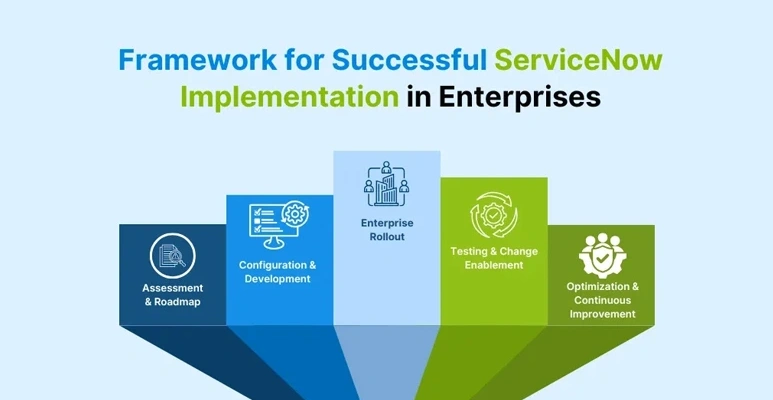

IT Service Management in Ireland: How Test Triangle Is Transforming Digital Operations

In today’s fast-paced digital economy, businesses are under increasing pressure to deliver seamless, reliable, and scalable IT services. From startups to established enterprises, effective IT Service Management (ITSM) has become a critical driver of operational success. This is where Test Triangle’s IT Service Management services stand out, helping organisations modernise their IT operations, improve service delivery, and stay competitive in an evolving technological landscape.

What Is IT Service Management (ITSM)?

IT Service Management refers to the processes, policies, and tools organisations use to design, deliver, manage, and improve IT services. Frameworks like Information Technology Infrastructure Library (ITIL) have long been the backbone of ITSM, but modern businesses require more agile, automated, and customer-centric approaches. Digital transformation is accelerating across sectors such as finance, healthcare, and technology, ITSM is no longer optional, it’s essential.

Why ITSM Matters for Businesses

1. Enhancing Operational Efficiency:
Organisations are increasingly adopting cloud technologies, hybrid work models, and digital platforms. Without structured ITSM processes, managing these systems can become chaotic. ITSM ensures streamlined workflows, reduced downtime, and improved productivity.

2. Improving Customer Experience:
Customers expect fast, reliable, and consistent digital services. ITSM helps businesses deliver on these expectations by ensuring issues are resolved quickly and services remain uninterrupted.

3. Supporting Compliance and Governance:
Ireland has strict data protection and regulatory requirements. ITSM frameworks help businesses maintain compliance while ensuring transparency and accountability in IT operations.

Test Triangle’s ITSM Services in Ireland

Test Triangle provides comprehensive IT Service Management solutions tailored to the needs of businesses. Our services are designed to align IT operations with business goals while driving innovation and efficiency.
Key Offerings:

Ireland ITSM Consulting:
Test Triangle helps organisations assess their current IT landscape and implement best-practice ITSM frameworks. This includes process design, tool selection, and roadmap development.

Service Desk Optimisation:
A well-functioning service desk is the backbone of IT support. Test Triangle enhances service desk performance through automation, improved workflows, and better incident management.

ITIL Implementation & Integration:
By leveraging globally recognised frameworks, Test Triangle ensures businesses adopt structured and scalable ITSM practices.

Automation & AI Integration:
Modern ITSM goes beyond manual processes. Test Triangle integrates automation and AI-driven solutions to reduce response times and improve service delivery.

Continuous Service Improvement:
ITSM is not a one-time implementation. Test Triangle focuses on ongoing optimisation to ensure IT services evolve alongside business needs.

Strategic Partnerships That Power Test Triangle’s ITSM Solutions

Test Triangle works with leading technology providers to deliver best-in-class ITSM solutions. Their partnerships enable organisations to leverage powerful, industry-leading platforms:

1. Atlassian: Atlassian provides a suite of collaboration and development tools that help teams plan, track, and manage work efficiently.
2. Jira: A cornerstone of modern ITSM and Agile environments, Jira enables powerful issue tracking, incident management, and workflow automation.
3. ServiceNow: ServiceNow is a leading platform for digital workflows, helping organisations automate IT services, manage incidents, and streamline operations at scale.
4. Freshworks: Freshworks offers intuitive ITSM and support tools that enhance customer and employee service experiences through modern, user-friendly interfaces.
5. Alemba: Alemba provides flexible ITSM solutions designed to simplify service management and improve IT service delivery across organisations.

Benefits of Choosing Test Triangle for ITSM

Faster Incident Resolution:
Minimise downtime and ensure business continuity with efficient issue management.

Improved Service Quality:
Deliver consistent, high-quality IT services that enhance user satisfaction.

Scalable Solutions:
Whether you’re a small business or a large enterprise, Test Triangle’s solutions grow with you.

Innovation-Driven Approach:
Leverage the latest technologies, including automation and AI, to stay ahead of the competition.

The Future of IT Service Management in Ireland
As Ireland continues to position itself as a global tech hub, the demand for robust ITSM solutions will only increase. Businesses that invest in modern IT service management today will be better equipped to handle future challenges, from cybersecurity threats to rapid digital expansion. Test Triangle is at the forefront of this transformation helping Irish organisations unlock the full potential of their IT infrastructure.

Final Thoughts

IT Service Management is no longer just about maintaining systems, it’s about delivering value, enabling growth, and driving innovation. With Test Triangle’s expertise and partnerships with industry leaders like Atlassian, Jira, ServiceNow, Freshworks, and Alemba, businesses in Ireland can transform their IT operations into a strategic advantage. If your organisation is looking to improve efficiency, enhance service delivery, and future-proof its IT environment, investing in Test Triangle’s ITSM services is a smart move.

Contact Us | Schedule a Consultation


Irish Minister, Jack Chambers visited the Hyderabad offices of Test Triangle

Mr. Jack Chambers, Irish Minister for Public Expenditure and Digitalisation, visited the Hyderabad offices of Test Triangle, on Friday the 20th February, where he met with Mr. Praveen Madire, CEO of Test Triangle, and a native of Hyderabad, along with the local leadership team.

The visit formed part of the Minister’s engagement programme in India aimed at strengthening Ireland/India collaboration in education, technology, innovation, and cross-border business, particularly at a time when the European Union and India are advancing a new trade agreement. Hyderabad, as one of India’s leading technology and talent hubs, played a central role in these discussions.

During the visit, Minister Chambers was briefed on how Test Triangle, founded and led by Hyderabad-born entrepreneur Praveen Madire is helping Indian businesses, many originating from Hyderabad and Telangana, establish and scale operations in Ireland’s growing technology ecosystem.

Mr. Praveen Madire, CEO of Techfynder and Test Triangle, said: “As someone who grew up in Hyderabad, it was a proud moment to welcome Minister Jack Chambers to our offices here. This city has been central to my entrepreneurial journey, and today it continues to be a bridge between Indian talent and global opportunities. Through Test Triangle, we are committed to helping Indian businesses access Ireland’s education and innovation ecosystem.”

The visit included interactions with Hyderabad-based employees, discussions on innovation-led growth, and an overview of how companies rooted in India can play a meaningful role in strengthening international collaboration. This engagement highlights the growing opportunity for Indian students to consider Ireland as a preferred destination for further education, offering high-quality academic pathways alongside strong post-study career and entrepreneurship prospects.

Minister Jack Chambers meets Test Triangle in India

We were proud to witness a significant milestone recently as Praveen Madire played a key role in facilitating an official visit to Hyderabad by distinguished Irish dignitaries, including Ireland’s Minister Jack Chambers, Ambassador of Ireland to India Kevin Kelly, and representatives from Enterprise Ireland. This visit marked an important step in strengthening ties between Ireland and India, particularly in the areas of technology, innovation, and digital transformation.

Hyderabad, one of India’s foremost technology and business ecosystems, served as the perfect setting for meaningful dialogue around shared opportunities, emerging technologies, and global partnerships. Praveen’s involvement reflects his ongoing dedication to connecting international markets and enabling productive conversations that benefit industries and communities alike.

As an organisation, we have always valued Praveen Madire’s ability to look beyond immediate horizons. Under his leadership, Test Triangle has expanded its global footprint by delivering cutting-edge technology consulting, quality engineering, and digital solutions to enterprises worldwide. Through Techfynder, he has further demonstrated his forward-thinking approach by transforming how businesses discover and engage technology talent across borders.

Enterprise Ireland meets the Test Triangle Team in India

What distinguishes Praveen is not only his strategic insight, but also his belief in the power of relationships and collaboration. His efforts continue to position our companies as trusted partners within the global technology landscape, while also contributing to the broader innovation dialogue between nations.

This recent engagement is a reflection of the values we stand for, openness, progress, and partnership. We remain inspired by Praveen Madire’s leadership and his unwavering focus on creating opportunities that extend far beyond organisational boundaries.