If your QA strategy still treats bug detection as a final gate rather than a continuous value driver, you’re already behind the 2026 curve. With the FDA’s final Quality Management System Regulation (QMSR) taking full effect on February 2, 2026, the margin for error in software assurance has vanished. Selecting a qa software testing company is no longer about finding a vendor; it’s about securing a strategic architect for your digital ecosystem.
You’ve likely felt the sting of reputational damage from high post-release defect rates or the frustration of QA silos that stall your DevOps pipelines. It’s exhausting when your testing team can’t scale fast enough to meet major release deadlines. This guide empowers you to master the evaluation process for a high-tier partner that aligns technology, talent, and transformation to achieve a truly flawless delivery cycle. By prioritizing a risk-based approach to software assurance, we’ll provide a strategic checklist to help you reduce the cost of quality through automation while ensuring your new partner integrates seamlessly with your existing Jira and Atlassian workflows.
Key Takeaways
- Transition from reactive testing to proactive Quality Engineering to safeguard your digital infrastructure against the escalating global costs of software failure.
- Utilize our 10-point evaluation checklist to select a qa software testing company that offers the specialized domain expertise necessary for complex enterprise environments.
- Integrate advanced AI-driven defect analysis and robust DevOps consulting into your toolchain to optimize performance and shorten time-to-market.
- Match your organizational needs with flexible delivery models, including specialized pharma IT staffing and managed services, for scalable 24/7 testing coverage.
- Align your digital transformation goals with a partner that leverages Atlassian and ServiceNow expertise to ensure a flawless, secure, and robust software delivery lifecycle.
Defining the Strategic Role of a QA Software Testing Company in 2026
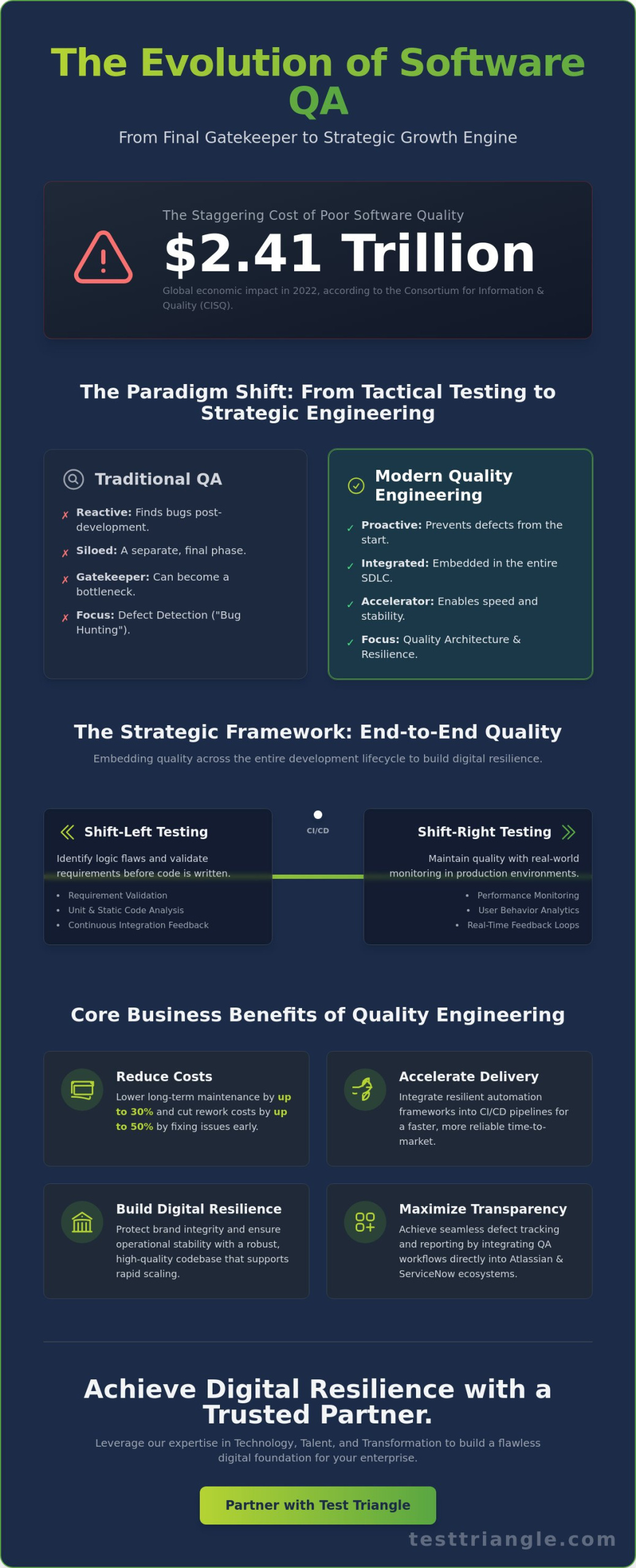
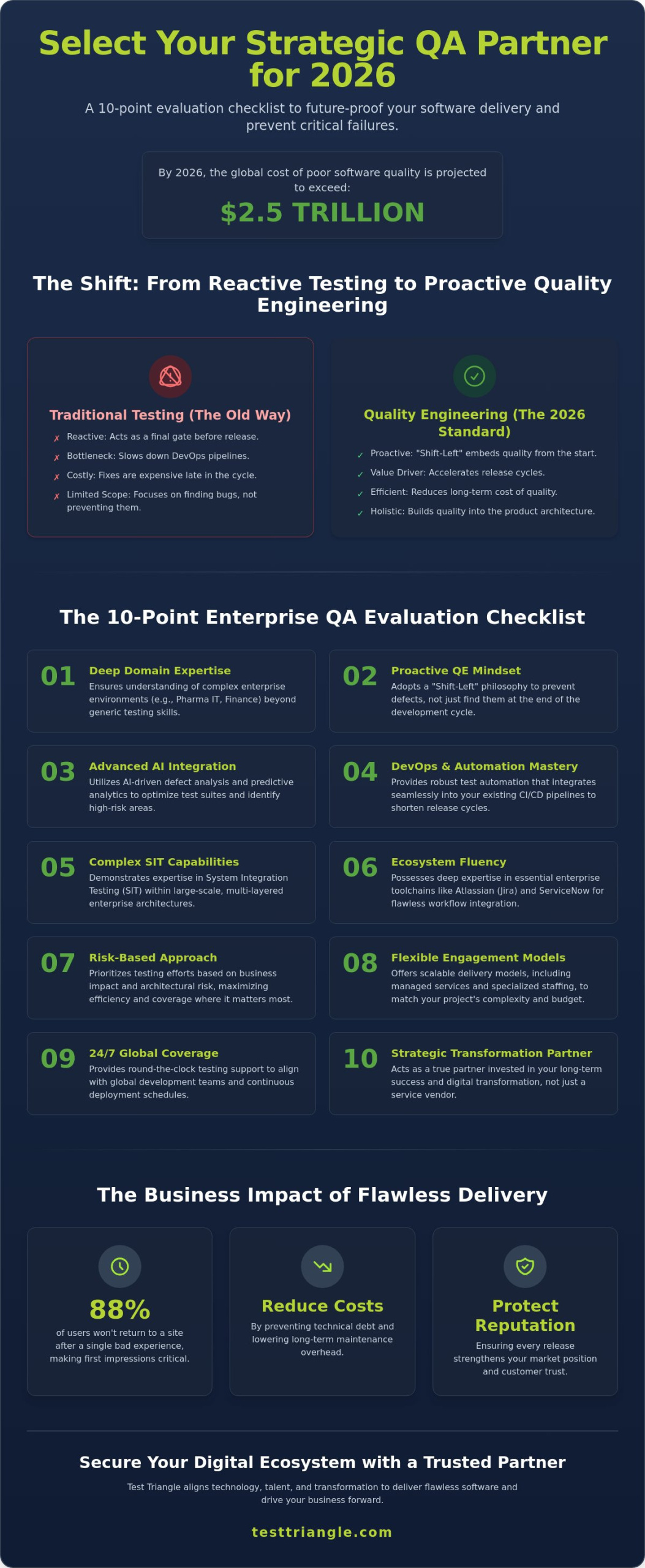
Software failure is no longer just a technical glitch; it’s a multi-trillion dollar liability. By 2026, the global cost of poor software quality is projected to exceed $2.5 trillion, driven by complex legacy systems and the rapid acceleration of AI-integrated applications. To survive this environment, your qa software testing company must transition from a reactive vendor to a “Strategic Architect.” This model doesn’t just look for bugs after the code is written. Instead, it aligns Technology, Talent, and Transformation to secure your entire digital ecosystem from the ground up.
As enterprises prioritize AWS cloud migration and large-scale digital transformation, the risk of operational downtime increases. A high-tier partner mitigates this risk by acting as a steady hand, ensuring that new infrastructures aren’t just functional but resilient. While foundational software testing focuses on verifying code against requirements, the 2026 landscape demands a partner that anticipates architectural weaknesses before they manifest as customer-facing failures.
Quality Engineering vs. Traditional Software Testing
Traditional testing often acts as a bottleneck, occurring at the end of the development cycle where fixes are most expensive. In contrast, Quality Engineering (QE) adopts a “Shift-Left” philosophy, integrating validation protocols into the earliest stages of the software development lifecycle. This proactive approach ensures that quality is built into the product rather than inspected at the end. By leveraging automated pipelines and predictive analytics, QE allows teams to identify high-risk areas during the design phase, significantly accelerating release cycles.
Quality Engineering is a holistic discipline of continuous improvement that embeds quality standards into every phase of the development lifecycle.
The Business Impact of Flawless Software Delivery
Flawless delivery is the cornerstone of brand reputation. In an era where 88% of users won’t return to a site after a single bad experience, the stakes for your digital interfaces are absolute. Robust testing doesn’t just catch errors; it reduces long-term maintenance costs and prevents the accumulation of technical debt that stifles innovation. When your QA partner integrates seamlessly with your IT Service Management Solutions, they create a feedback loop that improves not just the software, but the entire delivery toolchain.
By combining technical expertise with adaptable delivery models, a strategic qa software testing company empowers your business to scale without compromising stability. You aren’t just buying a service; you’re investing in a “Trusted Partner” dedicated to your long-term operational excellence. This alignment ensures that every release strengthens your market position rather than creating a reputational liability.
The Enterprise QA Evaluation Checklist: 10 Critical Selection Criteria
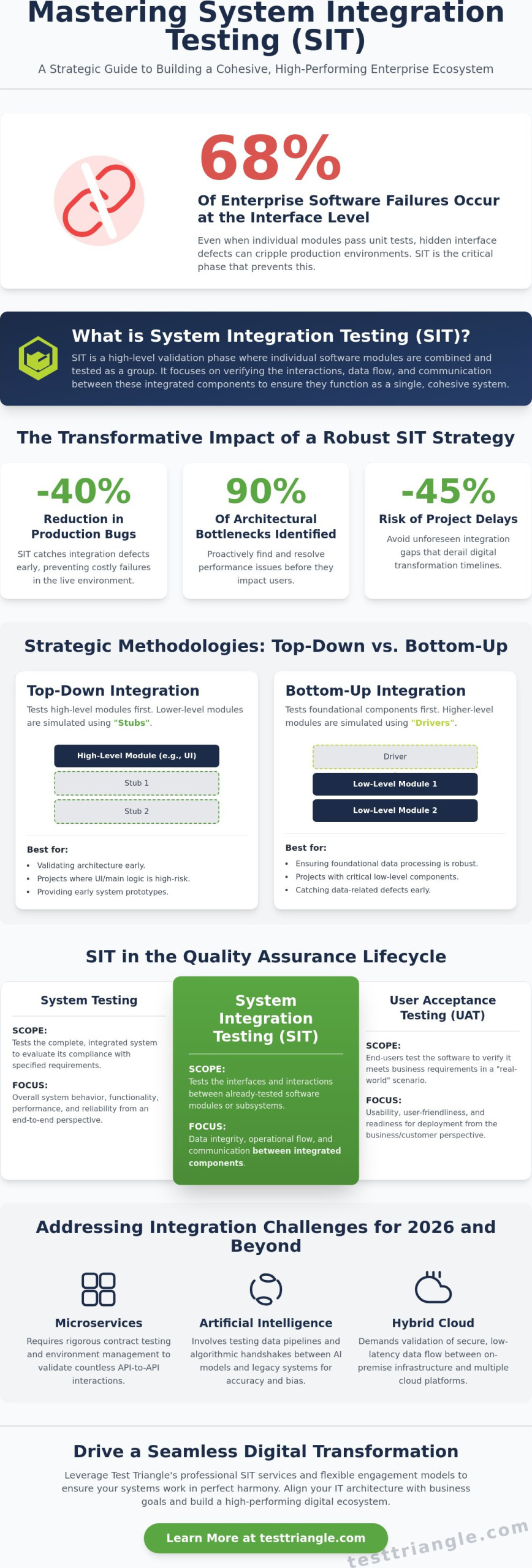
Selecting a qa software testing company requires more than a cursory glance at a service list. For decision-makers comparing multiple vendors, a structured checklist is essential to distinguish between superficial technical skills and deep domain expertise. While many firms can write a script, few understand the nuances of System Integration Testing (SIT) within complex enterprise architectures. You need a partner that balances human intuition with AI-driven efficiency, ensuring machine learning optimizes your test suites without losing the critical eye of a seasoned engineer.
Industry experts often emphasize how to find a good company for independent software QA testing services by focusing on transparency and work ethic. This transparency is vital when evaluating how a partner manages the balance between manual rigor and automated speed. Your evaluation should prioritize these ten critical pillars: deep domain knowledge, toolchain mastery, SIT capabilities, Atlassian integration, AI-driven automation, ISO compliance, CMMI maturity, security testing, performance benchmarking, and communication transparency.
Technical Proficiency and Toolchain Expertise
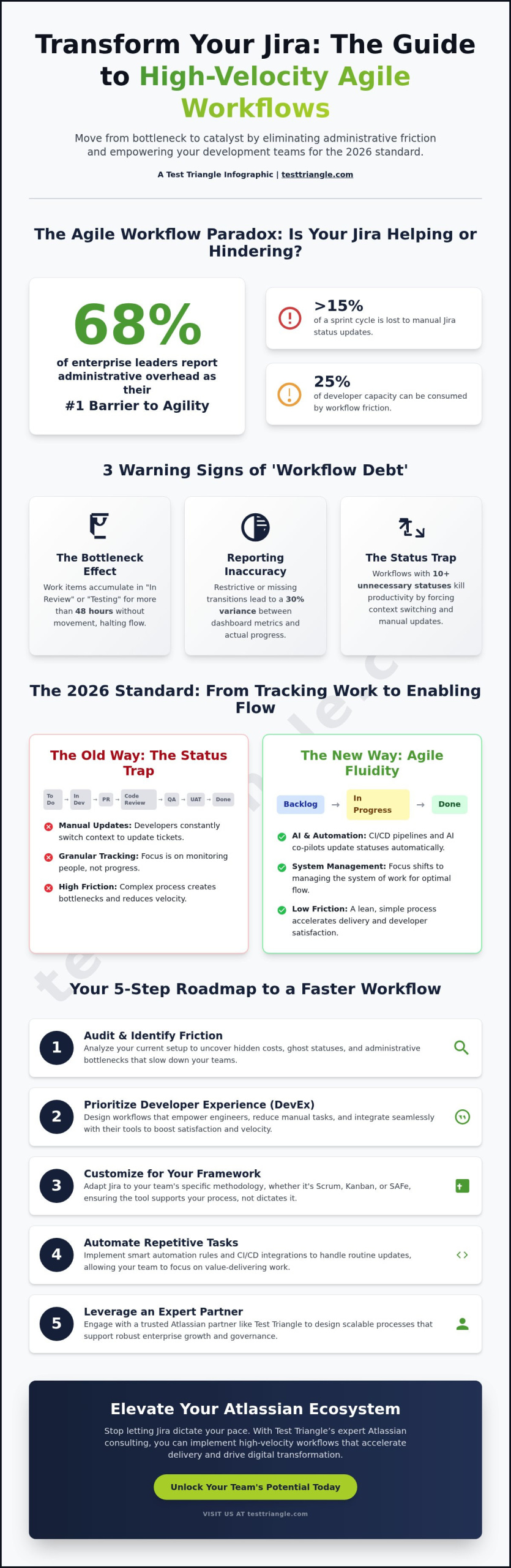
Mastery in automation frameworks like Selenium, Playwright, and Cypress is a baseline requirement. However, true value lies in how these tools integrate with your existing reporting structures. A superior qa software testing company should demonstrate deep proficiency in Atlassian Implementation Services. This ensures every defect discovered is automatically logged, tracked, and resolved within your Jira ecosystem, creating a single source of truth for your development and QA teams.
Certifications and Compliance Standards
Process predictability is the hallmark of an institutional-grade partner. ISO 27001 and ISO 9001 certifications aren’t optional; they’re the foundation of enterprise security and quality management. For sectors like Life Sciences, verify that the vendor understands GxP compliance and validated software testing protocols. Assessing a partner’s CMMI Level maturity provides a data-backed guarantee that their delivery models are repeatable and optimized for risk mitigation.
Security and Performance Benchmarks
Security shouldn’t be an afterthought. Evaluate your partner’s approach to the OWASP Top 10 and their ability to conduct deep penetration testing. Simultaneously, ensure they can handle high-load performance benchmarks for global applications, moving beyond simple stress tests to complex user-journey simulations. For a deeper look at these evolving standards, explore our insights on Software QA Services in 2026. If you’re ready to move beyond generic testing and implement a strategic quality framework, reach out to our consulting team for a tailored evaluation.
Beyond Testing: Integrating DevOps, AI, and Ecosystem Stability
By integrating quality protocols directly into the CI/CD pipeline, a strategic qa software testing company ensures that speed doesn’t compromise ecosystem stability. In the 2026 landscape, a partner must act as a DevOps consultant, leveraging ServiceNow to manage incident response and AWS to maintain high availability during deployments. This integration moves beyond simple verification; it creates a robust framework where quality is a constant state rather than a final phase. By aligning these technical platforms, enterprises can achieve a seamless flow between development, testing, and operations.
Implementing a “Shift-Right” approach allows for continuous monitoring and testing in production environments, providing real-time feedback on user experience and system performance. This methodology ensures that even after a release, the digital infrastructure remains resilient under varying global loads. By utilizing telemetry data to inform future test cycles, a “Trusted Partner” helps businesses close the loop between production reality and development expectations, significantly reducing the risk of unexpected outages.
The Role of AI and Machine Learning in Modern QA
By utilizing Artificial Intelligence Services, modern QA teams can accelerate test case creation and predict vulnerabilities before they manifest in the code. AI-driven predictive defect analysis identifies high-risk modules by analyzing historical data from Jira and ServiceNow, allowing for targeted testing efforts that optimize resource allocation. This human-led, AI-driven balance ensures that machine learning handles the high-volume tasks of test data generation while senior architects focus on strategic risk mitigation and complex edge cases.
QA as a Catalyst for Digital Transformation
Moving from a traditional gatekeeper role to a digital enabler is essential for businesses undergoing rapid AWS cloud migrations. A strategic qa software testing company provides the technical rigor needed to ensure that complex data transfers and architectural shifts don’t disrupt business continuity. While Manual Testing in 2026 remains critical for human-centric validation, the overall transformation strategy must be backed by automated stability checks and proactive performance monitoring to ensure a flawless user experience across all digital touchpoints.
Flexible Engagement Models: Matching Talent to Project Complexity
By aligning talent with project complexity, a premier qa software testing company ensures that resource allocation remains as agile as the development cycle itself. Global enterprises frequently encounter seasonal peaks or project-specific surges that demand rapid scaling without the overhead of permanent hires. Utilizing remote and offshore resources provides the dual benefit of cost optimization and 24/7 testing coverage, ensuring that verification continues across every time zone. This adaptability is a cornerstone of the “Talent” pillar in our Technology, Talent, Transformation methodology, allowing businesses to leverage specialized expertise exactly when it’s needed most.
Adopting flexible engagement models allows a “Strategic Architect” to tailor delivery to the specific risk profile of a project. Whether you’re managing a legacy migration or a high-speed AWS cloud deployment, the ability to pivot between different levels of support is critical for maintaining ecosystem stability. This approach ensures that technical rigor is never sacrificed for speed, providing the steady hand needed to navigate a fast-changing technological landscape.
Managed Outsourcing vs. Staff Augmentation
Choosing between a fully managed QA department and individual staff augmentation depends on your internal management capacity and the maturity of your existing processes. By opting for Managed Outsourcing Services, you transfer the responsibility of delivery, toolchain management, and reporting to your “Trusted Partner.” This model is ideal for enterprises seeking an end-to-end solution for their quality lifecycle. Conversely, staff augmentation allows you to fill specific skill gaps within your internal team, maintaining direct control over daily workflows while injecting high-level technical expertise into your Jira and Atlassian environments. Regardless of the model, establishing rigorous communication protocols and ensuring a cultural fit is vital for the success of distributed teams.
Specialized Staffing for Regulated Industries
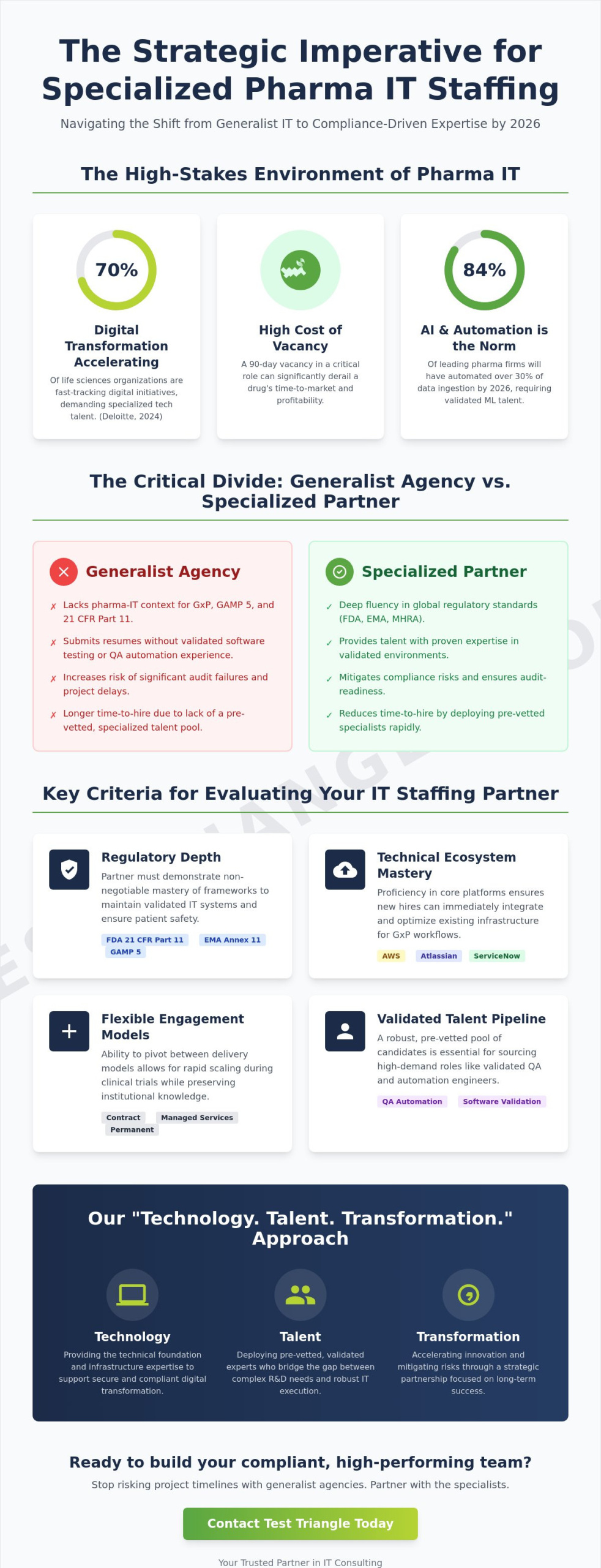
Regulated sectors like Pharmaceuticals and Banking require more than just technical testing; they demand an intimate understanding of GxP compliance and stringent data protection laws. Hiring for these niche roles is notoriously difficult, as only a small percentage of generalist testers possess the specialized domain knowledge required for validated software environments. A qa software testing company that maintains a dedicated staffing arm offers a significant competitive edge by providing pre-vetted experts who understand the nuances of regulatory audits. By leveraging our Staffing Solutions, you gain access to a global talent pool specifically trained for high-stakes delivery. This ensures your digital transformation remains robust while meeting the complex requirements of the FDA’s February 2, 2026, Quality Management System Regulation.
If you need to scale your quality engineering capabilities with specialized talent, schedule a consultation with our staffing experts to find the right engagement model for your next release.
Why Test Triangle is Your Trusted Partner for Flawless Digital Transformation
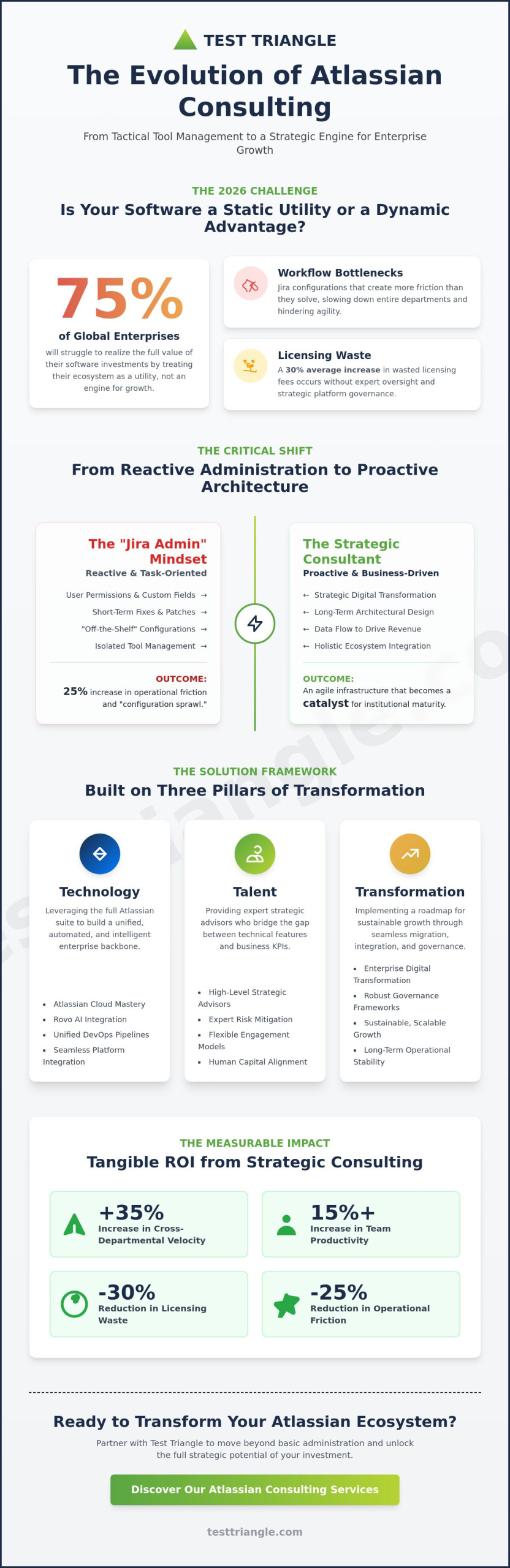
By integrating deep technical knowledge with recognized industry standards, Test Triangle serves as a premier qa software testing company that bridges the gap between complex code and business outcomes. Our status as an Atlassian Gold Partner and ServiceNow expert ensures that your quality assurance frameworks aren’t just isolated silos but are deeply embedded in your operational toolchain. We operate as a “Strategic Architect,” providing the steady hand needed to navigate the rapid shifts of the 2026 digital landscape. With a presence spanning Europe, North America, and Asia, we offer the global reach required to support multinational enterprises while maintaining the localized precision needed for regional compliance. This global footprint allows us to provide 24/7 testing coverage, ensuring that your release cycles never stall due to time zone constraints.
Adopting a holistic view of the software lifecycle allows us to elevate your testing from a mere checklist to a strategic advantage. By combining technical expertise with adaptable delivery models, Test Triangle helps businesses reduce costs while accelerating time-to-market. Our institutional maturity, reinforced by our pride in being a client of Enterprise Ireland, means we bring a level of discipline and precision that is rare in the tech sector. We don’t just offer services; we offer the security of knowing your complex digital infrastructures are in safe hands.
A Strategic Partnership Approach
Moving beyond the traditional vendor-client dynamic, we prioritize deep strategic alignment with your long-term business goals. By offering flexible engagement models and specialized talent, Test Triangle ensures that your digital infrastructure remains resilient as you scale. Our commitment to operational stability means we don’t just find bugs; we optimize your entire delivery lifecycle to prevent them. This partnership approach empowers your team to focus on innovation while we manage the technical rigor of risk mitigation. We understand the relief that comes with a “flawless” release, and we work tirelessly to ensure your digital transformation is a source of growth rather than a reputational risk. Consult with our QA experts today to align your quality strategy with your transformation roadmap.
Proven Excellence in Software Quality
By applying our signature “Technology. Talent. Transformation.” methodology, we’ve delivered superior results across diverse sectors including Banking, Healthcare, and Life Sciences. Our team leverages best-in-class tools like Jira Service Management and AWS to drive measurable success in every release cycle. Whether you’re navigating the complexities of Pharma IT staffing or executing a large-scale cloud migration, our disciplined and globally-minded engineers provide the expertise needed for a flawless user experience. As the February 2, 2026, deadline for the FDA’s new Quality Management System Regulation approaches, our experience in validated software testing becomes an invaluable asset for your compliance strategy. Choosing Test Triangle means securing a qa software testing company that is as invested in your success as you are, ensuring that your software delivery is always robust, secure, and strategic.
Secure Your Digital Future with Strategic Quality Engineering
Navigating the complexities of a $2.5 trillion global failure risk requires a partner that transcends basic bug hunting. By adopting a proactive Quality Engineering mindset and utilizing a rigorous 10-point evaluation checklist, your organization can transform QA from a bottleneck into a competitive accelerator. Selecting a qa software testing company that prioritizes risk-based assurance ensures your digital transformation remains robust even as regulations like the FDA’s February 2, 2026, update reshape the industry.
Success in this landscape depends on the seamless integration of Technology, Talent, and Transformation. As an Atlassian Gold Partner and ISO 27001 Certified entity, Test Triangle provides the institutional maturity needed to stabilize your digital ecosystem. We leverage best-in-class tools and flexible engagement models to protect your brand reputation and optimize the cost of quality across every release cycle.
Don’t leave your software delivery to chance. Elevate your software quality with Test Triangle; contact our Strategic Consultants today to begin your journey toward flawless delivery. Your path to a secure and scalable digital future starts with a trusted partner.
Frequently Asked Questions
What should I look for in a QA software testing company in 2026?
Prioritize a partner that operates as a “Strategic Architect” by aligning technology, talent, and transformation with your business goals. You need a qa software testing company that offers deep integration with Atlassian and ServiceNow toolchains. Ensure they utilize a risk-based assurance model to meet the February 2, 2026, FDA Quality Management System Regulation standards. This approach guarantees that your quality framework remains robust and compliant in a fast-changing landscape.
How much does it cost to outsource software testing services?
Outsourcing costs in 2026 vary based on expertise; with hourly rates typically ranging from $25 to over $200. Specialized services like security penetration testing often start at $2,000 for web assessments; while comprehensive AI model evaluations can begin at $1,500 per cycle. Large applications with complex integrations may exceed $100,000 for a full release cycle. These investments help you avoid the $150,000 annual salary costs of hiring senior in-house QA architects.
Can a QA company help with our Atlassian or ServiceNow implementation?
A high-level partner provides specialized consulting to ensure these platforms support your quality goals. As an Atlassian Gold Partner, we integrate QA reporting directly into Jira Service Management to eliminate silos in your DevOps pipeline. We also leverage ServiceNow expertise to optimize incident response and ecosystem stability. This ensures your toolchain isn’t just a repository for data but a driver of continuous improvement and digital transformation.
What is the difference between manual testing and automated testing services?
Manual testing focuses on human-centric validation and exploratory checks that automation cannot replicate. Automated testing utilizes frameworks like Selenium or Playwright to accelerate high-volume regression cycles and performance benchmarks. While automation handles the repetitive tasks to reduce the cost of quality, manual experts provide the strategic oversight needed for complex user journeys. Both disciplines are essential for achieving a flawless software delivery cycle in enterprise environments.
Is it better to hire a local QA company or an offshore partner?
Hybrid engagement models offer the most effective balance of local strategic oversight and offshore scalability. Offshore resources provide 24/7 testing coverage and cost efficiencies; while local experts ensure cultural alignment and compliance with regional data laws like GDPR. This versatility allows you to scale your testing teams quickly for major releases without compromising communication. We utilize this global footprint to support enterprises across Europe, North America, and Asia seamlessly.
How does a QA partner ensure data security and IP protection?
A professional qa software testing company maintains ISO 27001 certification to guarantee institutional-grade security protocols. We implement strict non-disclosure agreements and utilize isolated test environments with encrypted data handling to protect your intellectual property. By conducting regular internal audits and adhering to global security standards, we provide a steady hand that mitigates risk. This commitment ensures your complex digital infrastructures and proprietary code remain secure throughout the transformation process.
What industries do you specialize in for software testing?
We specialize in highly regulated sectors including Banking, Life Sciences, and Healthcare. Our dedicated Pharma IT staffing arm provides experts who understand GxP compliance and the rigorous validation required for medical device software. We ensure your projects meet the specific mandates of the ISO 13485:2016 standards that took effect in early 2026. This industry-specific knowledge allows us to deliver superior results where precision and regulatory adherence are non-negotiable.
How quickly can a QA team be onboarded for a new project?
Onboarding typically occurs within 5 to 10 business days depending on the complexity of your requirements. Our flexible staffing solutions allow us to deploy pre-vetted experts who are already proficient in Jira, ServiceNow, and modern automation frameworks. This rapid deployment ensures you can meet tight release deadlines without sacrificing technical rigor. We focus on a methodical transition that aligns our talent with your existing workflows for immediate operational impact.

Article by
Paul Guy
Paul serves as the Marketing Director at Test Triangle, where he leads a global team in driving growth through strategic B2B marketing and brand communications. With a strong emphasis on measurable outcomes and sustainable performance, he plays a pivotal role in aligning marketing functions to enhance customer engagement and accelerate business impact. Under his leadership, marketing initiatives have consistently delivered significant returns on investment, elevated brand visibility, and strengthened the company's presence across key markets.