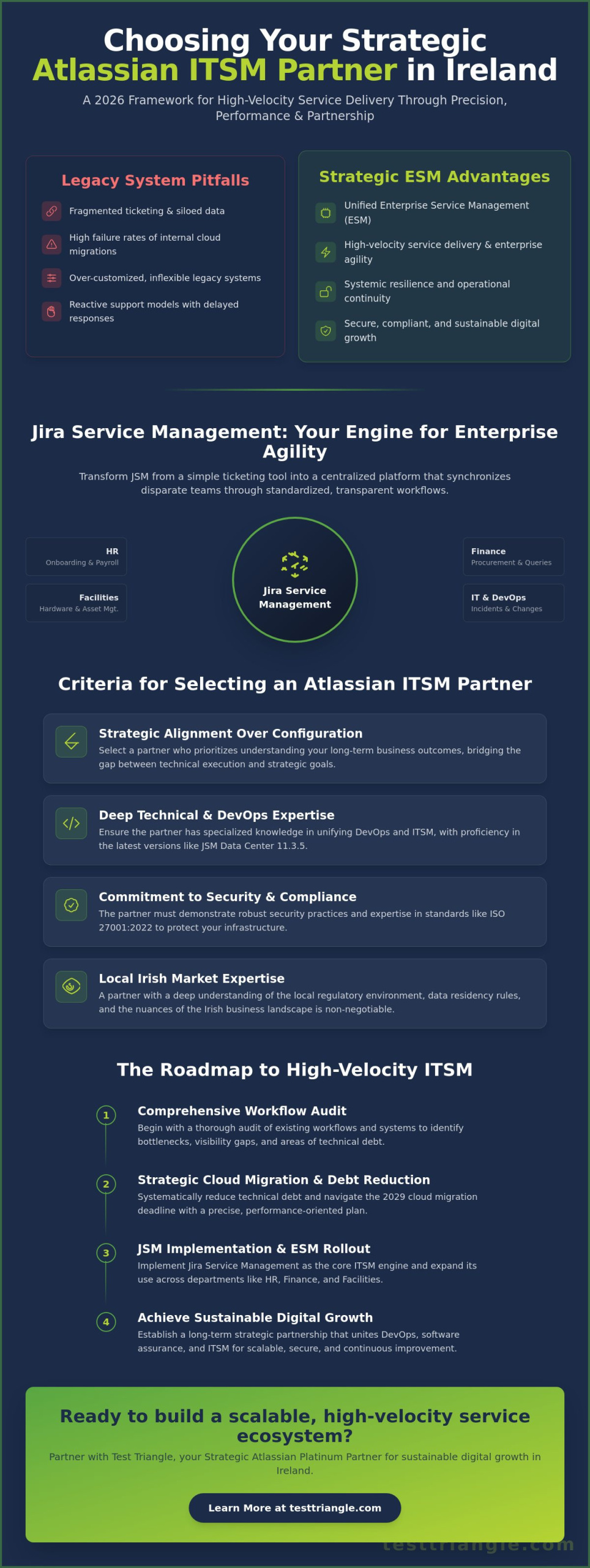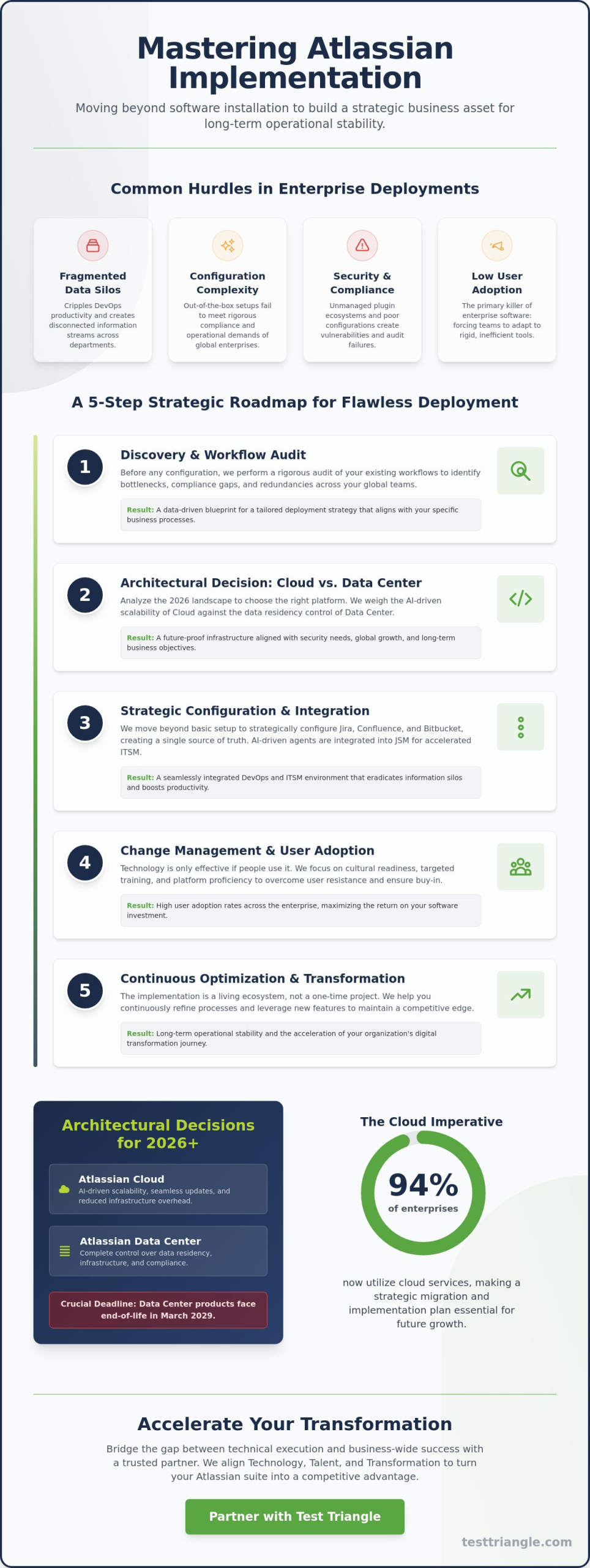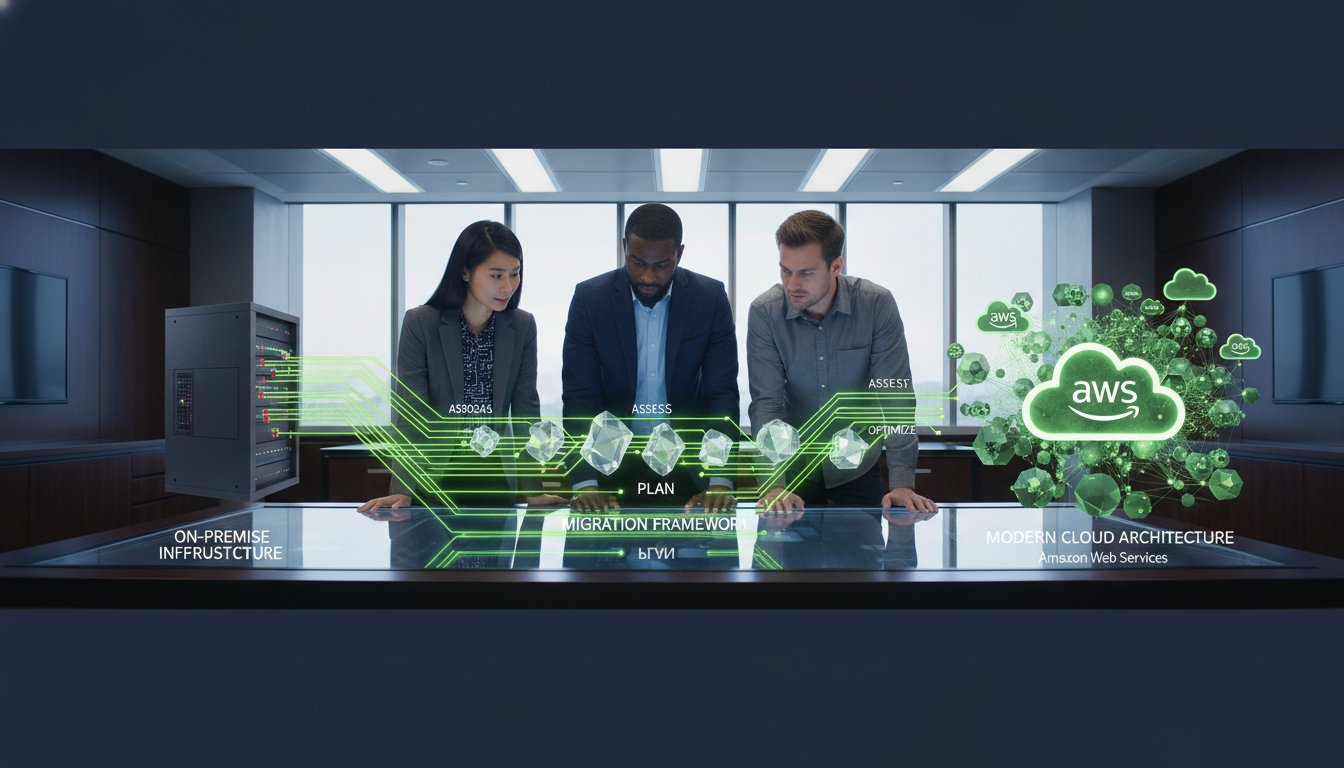
The true cost of an enterprise architecture isn’t found in license fees, but in the friction of disconnected workflows. By 2026, as Data Center products approach their final sunset, the gap between organizations that simply use tools and those that weaponize them has widened significantly. Strategic atlassian consulting services have evolved beyond basic configuration to become the architectural backbone of the modern enterprise. It’s no longer enough to manage tickets; you must orchestrate a unified system of work that bridges the divide between technical execution and high-level business outcomes.

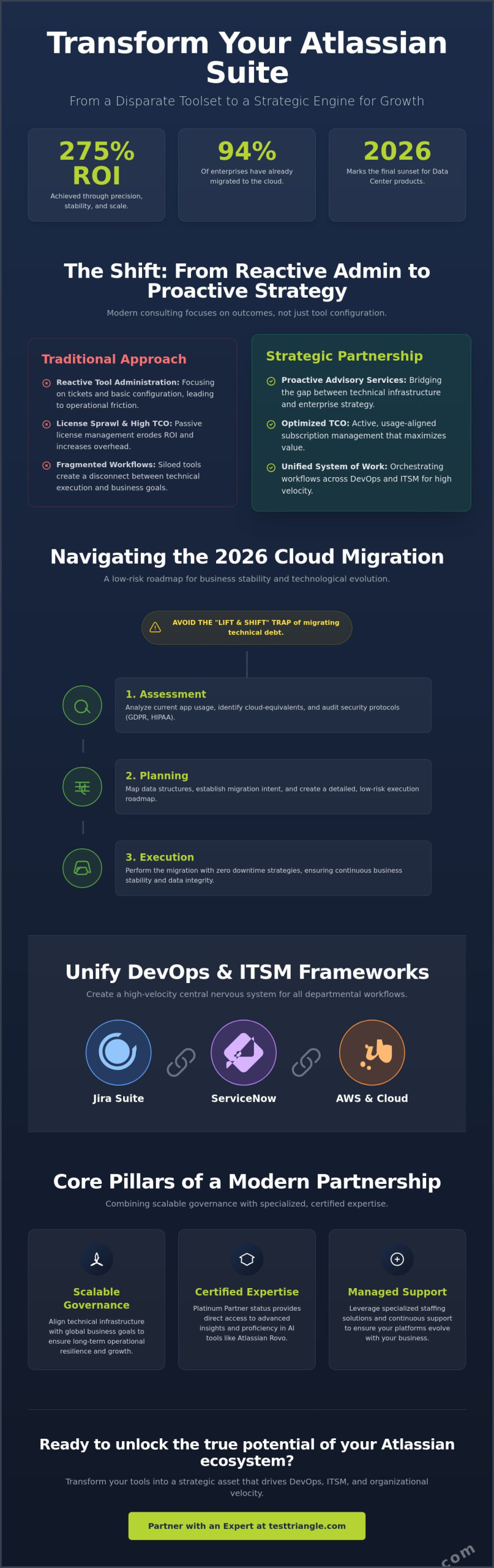
You likely recognize that license sprawl and rising operational overhead are eroding your ROI, even as your teams demand more automation. We understand that a seamless transition to the cloud is a non-negotiable requirement for maintaining business continuity in a landscape where 94% of enterprises have already migrated. This guide will show you how to transform your Atlassian suite from a disparate toolset into a strategic engine for DevOps, ITSM, and organizational velocity. We’ll explore expert license management, deep integrations with AWS and ServiceNow, and the path toward achieving a 275% ROI through precision, stability, and scale.

Key Takeaways

  • Transition from reactive tool administration to proactive advisory services that bridge the gap between technical infrastructure and enterprise-wide strategic outcomes.
  • Establish a low-risk migration roadmap that navigates the 2026 Cloud landscape while ensuring continuous business stability and technological evolution.
  • Optimize your total cost of ownership through atlassian consulting services that replace passive licensing with active, usage-aligned subscription management.
  • Unify your DevOps and ITSM frameworks by integrating Jira with ServiceNow to create a high-velocity central nervous system for all departmental workflows.
  • Leverage a strategic partner model that combines scalable governance with specialized staffing solutions to ensure long-term operational resilience and growth.

The Strategic Shift: Why Modern Atlassian Consulting Services Focus on Outcomes

Modern enterprises no longer view their software stacks as static utilities but as dynamic engines of growth. In this context, atlassian consulting services have transitioned from simple task-based support to a high-level strategic advisory role. This shift reflects a broader organizational need to align technical infrastructure with global digital transformation goals. Atlassian consulting is a holistic approach to optimizing the entire software delivery lifecycle, ensuring that every configuration choice serves a measurable business objective. By moving beyond the mechanics of traditional Jira administration, companies can bridge the gap between technical tools and the overarching DevOps and ITSM Frameworks that drive market competitiveness.

Moving from Tool Configuration to Process Transformation

Standard “out-of-the-box” configurations often buckle under the weight of enterprise-scale requirements, leading to fragmented data and siloed communication. A strategic consultant begins by conducting a rigorous audit of existing workflows before any technical implementation occurs. This methodology ensures that the tool adapts to the business, rather than forcing the business to conform to the tool’s default limitations. We focus on the three foundational pillars of success: People, Process, and Platforms. By addressing how teams collaborate and how information flows, we ensure that the technical atlassian implementation supports long-term scalability and operational stability.

The Role of Certified Expertise in 2026

In 2026, the complexity of the Atlassian ecosystem demands a level of specialized knowledge that internal teams rarely possess. Platinum Partner status provides organizations with a direct line to tier-one support and advanced insights into product roadmaps, which is vital for maintaining a competitive edge. For high-stakes environments such as finance and healthcare, certified expertise acts as a safeguard against data breaches and compliance failures. Modern consultants must be proficient in the latest 2026 releases, including the AI-powered capabilities of Atlassian Rovo and advanced AI agents. These tools represent the next frontier of productivity; however, they require precise governance to deliver their promised value without introducing new risks to the digital infrastructure.

By 2026, the Atlassian landscape has reached a definitive tipping point. With the sale of new Data Center licenses having ceased in March 2026, global enterprises are now prioritizing a transition to a cloud-first architecture to leverage advanced AI capabilities like Atlassian Rovo. However, a successful migration is rarely a linear path; it requires a sophisticated atlassian consulting services partner to navigate the technical and regulatory complexities. Moving to the cloud isn’t just about data residency. It’s about redefining how your organization scales without compromising the stability of your digital infrastructure.

Cloud Transformation: Beyond a Simple Lift-and-Shift

Many organizations falter by attempting a direct “lift-and-shift” of legacy data, which often results in migrating years of technical debt and broken workflows. To avoid the “garbage in, garbage out” trap, a strategic Cloud Migration and Architecture Strategy must begin with a comprehensive environment audit. This phase involves identifying redundant apps, archiving stale projects, and ensuring that security protocols meet global standards like GDPR or HIPAA. Our structured delivery model follows a disciplined cadence:

  • Assessment: Analyzing current app usage and identifying cloud-equivalent functionalities.
  • Planning: Mapping data structures and establishing a migration intent, whether for test or production environments.
  • Execution: Utilizing the Atlassian Implementation Services framework to ensure zero business downtime during the cutover.

Optimizing Data Center for Regulated Industries

While the push toward Cloud is undeniable, certain high-compliance sectors still rely on Data Center for air-gapped environments or specific regional regulatory requirements. In these scenarios, the focus shifts toward maximizing high availability and performance tuning to prevent operational bottlenecks. A seasoned consultant ensures that your on-premise infrastructure remains resilient and secure until the final 2029 end-of-life deadline. We often implement a “Hybrid” approach for these clients, where collaboration happens in Confluence Cloud while sensitive development remains within a hardened Data Center instance. This versatility allows for progress without sacrificing the rigorous security standards required in finance or government sectors.

If you’re unsure which path best supports your long-term scalability, you can speak with our strategic architects to evaluate your current architecture and design a roadmap tailored to your specific enterprise needs.
Strategic Atlassian Consulting Services: A 2026 Executive Guide to Enterprise Scalability

Evaluating ROI: License Management vs. Process Transformation

Executive leadership often views the annual Atlassian renewal as a significant financial hurdle, especially as enterprise pricing for Jira and Confluence continues to reflect the platform’s expanded AI capabilities. However, shifting from a mindset of passive subscription to one of active optimization is where atlassian consulting services prove their weight in gold. While many organizations treat licensing as a fixed overhead, a strategic partner identifies the hidden inefficiencies that inflate costs without contributing to output. License ROI is the intersection of tool consolidation and user adoption rates. By treating your toolset as a high-performance asset rather than a utility, you can transform rising costs into a quantifiable driver of organizational velocity.

Strategic License Management and Cost Reduction

Eliminating “zombie” licenses and consolidating marketplace app sprawl are the first steps toward regaining control over your software budget. It’s common for large enterprises to pay for premium tiers while utilizing only a fraction of the advanced features; worse, they often maintain multiple apps that perform identical functions. A consultant provides the rigorous oversight needed to audit these redundancies, ensuring that your tier levels align perfectly with actual team requirements. Beyond the immediate cleanup, purchasing through an authorized partner offers the advantage of unified billing and access to strategic discounts that aren’t available through direct self-service channels. This disciplined approach ensures that every dollar spent on Atlassian licenses is directly mapped to a functional business requirement.

Measuring Velocity: The True KPIs of Consulting

The ultimate measure of success isn’t just a lower bill; it’s the acceleration of your software delivery lifecycle. We track specific KPIs such as Lead Time and Cycle Time to demonstrate how a refined Jira environment removes the friction that slows down development. When implementing IT Service Management solutions, we focus on reducing the Mean Time to Resolution (MTTR) through advanced automation and AI-driven triage. There’s also a vital qualitative ROI to consider in 2026: the improvement of the Developer Experience (DX). By reducing the administrative burden on your engineers, you don’t just speed up deployment; you reduce burnout and retain the top-tier talent necessary for long-term digital evolution.

Synergistic Integration: Connecting Atlassian with DevOps and ITSM Frameworks

In the context of a modern digital infrastructure, the Atlassian suite acts as the central nervous system that orchestrates the flow of information across disparate departments. While many organizations treat Jira as an isolated project management tool, professional atlassian consulting services focus on creating a unified ecosystem where data flows seamlessly between development, operations, and support. This architectural synergy is essential for organizations pursuing a mature DevOps Consulting roadmap. By synchronizing your toolset with broader enterprise platforms, you ensure that technical execution remains perfectly aligned with the service delivery standards defined in your ITSM Solutions framework. This connectivity transforms the toolset from a repository of tasks into a dynamic engine for enterprise-wide visibility and stability.

Atlassian and ServiceNow: Bridging ITOM and ITSM

Large-scale enterprises often face a significant disconnect between software development teams, who live in Jira, and IT operations teams, who manage service delivery in ServiceNow. Integrating these two platforms is a strategic necessity to eliminate data silos and provide high-level visibility into the entire service lifecycle. When an incident is logged in ServiceNow, automated syncs ensure that the development team receives a corresponding ticket in Jira Software with all relevant technical context. This bidirectional flow maintains a single source of truth for incidents, changes, and problem records, which significantly reduces the friction of manual updates. It allows technical managers to track progress and resolve bottlenecks without leaving their preferred environment, fostering a culture of transparency and accountability across the organization.

DevOps Excellence with Bitbucket and Bamboo

Achieving true DevOps maturity requires more than just tool adoption; it requires the automated orchestration of the flow from “Code” to “Deploy.” We integrate Atlassian’s native tools, such as Bitbucket and Bamboo, directly into AWS-hosted CI/CD pipelines to create a resilient and scalable delivery engine. This setup ensures that code changes are automatically built, tested, and deployed with minimal human intervention. To maintain high standards of quality, we incorporate Software Test Automation Services directly into the pipeline. This integration ensures that performance and security checks are executed at every stage of the lifecycle, preventing production incidents and ensuring that only stable, high-quality code reaches the end user. By automating these touchpoints, our atlassian consulting services help you build a system that prioritizes both speed and traceability.

Ready to unify your enterprise toolchain and eliminate operational silos? Contact our integration specialists today to design a connected architecture that drives organizational velocity.

Test Triangle’s Methodology: Scalable Governance and Managed Support

Effective enterprise scalability requires a shift from transactional vendor relationships to a deep-rooted strategic partnership. At Test Triangle, we don’t just implement software; we embed ourselves into your organizational fabric to ensure your technical infrastructure evolves alongside your business goals. Our atlassian consulting services are built on a foundation of Precision, Partnership, and Progress, providing the stability needed to navigate the complexities of a 2026 digital landscape. By acting as a reliable long-term collaborator, we help you transition from reactive troubleshooting to a state of continuous optimization, ensuring that your investment in the Atlassian suite delivers compounding value over time.

Flexible Staffing: Solving the Atlassian Talent Gap

The demand for specialized expertise often outpaces the internal capacity of even the most robust IT departments. To bridge this divide, we offer comprehensive Staffing Solutions that provide both contract and permanent experts tailored to your specific environment. Whether you require embedded consultants to lead a high-stakes migration or offshore teams to provide cost-effective 24/7 maintenance, our model adapts to your unique operational constraints. This flexibility allows your core team to focus on high-value innovation while our specialists manage the intricacies of your Atlassian environment. Our global reach ensures that you have access to the right talent at the right time, regardless of geographical or regulatory challenges.

Long-Term Governance and System Optimization

System health is not a one-time achievement but a continuous process of refinement and vigilance. Through our Managed Outsourcing Services, we establish a proactive governance framework that includes quarterly architecture audits, timely version upgrades, and the immediate application of security patches. This disciplined approach prevents “process decay” and ensures that your workflows remain efficient as your user base grows. We also prioritize ongoing training and knowledge transfer to maintain high adoption rates across all departments. By combining technical rigor with human expertise, we ensure your Atlassian ecosystem remains a resilient asset that supports your long-term vision of digital transformation.

Your journey toward a fully optimized, scalable enterprise starts with a clear roadmap. We invite you to Contact Test Triangle today to schedule a strategic advisory session and discover how our atlassian consulting services can empower your organization’s growth.

Orchestrating Your Enterprise Evolution for 2026 and Beyond

The journey toward a scalable, high-velocity enterprise requires more than just high-performance software; it demands a disciplined alignment of technology, talent, and transformation. We’ve explored how the modern landscape necessitates a move toward outcome-based strategies, where deep integrations between Jira and ServiceNow serve as a unified central nervous system. By prioritizing active license optimization and proactive governance, global organizations can eliminate operational friction and secure a measurable return on their digital investments. This approach ensures that your infrastructure doesn’t just function, but actively propels your business goals forward.

As an Atlassian Platinum Solution Partner with a global presence across Europe, North America, and Asia, Test Triangle provides the institutional maturity required to manage complex infrastructures in highly regulated sectors like Finance and Pharma. Our atlassian consulting services are designed to act as a steady hand in a fast-changing technological environment, ensuring that your digital evolution is marked by stability, precision, and scale. We remain committed to your long-term success through a partnership model that values operational excellence and reliable support. Scale your enterprise with Test Triangle’s Strategic Atlassian Consulting and transform your toolset into a strategic engine for progress. The future of your organizational velocity starts with a single, strategic step forward.

Frequently Asked Questions

What are the primary benefits of hiring Atlassian consulting services?

Hiring atlassian consulting services ensures that your technical infrastructure is perfectly aligned with your high-level business objectives. Beyond simple tool configuration, these services provide the architectural oversight needed to reduce operational friction and eliminate data silos across global teams. This strategic alignment empowers leadership to make data-driven decisions while fostering an environment of stability and scalable growth through expert-led process transformation.

How much do Atlassian consulting services typically cost in 2026?

While specific engagement costs vary based on the complexity of the enterprise environment, industry benchmarks in 2026 show that the average hourly rate for an Atlassian consultant in the United States is approximately $62.66, though specialized Jira experts often command $200 or more per hour. Organizations generally find it prudent to budget between 20% and 30% of their annual licensing costs for professional implementation. These investments are typically offset by the elimination of redundant marketplace apps and the reduction of hardware maintenance overhead.

What is the difference between an Atlassian Solution Partner and a generic IT consultant?

An Atlassian Solution Partner possesses a direct relationship with Atlassian, providing them with prioritized access to product roadmaps and tier-one technical support that generic consultants can’t match. Platinum partners, in particular, must maintain rigorous certification standards and demonstrate a proven track record in managing complex, high-stakes environments. This specialized focus ensures that your digital infrastructure is managed with a level of precision and platform-specific expertise that generic IT providers lack.

Can Atlassian consultants help with Cloud migration from Server or Data Center?

Yes, specialized consultants design and execute comprehensive migration roadmaps that mitigate the risks of data loss and business downtime during the transition. This process includes a deep-dive audit to clean up technical debt and ensure that your new cloud architecture adheres to global compliance standards like GDPR or HIPAA. By utilizing a structured delivery model, consultants help organizations navigate the definitive shift toward cloud-first environments before the final Data Center end-of-life deadline in 2029.

How do Atlassian consulting services improve DevOps and CI/CD pipelines?

Consultants optimize DevOps workflows by integrating Atlassian tools like Bitbucket and Bamboo directly into your existing CI/CD pipelines, often hosted on AWS. This orchestration automates the flow from code commit to production deployment, which significantly reduces manual errors and production incidents. By establishing a unified “system of work,” atlassian consulting services ensure that your development and operations teams operate with maximum traceability and speed within a secure, automated environment.

What should we look for when choosing an Atlassian consulting partner?

Look for a partner that demonstrates a strategic visionary mindset combined with practical, industry-specific experience in regulated sectors like finance or pharma. It’s essential to select a collaborator that offers an adaptable approach to service delivery, including both high-level advisory and flexible staffing solutions to fill internal talent gaps. A partner’s ability to integrate Atlassian with other major platforms, such as ServiceNow, is also a critical indicator of their technical maturity and strategic value.

How does Atlassian consulting help with license management and cost optimization?

Consultants perform detailed audits to identify “zombie” licenses and redundant marketplace apps that inflate your total cost of ownership. By moving from passive licensing to active optimization, they align your subscription tiers with actual user adoption and functional requirements. This disciplined oversight ensures that your budget is spent on high-value features that drive productivity, rather than on underutilized seats or overlapping tool functionalities that provide no clear ROI.

Do Atlassian consultants provide training for our internal teams?

Yes, comprehensive training is a cornerstone of the strategic partner model to ensure long-term system health and high user adoption. Consultants provide tailored upskilling sessions that bridge the gap between technical tools and your organization’s specific workflows. This proactive knowledge transfer prevents process decay and empowers your internal teams to manage the day-to-day operations of your Atlassian suite with confidence and precision.

Paul Guy

Article by

Paul Guy

Paul serves as the Marketing Director at Test Triangle, where he leads a global team in driving growth through strategic B2B marketing and brand communications. With a strong emphasis on measurable outcomes and sustainable performance, he plays a pivotal role in aligning marketing functions to enhance customer engagement and accelerate business impact. Under his leadership, marketing initiatives have consistently delivered significant returns on investment, elevated brand visibility, and strengthened the company's presence across key markets.

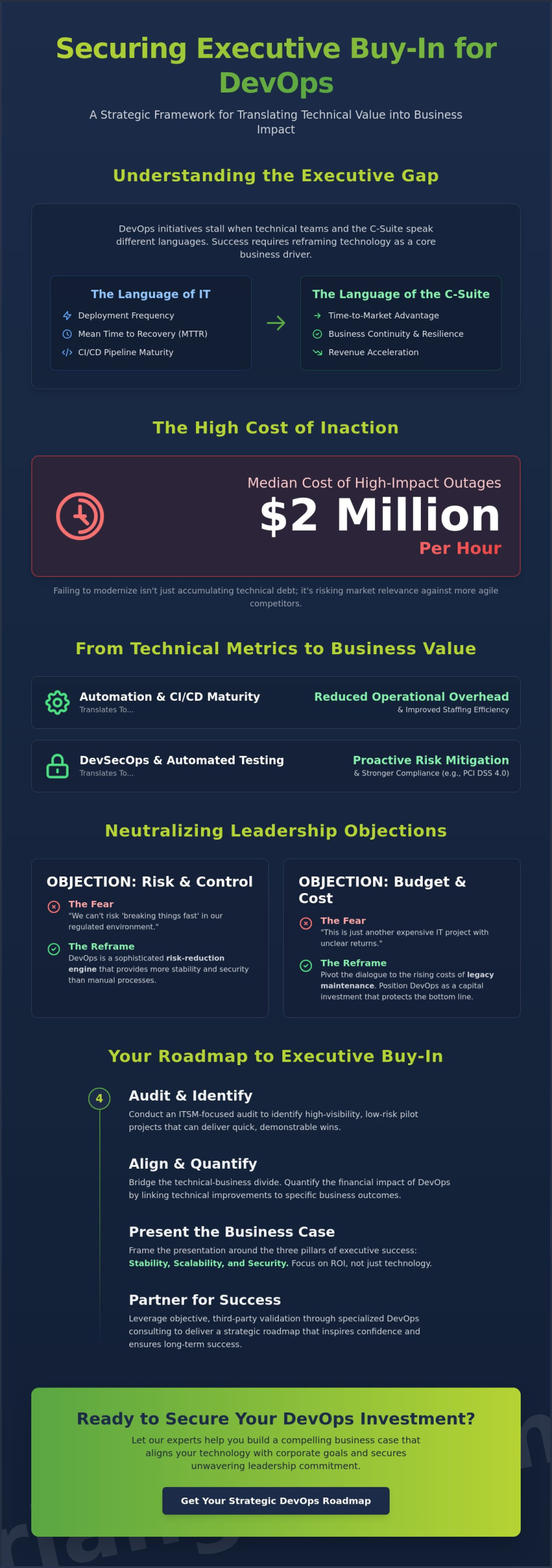
Executive buy-in isn’t won through technical speed; it is earned through the strategic mitigation of business risk and the acceleration of predictable revenue. You’ve likely experienced the frustration of budget rejections or leadership dismissals when DevOps is perceived as a mere operational fad rather than a core business driver. Understanding how to get executive buy-in for devops in 2026 requires a fundamental shift from reporting on deployment frequency to demonstrating how streamlined workflows protect the bottom line. It’s about positioning technology as a catalyst for stability, scalability, and security.

This article promises to equip you with a sophisticated framework for translating complex technical metrics into high-level business value that secures unwavering leadership commitment. By connecting your technical methodology to specific business actions, you’ll gain a clear roadmap for executive presentations that focuses on quantifiable outcomes, such as reducing the median $2 million per hour cost of high-impact outages. We will preview the specific strategies needed to align your DevOps initiatives with corporate goals, ensuring your infrastructure is viewed as a vital asset for long-term organizational success.

Key Takeaways

  • Bridge the technical-business divide by aligning your engineering methodology with high-level corporate strategy to transform DevOps from a perceived cost center into a strategic value driver.
  • Quantify the financial impact of automation and CI/CD maturity using a framework that links technical execution to reduced operational overhead and improved staffing efficiency.
  • Master how to get executive buy-in for devops by following a structured roadmap that utilizes an ITSM-focused audit to identify high-visibility, low-risk pilot projects.
  • Neutralize leadership objections regarding budget and risk by pivoting the dialogue toward the rising costs of legacy maintenance and the compliance benefits of DevSecOps standards.
  • Leverage objective third-party validation through specialized DevOps consulting to deliver a strategic roadmap that ensures a secure, scalable, and stable infrastructure.

Understanding the Executive Gap: Why DevOps Buy-In Stalls

True executive buy-in transcends simple budgetary approval; it represents a fundamental alignment between your technological methodology and the overarching corporate strategy. For many organizations, the journey toward modernization stalls because of a persistent “Technical-Business Divide” where engineering jargon obscures the actual commercial value. When technical teams focus exclusively on internal efficiencies, they fail to address the primary concerns of the C-Suite: market share, risk mitigation, and revenue acceleration. Within the context of digital transformation services, DevOps acts as the engine of change, yet it’s often treated as a black box by leadership. Understanding how to get executive buy-in for devops requires recognizing that leadership views technical initiatives through a lens of risk and return rather than architectural purity.

In the 2026 market, the stakes for this alignment have never been higher. With the median cost of high-impact IT outages reaching $2 million per hour according to current industry data, the cost of inaction is no longer just technical debt; it’s potential market irrelevance. Leadership must understand that DevOps principles aren’t just about coding faster, but about building a resilient infrastructure that can pivot as quickly as global market conditions demand. Failing to bridge this gap leaves the organization vulnerable to agile competitors who have already integrated their development and operations into a single, cohesive unit. This lack of synergy creates a ceiling on growth that no amount of manual effort can overcome.

The Language of the C-Suite vs. The Language of IT

Effective communication is the cornerstone of how to get executive buy-in for devops. While engineers might celebrate an increase in deployment frequency, an executive sees that same data as a time-to-market advantage. Similarly, technical metrics like Mean Time to Recovery (MTTR) should be reframed as Business Continuity metrics to resonate with risk-averse stakeholders. When presenting your case, focus on the three-word groupings that define executive success: Stability, Scalability, Success. By shifting the vocabulary from technical processes to business outcomes, you position DevOps as a strategic asset rather than a line-item expense. It’s about speaking the language of investment and return.

The Psychological Barriers to DevOps Adoption

Resistance often stems from a deep-seated fear of losing control over siloed departmental data or the perceived risk of “breaking things fast” in highly regulated environments. This is particularly true under the strict requirements of PCI DSS 4.0, where security cannot be an afterthought. You must frame DevOps as a sophisticated risk-reduction engine. Instead of emphasizing speed at all costs, highlight how automated testing and continuous monitoring provide a more stable and secure environment than manual processes ever could. This approach transforms the perception of DevOps from a disruptive force into a steady hand that ensures organizational progress through precision and scalable growth.

The 2026 Business Case: Translating DevOps Metrics into ROI

Securing executive commitment requires a transition from technical storytelling to a rigorous financial analysis of organizational performance. In 2026, the business case for DevOps has matured beyond simple innovation; it is now centered on demonstrating a measurable return on investment through the reduction of downtime and the acceleration of revenue recognition. By utilizing DevOps Consulting principles to benchmark your current state against industry leaders, you can present a clear, data-driven narrative that resonates with the CFO. This involves mapping every technical improvement to a specific business outcome, ensuring that leadership understands how to get executive buy-in for devops by treating the transition as a capital investment rather than a recurring expense. Success in this area is defined by your ability to communicate three core pillars: Efficiency, Evolution, and Empowerment.

CI/CD maturity directly influences the bottom line by lowering operational overhead and maximizing staffing efficiency. When deployment pipelines are fully automated, the manual labor required for releases drops significantly, allowing your existing team to handle a higher volume of work without increasing headcount. This efficiency isn’t just about internal metrics; it’s about customer experience. Organizations that have implemented DevOps report that 61% have seen improved quality in their deliverables, which translates to higher customer retention and a stronger market position. By focusing on these high-level outcomes, you provide the peace of mind that executives need to authorize large-scale technological shifts.

Financial Impact: Beyond the Tooling Costs

The true financial impact of Automation Testing lies in the prevention of catastrophic failures that can derail annual budgets. When you consider that high-impact IT outages carry a median cost of $2 million per hour, the ROI of automated performance testing becomes immediately apparent. Implementing a “Shift Left” philosophy acts as a massive cost-saving measure by identifying vulnerabilities earlier in the lifecycle, where they’re significantly cheaper to remediate. This proactive stance reduces the necessity for emergency late-night firefighting, allowing your team to maintain a consistent focus on high-value development rather than constant crisis management. This shift ensures that your budget is spent on growth rather than remediation.

Operational Efficiency and Talent Retention

Operational stability is inextricably linked to your ability to attract and retain elite engineering talent in a competitive market. Since 37% of IT leaders currently report a significant technical skills gap, providing a modern, automated environment is a critical competitive advantage for IT staffing services and internal recruitment efforts. A superior developer experience (DevEx) naturally leads to higher employee satisfaction, which reduces the substantial costs associated with recruitment and placement fees. By following an enterprise executive roadmap that prioritizes automation, you empower your human capital to focus on innovation that directly enhances customer experience. If you’re ready to quantify these benefits for your leadership team, you can speak with our strategic consultants to begin your assessment.

How to Get Executive Buy-In for DevOps: A Strategic 2026 Framework

Building the Strategic Roadmap: Tools, Culture, and Outcomes

Constructing a strategic roadmap requires a methodical progression from initial assessment to enterprise-wide execution. To begin, you must audit your current state through an IT Service Management (ITSM) lens, ensuring that your DevOps evolution respects existing governance while identifying critical bottlenecks. Following this, identifying a high-visibility, low-risk pilot project allows your team to demonstrate tangible results without jeopardizing mission-critical systems. This phased approach is essential for understanding how to get executive buy-in for devops, as it provides a low-stakes environment to validate your methodology before requesting broader resource allocation. By aligning your tooling with established Atlassian Implementation strategies, you ensure that your technical progress remains visible and measurable for every stakeholder involved.

A successful roadmap also necessitates the establishment of a continuous feedback loop between engineering and executive leadership to maintain alignment with corporate goals. As you scale the culture of quality across the entire enterprise, the focus remains on Precision, Performance, and Progress. This structured transition prevents the friction typically associated with large-scale cultural shifts, positioning the organization for long-term operational stability. By following this five-step framework, you transform DevOps from a departmental initiative into a core pillar of your digital strategy:

  • Step 1: Audit the current state using an ITSM lens to identify efficiency gaps.
  • Step 2: Launch a “Pilot Project” that offers high visibility with manageable risk.
  • Step 3: Consolidate the toolchain within the Atlassian and ServiceNow ecosystems.
  • Step 4: Institutionalize executive reporting through automated dashboards.
  • Step 5: Expand successful pilot methodologies to all business units.

Leveraging the Atlassian and ServiceNow Ecosystems

Integrating platform ecosystems like Atlassian and ServiceNow provides the executive-level visibility necessary to dispel the “black box” perception of engineering. Platforms such as Jira and Confluence act as a single source of truth, offering real-time dashboards that translate technical tasks into project milestones. By utilizing ServiceNow Implementation to manage enterprise-scale workflows, organizations can ensure that DevOps practices are governed by the same rigor as other corporate functions. This strategic integration maximizes the ROI of existing software licenses while providing leadership with the transparency they require to support large-scale technological evolution.

The Pilot Project: Proving Value in 90 Days

A 90-day pilot project serves as a practical laboratory to demonstrate the business value of DevOps through “Quick Wins” that resonate in the boardroom. When selecting this project, prioritize applications with high user visibility but manageable complexity to ensure that results are both impactful and achievable. Documenting the pilot’s success through reduced lead times and improved deployment stability provides the empirical evidence needed to justify more comprehensive managed outsourcing services. Presenting these results as a proof-of-concept ensures that your request for enterprise-wide adoption is backed by internal data rather than theoretical promises. This data-driven approach is the most effective method for how to get executive buy-in for devops within a highly disciplined corporate environment.

Overcoming Executive Objections: Risk, Cost, and Inertia

Addressing executive resistance requires a shift from defensive justification to strategic reframing. When leadership suggests that a DevOps transition is “too expensive,” the most effective counter-narrative focuses on the escalating costs of legacy maintenance and the hidden drain of technical debt. Maintaining fragile, manual systems often requires a larger operational budget than the initial investment in automation. By highlighting how how to get executive buy-in for devops involves protecting the bottom line from the inevitable decay of older infrastructures, you move the conversation from a cost center to a value-protection strategy. This approach is particularly vital for global enterprises where the inertia of existing processes can lead to market irrelevance if not corrected through systemic improvement.

Another common misconception is that DevOps methodologies are exclusively reserved for agile tech startups. In reality, the complexity of modern multi-cloud and hybrid cloud environments makes these practices essential for the enterprise scale. With 89% of organizations now utilizing multi-cloud strategies, the consistency provided by automated pipelines is the only way to manage such vast digital estates reliably. Presenting enterprise-scale case studies that demonstrate how large, regulated organizations have successfully navigated these transitions helps dispel the myth that DevOps is a risky or unproven experiment. It is, instead, a proven pillar of organizational progress and operational stability.

Securing the Perimeter: The DevSecOps Argument

The objection that “security will be compromised” is best met by introducing DevSecOps as a superior alternative to traditional, late-stage security audits. By integrating security practices from the initial stages of development, organizations can achieve “Compliance as Code,” which is essential for meeting the mandatory requirements of PCI DSS 4.0 as of March 31, 2025. Automated security testing reduces the risk of human error and ensures that governance is baked into the CI/CD pipeline. This proactive stance aligns with the NIST Cybersecurity Framework (CSF) 2.0, which emphasizes cybersecurity as a core leadership responsibility. Ultimately, a high level of security maturity ensures long-term brand protection, customer trust, and regulatory peace of mind.

The Skills Gap: Leveraging External Expertise

A significant barrier to adoption is the internal skills gap, with 37% of IT leaders reporting a lack of DevOps and DevSecOps expertise within their teams. Rather than stalling progress while searching for permanent hires, organizations can utilize flexible staffing solutions to inject immediate expertise into their projects. This hybrid staffing model acts as a risk-mitigation strategy for 2026, allowing companies to “jumpstart” their cultural evolution through a combination of contract, remote, or offshore talent. By leveraging external consultants to establish the initial framework, you empower your existing staff to learn through collaboration while maintaining the pace of your digital transformation. If you are ready to address the talent gap in your organization, you can consult with our staffing experts today to explore a tailored approach.

Partnering for Success: How DevOps Consulting Accelerates Buy-In

Engaging an objective third-party often serves as the definitive catalyst for securing leadership commitment, as external experts provide a level of neutrality and cross-industry perspective that internal teams may lack. This external validation is a critical component of how to get executive buy-in for devops, offering the “Global Benchmark” that reassures executives their investment aligns with recognized enterprise standards. By transitioning from a collection of fragmented tools to a unified IT Service Management strategy, organizations ensure their technical evolution is governed by rigorous operational standards. This strategic partnership transforms the DevOps initiative from a siloed engineering project into a validated corporate priority, emphasizing organizational progress through a commitment to Reliability, Resilience, and ROI.

A professional consultancy acts as a steady hand in a fast-changing technological landscape, bridging the gap between technical execution and business outcomes. When leadership sees that 99% of organizations implementing these practices report positive effects, the conversation shifts from “why” to “how fast.” Expert consultants provide the institutional maturity required to operate across diverse, highly regulated industries, ensuring that every technical milestone is connected to a tangible business benefit. This collaboration provides the peace of mind derived from risk reduction, allowing the C-Suite to focus on large-scale technological evolution with confidence and clarity.

The Value of a Strategic Technology Roadmap

A Strategic Technology Roadmap provides the predictable timeline for return on investment that financial stakeholders require before authorizing significant capital expenditure. This roadmap must explicitly align DevOps workflows with digital assurance testing to ensure that increased speed does not compromise the high standards of quality or security. With the global DevOps market projected to grow to $25.5 billion by 2028, leadership needs to understand how their specific roadmap positions them within this expanding digital economy. By identifying clear methodologies and subsequent results, the roadmap offers a composed, solution-oriented vision that empowers the organization to pursue scalable growth without the friction of unmanaged technical debt.

Taking the Next Step: Your Executive Presentation

Your final executive presentation should be a disciplined summary of the business value, risk mitigation, and operational stability that a modernized infrastructure provides. It’s essential to demonstrate how to get executive buy-in for devops by presenting an evidence-based proposition that focuses on quantifiable outcomes rather than abstract technical features. Beyond the initial implementation phase, ongoing managed support is vital for maintaining long-term stability and ensuring that the organization remains agile enough to meet future market demands. Securing your organization’s digital future requires a reliable long-term collaborator who is deeply invested in your operational success. To begin building your authoritative business case and defining your path to modernization, contact Test Triangle for a strategic DevOps consultation and secure the expert partnership your enterprise deserves.

Advancing Your Enterprise Modernization Strategy

Successfully mastering how to get executive buy-in for devops requires a definitive transition from technical metrics to a narrative of business resilience and revenue acceleration. By bridging the gap between engineering execution and corporate strategy, you position your infrastructure as a vital asset for long-term growth and operational stability. This framework has outlined the necessity of mapping CI/CD maturity to financial outcomes while leveraging trusted platforms like Atlassian and ServiceNow to provide the transparency leadership demands.

As an Atlassian Gold Solution Partner with global IT staffing expertise and strategic ServiceNow integration capabilities, we act as a reliable long-term collaborator for your digital evolution. Our solution-oriented methodology ensures your digital transformation remains precise, predictable, and profitable, providing the institutional maturity needed to navigate complex regulatory landscapes. We focus on delivering the peace of mind that comes from systemic improvement and risk reduction.

Secure your DevOps future with a strategic consultation at Test Triangle and empower your organization to lead in an increasingly competitive landscape. You now possess the strategic framework required to turn technical potential into business success, and we’re here to help you execute that vision with confidence.

Frequently Asked Questions

What is the fastest way to show ROI from DevOps to an executive?

The most efficient method involves launching a targeted pilot project that addresses a specific bottleneck in a revenue-generating application. By measuring the reduction in manual intervention and the subsequent acceleration of feature delivery, you provide a clear financial narrative for leadership. This approach allows you to demonstrate immediate value and operational progress without requiring an initial organizational overhaul.

How do I explain DevOps to a non-technical CEO?

Explain DevOps as a strategic alignment of your digital supply chain that ensures software is delivered with the same precision and reliability as a physical product. Focus on how it removes departmental silos to accelerate time-to-market while protecting the brand from costly operational failures. It is ultimately about building a stable foundation for scalable growth and long-term success.

Why is executive buy-in more important than technical tool selection?

Leadership commitment is the primary driver of cultural transformation, whereas tools are merely secondary enablers of that change. Without a strategic mandate, even the most sophisticated software will fail to deliver results if it isn’t integrated into broader corporate goals. This fundamental alignment is the cornerstone of how to get executive buy-in for devops and ensures organizational stability.

Can DevOps be implemented in highly regulated industries like finance or pharma?

Highly regulated sectors benefit significantly from DevOps through the implementation of automated “Compliance as Code” within their pipelines. This methodology ensures that every deployment meets strict security and regulatory standards automatically, which reduces the risk of human error during audits. It transforms compliance from a manual hurdle into a continuous, verifiable process that supports large-scale technological evolution.

What are the most important DevOps KPIs for business leaders in 2026?

Modern business leaders prioritize outcome-focused metrics such as revenue recognition speed, the cost of prevented outages, and overall customer experience ratings. While technical teams track deployment frequency, executives require data that reflects the organization’s ability to pivot and remain competitive. These specific KPIs bridge the gap between engineering effort and commercial success, providing the peace of mind leadership craves.

How does DevOps consulting differ from just hiring more developers?

DevOps consulting focuses on establishing a strategic framework and optimized methodology, whereas hiring developers typically only increases your current production capacity. A consultant provides the roadmap and governance necessary to ensure that your team is working within an efficient, automated system. This ensures long-term operational stability and systemic improvement rather than just temporary output gains.

What happens if we implement DevOps without full executive buy-in?

Operating without full executive commitment often results in fragmented silos where DevOps practices are confined to small teams without the resources to scale. This lack of alignment leads to friction when technical improvements collide with traditional corporate policies, eventually causing the initiative to stall. It’s essential to understand how to get executive buy-in for devops to avoid these systemic bottlenecks and ensure progress.

How do Atlassian tools help in getting executive buy-in?

Atlassian platforms like Jira and Confluence facilitate buy-in by providing high-level visibility into the development lifecycle through automated dashboards. These tools translate technical progress into project milestones that executives can easily monitor, which fosters a sense of transparency and trust. This visibility proves that the technological methodology is directly supporting the strategic roadmap and corporate vision.

Paul Guy

Article by

Paul Guy

Paul serves as the Marketing Director at Test Triangle, where he leads a global team in driving growth through strategic B2B marketing and brand communications. With a strong emphasis on measurable outcomes and sustainable performance, he plays a pivotal role in aligning marketing functions to enhance customer engagement and accelerate business impact. Under his leadership, marketing initiatives have consistently delivered significant returns on investment, elevated brand visibility, and strengthened the company's presence across key markets.
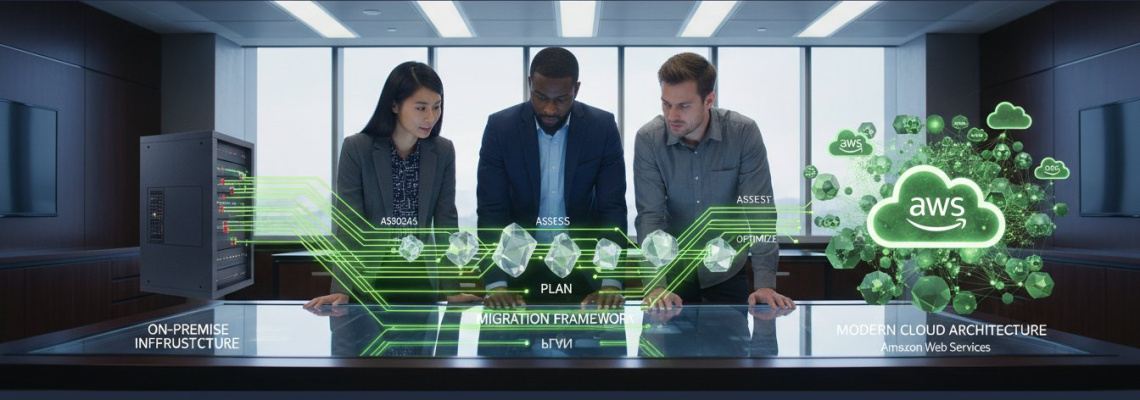

The fastest way to fail your cloud transition is to treat your aws migration strategy for legacy applications as a simple infrastructure swap rather than a holistic business evolution. While many enterprises view legacy monoliths as anchors of technical debt, these systems often house the core logic that defines your market advantage. Transitioning them to the cloud requires more than just moving data; it demands a precise, risk-mitigated framework that balances operational stability with the need for modern performance.

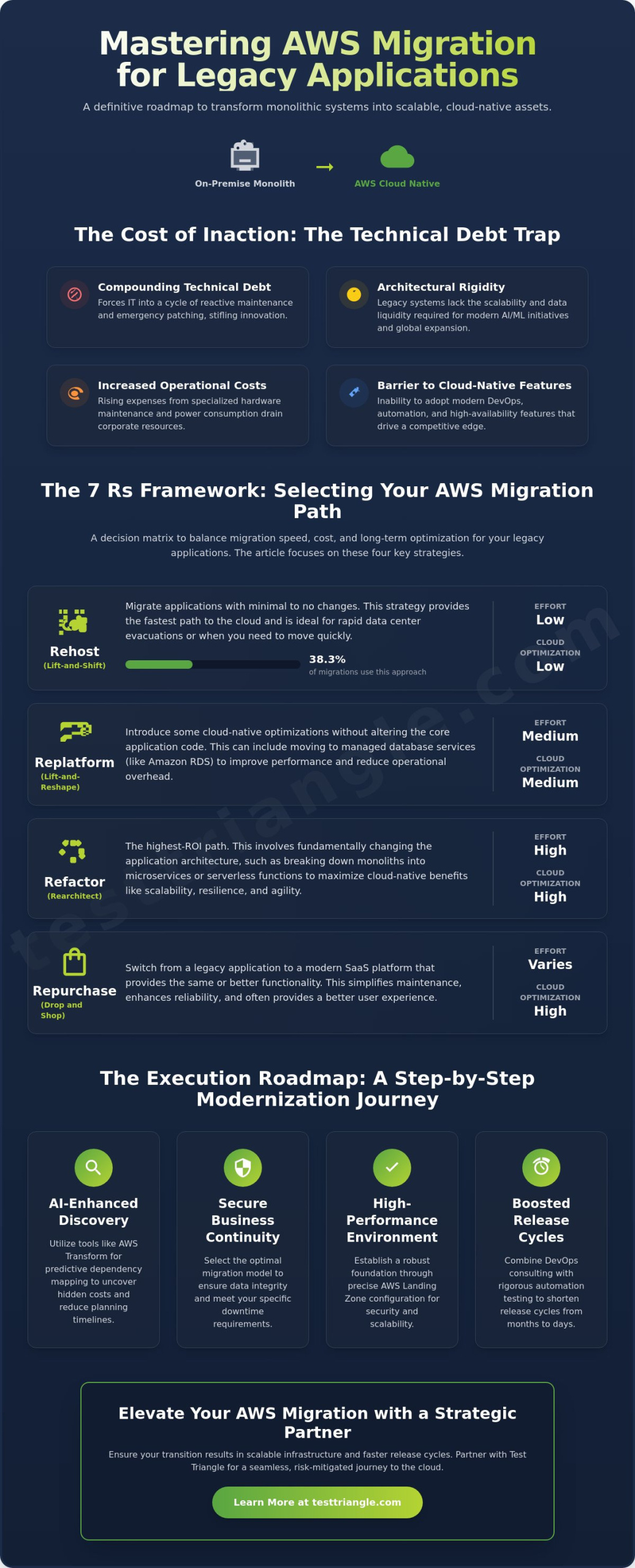
You’re likely facing the daunting reality of monolithic systems, where the fear of extended downtime or data loss often outweighs the desire for innovation. We understand that managing regulatory compliance hurdles and a lack of internal AWS expertise can make the move feel impossible. This guide provides a definitive roadmap to master these complexities, ensuring your transition results in scalable infrastructure and faster release cycles through integrated DevOps practices. We’ll explore the shift to AI-driven discovery using AWS Transform, the implementation of the 7 Rs framework, and how to achieve data liquidity for the next generation of enterprise intelligence.

Key Takeaways

  • Recognize the compounding risks of technical debt to see why keeping on-premise monoliths isn’t a sustainable option in 2026.
  • Select the optimal aws migration strategy for legacy applications by leveraging the 7 Rs framework to balance immediate speed with long-term optimization.
  • Secure your business continuity by choosing the migration model that’s best for your data integrity and downtime requirements.
  • Establish a high-performance environment through precise landing zone configuration and AI-enhanced discovery phases that reduce planning timelines.
  • Boost your release cycles by combining DevOps consulting with rigorous automation testing so your new environment’s ready for scale.

The Strategic Imperative: Why Legacy Migration to AWS is Non-Negotiable in 2026

In 2026, the definition of a legacy application has shifted from a measure of chronological age to a metric of architectural rigidity. These systems often represent the core of an enterprise’s operations, yet they remain isolated from the data liquidity required for modern AI and machine learning initiatives. Organizations that fail to implement a comprehensive aws migration strategy for legacy applications find themselves trapped in a cycle of reactive maintenance. This stagnation prevents the adoption of cloud-native features that drive competitive differentiation and systemic growth.

The “cost of inaction” is no longer a theoretical risk but a documented drain on corporate resources. Maintaining on-premise monoliths leads to a significant increase in operational costs compared to modernized cloud alternatives, often due to the rising price of specialized hardware maintenance and power consumption. Beyond the financial burden, the lack of scalability in traditional environments creates a glass ceiling for global expansion. Establishing a modern aws migration strategy for legacy applications facilitates a move to cloud computing, allowing for a strategic realignment where infrastructure serves as a foundation for stability, precision, and scalable growth.

Overcoming the Technical Debt Trap

Technical debt is a structural barrier to innovation that forces IT departments to prioritize emergency patching over the delivery of new business value. AWS Transform and other AI-driven tools now allow for predictive dependency mapping, which uncovers these hidden costs before the migration begins. By offloading hardware management to AWS, firms achieve a state of operational excellence where human expertise is redirected toward high-impact projects. Integrating automation testing during this phase ensures that the technical debt isn’t just relocated, but actively eliminated through refactored, high-quality code.

The Business Value of Cloud Agility

True agility is found in the ability to pivot at the speed of the market. AWS enables this through a globally distributed infrastructure that guarantees high availability and low latency for international users. This transition empowers teams to adopt DevOps consulting methodologies, which significantly shortens release cycles from months to days. The result is a more resilient digital presence that directly influences customer satisfaction and long-term brand loyalty. By mapping these technical milestones to specific business KPIs, such as reduced downtime and improved deployment frequency, leadership can track the tangible ROI of their digital transformation efforts.

The 7 Rs Framework: Selecting Your AWS Migration Strategy

Selecting the appropriate aws migration strategy for legacy applications is a pivotal decision that dictates the long-term agility of your digital ecosystem. The 7 Rs framework serves as the definitive architecture for these decisions, categorizing workloads based on their technical complexity and business value. While rehosting remains a common entry point, accounting for 38.3% of migrations according to 2026 industry data, it’s often just the first step in a broader modernization journey that prioritizes systemic improvement over simple relocation.

Each strategy within the framework offers a different balance of speed, cost, and optimization:

  • Rehost (Lift-and-Shift): This approach provides the fastest path to the cloud by migrating applications with minimal changes, making it ideal for rapid data center evacuations.
  • Replatform (Lift-and-Reshape): By introducing cloud-optimizations like managed database services, you can improve performance without altering the core application code.
  • Refactor/Rearchitect: This high-ROI path involves breaking down monoliths into microservices or serverless architectures to maximize the benefits of cloud-native scalability.
  • Repurchase: Some legacy functions are better served by shifting to industry-leading SaaS platforms, which simplifies maintenance and enhances reliability.

A Decision Matrix for Legacy Systems

A structured decision matrix is essential for evaluating whether to prioritize speed or optimization. For non-core applications, a Rehost strategy allows for immediate cost savings on hardware maintenance. However, mission-critical monoliths that drive your primary revenue streams usually warrant a Refactor approach. This ensures that the application can handle modern traffic patterns and integrate with AI-driven analytics. Organizations must weigh the initial modernization effort against the long-term operational efficiency gained through cloud-native features. If your current systems are too rigid for a direct move, a phased aws migration strategy for legacy applications might involve an initial rehost followed by incremental refactoring.

Integration with Modern Ecosystems

Successful migration extends beyond the infrastructure layer to include your entire operational toolset. Utilizing Atlassian Consulting ensures that your migration workflows are documented and managed with precision, maintaining visibility across all stakeholders. Similarly, a robust ServiceNow Implementation allows for seamless ITSM integration, providing a unified view of your hybrid cloud environment. This level of technical rigor is necessary for managing sensitive legacy data that may require a phased transition rather than a “big bang” migration. If you’re unsure which path fits your current technical debt profile, it’s often helpful to consult with a strategic partner to map your journey.

AWS Migration Strategy for Legacy Applications: The 2026 Strategic Enterprise Guide

Mitigating Risk: Challenges in Migrating Mission-Critical Applications

Transitioning core business logic from on-premise environments to the cloud introduces unique vulnerabilities that demand a sophisticated, risk-mitigated aws migration strategy for legacy applications. For global enterprises, the primary concern remains the preservation of data integrity during high-volume transfers. While a “Big Bang” migration cutover offers immediate finality, it often introduces unacceptable levels of business risk for mission-critical systems. Conversely, an incremental approach allows for gradual validation, ensuring that each component of the legacy monolith is stable within the AWS ecosystem before proceeding to the next phase of the journey.

In highly regulated sectors such as Pharmaceuticals and Finance, these risks are compounded by strict legal mandates. Navigating GxP or SOC 2 requirements during a cloud transition isn’t a secondary concern; it’s a foundational requirement that dictates the entire technical roadmap. AWS provides a comprehensive compliance program, but the responsibility for configuring these tools correctly remains with the organization. This necessitates a strategic focus on security, stability, and scalability, ensuring that every architectural decision aligns with both global regulations and long-term business objectives.

Security and Compliance Guardrails

Utilizing AWS Identity and Access Management (IAM) alongside advanced encryption protocols ensures that legacy data remains protected throughout its journey. For enterprises operating in sensitive markets, maintaining GDPR or GxP compliance requires more than just technical configuration. It requires a documented trail of verification. Integrating Digital Assurance into your migration pipeline allows for the continuous validation of security protocols. This provides the peace of mind that comes from knowing your infrastructure meets the highest global standards of quality and security.

The Human Element of Migration

Technical transformation is inextricably linked to organizational change. Legacy IT departments often harbor a natural resistance to cloud adoption, fearing that their specialized knowledge will become obsolete. Overcoming this hurdle requires a commitment to upskilling and clear communication regarding the new operational landscape. When internal expertise is stretched thin, leveraging IT Staffing Services can fill critical AWS skill gaps. This provides the temporary specialized talent needed to execute a complex aws migration strategy for legacy applications without disrupting daily operations. Our adaptable approach to service delivery ensures that your internal teams are supported by seasoned experts who value precision and organizational progress.

The Execution Roadmap: A Step-by-Step Modernization Journey

Executing a high-performance aws migration strategy for legacy applications is a disciplined four-phase process that transforms technical debt into operational equity. While many organizations rush into the execution phase, a strategic partner understands that the precision of the discovery phase dictates the success of the entire modernization journey. This roadmap is designed to move your mission-critical systems with a composed, solution-oriented approach that prioritizes stability and precision.

The journey follows a methodical progression across four distinct stages:

  • Phase 1: Discovery and Assessment: Utilizing AWS Transform, the successor to AWS Migration Hub launched in May 2025, we use predictive analytics to map complex application dependencies and identify potential friction points.
  • Phase 2: Detailed Design: This stage focuses on the configuration of the AWS Landing Zone, establishing a secure, multi-account environment that anchors your infrastructure in recognized global benchmarks.
  • Phase 3: Migration Execution: Data synchronization is managed via AWS Application Migration Service (MGN). As of May 2026, MGN supports CentOS Stream 9 and provides local EBS snapshot storage within AWS Local Zones.
  • Phase 4: Validation and Tuning: The final stage involves rigorous performance testing and post-cutover monitoring to ensure the new environment meets all functional and business requirements.

The Critical Role of Migration Testing

Digital assurance is the cornerstone of risk mitigation. Implementing System Integration Testing (SIT) ensures that cross-platform data flows remain intact when legacy monoliths interact with modern cloud services. Automating regression testing is equally vital to prevent old bugs from creeping into the new environment. While automation handles the bulk of the workload, our framework for manual testing provides the validation needed for complex edge cases that automated scripts might overlook. This combination of human expertise and technical tools ensures that your aws migration strategy for legacy applications delivers a resilient, high-performance outcome.

Performance Tuning and Optimization

Post-cutover health is managed through AWS CloudWatch, which provides real-time visibility into application performance and resource consumption. Right-sizing EC2 instances, such as the t4g.nano which starts at $0.0042/hr as of May 2026, ensures that you’re only paying for the compute power you actually need. Establishing a DevOps consulting framework allows for continuous improvement, turning your migrated application into a dynamic asset that evolves with your business. This steady hand in a fast-changing landscape ensures long-term operational stability and scalable growth. If you’re ready to modernize your legacy portfolio without disrupting business operations, reach out to our strategic consultants to begin your assessment.

Strategic Partnership: Elevating Your AWS Migration with Test Triangle

Developing a successful aws migration strategy for legacy applications requires a partner that understands the delicate balance between technical modernization and operational continuity. Test Triangle stands as a reliable long-term collaborator, offering a unique combination of high-level strategic vision and practical execution. By aligning our DevOps consulting methodology with rigorous digital assurance, we ensure that your transition to the cloud is not merely a relocation of assets but a strategic leap in operational capacity. Our approach prioritizes stability, precision, and performance, providing the peace of mind necessary for global enterprises to evolve without compromise.

For organizations operating in highly regulated sectors such as Pharmaceuticals or Finance, a generic migration path is insufficient. We specialize in creating tailored migration frameworks that account for complex GxP and GDPR requirements, ensuring that every architectural decision remains compliant with global benchmarks. This institutional maturity allows us to manage your digital infrastructure with expertise, transforming rigid monoliths into agile, cloud-native systems. Our adaptable approach to service delivery means we can function as a steady hand throughout the entire lifecycle, from the initial discovery phase to the final performance tuning of your new environment.

Beyond the technical cutover, we address the critical SERP gap of post-migration support through our comprehensive Managed Outsourcing Services. This ensures that your infrastructure remains optimized and secure long after the initial migration is complete. To fill specialized skill gaps during the transition, our IT Staffing Services provide access to top-tier AWS talent, allowing your internal teams to focus on core business objectives while we handle the complexities of the cloud transition. This global delivery model offers the versatility and discipline required to manage large-scale technological evolution effectively.

A Holistic Approach to Digital Transformation

A truly effective aws migration strategy for legacy applications must integrate seamlessly with your existing enterprise ecosystem. We leverage our expertise in Atlassian Consulting and ServiceNow Implementation to ensure that your new AWS environment is fully aligned with your ITSM and project management workflows. This holistic integration facilitates proactive monitoring and maintenance, ensuring long-term stability and operational excellence. Test Triangle acts as a reliable long-term collaborator, deeply invested in your organization’s sustained success and technical maturity.

Next Steps for Enterprise Leaders

The journey toward a modernized, high-performance infrastructure begins with a clear understanding of your current technical debt and cloud readiness. Our consultants are prepared to develop a customized roadmap for your legacy application portfolio, identifying the most efficient path for your specific business needs. By requesting a comprehensive cloud readiness assessment, you can gain the clarity required to initiate a risk-mitigated transition. We invite you to contact our strategic consultants today to begin your transformation journey and secure your enterprise’s digital future.

Securing Your Competitive Edge through Modernization

Transitioning from rigid on-premise monoliths to a high-performance cloud environment is the defining challenge for enterprise leaders in 2026. By implementing a risk-mitigated aws migration strategy for legacy applications, your organization can effectively eliminate technical debt while achieving the data liquidity required for next-generation AI initiatives. Success in this journey depends on a methodical approach that balances the speed of rehosting with the long-term ROI of refactoring, all while maintaining strict compliance in regulated sectors.

As a strategic partner with global delivery centers across Europe, North America, and Asia, we provide the institutional maturity required to manage complex digital infrastructures. Our status as a strategic partner for AWS, Atlassian, and ServiceNow, combined with our proven expertise in highly regulated industry migrations, ensures your transition is handled with technical rigor. We remain committed to your long-term success, acting as a reliable collaborator to navigate the evolving cloud landscape. To transform your legacy portfolio into a scalable asset, Partner with Test Triangle for your AWS Migration Strategy. Your path to operational excellence is ready for execution.

Frequently Asked Questions

What is the most cost-effective AWS migration strategy for legacy apps?

Rehosting is generally the most cost-effective initial aws migration strategy for legacy applications because it requires the fewest code modifications and reduces upfront labor costs. While this “lift-and-shift” method provides a rapid exit from expensive on-premise hardware, enterprises often find that Replatforming offers better long-term value by reducing the overhead of managing underlying operating systems and databases.

How long does a typical legacy application migration to AWS take?

Migration timelines vary based on the complexity of the portfolio, with individual applications often taking between six to ten weeks for a full transition. For large-scale enterprise portfolios, the process can span several months. Utilizing AI-driven discovery tools within AWS Transform can significantly accelerate this timeline by reducing the manual effort required for dependency mapping and portfolio assessment.

What are the main risks of migrating monolithic applications to the cloud?

The primary risks include data integrity loss during the transfer process and extended downtime that can disrupt core business operations. Technical debt within the monolith can also lead to performance bottlenecks if the application isn’t properly tuned for the cloud environment. These risks are mitigated through rigorous performance testing and a phased, incremental migration approach rather than a single cutover.

Do I need to rewrite my entire application to move it to AWS?

You don’t need to rewrite your application to move it to the cloud. Strategies like Rehosting and Replatforming allow you to migrate workloads with little to no changes to the existing code base. Rewriting, or Refactoring, is a selective strategic choice reserved for applications that require the extreme scalability and cost-efficiency of serverless or microservices architectures.

How does AWS ensure data security during the migration process?

AWS provides a secure foundation through robust encryption for data in transit and at rest, complemented by Identity and Access Management (IAM) for granular control. Using the AWS Application Migration Service (MGN), which recently added support for RHEL 10.1 and SLES 15 service packs, ensures that your data is replicated securely within a controlled environment that meets global security standards.

Can I migrate legacy applications that require specific regulatory compliance?

Yes, legacy applications requiring GxP, GDPR, or PCI DSS compliance can be migrated by utilizing AWS services that are already within the scope of these programs. A successful aws migration strategy for legacy applications in regulated sectors involves careful landing zone configuration and continuous digital assurance to ensure that every architectural layer remains compliant with industry-specific legal requirements.

What is the difference between Rehosting and Refactoring in AWS migration?

Rehosting involves moving an application to the cloud “as-is” by hosting it on EC2 instances, which is the fastest migration path. Refactoring is a more intensive process where the application is rearchitected to utilize cloud-native features like AWS Lambda or Amazon EKS. While Refactoring requires more effort, it delivers higher performance and lower operational costs over time.

How can I minimize downtime during a legacy application cutover?

Minimizing downtime is achieved through continuous data replication and an incremental migration model that allows for extensive validation before the final switch. By establishing a robust DevOps framework and performing comprehensive automation testing in a staging environment, you can ensure that the final cutover is a low-risk event that maintains business continuity for your global users.

Paul Guy

Article by

Paul Guy

Paul serves as the Marketing Director at Test Triangle, where he leads a global team in driving growth through strategic B2B marketing and brand communications. With a strong emphasis on measurable outcomes and sustainable performance, he plays a pivotal role in aligning marketing functions to enhance customer engagement and accelerate business impact. Under his leadership, marketing initiatives have consistently delivered significant returns on investment, elevated brand visibility, and strengthened the company's presence across key markets.

63% of developers report that leadership fails to understand their primary pain points, a figure that has surged by 19% since last year according to Atlassian research. This disconnect often stems from a focus on technical motion rather than meaningful progress, leaving organizations unable to translate rapid engineering cycles into tangible business value. If you’re managing complex digital infrastructures, you likely feel the strain of data silos between platforms like Jira and ServiceNow that obscure the true impact of your DevOps initiatives.

You can bridge this gap by mastering the strategic frameworks required for measuring devops success metrics and kpis to ensure your technical velocity drives real-world ROI. We’ll provide a clear roadmap for building an actionable KPI dashboard that aligns engineering output with executive expectations, moving beyond the 19% of teams currently reaching elite performance status. By the end of this guide, you’ll understand how to optimize deployment frequency and stability while maintaining the operational precision your enterprise demands.

Key Takeaways

  • Understand why the shift from measuring motion to measuring outcomes is essential for maintaining a competitive edge in the 2026 enterprise landscape.
  • Master the foundational DORA benchmarks to refine your approach to measuring devops success metrics and kpis, ensuring every code commit translates into reliable production value.
  • Discover the methodology for converting engineering cycle times into measurable time-to-market advantages that resonate with executive leadership.
  • Establish a robust, integrated toolchain across Atlassian and ServiceNow ecosystems to eliminate data silos and provide a unified view of your delivery health.
  • Explore how a strategic partnership involving DevOps Consulting can streamline your digital transformation by providing the expertise required for scalable, precision-led growth.

Beyond Velocity: Redefining DevOps Success in 2026

Success in 2026 is no longer defined by how often you push code, but by the value that code generates for the end user. While early adoption focused on the raw mechanics of What is DevOps?, modern enterprises now face a “Measurement Gap” where technical velocity fails to move the needle on business ROI. This friction occurs when teams prioritize activity over outcomes. Effective measuring devops success metrics and kpis requires a transition from simply tracking deployment frequency to understanding how those deployments impact operational stability and market agility. It’s about ensuring that every sprint contributes to a more resilient and responsive digital infrastructure.

Executives don’t care about the number of Jenkins jobs triggered; they care about lead time for revenue-generating features. In a landscape where the DevOps market is projected to reach USD 108.26 billion by 2035, the pressure to prove ROI is immense. Organizations must bridge the disconnect between engineering speed and executive satisfaction by aligning technical milestones with strategic business goals. This involves a disciplined approach to systemic improvement where every metric serves as a proxy for customer value. Many teams currently struggle with a “toolchain tax,” spending excessive time maintaining fragmented systems rather than delivering features. Reducing this overhead is a primary goal of measuring devops success metrics and kpis in the modern era.

The Evolution of DevOps Performance Standards

Digital Transformation Services have fundamentally raised the bar for what constitutes “elite” performance. It’s no longer enough to be fast; you must be secure and scalable. In 2026, success is measured by the ability to maintain high-velocity output without compromising the integrity of complex, highly regulated digital infrastructures. This shift moves the focus from reactive incident monitoring to proactive strategic roadmapping. Gartner predicts that 80% of large engineering organizations will establish platform engineering teams by 2026. This evolution allows for a more focused measurement of developer experience and productivity, ensuring that human expertise is empowered by technical tools rather than hindered by them.

The Strategic Importance of Quality Assurance

While automation is a cornerstone of speed, Manual Testing remains a vital counter-metric for ensuring qualitative excellence. Pure velocity often creates “noise” through useless security alerts or unstable releases. Balancing speed with Digital Assurance ensures that brand protection is never sacrificed for a faster release cycle. High-standard software QA services provide the necessary oversight to translate technical execution into enduring business value. This balanced approach ensures that stability remains a constant even as deployment frequencies increase, providing the peace of mind that comes from reduced risk and enhanced operational reliability.

The Core Framework: Mastering DORA Metrics and Lead Time

Establishing a high-performance culture requires a shift from anecdotal evidence to empirical data. The DevOps Research and Assessment (DORA) metrics provide the foundational benchmark for this transition, offering a balanced view of both speed and stability. For global enterprises operating in highly regulated industries, the challenge lies in scaling these metrics across fragmented toolchains while maintaining strict compliance. Effective measuring devops success metrics and kpis depends on these four pillars to identify bottlenecks and ensure that engineering efforts align with strategic organizational growth.

Success in 2026 isn’t just about the metrics themselves, but the methodology used to capture them. Data silos between development and operations often lead to skewed results that don’t reflect reality. By implementing a unified framework, organizations can move beyond basic activity tracking to achieve a sophisticated understanding of their operational health. This disciplined approach provides the peace of mind that comes from knowing your infrastructure is both agile and resilient.

Deep Dive into Lead Time and Deployment Frequency

Lead Time for Changes is the primary indicator of pipeline efficiency, quantifying the journey from the initial code commit to a successful production release. High-performing organizations utilize Atlassian tools to automate the collection of these data points, ensuring that leadership has a transparent view of the delivery lifecycle. According to the 2024 DORA State of DevOps report, elite performers deploy 182 times more frequently than low performers. However, with only 19% of teams qualifying as elite, most organizations still face significant hurdles in achieving this level of agility. Strategic roadmapping helps bridge this gap by identifying exactly where manual handoffs are stalling the rhythm of your delivery pipeline.

Stability Metrics: MTTR and Change Failure Rate

Velocity must always be tempered by reliability to protect brand integrity and operational continuity. The Change Failure Rate serves as an essential metric for process quality, measuring the percentage of deployments that require immediate remediation. The integration of software test automation services provides the necessary safety net, allowing teams to accelerate without increasing risk. When incidents do occur, Mean Time to Recovery (MTTR) becomes the ultimate measure of resilience. A sophisticated ServiceNow implementation streamlines this response by connecting technical alerts to automated incident management workflows. This methodical approach ensures that stability remains a constant, even as your organization scales its digital infrastructure. To see how these frameworks can be tailored to your specific environment, consider how a strategic consultation can optimize your measurement strategy.

Measuring DevOps Success: Strategic Metrics and KPIs for 2026

Bridging the Gap: Connecting Engineering KPIs to Business ROI

Engineering velocity lacks inherent value if it fails to translate into measurable business growth. For executive stakeholders, “Cycle Time” is often viewed as a technical abstraction, requiring a strategic translation into “Time to Market” to demonstrate economic impact. By measuring devops success metrics and kpis through the lens of revenue generation and market agility, organizations can justify the intensive capital required for large-scale technological evolution. A primary driver of this justification is the ROI of DevOps Consulting, which manifests in substantial cost-per-release reductions. These efficiencies are achieved by identifying systemic waste and automating manual bottlenecks that otherwise drain resources and delay profitability.

Beyond raw output, Developer Experience (DX) has emerged as a leading indicator of long-term productivity and talent retention. Atlassian research indicates that teams with easy access to self-serve information are 4.4 times more productive, yet many organizations continue to ignore the friction within their own toolchains. Improving DX reduces the cognitive load on engineers, allowing them to focus on innovation rather than infrastructure maintenance. This cultural shift is essential for maintaining the institutional maturity required to operate across diverse, highly regulated industries.

Strategic vs. Operational KPIs

Strategic KPIs focus on high-level outcomes such as revenue impact, customer satisfaction, and market agility; they provide the evidence executive leadership needs to support continued digital investment. Conversely, operational KPIs like sprint velocity, bug leakage, and infrastructure uptime offer the granular detail technical managers require to maintain stability. Creating a balanced scorecard that synthesizes these two perspectives ensures that both the CTO and CFO are aligned on the definition of success. This unified view fosters a spirit of partnership, ensuring that every deployment is a calculated step toward organizational progress.

The Role of Specialized Talent in Metric Success

The “Human Element” remains the most significant variable in achieving elite DevOps status. Access to specialized IT staffing directly influences an organization’s ability to meet complex KPI benchmarks, particularly in sectors with stringent compliance requirements. Pharmaceutical IT staffing, for example, provides the domain expertise necessary to ensure that security and regulatory KPIs are met without hindering delivery speed. Additionally, the strategic use of remote offshore resources can optimize cost-efficiency metrics when integrated into a disciplined, globally-minded framework. Positioning “Staffing as a Service” as a catalyst for growth allows enterprises to remain versatile while benefiting from a steady hand in a fast-changing landscape. Precision, Productivity, Profitability; these are the natural results of a well-staffed, data-driven DevOps culture.

Strategic Implementation: Building a Data-Driven DevOps Culture

The transition toward a data-driven DevOps culture requires a methodical approach that transcends simple tool adoption, beginning with a comprehensive audit to establish a clear baseline for current operational health. Without this foundational step, measuring devops success metrics and kpis becomes an exercise in tracking motion without direction. Once a baseline is established, organizations must move toward a strategic integration of their toolchain, ensuring that data flows seamlessly between Jira, Bitbucket, and ServiceNow. This connectivity allows leadership to define “North Star” metrics that align technical output with specific, high-level business objectives. Precision, Performance, Progress; these three pillars form the core of a mature implementation strategy.

Achieving this level of transparency often requires the expertise found in Atlassian Consulting to automate reporting and eliminate manual data entry. Automation ensures that the insights generated are both accurate and timely, providing executive stakeholders with the confidence needed to make informed investment decisions. The final stage of this implementation is iterative refinement, where continuous feedback loops allow teams to adjust their strategies based on real-world performance data. This disciplined cycle ensures that the DevOps framework remains adaptable and resilient in a fast-changing technological landscape.

Toolchain Integration for Holistic Visibility

Establishing a “Single Source of Truth” is critical for enterprise reporting, as fragmented data lead to conflicting interpretations of success. By leveraging sophisticated IT Service Management solutions, organizations can bridge the gap between development and operations, creating end-to-end visibility across the entire lifecycle. Data silos dissolve when tools connect. Automating KPI dashboards reduces manual reporting overhead, allowing engineers to focus on high-value tasks while providing leadership with real-time health indicators. This integration ensures that every stakeholder, from the developer to the CFO, is working from the same set of verified facts.

Fostering a Culture of Continuous Improvement

A data-driven culture thrives when organizations move away from a “Blame Culture” and embrace a “Learning Culture” rooted in empirical evidence. Using measuring devops success metrics and kpis to identify training gaps and staffing needs allows for more targeted professional development and resource allocation. Successful KPI adoption depends heavily on effective change management and ongoing training, ensuring that teams understand the “why” behind the metrics. When data are used as a tool for empowerment rather than a metric for punishment, organizational progress becomes a shared mission. To begin your journey toward a more transparent and efficient delivery model, consider scheduling a strategic roadmap session to align your toolchain with your business goals.

Optimising Delivery: The Test Triangle Strategic Partnership Model

Achieving peak delivery performance requires more than just a list of benchmarks; it demands a reliable long-term collaborator capable of aligning technical rigor with corporate strategy. Test Triangle positions itself as this steady hand, providing the institutional maturity necessary to manage large-scale technological shifts. By integrating our Managed Outsourcing Services, enterprises can remove the inherent friction of measuring devops success metrics and kpis, allowing internal teams to focus on core innovation while we handle the intricacies of data collection and analysis. Strategy, Stability, Success; these three pillars form the foundation of our integrated consulting approach. We combine industry-leading tools with specialized talent and proven techniques to ensure that your delivery pipeline remains both agile and resilient.

We recognize that a one-size-fits-all approach is insufficient for global enterprises operating in highly regulated sectors. Whether your organization is in finance, healthcare, or retail, our customized KPI frameworks are designed to address the specific regulatory and operational challenges of your industry. This sector-specific expertise ensures that your DevOps transformation isn’t just fast, but also compliant and secure. By bridging the gap between technical execution and business outcomes, we empower leadership to make data-driven decisions that foster sustainable, scalable growth.

Comprehensive DevOps and QA Support

A truly optimized delivery pipeline must account for qualitative excellence at every stage of the lifecycle. Integrating QA Outsourcing into your DevOps pipeline provides a critical layer of digital assurance, ensuring that brand protection is never sacrificed for the sake of velocity. Our global presence supports 24/7 delivery and monitoring, providing the infrastructure needed to maintain high-performance standards across diverse time zones. Beyond immediate technical support, we offer strategic technology roadmapping as a service, helping your organization anticipate future shifts in the landscape and adjust your measuring devops success metrics and kpis accordingly.

Next Steps for Enterprise Transformation

The journey toward elite performance begins with an objective evaluation of your current maturity level through a strategic audit. We identify existing bottlenecks and data silos that hinder your ability to translate engineering speed into ROI. We advocate for a phased implementation approach to DevOps metrics, which allows for the gradual adoption of sophisticated benchmarks without overwhelming your operational teams. This methodical progression ensures that each new KPI provides immediate value while building toward a comprehensive dashboard of delivery health. If you’re ready to master the frameworks required for 2026, Test Triangle is prepared to serve as your strategic partner. Reach out to our team today for a bespoke consultation on your DevOps roadmap and take the first step toward a more transparent, efficient, and profitable future.

Mastering the Future of DevOps Delivery

Navigating the complexities of modern digital infrastructure requires a shift from tracking simple activity to prioritizing high-impact business outcomes. By refining your approach to measuring devops success metrics and kpis, you ensure that every engineering sprint contributes directly to market agility and operational stability. Establishing a single source of truth across integrated toolchains isn’t just a technical goal; it’s a strategic necessity for enterprises seeking elite performance status. This alignment provides the transparency required to justify technological investments and drive sustainable growth.

As an Atlassian Platinum Solution Partner and ServiceNow Specialist Partner, Test Triangle provides a global delivery model infused with localized expertise to guide your digital evolution. We act as a reliable long-term collaborator, helping you bridge the gap between technical velocity and executive satisfaction through precision-led frameworks. Partner with Test Triangle to optimize your DevOps metrics and drive strategic growth. Together, we can transform your delivery pipeline into a powerful engine for innovation and profitability.

Frequently Asked Questions

What are the most important DevOps KPIs to track for executives?

Executives should prioritize high-level outcomes such as Time-to-Market, Customer Satisfaction Scores (CSAT), and the total cost of delivery per feature. These indicators translate technical motion into financial and market impact, allowing leadership to assess how digital transformation initiatives drive competitive advantage. By focusing on these strategic results, organizations can justify the capital investment required for large-scale infrastructure evolution.

How do DORA metrics help in measuring DevOps success?

DORA metrics provide a standardized, empirical framework for benchmarking your organization against industry-wide performance tiers. By tracking Deployment Frequency and Change Failure Rate, teams gain a balanced view of both agility and reliability. This disciplined approach is essential for measuring devops success metrics and kpis in a way that identifies specific process bottlenecks and guides systemic improvement.

Can DevOps metrics be used to improve developer experience?

Metrics like developer toil, build times, and documentation accessibility serve as direct indicators of the internal developer experience. High friction within the toolchain often leads to burnout and decreased productivity, which eventually impacts the bottom line. Organizations that prioritize these leading indicators typically see a strong correlation with improved talent retention and higher-quality code output.

How do I integrate Jira and ServiceNow for better DevOps visibility?

Integration is achieved by connecting development workflows in Jira with service management processes in ServiceNow to create a unified, end-to-end data stream. This connectivity ensures that incident data and change requests are automatically synchronized across the lifecycle. A successful ServiceNow implementation eliminates manual status updates and provides the “Single Source of Truth” required for accurate enterprise reporting.

What is the difference between leading and lagging indicators in DevOps?

Leading indicators, such as pull request review times or sprint velocity, predict future performance, while lagging indicators like monthly uptime or total revenue reflect past results. Both are necessary for a comprehensive balanced scorecard. Leading metrics allow for proactive adjustments to the pipeline, whereas lagging metrics confirm whether your long-term strategic objectives were actually met.

How often should we review our DevOps success metrics?

While operational dashboards should be monitored in real-time, strategic reviews of your overarching KPI framework should occur on a quarterly basis. This cadence allows sufficient time for systemic changes to manifest in the data without reacting to short-term noise. Regular audits ensure that your measurement strategy remains closely aligned with shifting business priorities and evolving market conditions.

What role does automation play in achieving elite DevOps metrics?

Automation acts as the primary catalyst for achieving elite performance by removing human error and accelerating the feedback loop. It’s particularly critical for measuring devops success metrics and kpis because it ensures that data are collected consistently and transparently across the entire pipeline. Without automated testing and deployment, maintaining high velocity while reducing operational risk is virtually impossible.

How can I justify the cost of DevOps consulting using KPIs?

You can justify the investment by demonstrating a clear reduction in the cost-per-release and a decrease in the financial impact of production outages. DevOps Consulting provides the specialized expertise required to identify and eliminate systemic waste that drains corporate resources. By linking these efficiency gains to improved time-to-market, you provide executive leadership with a compelling ROI case rooted in financial performance.

Paul Guy

Article by

Paul Guy

Paul serves as the Marketing Director at Test Triangle, where he leads a global team in driving growth through strategic B2B marketing and brand communications. With a strong emphasis on measurable outcomes and sustainable performance, he plays a pivotal role in aligning marketing functions to enhance customer engagement and accelerate business impact. Under his leadership, marketing initiatives have consistently delivered significant returns on investment, elevated brand visibility, and strengthened the company's presence across key markets.


With industry benchmarks now demanding a crash-free user rate of over 98 percent and app load times under two seconds, the margin for technical error in 2026 has effectively vanished. You likely recognize that high uninstallation rates often stem from subtle lag or the failure to replicate unpredictable network conditions during the development cycle. It’s frustrating when performance testing remains a late-stage afterthought rather than a core component of your sprint. This comprehensive mobile app performance testing checklist provides the strategic framework you need to bridge the gap between technical execution and business outcomes.

By adopting a DevOps-aligned approach, you can transform performance from a reactive hurdle into a predictable driver of user retention. We promise to guide you through a repeatable framework designed to eliminate bottlenecks and ensure your applications remain compliant with the latest iOS 26 and Android 17 SDK requirements. This guide previews the essential protocols for testing across diverse hardware, from the flagship iPhone 17 Pro to high-volume budget devices, ensuring your digital infrastructure achieves the operational stability required for long-term global success.

Key Takeaways

  • Quantify the strategic impact of mobile responsiveness by analyzing how millisecond delays directly correlate with enterprise revenue loss within the competitive 2026 landscape.
  • Deploy a rigorous mobile app performance testing checklist that systematically monitors CPU spikes, battery drain, and network resilience to eliminate bottlenecks before deployment.
  • Integrate performance metrics into the DevOps lifecycle to facilitate shift-left testing, ensuring that speed and stability are verified with every automated code commit.
  • Enhance backend scalability by emulating diverse network conditions and optimizing data payloads to maintain high-performance standards across complex global infrastructures.
  • Align technical KPIs with long-term business growth by utilizing expert performance engineering and flexible staffing solutions to drive sustainable digital transformation.

The High Stakes of Mobile Performance in the 2026 Digital Economy

In the digital economy of 2026, the correlation between application speed and enterprise profitability has reached a critical inflection point. Global enterprises now recognize that millisecond delays are no longer mere technical inconveniences; they’re direct catalysts for revenue erosion and brand degradation. While 5G ubiquity promised seamless connectivity, it paradoxically raised the bar for app responsiveness. When users operate on high-speed networks, their psychological threshold for latency drops significantly. If an application fails to load instantly, the user doesn’t blame the network; they blame the brand. By grounding your strategy in the foundational principles of Software performance testing, your organization can move from reactive troubleshooting to proactive engineering.

Adopting a performance-first mindset requires a fundamental shift in how we approach the development lifecycle. It’s about moving beyond the “fix it if it breaks” mentality and embracing a culture of precision, pace, and performance. This strategic evolution is particularly vital for App Store Optimization (ASO). In 2026, both Apple and Google utilize performance vitals as primary ranking factors. Applications that fail to meet the industry benchmark of 98 percent crash-free users or load times under two seconds find themselves buried in search results, regardless of their feature set. Implementing a comprehensive mobile app performance testing checklist ensures that visibility remains high and technical debt remains low.

User Retention and the Cost of Latency

The financial implications of performance bottlenecks are most visible in user retention rates. For subscription-based models, even a minor increase in lag can fuel negative brand sentiment and trigger immediate uninstalls. We see this reflected in current benchmarks where day 1 retention must exceed 25 percent to sustain growth. When performance is treated as an afterthought, the cost of reclaiming a lost user often exceeds the initial acquisition spend. Maintaining stability across diverse hardware, from the flagship iPhone 17 to the widely used Samsung Galaxy A-series, is essential for preserving the user base you’ve worked hard to build.

Performance as a Competitive Differentiator

In saturated markets like finance and retail, “stable” has become the new “fast.” Enterprises that prioritize consistent, reliable user experiences can significantly reduce long-term customer acquisition costs by fostering organic loyalty. Benchmarking your application against industry leaders isn’t just about matching their speed; it’s about exceeding their reliability. Through our specialized performance testing services, we act as a reliable long-term collaborator, helping you transform technical KPIs into tangible business ROI. This disciplined approach to QA ensures that your digital transformation efforts result in scalable growth rather than operational instability. A well-executed mobile app performance testing checklist acts as the blueprint for this competitive advantage, allowing your team to deploy with confidence every time.

The Definitive Mobile App Performance Testing Checklist

Executing a robust mobile app performance testing checklist requires more than just measuring speed; it demands a deep dive into how an application interacts with the host hardware under varying conditions. In 2026, where devices like the iPhone 17 Pro and Samsung Galaxy S26 offer immense processing power, users expect fluid interactions that don’t compromise device health. Monitoring CPU, RAM, and GPU spikes is essential. High resource utilization often results in frame drops or unresponsive UI elements. By aligning your strategy with Apple’s official performance guide, you can ensure that your application utilizes system resources efficiently without triggering thermal throttling.

Battery consumption remains a top reason for app uninstalls. Identifying power-hungry background processes through rigorous analysis prevents your app from being flagged by OS-level energy monitors. Similarly, testing for thermal impact during prolonged heavy usage is vital. Devices that overheat will automatically throttle performance, leading to a degraded user experience that your testing suite must account for. Startup time benchmarks, specifically the ‘First Contentful Paint’, determine the user’s initial perception of quality. If the app doesn’t become interactive within that two-second window, abandonment rates climb. To prevent crashes during extended sessions, memory leak detection must be a non-negotiable part of your QA cycle. Ensuring long-session stability is a hallmark of institutional maturity in software development.

On-Device Performance Metrics

Maintaining a consistent 60 or 120 FPS frame rate is critical for modern displays. Beyond visual smoothness, your checklist should evaluate storage footprint and cache management. Inefficient caching can bloat the app size, leading to storage warnings on budget devices like the Samsung Galaxy A07. Additionally, the impact of sensors such as GPS, Biometrics, and high-resolution cameras must be measured, as these components significantly drain resources when active. For enterprises seeking to refine these processes, our specialized performance testing services provide the technical rigor needed for scalable growth.

Stability and Reliability Under Pressure

Determining the breaking point through stress testing helps you understand the absolute limits of your architecture. Spike testing evaluates how the app recovers after a sudden user influx, while soak testing identifies performance degradation over several hours of continuous use. This methodical approach ensures that your application remains reliable during peak traffic events. If you are looking to optimize your current QA framework or need expert oversight, you can connect with our strategic consultants to discuss a tailored mobile app performance testing checklist for your specific enterprise needs.

Mobile App Performance Testing Checklist: The 2026 Strategic Enterprise Guide

Network Resilience and Backend Scalability Analysis

While on-device metrics establish the baseline for fluid interaction, the true measure of enterprise-grade reliability lies in an application’s ability to navigate the volatile nature of global networks. In the 2026 ecosystem, where 5G ubiquity is high but consistency remains elusive in transit hubs or rural corridors, your mobile app performance testing checklist must prioritize network resilience. By emulating 3G, 4G, and spotty Wi-Fi environments, your engineering team can ensure that the application remains functional even when connectivity is compromised. Leveraging the latest Google I/O 2026 performance tools, such as the updated ProfilingManager, allows developers to gain granular visibility into how varying connection qualities impact real-time data synchronization and user experience.

Identifying backend bottlenecks that masquerade as app lag is a sophisticated exercise in root-cause analysis that requires a holistic view of the technology stack. Data payload optimization is a critical component of this strategy; reducing API response sizes ensures that even users on legacy connections don’t suffer from prolonged wait times. Beyond simple speed, the architecture must support robust offline mode functionality. Ensuring graceful degradation when connectivity is lost prevents the app from hanging or crashing, which is essential for maintaining the high standards of stability that global enterprises demand. By focusing on server-side response times, you can isolate whether a delay originates in the mobile client or the cloud infrastructure, allowing for more precise remediation and improved operational efficiency.

API and Integration Performance

The modern mobile landscape relies heavily on a web of third-party integrations and SDKs, each of which introduces potential latency. Evaluating the speed and reliability of these external services is paramount to preventing a single failed integration from compromising the entire user journey. To maintain peak efficiency, enterprises often utilize specialized API testing services to validate seamless data flow and manage concurrent request handling at the gateway level. This disciplined approach to integration testing ensures that your digital infrastructure remains resilient under heavy load, providing the peace of mind that comes from comprehensive risk reduction.

Global Connectivity Standards

Operating on a global scale requires strict adherence to international connectivity standards and protocol optimization. Your testing suite should compare the performance of HTTP/2 versus HTTP/3 to determine which protocol offers the best multiplexing and header compression for your specific use case. Testing for cross-border latency and CDN efficiency is vital for apps with a distributed user base, as it highlights geographical performance disparities. For real-time communication apps, handling packet loss and jitter is a non-negotiable requirement. Integrating these factors into your mobile app performance testing checklist ensures that your application provides a consistent, high-quality experience regardless of the user’s physical location or network hardware.

Integrating Performance into the DevOps Lifecycle

The structural evolution of enterprise software development necessitates that performance is no longer treated as a concluding validation phase but as an intrinsic element of the continuous delivery pipeline. By adopting a shift-left strategy, organizations can identify latency issues during the earliest development stages, effectively neutralizing technical debt before it compounds. This proactive integration ensures that every line of code is scrutinized for its impact on system resources, transforming your mobile app performance testing checklist from a static document into a dynamic, automated component of your CI/CD environment. Our DevOps Consulting framework emphasizes this cultural shift, aligning engineering efforts with high-level business ROI.

Automated performance regression acts as a critical safeguard, preventing incremental speed degradation with every code commit. To maintain this standard, development teams must establish strict performance budgets, which define acceptable thresholds for resource consumption and response times. When a build exceeds these predefined limits, automated gates within the deployment pipeline trigger immediate alerts, allowing for rapid remediation. This disciplined approach ensures that the final product remains lean and responsive, even as new features are introduced at a rapid cadence. By grounding your methodology in these rigorous standards, you achieve the institutional maturity required to operate within highly regulated, global industries through precision, predictability, and progress.

Automated Testing Frameworks

Selecting the right tools for Software Test Automation Services is paramount for building a resilient performance infrastructure. Your framework should facilitate the creation of scalable load scripts that accurately mimic real-world user journeys across diverse device profiles. Integrating these performance gates into platforms like Jenkins, GitLab, or Azure DevOps ensures that stability is verified at every stage of the lifecycle. This methodical automation reduces the reliance on manual oversight while increasing the precision of your quality assurance efforts through continuous detection, diagnosis, and delivery.

Performance Observability

Transitioning from basic monitoring to deep system observability allows enterprises to analyze log data and predict performance failures before they manifest as user-facing issues. By utilizing APM tools and AI-driven analytics, technical managers can perform sophisticated root cause analysis of lag, identifying the exact microservice or database query responsible for latency. This level of visibility provides the peace of mind that comes from comprehensive risk reduction and operational stability. If your organization is ready to modernize its delivery pipeline, consult with our DevOps experts to integrate a high-performance culture into your existing infrastructure.

Strategic QA Partnership: Elevating Performance with Test Triangle

Managing the intricate requirements of the 2026 digital landscape requires more than just a mobile app performance testing checklist; it demands a synergy between technical rigor and strategic foresight. As a reliable long-term collaborator, Test Triangle provides high-level IT Consulting designed to manage the complex digital infrastructures of global enterprises with expertise and precision. We focus on risk reduction and organizational progress, ensuring that your digital transformation initiatives are supported by a steady hand in a fast-changing technological environment. By aligning technical execution with business outcomes, we empower your leadership to make data-driven decisions that foster sustainable growth and operational stability.

Our commitment to excellence is reflected in our flexible Staffing Solutions, which provide access to specialized performance engineers capable of handling the most demanding QA workflows. Whether you’re optimizing for the latest iOS 26 features or ensuring Android 17 compatibility, our experts integrate seamlessly into your existing teams to deliver measurable results. We believe in an adaptable approach to service delivery, combining human expertise with industry-leading tools to assess, automate, and accelerate your path to market. This disciplined methodology ensures that your application meets the high standards of quality and security expected by today’s sophisticated user base.

Custom QA and Staffing Models

Bridging the talent gap in specialized performance engineering often requires a versatile, globally-minded strategy. Through our Managed Outsourcing Services, enterprises can reduce operational overhead while significantly increasing the quality of their performance assurance protocols. This model allows you to scale your QA team dynamically, providing the agility needed for major product launches without the long-term burden of internal recruitment. Our remote and offshore experts bring institutional maturity to every project, ensuring that your mobile app performance testing checklist is executed with the highest degree of technical discipline.

Enterprise Platform Optimisation

Specialized enterprise ecosystems like Atlassian and ServiceNow require a unique approach to mobile performance that standard QA providers often overlook. Our expertise in Atlassian Implementation ensures that your mobile integrations remain responsive and scalable under heavy enterprise loads. Similarly, we specialize in ServiceNow Consulting Services to ensure that mobile interfaces provide the efficiency required for modern IT service management. If your organization is ready to elevate its performance standards, the next step is to request a comprehensive performance audit to identify and eliminate hidden bottlenecks within your digital infrastructure.

Future-Proofing Enterprise Mobile Excellence

In the rapidly shifting technological landscape of 2026, maintaining a competitive edge requires a disciplined commitment to technical rigor and operational stability. By implementing a DevOps-aligned mobile app performance testing checklist, your organization can move beyond reactive troubleshooting to embrace a culture of precision, pace, and performance. This strategic evolution ensures that your digital infrastructure remains resilient across global networks while consistently meeting the high standards of a sophisticated user base through methodical detection, diagnosis, and delivery.

As an Atlassian Gold Solution Partner and Strategic ServiceNow Implementation Partner, Test Triangle acts as a reliable long-term collaborator for enterprises navigating large-scale digital transformations. Our global presence and specialized QA expertise provide the peace of mind derived from risk reduction and the empowerment found in scalable growth. We invite you to secure your application’s future with Test Triangle’s Performance Testing Services and transform your technical KPIs into tangible business ROI. Your journey toward seamless user experiences and sustained market leadership begins with a partnership built on stability, precision, and trust.

Frequently Asked Questions

What is the most critical metric in a mobile app performance testing checklist?

App load time and crash-free user rates represent the most critical indicators within any mobile app performance testing checklist. Industry benchmarks for 2026 dictate that applications must become interactive within two seconds to avoid immediate user abandonment. Additionally, maintaining a crash-free rate above 98 percent ensures the operational stability required for enterprise-level user retention and long-term brand loyalty across diverse hardware ecosystems.

How often should I perform mobile performance testing in a DevOps cycle?

Performance testing should be integrated continuously into the DevOps cycle through automated regression suites triggered by every code commit. This shift-left approach identifies latency issues during the earliest development stages, preventing technical debt from compounding over time. By establishing automated performance gates in your CI/CD pipeline, you ensure that speed and stability are verified through every iteration of the software lifecycle.

Can I rely on simulators for performance testing, or do I need real devices?

While simulators provide initial utility during early development, real devices are essential for capturing accurate hardware interactions and thermal impacts. Simulators cannot replicate the nuances of GPU throttling, sensor drain, or unpredictable network jitter found on physical handsets like the iPhone 17 or Galaxy S26. Utilizing a diverse real-device cloud ensures your application remains resilient across varying hardware specifications and environmental conditions.

How does battery consumption affect my app’s performance ranking?

Excessive battery consumption negatively impacts your app’s ranking by triggering OS-level energy warnings and increasing uninstallation rates. Both Apple and Google utilize performance vitals as primary ranking factors in 2026; applications that drain resources excessively are deprioritized in search results. Monitoring power-hungry background processes ensures your application remains compliant with the efficiency standards required for high global visibility and user satisfaction.

What is the difference between load testing and stress testing for mobile apps?

Load testing evaluates application behavior under expected user volumes to ensure consistent response times during normal operation. In contrast, stress testing pushes the infrastructure to its absolute breaking point to identify how the system fails and recovers under extreme conditions. Both methodologies are vital components of a comprehensive mobile app performance testing checklist, providing the technical rigor needed for scalable growth during peak traffic events.

How do I test mobile app performance for users with poor network connectivity?

Testing for poor connectivity involves network latency emulation to simulate 3G, 4G, and high-jitter environments. This process ensures that your application implements graceful degradation and robust offline functionality when a stable connection is unavailable. By analyzing data payload sizes and API response times under these constrained conditions, you can optimize the user experience for a globally distributed audience operating on inconsistent infrastructure.

What are performance budgets, and how do they help development teams?

Performance budgets are predefined thresholds for metrics such as bundle size, CPU usage, and load times that development teams must not exceed. These budgets act as a strategic framework for managing technical debt and ensuring that new features don’t compromise system responsiveness. By adhering to these limits, teams maintain the institutional maturity required to deliver lean, high-performance applications that align with technical KPIs and business ROI.

Should I outsource my mobile performance testing or keep it in-house?

The decision to outsource performance testing often depends on the need for specialized expertise and flexible scaling during major product launches. Partnering with an external provider for performance testing or IT staffing services allows enterprises to bridge the talent gap with offshore experts while reducing internal overhead. This strategic collaboration provides the peace of mind that comes from comprehensive risk reduction and expert oversight of complex digital infrastructures.

Paul Guy

Article by

Paul Guy

Paul serves as the Marketing Director at Test Triangle, where he leads a global team in driving growth through strategic B2B marketing and brand communications. With a strong emphasis on measurable outcomes and sustainable performance, he plays a pivotal role in aligning marketing functions to enhance customer engagement and accelerate business impact. Under his leadership, marketing initiatives have consistently delivered significant returns on investment, elevated brand visibility, and strengthened the company's presence across key markets.
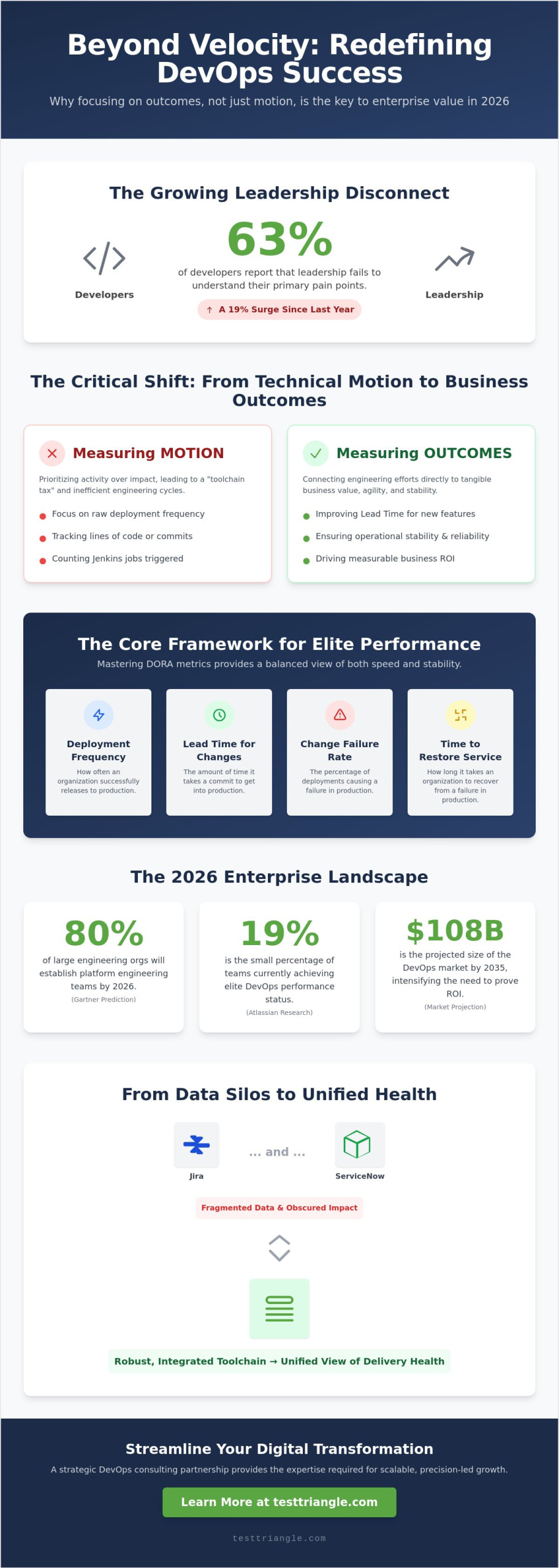

With 43% of websites currently failing the 200ms Interaction to Next Paint (INP) threshold, the technical margin for error has never been thinner for global enterprises. You understand that a mere one-second delay in page load time can trigger a 7% reduction in conversions, potentially costing your organization millions during peak volatility. Implementing rigorous load testing for ecommerce black friday 2026 is no longer a seasonal checkbox; it is a strategic necessity to protect your digital ecosystem from catastrophic system failure and unrecovered revenue loss.

We agree that the fear of third-party API instability and the difficulty of simulating realistic, high-concurrency user behavior are significant hurdles for any digital transformation leader. This guide provides the strategic framework you need to master your infrastructure readiness and ensure your platform remains resilient under the most intense traffic surges. By examining how to identify hidden bottlenecks and validate your infrastructure spend, you will move from reactive troubleshooting to a state of authoritative, crash-free readiness that delivers precision, performance, and peace-of-mind.

Key Takeaways

  • Evaluate the impact of AI-driven personalization engines on server capacity to ensure your infrastructure can withstand the sophisticated demands of the 2026 retail landscape.
  • Navigate the performance testing hierarchy by integrating stress, spike, and soak simulations into your strategy for load testing for ecommerce black friday 2026.
  • Identify invisible system bottlenecks by analyzing the technical debt often hidden within headless architectures and the limitations of automated cloud scaling.
  • Adopt a phased, four-month readiness roadmap that utilizes DevOps Consulting to automate testing protocols and secure long-term operational stability.
  • Mitigate high-stakes risks through managed quality assurance, positioning your organization for a crash-free event via strategic technical partnership.

The Strategic Imperative of Load Testing for Black Friday 2026

Software load testing is the strategic simulation of high-volume traffic designed to expose architectural weaknesses and validate system resilience before they manifest as customer-facing failures. For enterprises orchestrating load testing for ecommerce black friday 2026, this process has evolved from a seasonal checkbox into a fundamental pillar of digital assurance. We define Software load testing as the rigorous evaluation of how a system behaves under specific expected loads, ensuring that every microservice and database query performs optimally when concurrency peaks.

The 2026 retail landscape introduces unprecedented technical pressure. Hyper-personalization engines and AI-driven shopping assistants now generate massive server-side computations for every individual user session. It’s no longer enough to handle a high volume of static requests; your infrastructure must now process complex, intelligence-heavy interactions in real-time. The goal is a frictionless customer experience where the system remains invisible, even under maximum stress, preventing the catastrophic revenue loss associated with site instability.

Quantifying the “Cost of a Second” reveals the high stakes of this preparation. Research indicates that a single second of latency can trigger a 7% reduction in conversions. In an era where Black Friday sales have reached record-breaking heights of $74 billion globally, these milliseconds represent millions in abandoned carts. Comprehensive load testing for ecommerce black friday 2026 ensures that your platform doesn’t just stay online, but remains responsive enough to secure every potential transaction during the most volatile trading window of the year.

The Evolution of Peak Traffic in 2026

The composition of traffic has fundamentally changed, shifting from human-centric browsing to an environment dominated by high-frequency bot interactions and autonomous AI shoppers. These agents interact with your platform at speeds no human could match, placing unique strains on API gateways and inventory management systems. Traditional average load metrics are now obsolete. With 43% of websites currently failing the 200ms threshold for Interaction to Next Paint (INP), international retail brands must prioritize global latency testing to ensure that geographic distance doesn’t degrade the responsiveness modern consumers demand.

Risk Mitigation as a Business Value Driver

Strategic Performance Testing is a vital investment in brand equity and long-term customer loyalty. When a platform fails during a high-budget marketing campaign, the damage extends beyond immediate sales to include significant reputational harm. There are also critical legal implications to consider. With the EU AI Act and updated data privacy laws in states like Indiana and Kentucky now in effect, system instability can lead to compliance failures or data exposure during cascading failures. Validating your infrastructure spend through rigorous testing secures your organizational reputation and maximizes the ROI of your peak season initiatives.

The Performance Testing Hierarchy: Beyond Simple Load Simulation

Executing effective load testing for ecommerce black friday 2026 requires a multi-layered approach that transcends basic traffic volume simulations. While traditional methods focus on whether a site stays online, modern enterprise environments demand a more nuanced understanding of how various types of performance testing interact to secure the entire transaction lifecycle. By implementing a hierarchy of testing protocols, organizations can validate that their software and digital assurance testing efforts cover every conceivable failure point, from specific microservice latency to global system collapse.

Isolation testing serves as a critical diagnostic tool within this hierarchy. It allows technical teams to decouple specific components and identify which microservice or third-party API acts as the weakest link in the chain. For those seeking the highest level of resilience, chaos engineering introduces intentional, controlled failures into the environment. This advanced tier of readiness ensures that your system doesn’t just survive traffic; it possesses the self-healing capabilities required to maintain operations when unforeseen infrastructure issues arise during the peak shopping window.

Load vs. Stress vs. Spike Testing

Understanding the distinction between these methodologies is essential for building a robust load testing for ecommerce black friday 2026 strategy. Each serves a distinct purpose in identifying the difference between a “degradation point,” where performance begins to slow, and the “breaking point,” where the system fails entirely. Spike testing is particularly vital for simulating the sudden, extreme bursts of concurrency seen during flash sales or limited-time offers.

Test TypePrimary PurposeUser Load ProfileExpected Strategic Outcome
Load TestingValidate performance under expected peak traffic.Steady increase to anticipated maximum.Confirmation of baseline operational stability.
Stress TestingIdentify the absolute breaking point of the system.Traffic pushed beyond documented limits.Verified understanding of failure modes and recovery.
Spike TestingSimulate “Limited Time Offer” rushes.Sudden, extreme bursts of concurrency.Validation of auto-scaling and queue management.

The Role of Soak Testing in Peak Season

While spike tests handle the immediate rush, soak testing addresses the endurance required for a multi-day event. By maintaining a high load for 48 to 72 hours, teams can uncover memory leaks and database contention issues that remain hidden during shorter test cycles. This duration is also critical for validating auto-scaling cooldown periods. It ensures that infrastructure doesn’t prematurely scale down while secondary processes are still completing. To ensure your architecture is prepared for these sustained demands, you may wish to consult with a performance specialist regarding your current environment.

Load Testing for Ecommerce Black Friday 2026: A Strategic Readiness Guide

Identifying Invisible Bottlenecks in Modern Ecommerce Architectures

Relying solely on a cloud provider’s auto-scaling capabilities is a common strategic oversight. While horizontal scaling adds compute resources, it cannot resolve underlying architectural inefficiencies. In fact, rapid scaling can often exacerbate database deadlocks or reveal hidden synchronization issues that only manifest under the extreme concurrency of load testing for ecommerce black friday 2026. Modern headless commerce architectures, while offering flexibility, introduce a “headless tax.” Every interaction requires multiple API calls between decoupled layers, placing immense pressure on back-end services that might have been optimized for traditional monolithic structures. Without rigorous validation, these decoupled layers can become silent points of failure.

Database locking remains the primary cause of checkout failures during high-traffic events. When thousands of users attempt to update inventory or finalize payments simultaneously, poorly optimized query patterns lead to deadlocks that halt the entire transaction pipeline. These bottlenecks are often invisible during low-traffic periods but become catastrophic under peak demand. Integrating Performance Testing into your development lifecycle allows for the identification of these contention points long before they impact your revenue. It’s about achieving stability, scalability, and security through proactive technical discipline.

The Third-Party API Trap

Your platform’s performance is intrinsically linked to the stability of your external ecosystem. During peak events, a slow response from a credit card processor or a review widget can block critical threads, leading to abandoned carts. We recommend implementing strategies for “graceful degradation.” This ensures that if a non-essential service like a social media feed or a tracking script fails, the core checkout journey remains intact. Mocking these external responses during your test cycles is essential to isolate your internal system’s true capacity and ensure your site is not held hostage by a third-party vendor’s latency.

Microservices and Cascading Failures

Distributed systems are vulnerable to cascading failures where a single lagging service triggers a domino effect across the entire architecture. The “Circuit Breaker” pattern is a non-negotiable requirement for 2026 readiness. It prevents a failing service from being overwhelmed by continuous requests, allowing it the necessary time to recover. Without this protection, you risk “Retry Storms.” This occurs when automated retries from multiple services simultaneously hit a struggling component, effectively performing a self-inflicted DDoS attack on your own infrastructure. Testing these failover mechanisms is as important as testing the load itself.

A Phased Roadmap for Peak Season Readiness

Achieving operational resilience requires more than a last-minute stress test. For global enterprises, the journey toward successful load testing for ecommerce black friday 2026 must begin at least three to four months in advance. This lead time allows for the deep architectural adjustments identified in previous sections to be implemented without compromising the release cycle. By leveraging DevOps Consulting, organizations can automate these performance validations, moving away from manual, reactive checks toward a sophisticated “Shift-Left” methodology. This approach ensures that performance is validated at the code level before reaching staging, significantly reducing the cost of remediation.

The transition from synthetic testing to real-user monitoring (RUM) marks the final stage of this evolution. While synthetic tests provide a controlled baseline, RUM captures the actual experience of users across diverse geographies and device types. This dual-layered visibility is essential for identifying the “last mile” latencies that impact conversion rates. By integrating these insights into your Atlassian-managed workflows, your technical teams can maintain a unified view of system health and performance debt throughout the preparation phase.

Step 1: Baseline and Goal Setting

Establishing a baseline begins with a granular analysis of historical data from the 2025 peak season to set realistic growth targets for the coming year. Key Performance Indicators (KPIs) such as response time, throughput, and error rates must be defined against these projections. We prioritize the most critical user paths, specifically search functionality, cart additions, and the final checkout sequence, to ensure that high-value interactions remain frictionless even when concurrency reaches its zenith.

Step 2: Environment Mirroring and Scripting

Environment mirroring is a prerequisite for accuracy. Testing in a scaled-down environment often leads to false confidence; it fails to expose the database index issues or network latencies that only surface at production scale. We insist on full data parity, utilizing a production-sized database to identify long-term contention issues. Test scripts must be meticulously developed to include “think time” and varied user journeys, reflecting the non-linear way modern shoppers interact with AI-driven platforms.

Step 3: Execution and Iterative Optimization

The execution phase is an iterative “Test-Fix-Retest” cycle. A single test run is never sufficient to validate complex fixes. Utilizing software test automation services allows teams to run regression performance tests continuously as the infrastructure evolves. The final milestone is a full-scale simulation where the entire stack is tested at 150% of the expected peak load. To begin your architectural audit and secure your platform’s future, connect with our strategic consulting team today.

As global enterprises approach the final validation phase of their peak season roadmap, the transition from internal verification to managed digital assurance becomes a critical pivot point for risk mitigation. Test Triangle serves as a strategic visionary and practical partner, providing the technical rigor required to ensure your platform exceeds the unprecedented demands of the modern retail calendar. Implementing comprehensive load testing for ecommerce black friday 2026 requires more than just high-end tools; it demands the specialized expertise of a seasoned collaborator capable of translating technical metrics into operational certainty and executive peace of mind.

Our managed outsourcing services allow organizations to access specialized peak-season bursts of activity without the overhead of permanent internal expansion. This flexibility is complemented by our staffing solutions, which provide the niche expertise necessary for complex JMeter or Locust deployments. By integrating these resources with your existing Atlassian Implementation, we create a unified ecosystem where performance data flows directly into your development workflows. This synergy ensures that every bottleneck identified during load testing for ecommerce black friday 2026 is tracked, prioritized, and resolved with disciplined precision.

The Value of an Independent QA Partner

Internal development teams often fall victim to “development bias,” where familiarity with the codebase leads to overlooking subtle architectural flaws that only manifest under extreme stress. An independent partner provides an objective perspective, utilizing global testing teams to simulate authentic traffic patterns from diverse geographic regions. These experts don’t just deliver data; they interpret complex load test reports into actionable business intelligence. This process empowers your leadership to make informed decisions regarding infrastructure spend and marketing spend, ensuring that every dollar invested contributes to a stable, high-performing customer journey.

Ensuring Long-Term Stability Post-Black Friday

The value of a rigorous performance strategy extends far beyond the final checkout of the holiday weekend. By analyzing peak season data, we help you optimize your infrastructure costs during “normal” trading periods, ensuring you aren’t over-provisioning resources. The lessons learned during Black Friday are transformed into permanent CI/CD performance gates, preventing future code deployments from introducing regression issues. This commitment to continuous improvement is at the heart of our IT Service Management solutions, which prioritize long-term organizational progress over short-term fixes. To secure your digital future and validate your readiness for the upcoming surge, you should partner with Test Triangle for your 2026 performance strategy today.

Securing Your Competitive Advantage for the 2026 Peak Season

Mastering the complexities of modern retail requires a shift from reactive troubleshooting to a proactive, risk-based methodology. By prioritizing shift-left performance testing and addressing the bottlenecks inherent in decoupled architectures, your organization can transform technical vulnerabilities into a robust foundation for growth. We’ve explored how a phased roadmap ensures your platform remains frictionless even as AI-driven traffic peaks. Implementing rigorous load testing for ecommerce black friday 2026 is the definitive step toward protecting your revenue during the year’s most volatile trading window. Don’t leave your infrastructure’s resilience to chance when the stakes are at their highest.

As an Atlassian Gold Solution Partner with global delivery centers across Europe, North America, and Asia, Test Triangle brings institutional maturity to your digital assurance strategy. Our expertise in high-compliance sectors like Finance and Pharma ensures your infrastructure meets the highest standards of stability and security. We’re ready to act as your reliable long-term collaborator, providing the specialized insights needed to navigate this evolving landscape. Secure Your 2026 Peak Season Performance with Test Triangle and prepare your platform for unprecedented success. Your resilient future starts today.

Frequently Asked Questions

When should I start load testing for Black Friday 2026?

You should initiate your performance testing cycle at least three to four months before the peak event to allow sufficient time for identifying and remediating deep architectural flaws. Starting early ensures that your DevOps teams can integrate performance gates into the CI/CD pipeline, preventing late-stage code deployments from introducing regression issues that could compromise your 2026 readiness. This lead time is essential for conducting multiple iterations of the “Test-Fix-Retest” cycle to achieve optimal stability.

How much traffic should I simulate for a Black Friday load test?

We recommend simulating at least 150% of your anticipated peak traffic to identify the absolute breaking point of your infrastructure and validate your failover mechanisms. By analyzing historical data from the 2025 peak season and projecting growth targets for 2026, you can establish a realistic baseline that accounts for both human shoppers and the increasing volume of autonomous AI shopping agents. Testing beyond the expected peak provides the technical assurance needed to handle unexpected viral surges or aggressive marketing campaigns.

Can cloud auto-scaling replace the need for performance testing?

Cloud auto-scaling cannot replace the need for rigorous performance testing because it only addresses compute capacity rather than architectural efficiency or database health. Automated scaling often masks underlying issues like database deadlocks, poorly optimized API calls, or memory leaks, which can lead to cascading failures even when additional resources are provisioned. Relying on scaling alone without validating your system’s limits often results in unexpected costs and unrecovered revenue during high-concurrency events.

What are the most common bottlenecks found during ecommerce load testing?

The most frequent bottlenecks identified during load testing for ecommerce black friday 2026 include database contention, third-party API latency, and the technical “tax” associated with headless commerce architectures. These invisible points of failure often remain hidden during normal trading periods but become catastrophic under extreme concurrency. Identifying these issues early allows your organization to implement strategies like the “Circuit Breaker” pattern or graceful degradation to maintain a frictionless customer journey when individual services lag.

How do I test third-party payment gateway performance without making real charges?

You can validate payment workflows by utilizing vendor-provided sandbox environments or by mocking third-party responses to simulate various success and failure scenarios under load. This methodology allows your technical teams to isolate internal performance and test how the system handles external timeouts without incurring transaction fees or processing real financial data. It’s a critical step for ensuring that your checkout sequence remains resilient even if an external processor experiences its own peak-season latency.

What is the difference between load testing and stress testing for retail?

Load testing validates system behavior under the expected peak volume to ensure operational stability, while stress testing pushes the system beyond its documented limits to identify its absolute breaking point. While load testing confirms that you can meet your business goals, stress testing reveals how the system fails and how effectively it recovers. Both methodologies are essential components of a comprehensive digital assurance strategy, providing the data needed to manage infrastructure spend and mitigate the risk of catastrophic failure.

How does headless commerce affect my load testing strategy?

Headless commerce increases the complexity of your strategy by requiring the validation of decoupled front-ends and the resulting pressure on back-end APIs. Every user interaction in a headless environment typically triggers multiple API calls across distributed systems, which necessitates a deeper focus on inter-service communication latency and microservice resilience. Your testing scripts must accurately reflect these complex interaction patterns to ensure that your API gateway doesn’t become a single point of failure during high-traffic bursts.

What tools are best for simulating millions of concurrent users in 2026?

For simulating massive concurrency in 2026, industry-standard platforms like Apache JMeter 5.6.3 and Locust 2.44.0 remain the preferred choices for global enterprises due to their scalability and flexibility. These tools allow for the creation of sophisticated, intelligence-heavy interaction models that mimic the behavior of modern shoppers and AI assistants. When integrated with a managed performance testing framework, these tools provide the granular visibility required to validate end-to-end journeys across diverse geographic regions and device types.

Paul Guy

Article by

Paul Guy

Paul serves as the Marketing Director at Test Triangle, where he leads a global team in driving growth through strategic B2B marketing and brand communications. With a strong emphasis on measurable outcomes and sustainable performance, he plays a pivotal role in aligning marketing functions to enhance customer engagement and accelerate business impact. Under his leadership, marketing initiatives have consistently delivered significant returns on investment, elevated brand visibility, and strengthened the company's presence across key markets.


By the end of 2026, Gartner projects that 80% of large software organizations will have established platform engineering teams to manage infrastructure complexity. Despite these structural shifts, many enterprise leaders still struggle with release cycles that lag behind market demands and specialized talent that leaves as quickly as they arrive. You likely hired for DevOps engineering expecting immediate agility, yet you might find your teams caught in a confusing overlap of SRE, SysAdmin, and developer responsibilities. It’s a common frustration to see high-level technical investments fail to translate into measurable business outcomes.

You’re not alone in feeling that the promise of automation hasn’t fully delivered on its potential for reliability and speed. This article serves as your strategic guide to debunking the five critical myths that currently stall digital transformation efforts. We’ll provide a clear framework for defining the DevOps engineering role within a modern enterprise, ensuring your technical roadmap aligns perfectly with long-term operational stability. From understanding the impact of AI-driven SRE tools to optimizing your deployment frequency, you’ll discover how to turn technical friction into a disciplined engine for growth.

Key Takeaways

  • Transition from reactive infrastructure management to a proactive, code-driven methodology that aligns your technical execution with core business objectives.
  • Discover why human-centric scaling and team collaboration are superior to the “lone wolf” specialist model for sustainable DevOps engineering success.
  • Learn to avoid the toolchain trap by prioritizing process refinement and cultural alignment over the mere implementation of high-end automation software.
  • Master the “Day 2 Operations” mindset to ensure your digital transformation remains a continuous cycle of optimization rather than a static, one-time project.

Myth 1: Debunking the Identity Crisis. DevOps Engineering is Just “SysAdmin 2.0”

Many enterprise leaders mistake a title change for a structural evolution. They assume that by rebranding their operations team, they’ve achieved agility. However, DevOps engineering isn’t a simple upgrade of a system administrator’s toolkit; it’s a fundamental shift in how organizations deliver value. While traditional administrators focus on the maintenance of existing servers, engineers in this discipline focus on the architecture of the delivery pipeline itself. By integrating DevOps principles into the core of the business, leaders can dismantle the silos that historically separated development and operations, creating a unified flow that prioritizes systemic efficiency over individual task completion.

This transition is anchored in the “You Build It, You Run It” philosophy popularized by industry leaders like Amazon and Red Hat. In this model, the responsibility for a service doesn’t end when the code is committed. Instead, the engineering team maintains accountability for the service throughout its entire lifecycle. This proactive approach eliminates the “throw it over the wall” mentality, forcing a focus on long-term reliability and code-driven infrastructure. Instead of manual provisioning, which is prone to human error and inconsistency, teams utilize Infrastructure as Code (IaC) to ensure environments are reproducible, scalable, and secure. This shift ensures that infrastructure is managed with the same version control and testing rigor as the application code itself.

The Evolution from Operations to Engineering

Historically, operations teams were the firefighters of the IT world, reacting to outages with manual fixes. Modern DevOps engineering reverses this dynamic by applying software engineering rigor to infrastructure management. The role has matured from “fixing broken things” to “building systems that don’t break” by design. By embedding infrastructure requirements directly into the software development life cycle (SDLC), organizations can automate compliance and performance checks before a single line of code reaches production. DevOps engineering is a discipline that applies software engineering practices to infrastructure to create resilient, self-healing environments.

Core Responsibilities vs. Traditional Roles

The distinction becomes clearest when examining Key Performance Indicators (KPIs). Traditional roles often prioritize “Uptime” above all else, which can lead to a fear of change and slower release cycles. In contrast, DevOps engineers balance Velocity and Reliability, recognizing that speed is only valuable if the system remains stable. This “Software Defined Everything” playground allows for rapid experimentation and automated recovery. For leaders struggling to bridge this gap, DevOps Consulting provides the strategic roadmap necessary to redefine these boundaries and ensure that engineering efforts translate into tangible business value.

Myth 2: The Toolchain Trap—Automation is the Only Metric That Matters

Many enterprise leaders fall into the trap of equating tool acquisition with organizational transformation. They invest heavily in platforms like Jira, Jenkins, or AWS, expecting these tools to solve deep-seated operational friction. However, DevOps engineering is not a product you can purchase off the shelf. If you automate a flawed, fragmented process, you only succeed in accelerating failure. Real progress requires a holistic approach that balances technical implementation with structural change, ensuring that every automated action serves a specific strategic purpose.

The CALMS framework—Culture, Automation, Lean, Measurement, and Sharing—provides the necessary equilibrium for sustainable growth. While automation is a critical pillar, it cannot function in a vacuum. Culture must precede the toolchain because tools are merely force multipliers for the existing organizational mindset. Without a foundation of trust and open communication, even the most sophisticated pipeline becomes a source of technical debt rather than a driver of efficiency. Leaders who prioritize tools over people often find themselves with expensive licenses but no improvement in their actual delivery speed.

Why Automation is a Means, Not an End

Automation serves as a means to an end, not the ultimate objective. There is a persistent danger in creating “Automated Silos,” where departments use disparate tools that fail to communicate, leading to data fragmentation and operational blind spots. Successful application development requires building software architectures that are inherently automatable from the start. High-performing DevOps engineering initiatives focus on strategy, stability, and scalability rather than just writing repetitive scripts. They prioritize the systemic flow of value across the entire organization.

Measuring What Actually Matters

To understand if your investments are delivering results, you must measure what actually impacts the bottom line. The DORA metrics—Deployment Frequency, Lead Time for Changes, Change Failure Rate, and Time to Restore—offer a clear framework for aligning technical efforts with business-level ROI. These indicators move the conversation away from how many scripts were written to how quickly and safely the team delivers value to the customer. Evaluating your toolchain effectiveness should include a simple checklist:

  • Integration: Do your tools communicate seamlessly across the entire development lifecycle?
  • Cognitive Load: Does the automation simplify the developer’s job or add new layers of complexity?
  • Visibility: Are the performance metrics visible and actionable for both technical and executive leadership?

If you find your team’s progress stalled by a complex toolchain, you might benefit from a strategic review of your current processes. Consider how a refined approach can empower your engineering leadership to move beyond the toolchain trap and achieve genuine operational excellence.

DevOps Engineering in 2026: Debunking 5 Critical Myths for Enterprise Leaders

Myth 3: The Lone Wolf Fallacy—One “Rockstar” Engineer Can Fix Your Pipeline

Enterprise leaders often succumb to the allure of the “rockstar” hire, believing that a single specialized expert can unilaterally resolve complex pipeline inefficiencies. This approach typically stems from a desire to minimize costs while seeking high-level technical results. However, relying on a solitary specialist creates a dangerous single point of failure that can paralyze your digital transformation if that individual leaves or becomes overwhelmed. DevOps engineering is a collective capability, not an individual talent. When the weight of an entire organization’s deployment frequency rests on one person, they inevitably become the very bottleneck they were hired to eliminate. Hero culture leads to burnout.

The Problem with “DevOps as a Person”

Designating a specific individual as “the DevOps person” frequently backfires by inadvertently creating a new organizational silo. Instead of fostering collaboration between development and operations, this structure encourages developers to outsource their operational responsibilities. This shift leads to a reactive environment where one person is constantly firefighting while the rest of the team remains disconnected from the production environment. Reliance on individual heroics is unsustainable and detrimental to long-term system stability. To mitigate these risks, many enterprises are turning to Managed Outsourcing Services to provide the breadth of expertise required without the vulnerability of the lone wolf model. This approach ensures that institutional knowledge remains within the organization rather than walking out the door with a single employee.

Integrating Quality and Security

True operational excellence requires that DevOps engineering is deeply integrated with quality assurance and security protocols from the start. The “Shift Left” movement emphasizes that testing and security shouldn’t be final checkboxes but continuous activities throughout the development lifecycle. This level of integration is impossible if your DevOps effort is isolated to a single engineer. Effective collaboration requires robust platforms and methodologies, such as software and digital assurance testing, to ensure that every release meets high standards of reliability. By utilizing collaborative tools like ServiceNow and Atlassian, organizations can bridge the communication gap between Dev, QA, and Security. This transforms DevOps from a lonely job title into a pervasive cultural standard that empowers every team member to contribute to the system’s success.

Myth 4: The Startup Stigma—DevOps Engineering is Only for Tech Giants

A persistent misconception suggests that DevOps engineering is a luxury reserved for hyperscalers like Netflix or Google. This “startup stigma” leads many small-to-medium enterprise (SME) leaders to believe their operations are too modest to justify such technical rigor. In reality, organizations with limited resources stand to benefit the most from these methodologies. While a tech giant can absorb the cost of manual inefficiencies through sheer headcount, a smaller team cannot. Implementing a strategic engineering framework reduces the “Cognitive Load” on your developers, freeing them from the mental tax of complex infrastructure management so they can focus on high-value feature development.

The democratization of technology through major cloud providers has leveled the playing field, making enterprise-grade reliability accessible to businesses of all sizes. You don’t need a massive budget to implement robust security or automated scaling. By adopting a “Minimum Viable DevOps” approach, growing organizations can prioritize the most critical bottlenecks, ensuring that their technical foundation supports rather than hinders rapid expansion. This disciplined approach to growth ensures that your systems remain stable even as your user base and data requirements increase exponentially.

DevOps for the SME: A Practical Roadmap

Transitioning toward a more mature operational model doesn’t require an overnight overhaul. Small teams can achieve significant gains by following a structured progression. First, standardizing the environment through proven AWS Cloud Migration strategies ensures a consistent baseline for all future development. Once the foundation is secure, implementing basic CI/CD pipelines eliminates the risk and delay associated with manual deployments. Finally, fostering a “Blameless Post-Mortem” culture allows your team to treat failures as data points for improvement rather than opportunities for finger-pointing, which is essential for maintaining long-term morale and system integrity.

Resource Management and Staffing

One of the most significant challenges for smaller organizations is balancing the need for specialized talent with the reality of a finite budget. Leaders must decide whether to invest in permanent internal hires or leverage flexible Staffing Solutions to fill specific expertise gaps. Utilizing contract or offshore resources often provides access to high-level specialized skills without the heavy overhead of enterprise-level benefits and long-term commitments. This versatility allows you to scale your engineering capacity in direct response to project demands. Scalability is a mindset, not just a server configuration. If you’re ready to optimize your team’s performance, contact our strategic advisors to discuss a tailored approach for your organization.

Myth 5: The “Set it and Forget it” Fallacy—DevOps Engineering is a One-Time Project

Many enterprise leaders treat digital transformation as a destination with a definitive finish line. They assume that once the initial automation pipelines are established, the work of the engineering team is essentially complete. However, DevOps engineering is a continuous discipline that must evolve in parallel with the software it supports. As your application architecture changes to meet shifting market demands, the underlying infrastructure must be refined to maintain high standards of reliability and performance. Treating this evolution as a one-time project is a strategic error that leads to technical debt and operational stagnation.

This reality introduces the “Day 2 Operations” challenge, which focuses on the long-term maintenance, monitoring, and optimization of systems after the initial deployment. Modern engineering requires a sophisticated approach to observability, where real-time data ingestion allows teams to identify and resolve systemic bottlenecks before they impact the end-user. By fostering a culture of continuous improvement, organizations ensure that their technical foundations remain resilient against the complexities of a scaling environment. It’s a journey of constant refinement where each successful release provides the data necessary for the next phase of optimization.

The Continuous Nature of Modern Infrastructure

Infrastructure is never truly static. It requires periodic, rigorous audits of critical platforms like Atlassian or ServiceNow to ensure that configurations remain aligned with changing team workflows and security requirements. While a successful Atlassian Implementation provides a powerful start to the efficiency journey, it’s the ongoing management of these tools that secures long-term business value. Leaders must prioritize staying current with critical security patches and cloud cost optimization strategies to prevent operational overhead from eroding their digital gains. Regular technical health checks are essential for maintaining the agility promised by modern engineering frameworks.

Partnering for Long-Term Maturity

Achieving institutional maturity in a fast-changing landscape often requires the support of a strategic partner who understands the interplay between specialized talent and advanced tools. By integrating comprehensive IT Service Management Solutions, organizations establish the governance and order needed to scale their operations across diverse, highly regulated industries. This collaborative approach ensures that your engineering efforts are not just technically sound but also deeply aligned with your overarching business objectives. If you’re concerned that your current processes have become stagnant, we encourage a strategic review of your DevOps maturity to identify new opportunities for growth and system reliability.

Mastering the Strategic Evolution of Your Engineering Culture

Dismantling the myths surrounding DevOps engineering requires a fundamental shift from viewing infrastructure as a cost center to recognizing it as a strategic asset. Success depends on prioritizing culture over tool acquisition, fostering collective team accountability, and accepting that optimization is an ongoing journey rather than a static project. By moving away from the “lone wolf” model and embracing a disciplined, code-driven methodology, your organization can achieve the stability and velocity needed to compete on a global scale. This evolution transforms your technical friction into a reliable engine for sustainable growth.

As an Atlassian Gold Solution Partner and ServiceNow Consulting Experts, we provide the institutional maturity and technical rigor required to manage complex digital transformations. Our global presence across Europe, North America, and Asia ensures that we remain a reliable collaborator for enterprises seeking scalable growth and risk reduction. If you’re ready to align your technical execution with long-term business value, explore our DevOps Consulting and Staffing Solutions to begin your next phase of operational excellence. Your path to a resilient and efficient digital future starts with a single strategic decision.

Frequently Asked Questions

What is the difference between a DevOps engineer and a Site Reliability Engineer (SRE)?

Site Reliability Engineering (SRE) acts as a specific implementation of the broader DevOps philosophy, focusing primarily on system availability and performance through software engineering practices. While DevOps engineering aims to bridge the gap between development and operations to improve velocity, SRE provides the prescriptive metrics and error budgets needed to maintain stability. This structured approach ensures that speed doesn’t compromise the integrity of the production environment.

Can a small company afford a DevOps engineer?

Small organizations can absolutely afford to integrate these capabilities by leveraging flexible staffing solutions or managed services rather than hiring a full-time, high-salaried specialist. By utilizing a fractional model, smaller teams gain access to enterprise-grade expertise that reduces manual errors and accelerates time-to-market. This strategic investment prevents the costly technical debt that often accumulates in growing businesses with unoptimized delivery pipelines.

What are the most essential tools for a DevOps engineering team in 2026?

Essential tools for 2026 center on Kubernetes for orchestration, Terraform for infrastructure as code, and AI-enhanced observability platforms like Datadog or New Relic. Security integration through tools like Snyk and automated CI/CD via platforms like Harness or GitHub Actions are now baseline requirements for high-performing teams. These technologies provide the precision, protection, and performance necessary to manage modern, complex digital infrastructures effectively.

Is DevOps engineering more about coding or culture?

DevOps engineering requires a balanced integration of technical coding skills and a collaborative organizational culture to be truly effective. While automation scripts and Infrastructure as Code are the visible outputs, they rely on a cultural foundation of shared responsibility and open communication to deliver value. Without a shift in mindset, even the most advanced code will fail to break down the silos that stall digital transformation.

How do I transition my traditional IT team into a DevOps model?

Transitioning a traditional team begins with identifying a pilot project where you can implement automated testing and continuous integration to demonstrate immediate value. Providing structured training and seeking expert consulting helps bridge the skill gap while gradually introducing a blameless, data-driven operational mindset. This methodical evolution ensures that the team moves from reactive maintenance to proactive system engineering without disrupting core business operations.

What is the ROI of investing in DevOps engineering for a non-tech business?

For non-tech businesses, the ROI of DevOps engineering manifests through improved system reliability, reduced operational overhead, and the ability to respond faster to customer needs. By automating repetitive manual tasks, organizations can redirect human capital toward higher-value strategic initiatives that drive revenue. This shift results in a more resilient infrastructure that supports scalable growth and minimizes the financial impact of potential system downtime.

Do I need to be on the cloud (AWS/Azure) to implement DevOps?

You don’t need to be exclusively on a public cloud like AWS or Azure to implement these principles, though cloud environments offer the native automation tools that simplify the process. On-premise and hybrid infrastructures can also benefit from Infrastructure as Code and automated delivery pipelines to improve consistency. The focus remains on the methodology and the results rather than the specific physical location of the servers.

How does DevOps engineering impact software security?

DevOps engineering significantly enhances software security by integrating automated scanning and compliance checks directly into the early stages of the development lifecycle. This “shift-left” approach ensures that vulnerabilities are identified and remediated long before the code reaches production, reducing the risk of a data breach. By treating security as a continuous, automated process, organizations achieve a higher standard of protection while maintaining vision, velocity, and value. Staying current with evolving vulnerability frameworks, such as the OWASP Top 10 2026 news and its strategic implications for enterprise security, is essential for ensuring your DevOps pipeline remains aligned with the latest threat landscape.

Paul Guy

Article by

Paul Guy

Paul serves as the Marketing Director at Test Triangle, where he leads a global team in driving growth through strategic B2B marketing and brand communications. With a strong emphasis on measurable outcomes and sustainable performance, he plays a pivotal role in aligning marketing functions to enhance customer engagement and accelerate business impact. Under his leadership, marketing initiatives have consistently delivered significant returns on investment, elevated brand visibility, and strengthened the company's presence across key markets.
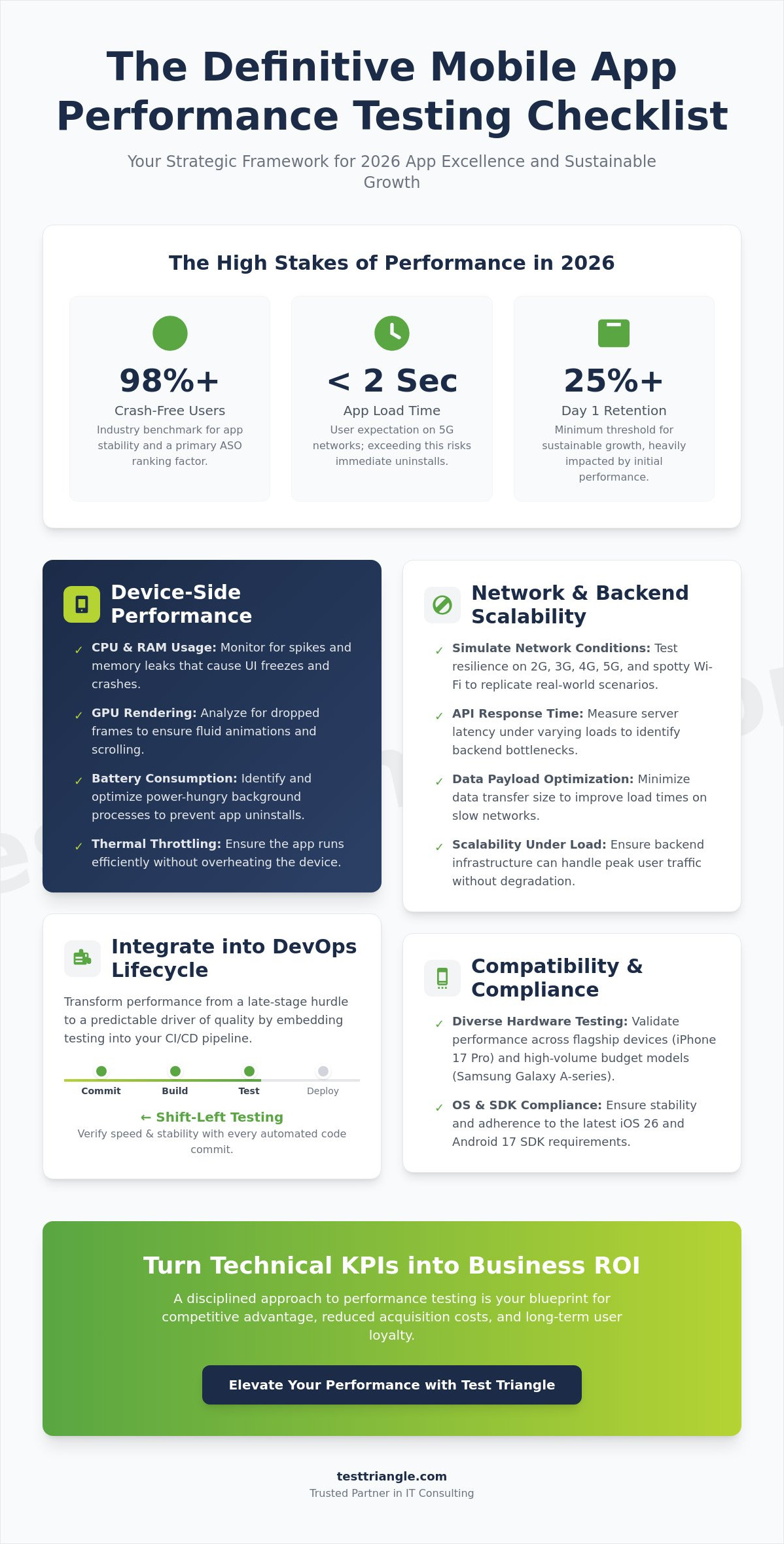

At $23,750 per minute, the cost of unplanned downtime for a modern enterprise isn’t just a technical failure; it’s a direct threat to organizational stability and market reputation. As global traffic volumes reach unprecedented levels in 2026, the reliance on professional performance testing services has transitioned from a quality assurance luxury to a fundamental requirement for digital survival. You likely recognize that a single second of latency can erode customer trust faster than any marketing campaign can build it. We understand the pressure of managing complex cloud environments where finding specialized talent feels as difficult as preventing the bottlenecks themselves.

This guide provides a strategic roadmap to help you evaluate and implement performance testing services that transform your infrastructure into a resilient, high-performing asset. You’ll discover how to integrate automated frameworks into your DevOps pipeline while adhering to the updated ISO/IEC 25010:2023 standards for software quality. We’ll examine the methodologies required to achieve zero-downtime releases and reduce infrastructure costs through precise optimization. By the end of this article, you’ll have a clear framework for selecting a partner capable of securing your long-term operational stability and scalable growth.

Key Takeaways

  • Align your digital assurance strategy with high-stakes business objectives by identifying the critical distinctions between load, stress, and endurance testing.
  • Utilize a sophisticated evaluation framework to audit performance testing services based on technical depth, tool proficiency, and global compliance standards.
  • Master the five-step methodology for automating performance validation within your DevOps workflow, leveraging the Atlassian ecosystem to synchronize development and quality assurance.
  • Secure long-term operational stability and reduced infrastructure costs by adopting a proactive model that focuses on engineering performance, ensuring reliability, and empowering growth.

Defining the Role of Performance Testing Services in Modern Enterprise Ecosystems

Performance testing is the systematic evaluation of a system’s speed, responsiveness, and stability under a defined workload. While traditional approaches often treated this as a final hurdle before launch, modern performance testing services serve as the strategic backbone of digital assurance. They provide a structured framework for identifying bottlenecks before they impact the end user. This shift from reactive troubleshooting to proactive performance engineering is essential for global organizations operating in hyper-competitive markets. When infrastructure remains resilient, executive leadership gains the peace of mind necessary to focus on innovation rather than crisis management. By prioritizing stability, precision, and progress, companies can ensure their digital assets remain competitive in a landscape where failure isn’t an option.

The complexity of 2026 cloud-native environments requires a more sophisticated approach than simple load generation. Effective software performance testing involves a deep analysis of how microservices, APIs, and third-party integrations interact under pressure. It’s no longer enough to know that a system works; you must know exactly when and why it might break. This level of insight allows technical managers to make data-driven decisions about infrastructure scaling and resource allocation, ultimately protecting the organization’s bottom line.

The Business Impact of Optimized Performance

In the current digital economy, milliseconds define the boundary between a completed transaction and a lost customer. Research indicates that the average cost of unplanned downtime is $14,056 per minute, a figure that can escalate to $23,750 for large-scale enterprises. For sectors like finance and healthcare, the cost of failure extends beyond immediate revenue loss to include severe brand erosion and legal liability. High-load applications require consistent optimization to maintain user engagement and long-term loyalty. When you invest in professional performance testing services, you’re not just buying a report; you’re securing your brand’s reputation and ensuring revenue retention through a seamless user experience.

Performance Testing vs. Performance Engineering

It’s vital to distinguish between traditional, one-off testing and the more comprehensive discipline of performance engineering. While testing validates performance against specific benchmarks at the end of a cycle, engineering builds quality directly into the architecture from day one. This “Shift-Left” approach integrates performance validation earlier in the Software Development Life Cycle (SDLC), ensuring that scalability isn’t an afterthought. By adopting these advanced performance testing services, companies can transition from simple defect detection to a culture of continuous improvement. This methodology ensures that every code release contributes to a more stable, scalable, and secure environment, reducing the overall cost of technical debt.

How to Identify Key Performance Testing Types for Your Application

Selecting the appropriate testing methodology requires a deep alignment between technical execution and specific business milestones. In 2026, the complexity of distributed systems demands a more nuanced approach than a one-size-fits-all test script. Modern performance testing services now leverage AI-augmented simulations to model realistic user behavior, ensuring that your digital infrastructure is prepared for actual human interaction rather than just synthetic traffic. Whether you’re preparing for a global product launch or managing a complex cloud migration, identifying the right testing type is critical for maintaining operational continuity.

Scalability testing plays a pivotal role during cloud migration projects, as it validates the system’s ability to scale up or out in response to fluctuating demand. By utilizing enterprise performance testing strategies, organizations can avoid the common pitfall of over-provisioning infrastructure, which often leads to unnecessary cloud expenditures. A disciplined approach ensures that every resource allocated contributes directly to system responsiveness and user satisfaction.

Load Testing for Daily Operational Stability

Load testing is the baseline for all performance benchmarks. It allows you to determine your “normal” load by simulating expected concurrent user growth while monitoring vital metrics such as throughput, latency, and error rates during peak hours. By establishing these baselines, technical managers can identify the exact point where response times begin to degrade. This data is indispensable for long-term capacity planning and ensuring that daily operations remain fluid and predictable.

Stress and Spike Testing: Preparing for the Unexpected

While load testing focuses on the expected, stress and spike testing prepare your systems for the volatile reality of modern markets. Stress testing involves pushing a system to its breaking point to evaluate how it recovers and whether it maintains “graceful degradation” under extreme pressure. Spike testing, conversely, simulates sudden traffic surges common in the retail and media industries, such as a Black Friday sale or a viral news event. These tests ensure that your application doesn’t just survive the surge but remains responsive enough to protect revenue. If you’re unsure which scenario poses the highest risk to your operations, you can consult with our performance engineering experts to design a custom simulation profile.

Endurance and Volume Testing for Long-Term Reliability

Long-term reliability is often compromised by issues that don’t appear in short-term tests, such as memory leaks or resource exhaustion. Endurance testing involves running a consistent load over extended periods to identify these hidden vulnerabilities. Similarly, volume testing manages large data sets to ensure database performance remains consistent as your records grow. Integrating these practices into your broader software and digital assurance testing strategy is essential for maintaining a stable enterprise ecosystem. This comprehensive approach ensures that your infrastructure remains resilient, scalable, and high-performing throughout its entire lifecycle.

Performance Testing Services: The 2026 Strategic Guide to Enterprise Scalability

Comparing Performance Testing Service Providers: A Strategic Evaluation Framework

Selecting a partner for performance testing services requires a rigorous audit that extends beyond surface-level metrics or generic case studies. As enterprise architectures become increasingly fragmented across multi-cloud environments, the ability to evaluate a provider’s technical depth, operational maturity, and strategic alignment becomes a prerequisite for project success. A robust evaluation framework must prioritize a partner’s capacity to act as a steady hand, guiding your organization through the complexities of large-scale technological evolution while ensuring long-term operational stability. By focusing on a combination of technical rigor and business-centric outcomes, leadership can transition from a state of uncertainty to one of precision, partnership, and progress.

The distinction between a mere service provider and a strategic collaborator often lies in their approach to tool utilization. We believe that vendor-agnostic expertise is significantly superior to proprietary tool locks, as it allows for the selection of the most effective technology for your specific stack. This flexibility ensures that your testing framework remains adaptable as your digital infrastructure evolves. Furthermore, global enterprises should examine the provider’s delivery models, assessing how their managed outsourcing services or specialized staffing solutions integrate into existing internal workflows to provide seamless, scalable support.

Technical Proficiency and Tool Stack Audit

A comprehensive technical audit should verify the provider’s mastery of industry-standard tools such as Apache JMeter 5.6.3, LoadRunner, and Gatling. In 2026, proficiency must extend into cloud-native testing environments, specifically within AWS, Azure, and Google Cloud platforms. You should evaluate their ability to develop custom scripts for complex API and microservices architectures, ensuring that the testing environment mirrors the intricacies of your production ecosystem. This technical depth is essential for identifying subtle performance regressions that standard, out-of-the-box configurations might overlook.

Strategic Alignment and Industry Expertise

Specialized knowledge in highly regulated sectors, such as Finance and Pharma, is non-negotiable due to the stringent compliance and security standards these industries demand. When auditing potential partners, look for those who demonstrate a deep understanding of the strategic value of QA outsourcing and its role in driving organizational growth. A comprehensive digital assurance strategy should also account for platform-specific failures, which is why pairing performance validation with robust compatibility testing services ensures your application delivers a consistent experience across every device, browser, and operating system your users depend on. The most effective performance testing services don’t just deliver raw data; they provide actionable insights that connect technical performance to executive-level business objectives. This ensures that every test conducted contributes directly to risk reduction and the empowerment of your digital transformation journey.

How to Integrate Performance Testing into a Continuous DevOps Workflow

Performance validation is no longer a siloed event that occurs at the end of a development cycle. In 2026, 68% of enterprises have already embedded performance testing services directly into their CI/CD pipelines to ensure continuous reliability with every code commit. This integration transforms performance from a reactive concern into a proactive architectural discipline. By automating these checks, organizations can identify regressions in real time, preventing costly bottlenecks from reaching production. Efficiency is the result of discipline. A scalable testing framework allows your team to maintain high velocity without sacrificing the stability that global users expect.

Adopting a “performance as code” philosophy ensures that scalability requirements are treated with the same priority as functional features. This approach requires a methodical feedback loop that connects development, operations, and quality assurance teams. When performance metrics are transparent and integrated into daily workflows, the entire organization becomes invested in the system’s long-term health. Setting strict “Performance Budgets” for development teams provides a clear ceiling for latency and resource consumption, ensuring that new features don’t inadvertently degrade the user experience. Complementing this discipline with robust software test automation services ensures that regression suites scale alongside your deployment frequency without creating unsustainable manual overhead.

Step-by-Step: Automating the Performance Feedback Loop

Automating the feedback loop requires a structured 5-step process to ensure consistent results and actionable data. This methodology allows teams to catch issues early when they’re still inexpensive to fix.

  • Step 1: Define performance requirements as code within your Bitbucket or GitHub repository to ensure version-controlled benchmarks.
  • Step 2: Trigger automated load tests on every major build or pull request to validate performance against your established budgets.
  • Step 3: Analyze results against historical benchmarks using AI-driven analytics to distinguish between minor fluctuations and genuine regressions.
  • Step 4: Fail the build automatically if performance thresholds are not met, preventing substandard code from progressing through the pipeline.
  • Step 5: Document and remediate identified defects within your project management ecosystem to maintain a clean performance profile.

Leveraging Atlassian and ServiceNow for Performance Governance

Effective governance relies on the seamless integration of testing results into the tools your teams use every day. By synchronizing test data with Jira, you provide developers with immediate visibility into performance defects, allowing for rapid remediation within their standard sprint cycles. Utilizing a strategic ServiceNow implementation allows you to track performance trends in production environments and manage incidents with greater precision. This holistic view ensures that your Atlassian implementation strategy is informed by real-world performance data. If you’re ready to modernize your pipeline, speak with our DevOps consultants today to build a framework that supports sustainable growth.

Test Triangle: Engineering Performance, Ensuring Reliability, Empowering Growth

As global enterprises navigate the complexities of 2026, the need for a disciplined approach to performance testing services has never been more acute. Test Triangle stands as a strategic visionary in this landscape, offering a unique blend of technical rigor and human expertise to manage your digital infrastructure. We don’t just identify defects; we provide the roadmap for systemic improvement and scalable growth. Our personality is built on precision, partnership, and progress, ensuring that your organization remains resilient against the volatility of modern traffic demands. By positioning ourselves as a reliable long-term collaborator, we help you transition from the anxiety of potential system failure to the confidence of operational stability.

Our Methodology: The Three Pillars of Performance

Our strategic approach is built upon three distinct phases designed to lead your organization from a general need for improvement to a specific technical solution. Each phase is executed with a focus on risk reduction and large-scale technological evolution.

  • Analyze: We begin with a deep-dive into your architecture to identify hidden risks and potential bottlenecks that could compromise your user experience. This phase ensures that we understand the methodology behind your current system before proposing specific actions.
  • Optimize: Through the implementation of precision testing, we refine code and infrastructure efficiency to ensure peak performance under any workload. We utilize the latest tools, such as Apache JMeter 5.6.3, to anchor our execution in recognized global benchmarks.
  • Empower: We provide the training and tools necessary for long-term operational stability. This empowers your team to maintain a scalable testing framework that fits seamlessly into your existing DevOps pipeline.

Partnering for Scalable Success

Building a resilient digital ecosystem requires a collaborator who understands the nuances of global industry platforms. Our managed outsourcing services provide a foundation for long-term QA stability, allowing your internal teams to focus on core innovation while we maintain the integrity of your releases. Our adaptable approach to service delivery means we can seamlessly integrate into your existing culture, whether you require specialized staffing solutions to fill technical gaps or a fully managed end-to-end testing program. This flexibility ensures that technical rigor is never sacrificed for speed.

By leveraging our deep expertise in AWS and our comprehensive Atlassian implementation strategies, we ensure that your testing standards meet world-class benchmarks for security and speed. We invite you to a strategic technology roadmapping session to address your specific bottlenecks and design a scalable framework that supports your digital transformation. Consult with our performance testing experts today to secure your organizational progress through a combination of expert human insight and industry-leading technical tools.

Securing Digital Resiliency: Precision, Partnership, Progress

Achieving enterprise scalability in 2026 requires a transition from reactive troubleshooting to a culture of proactive performance engineering. By embedding automated validation into your CI/CD pipeline and utilizing a criteria-based framework for partner selection, your organization can effectively mitigate the significant financial risks associated with unplanned downtime. High-performing infrastructure is no longer merely a technical objective; it’s a strategic imperative that ensures your brand remains competitive in an increasingly volatile global market. Stability is the result of disciplined execution and visionary planning.

Test Triangle provides a sophisticated approach to performance testing services, leveraging over a decade of expertise in global IT services to maintain your operational stability. Our strategic partnerships with Atlassian, ServiceNow, and AWS, alongside specialized staffing models for the pharmaceutical and finance sectors, offer the technical rigor necessary for complex, regulated environments. We invite you to partner with Test Triangle for authoritative performance testing services to transform your technical challenges into sustainable growth. Your journey toward a resilient, high-performing digital future begins with a single strategic step.

Frequently Asked Questions

What are the most critical metrics to track during performance testing?

The primary metrics for evaluating system health include response time, throughput, and error rates. Technical managers must also monitor resource utilization such as CPU and memory consumption to identify underlying hardware bottlenecks. These data points provide the quantitative evidence needed to validate that your application meets the updated ISO/IEC 25010:2023 standards for interaction capability and flexibility.

How much do performance testing services typically cost for an enterprise application?

Investment levels for professional performance testing services depend on the complexity of your digital ecosystem and the scale of the required simulations. Factors influencing the total expenditure include tool licensing fees, the depth of specialized staffing required, and the duration of the engagement. Organizations should focus on the return on investment derived from risk reduction and the prevention of downtime costs, which average $23,750 per minute for global enterprises.

Can performance testing be fully automated within a CI/CD pipeline?

Yes, modern performance testing services prioritize the integration of automated checks directly into your DevOps workflow. By utilizing a “tests as code” approach, teams can trigger load simulations with every build to ensure that new features don’t introduce performance regressions. This methodology allows for a faster feedback loop and supports the shift-left strategy discussed earlier in this guide.

What is the difference between load testing and stress testing?

Load testing evaluates how a system performs under expected traffic volumes to ensure daily operational stability. Stress testing, by contrast, pushes the application beyond its specified limits to identify the exact breaking point and evaluate its recovery capabilities. While load testing focuses on meeting service level agreements, stress testing ensures the system can maintain graceful degradation during extreme surges.

How long does a typical performance testing engagement take?

The duration of an engagement varies based on whether the project is a one-off audit or a transition to continuous performance engineering. Initial baseline establishment and environment configuration typically require several weeks of intensive analysis. Once the framework is established, subsequent regression tests can be executed rapidly as part of your standard release cycle.

Is performance testing necessary for cloud-native applications?

Performance validation is critical for cloud-native architectures due to the inherent complexity of microservices and distributed APIs. While cloud providers offer auto-scaling, you must test these triggers to ensure they respond quickly enough to prevent latency. Testing also prevents over-provisioning, which helps in reducing unnecessary infrastructure costs through precise optimization.

How do I choose between open-source and commercial performance testing tools?

The decision rests on your team’s technical proficiency and your specific integration requirements. Open-source tools like Apache JMeter 5.6.3 offer significant flexibility for teams comfortable with custom scripting. Commercial platforms often provide more robust reporting and dedicated support, which can be beneficial for highly regulated industries requiring extensive documentation.

What happens if my application fails a performance test?

A failed test serves as a strategic diagnostic tool rather than a project setback. The results are used to pinpoint the specific component or code block causing the bottleneck, allowing for targeted remediation. Once the issues are addressed, the system is re-tested to confirm that the optimizations have successfully restored performance to its required benchmarks.

Paul Guy

Article by

Paul Guy

Paul serves as the Marketing Director at Test Triangle, where he leads a global team in driving growth through strategic B2B marketing and brand communications. With a strong emphasis on measurable outcomes and sustainable performance, he plays a pivotal role in aligning marketing functions to enhance customer engagement and accelerate business impact. Under his leadership, marketing initiatives have consistently delivered significant returns on investment, elevated brand visibility, and strengthened the company's presence across key markets.


The most sophisticated software in the world won’t save your organization if your implementation partner prioritizes technical configuration over long-term strategic alignment. For many Irish enterprises, the transition to high-velocity service delivery is often stalled by over-customized legacy systems and the high failure rates of internal cloud migrations. Selecting a strategic Atlassian ITSM partner Ireland requires looking beyond mere licensing to identify a collaborator who understands the critical intersection of DevOps, ITSM, and organizational agility through precision, performance, and partnership.

You likely recognize that visibility into cross-departmental workflows isn’t a luxury but a fundamental requirement for operational excellence. This guide clarifies how to select a strategic partner who can deliver seamless integration between your development and service teams while ensuring your infrastructure remains secure and compliant with standards like ISO 27001:2022. We’ll examine the specific specializations that define the Irish market in 2026, including the latest Jira Service Management Data Center updates like version 11.3.5, and provide a framework for building a scalable, high-velocity service ecosystem through strategy, stability, and scalability.

Key Takeaways

  • Transition from fragmented ticketing systems to unified Enterprise Service Management frameworks to maintain operational continuity and alignment within hybrid work environments.
  • Transform Jira Service Management into a high-visibility engine for enterprise agility through the strategic integration of assets and service configuration management.
  • Select a high-level Atlassian ITSM partner Ireland capable of bridging the gap between technical execution and business outcomes through specialized, solution-oriented consulting.
  • Navigate the 2029 cloud migration deadline with precision and performance by prioritizing comprehensive workflow audits and the systematic reduction of technical debt.
  • Establish a long-term strategic partnership that unites DevOps engineering, software assurance, and ITSM for sustainable, scalable, and secure digital growth.

Precision, Performance, Partnership: The 2026 ITSM Landscape in Ireland

The evolution of enterprise infrastructure in Ireland has reached a critical juncture where traditional, reactive support models no longer suffice. As organizations transition toward digital-first service delivery, the limitations of siloed ticketing systems become apparent, often resulting in fragmented data and delayed response times. Achieving operational stability in this complex environment requires more than software; it demands a strategic alignment of technology and process. For many leading firms, identifying a qualified Atlassian ITSM partner Ireland becomes the first step toward achieving systemic resilience and high-velocity output.

Modern service delivery has moved beyond the simple resolution of technical glitches to a broader framework of IT Service Management (ITSM) that encompasses every facet of the business. This shift toward Enterprise Service Management (ESM) allows departments like HR, Facilities, and Finance to adopt the same disciplined workflows used by IT teams. By centralizing these operations within the Atlassian ecosystem, enterprises can eliminate the visibility gaps that typically plague large-scale hybrid work environments. This synchronized approach ensures that every request, from a hardware procurement to a payroll query, follows a predictable, audited path to resolution.

Local expertise remains a non-negotiable factor for Irish enterprises, particularly those operating within highly regulated sectors. Navigating the specificities of data residency and national compliance standards requires an Atlassian ITSM partner Ireland that possesses a deep understanding of the local regulatory environment. Whether it’s adhering to the latest security protocols or managing the nuances of the Irish business landscape, a partner with local roots provides the steady hand necessary to guide complex digital transformations without compromising on security or performance.

The Move Toward High-Velocity Service Delivery

In 2026, high-velocity service delivery is defined by the ability to synchronize development and operations teams into a single, cohesive unit. By utilizing Jira Service Management, organizations can break down the historical walls between IT and other business units. These tailored IT Service Management solutions bridge the gap between technical execution and business value, ensuring that service desks aren’t just cost centers but drivers of efficiency. This methodology prioritizes rapid feedback loops and continuous improvement, allowing teams to pivot quickly as market demands shift.

Navigating the 2026 Digital Transformation Agenda

The integration of AI and automation into standard workflows has become a cornerstone of the 2026 digital agenda. Modern service desks now leverage intelligent automation to handle routine inquiries, freeing up human experts for high-value strategic tasks. For the Irish financial and healthcare sectors, this evolution must be balanced with rigorous data residency requirements. Maintaining a sustainable digital infrastructure involves more than just speed; it requires the precision of tools like Jira Service Management Data Center version 11.3.5 to ensure that performance never comes at the expense of compliance or stability.

Beyond Basic Ticketing: Leveraging Jira Service Management for Enterprise Agility

Jira Service Management (JSM) operates as the engine of modern organizational agility, transcending its historical role as a simple ticketing portal. In the context of a broader digital transformation, JSM serves as a centralized platform that synchronizes disparate teams through standardized, transparent workflows. For enterprises seeking to eliminate the friction of legacy systems, an experienced Atlassian ITSM partner Ireland provides the technical rigor necessary to transform JSM into a strategic asset that supports both rapid innovation and operational stability.

The true power of JSM lies in its ability to provide deep visibility through the integration of Assets and Service Configuration Management. By maintaining a comprehensive registry of hardware, software, and cloud resources, IT leaders gain an immediate understanding of how individual components impact the wider service ecosystem. This level of insight reduces the risk of failed changes and allows for more precise impact analysis during incidents. When combined with Confluence as a dynamic knowledge base, organizations can effectively drive self-service deflection, empowering users to resolve routine issues independently and freeing technical staff for higher-value initiatives.

Establishing this level of maturity requires a methodical approach to tool configuration and process design. To ensure your infrastructure is optimized for these advanced capabilities, you might consider how a specialized implementation strategy can accelerate your time-to-value. Professional guidance ensures that your deployment isn’t just a software installation but a strategic evolution of your service culture.

Unified Workflows: Connecting Development and Operations

Modern DevOps teams require a seamless flow of information to maintain high-velocity delivery. By integrating JSM with Bitbucket and Jira Software, organizations create a transparent audit trail from the initial bug report to the final code deployment. This connectivity allows for automated incident response and significantly reduces the Mean Time to Resolution (MTTR). Automated change requests, triggered directly from CI/CD pipelines, ensure that governance remains intact without slowing down the development cycle.

Expanding ITSM into Enterprise Service Management (ESM)

The principles of ITIL 4 are increasingly applied beyond the IT department to departments such as Legal, Finance, and HR. Standardizing service delivery across the entire national organization ensures a consistent employee experience and improves cross-departmental accountability. With the introduction of Atlassian Rovo and advanced AI features, request fulfillment is further accelerated through intelligent categorization and automated routing, allowing non-technical teams to manage complex request volumes with the same precision as IT professionals.

Strategic, Scalable, Secure: Criteria for Selecting an Atlassian ITSM Partner

The selection of an Atlassian ITSM partner Ireland represents a pivotal investment in your organization’s operational future. It’s a choice that moves beyond simple procurement and into the realm of strategic collaboration. While many providers can install software, few possess the institutional maturity to align that software with complex, cross-departmental business processes. To ensure a return on investment, enterprises must evaluate potential partners through a lens that prioritizes strategic, scalable, and secure outcomes.

A common pitfall in digital transformation is the failure to distinguish between a technical vendor and a strategic consultant. Technical certification is the baseline, but the true value lies in a partner’s ability to audit current workflows, identify technical debt, and design a roadmap that supports sustainable growth. When vetting an Atlassian ITSM partner Ireland, consider the following criteria during your RFP process:

  • Proven Local Track Record: Documentation of successful migrations within the Irish market, particularly for organizations with similar regulatory pressures.
  • Business Process Depth: Evidence that the partner understands ITIL 4 frameworks and can apply them to non-technical business units.
  • Managed Service Capability: The infrastructure to provide ongoing support, training, and system optimization rather than just a one-off delivery.
  • Scalable Resource Pool: The ability to provide specialized talent through integrated staffing solutions when project demands fluctuate.

Selecting a partner that can provide ongoing managed services is often more beneficial than a one-off implementation. This approach ensures that your Atlassian ecosystem evolves alongside your business, preventing the accumulation of technical debt and ensuring that your team stays updated on the latest platform enhancements.

Why Platinum Solution Partner Status Matters

Platinum Solution Partner status is the highest tier of recognition within the Atlassian ecosystem, signifying a partner who has met the most rigorous standards for technical expertise and customer success. In 2026, maintaining this status requires a continuous commitment to advanced training and the successful execution of large-scale enterprise deployments. By engaging with these high-level experts, organizations gain early access to product roadmaps and a direct line to Atlassian’s own internal support teams. Leveraging specialized Atlassian consulting services ensures that your implementation is handled with the precision and performance required for global-scale operations.

Assessing Industry-Specific Expertise

Irish enterprises in the pharmaceutical, healthcare, and financial sectors face unique challenges regarding data integrity and security compliance. A partner with experience in these fields will prioritize risk reduction, ensuring that every configuration adheres to frameworks like ISO 27001:2022. This industry-specific knowledge is vital for navigating the nuances of data residency and audit trails. Verifying a partner’s case studies in these sectors provides the peace of mind that your digital infrastructure is built on a foundation of reliability and regulatory excellence.

The Strategic Roadmap: Transitioning to High-Velocity ITSM and Cloud Excellence

The 2029 deadline for Atlassian Data Center support marks a definitive shift in the technological landscape, requiring Irish enterprises to accelerate their journey toward Cloud excellence. A failed migration often stems from a “lift and shift” mentality that ignores the underlying technical debt accumulated over years of over-customization. By engaging a specialized Atlassian ITSM partner Ireland, organizations can navigate this transition through a structured roadmap that prioritizes long-term operational stability over short-term technical fixes. This methodical approach ensures that your service delivery model isn’t just moved to a new environment but is fundamentally optimized for high-velocity output.

Discovery and assessment form the bedrock of this roadmap, involving a comprehensive audit of current workflows and configuration complexities. This phase isn’t merely about inventory; it’s about evaluating the business value of every existing process to determine what should be migrated, retired, or redesigned. Design and governance follow, establishing a scalable architecture that ensures security and compliance remain intact as the organization grows. Finally, implementation and training ensure that the technical transition is matched by cultural alignment, driving user adoption and ensuring that your teams are empowered to leverage the full potential of the Atlassian ecosystem.

Navigating the Cloud Migration Journey

In 2026, the choice between Cloud, Data Center, and hybrid deployment models depends heavily on your specific security and performance requirements. While Cloud offers the most rapid access to innovation and AI capabilities, some highly regulated sectors may still utilize Data Center versions like 11.3.5 for specific jurisdictional needs. A risk-free Atlassian implementation requires a partner who understands the nuances of data residency within the Irish jurisdiction, ensuring that your migration strategy adheres to both global benchmarks and local regulations. This precision in planning prevents the common pitfalls that lead to project delays and budget overruns.

Post-Implementation Optimization and Support

The conclusion of a migration project is actually the beginning of a cycle of continuous improvement. Transitioning from a project-based delivery to long-term managed outsourcing services allows your organization to maintain peak performance through regular system health checks and quarterly business reviews. An Atlassian ITSM partner Ireland provides the ongoing expertise needed for sophisticated license management and cost optimization, ensuring that your investment continues to deliver measurable business value. This steady hand in a fast-changing landscape ensures that your infrastructure remains secure, scalable, and strategically aligned with your growth objectives.

If you’re ready to secure your infrastructure against the 2029 deadline and drive operational excellence, reach out to our strategic consultants today for a comprehensive audit of your Atlassian ecosystem.

Atlassian ITSM Partner Ireland: A Strategic Guide to Enterprise Service Management in 2026

Test Triangle: A Strategic Atlassian Platinum Partner for Sustainable Digital Growth

Test Triangle occupies a unique position in the Irish technological ecosystem, serving as a global IT leader with deep institutional roots in Dublin and beyond. While many providers focus solely on tool implementation, our methodology integrates software assurance, DevOps engineering, and ITSM into a unified framework for enterprise transformation. This holistic approach ensures that digital infrastructures are not only functional but resilient and optimized for high-velocity delivery. As a recognized Atlassian ITSM partner Ireland, we embody the principles of precision, performance, and partnership, providing the strategic visionary leadership required to navigate the complexities of 2026 and beyond.

Our identity is built on the foundation of being a reliable long-term collaborator, a concept that dictates every engagement from initial discovery to ongoing managed services. We recognize that the “Test Triangle Advantage” lies in our ability to combine technical rigor with practical business strategy. By connecting our methodology to specific actions and subsequent results, we deliver a framework that prioritizes clarity and comprehensive detail, allowing technical managers and executive leadership to find common ground in their digital transformation goals. This synchronized approach ensures that your organization doesn’t just adopt new tools but evolves its entire service culture for long-term operational stability.

A Comprehensive Portfolio of IT Excellence

Achieving superior ITSM outcomes requires a deep understanding of the entire software lifecycle. Our expertise in software and digital assurance testing ensures that every deployment meets the highest standards of quality and security before it reaches the end-user, significantly reducing the risk of post-implementation failures. This commitment to quality is further strengthened by our strategic partnerships with AWS and our specialized ServiceNow consulting, allowing us to manage complex multi-platform environments with ease. To support your internal IT evolution, we offer tailored staffing models that provide the necessary talent to scale projects rapidly without compromising on technical excellence or strategic alignment.

Your Partner for the Future of Work

Global enterprises trust Test Triangle with their most critical digital infrastructures because we prioritize risk reduction and operational stability above all else. Our focus remains on the peace of mind derived from knowing that your systems are managed by a steady hand in a fast-changing landscape. As you look toward the 2029 cloud migration deadline and the continued expansion of ESM, having a disciplined, globally-minded Atlassian ITSM partner Ireland becomes a fundamental requirement for success. We invite you to partner with Test Triangle for Atlassian Excellence and secure your organization’s digital future through strategy, stability, and scalable growth.

Securing Your Digital Future Through Strategic Alignment

The transition toward high-velocity service delivery is no longer a choice but a prerequisite for staying competitive in the Irish market. As we’ve explored, the journey involves more than just software configuration; it requires a deep integration of DevOps, ITSM, and enterprise-wide agility. By prioritizing technical rigor and strategic vision, you can transform your service desk from a cost center into a powerful engine for growth. Selecting a qualified Atlassian ITSM partner Ireland is the most critical decision in this evolution, ensuring your infrastructure remains secure, scalable, and compliant with evolving standards.

With over 10 years of enterprise IT consulting experience and a global reach that respects local Irish expertise, Test Triangle provides the steady hand your organization needs. As an Atlassian Platinum Solution Partner, we’re dedicated to helping you navigate the 2029 cloud migration deadline through strategy, stability, and scalability. Don’t let legacy systems hold back your operational excellence. It’s time to build a foundation that empowers your teams and delights your customers. Consult with our Atlassian Platinum Experts Today and take the first step toward a more resilient digital landscape.

Frequently Asked Questions

What are the benefits of hiring an Atlassian ITSM partner in Ireland?

Engaging an Atlassian ITSM partner Ireland ensures that your enterprise transformation is guided by experts who understand the local regulatory environment and business standards. Local partners provide the necessary proximity for high-touch consulting while ensuring that data residency requirements within the Irish jurisdiction are met with precision. This partnership accelerates your time-to-value by aligning technical configuration with the specific operational needs of Irish financial, healthcare, and pharmaceutical sectors.

How does Jira Service Management compare to legacy ITSM tools in 2026?

By 2026, Jira Service Management has outpaced legacy tools by offering a unified platform that bridges the gap between development and operations. Unlike traditional siloed ticketing systems, JSM leverages advanced AI features like Atlassian Rovo to automate request fulfillment and categorize incidents with superior accuracy. This modern framework reduces technical debt and provides the visibility required for Enterprise Service Management, allowing non-technical departments to adopt high-velocity workflows without the complexity of over-customized legacy software.

What is the difference between an Atlassian Gold and Platinum Solution Partner?

The primary distinction lies in the level of technical expertise and the scale of the partner’s operations. Platinum Solution Partners represent the highest tier of the Atlassian ecosystem, requiring a larger number of certified individuals and a proven track record of managing complex enterprise-level deployments. While Gold partners provide reliable service, Platinum partners offer advanced access to product roadmaps and direct support from Atlassian, ensuring the highest standards of quality and security for global organizations.

How long does a typical Jira Service Management implementation take?

An enterprise-grade Jira Service Management implementation typically spans between three to six months, depending on the complexity of your current infrastructure and the scope of the migration. This timeline includes a thorough discovery phase to audit existing workflows and identify technical debt before moving into configuration and user training. A phased approach ensures that your team can achieve high-velocity service delivery without disrupting critical business operations during the transition.

Can an Atlassian partner help with Cloud migration from Jira Data Center?

Yes, a specialized Atlassian ITSM partner Ireland is essential for managing the complex transition from Data Center to Cloud. With the 2029 support deadline approaching, partners provide a structured roadmap that prioritizes data integrity and security during the migration process. They handle the heavy lifting of auditing over-customized systems and redesigning workflows to leverage the full suite of Cloud-native features, ensuring a risk-free transition that supports long-term growth and scalability.

Does Test Triangle provide ongoing support after the initial ITSM implementation?

Test Triangle prioritizes long-term collaboration through comprehensive managed outsourcing services that extend far beyond the initial implementation. Our team provides continuous improvement through quarterly business reviews, system health checks, and proactive license management to ensure your Atlassian ecosystem remains optimized. This ongoing support model allows your internal IT teams to focus on strategic initiatives while we maintain the stability, precision, and performance of your digital infrastructure through dedicated technical expertise.

How does Atlassian ITSM support compliance with Irish data regulations?

Atlassian ITSM solutions are designed to adhere to rigorous security frameworks, including ISO 27001:2022 and GDPR, which are critical for the Irish jurisdiction. Strategic partners configure your environment to ensure data residency requirements are met, particularly for highly regulated sectors like finance and healthcare. By implementing standardized audit trails and robust governance models, we provide the peace of mind that your enterprise data remains secure and compliant with both national and international regulations.

What is the cost structure for Atlassian consulting services in Ireland?

The cost structure for Atlassian consulting services is typically tailored to the specific scope and complexity of your project. Most engagements follow either a project-based fixed fee for defined implementations or a time-and-materials model for ongoing strategic consulting and managed services. This flexible approach ensures that the investment remains aligned with your organizational goals, focusing on delivering tangible business value and operational efficiency rather than just technical execution.

Paul Guy

Article by

Paul Guy

Paul serves as the Marketing Director at Test Triangle, where he leads a global team in driving growth through strategic B2B marketing and brand communications. With a strong emphasis on measurable outcomes and sustainable performance, he plays a pivotal role in aligning marketing functions to enhance customer engagement and accelerate business impact. Under his leadership, marketing initiatives have consistently delivered significant returns on investment, elevated brand visibility, and strengthened the company's presence across key markets.
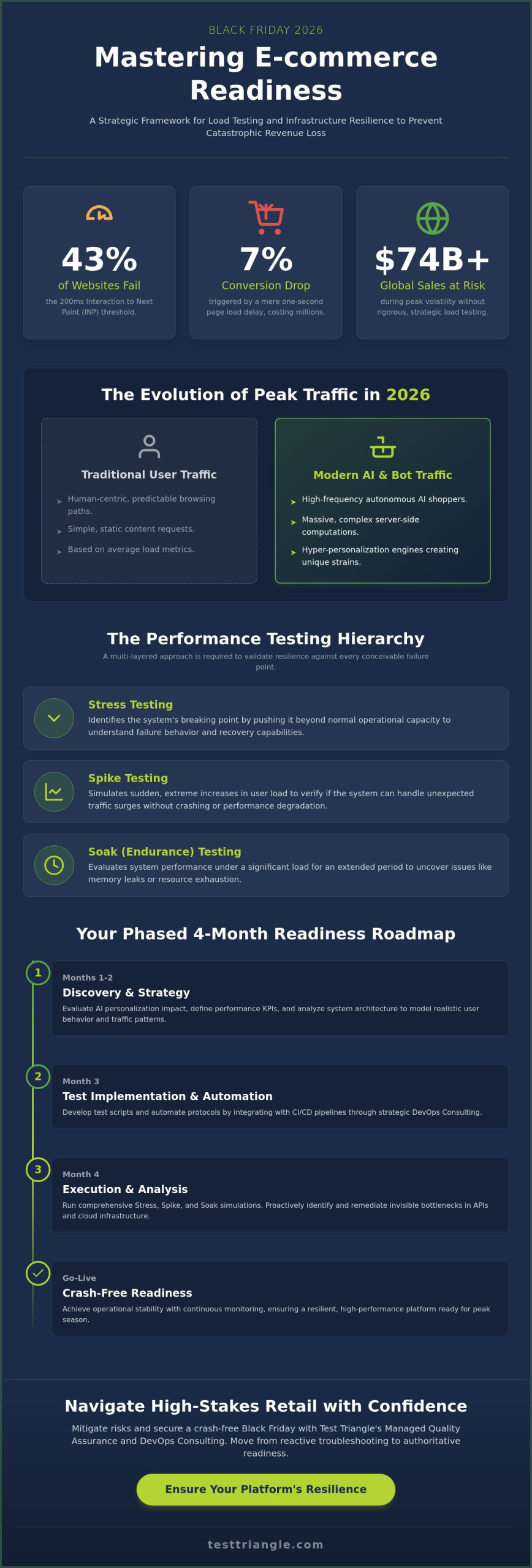

If you view your upcoming Atlassian Implementation as a mere software installation, you’ve already compromised your enterprise’s operational stability for the next decade. With 94% of enterprises now utilizing cloud services and Atlassian Data Center products facing a definitive end-of-life in March 2029, the stakes for a flawless deployment have never been higher. You’re likely struggling with fragmented data silos and the high complexity of Jira Service Management configurations, all while trying to mitigate security risks during a high-pressure migration.

We understand that the true challenge isn’t just technical; it’s about overcoming resistance among legacy teams and ensuring your infrastructure supports global growth. By combining technical expertise with a focus on long-term operational stability, Test Triangle helps you align Technology, Talent, and Transformation to turn these hurdles into a competitive advantage. This guide promises a comprehensive roadmap to master the complexities of your deployment, helping you achieve a seamlessly integrated DevOps and ITSM environment.

We’ll examine how to leverage the latest Jira 11.3 LTS features and AI-driven agents to drive a higher ROI from your software investments and ensure robust, scalable growth for your global organization.

Key Takeaways

  • Discover how to move beyond basic configurations by treating your Atlassian Implementation as a holistic business asset tailored for the rigorous demands of regulated industries.
  • Apply a 5-step strategic roadmap built on the Method-Action-Result framework to ensure your deployment is grounded in a comprehensive workflow audit.
  • Analyze the 2026 architectural landscape to determine whether the AI-driven scalability of the Cloud or the residency control of Data Center best serves your global infrastructure.
  • Secure long-term operational stability by prioritizing change management and platform proficiency to overcome the primary killer of enterprise software: user resistance.
  • Accelerate your digital transformation by leveraging the expertise of a Trusted Partner who bridges the gap between technical execution and business-wide transformation.

Defining Atlassian Implementation as a Strategic Business Asset

Atlassian Implementation represents the holistic process of configuring, integrating, and optimizing the software suite to drive enterprise-scale operations. It is a fundamental shift from basic tool adoption to a strategic alignment of business goals. As the Atlassian Corporation has evolved into a powerhouse of collaboration and ITSM tools, the complexity of managing these systems has grown exponentially. For global enterprises in 2026, a standard “out-of-the-box” setup is no longer sufficient. Sectors like finance, healthcare, and retail face rigorous compliance requirements and data residency laws that generic configurations simply cannot address. By choosing a dedicated Atlassian Implementation strategy, organizations move beyond simple installation to build a robust foundation for digital transformation.

The role of a Strategic Architect is vital in this landscape. Instead of merely checking boxes on a configuration list, these experts engage in deep business process re-engineering. They examine how work flows from a developer’s keyboard in Bitbucket to a support agent’s queue in Jira Service Management. This ensures that the technology serves the talent, rather than forcing teams to adapt to rigid, inefficient tools. By aligning Jira, Confluence, and Bitbucket, enterprises create a single source of truth that eliminates departmental silos and provides C-suite executives with the real-time data needed for informed decision-making.

The Core Components of an Enterprise Stack

Building a superior digital infrastructure requires a methodical approach to each product in the stack. By following a structured delivery model, Test Triangle helps businesses elevate their operational maturity through these core pillars:

  • Strategic Mapping of Jira Software: We optimize Jira for agile development and complex project tracking, ensuring workflows match your specific team dynamics.
  • Confluence as a Knowledge Hub: We leverage Confluence as a high-velocity knowledge management center, capturing institutional intelligence to prevent data loss.
  • AI-Driven ITSM: By integrating Jira Service Management, we accelerate service delivery through modern, task-specific AI agents that handle routine requests flawlessly.

By focusing on these components, enterprises can achieve a seamlessly integrated environment that supports global growth.

Why Implementation Fails Without Strategic Oversight

Success is never guaranteed by the software alone. Many organizations fail because they ignore the hidden costs of tool sprawl and unmanaged plugin ecosystems. Without professional IT Service Management services, businesses often face data fragmentation that cripples DevOps productivity. This fragmentation creates security risks and makes compliance audits nearly impossible to pass. Atlassian Implementation is a multi-layered journey involving technical precision and cultural readiness.

A 5-Step Strategic Roadmap for Flawless Atlassian Deployment

Achieving operational stability requires more than just a software setup; it demands a disciplined framework that aligns technical execution with business objectives. We utilize a Method-Action-Result framework to ensure every phase of your deployment delivers measurable value. By establishing clear protocols from the outset, global enterprises can mitigate the risks of data silos and configuration errors that often plague unguided installations. Success isn’t found in a setup wizard. It’s found in a structured path that treats your infrastructure as a living ecosystem.

Every successful Atlassian Implementation begins with a rigorous Discovery Phase. Before a single license is provisioned, we audit your existing workflows to identify bottlenecks and redundancies. This step is critical for organizations operating across multiple time zones where a lack of coordination can lead to significant downtime. By integrating sophisticated IT Service Management solutions, we bridge the gap between development and operations, ensuring that your ITSM environment is as agile as your DevOps pipeline. To minimize disruption, we employ an Iterative Rollout strategy, allowing for departmental transitions that respect local operational hours and minimize the impact on global productivity.

Phase 1 & 2: Audit and Architectural Design

By conducting a comprehensive audit of current software testing and DevOps processes, our architects identify the specific needs of your talent pool. We design a scalable hierarchy for Jira projects and Confluence spaces that supports future growth without creating administrative overhead. For clients in highly regulated sectors, we ensure every architectural decision maintains compliance with industry-standard benchmarks such as GxP for life sciences or ISO standards for financial services. This strategic mapping ensures your data remains secure and your processes stay audit-ready.

Phase 3 to 5: Configuration, Migration, and Optimization

During the execution of your Atlassian Implementation, our focus remains on data integrity and performance. We develop custom workflows that automate repetitive tasks, which helps reduce lead times and empowers teams to focus on high-value innovation. Migration isn’t a one-time event but a transition into continuous optimization. We implement feedback cycles to ensure the platform evolves alongside your business requirements. If you’re ready to elevate your digital infrastructure, it’s time to consult with our strategic architects to build a robust roadmap for your enterprise transformation.

Architectural Decisions: Cloud-First vs. Data Center in 2026

By analyzing the current technological trajectory, enterprises face a pivotal choice between the rapid innovation of the Cloud and the granular control of the Data Center. With the official end-of-life for Atlassian Data Center products set for March 28, 2029, the window for long-term on-premise planning is narrowing. However, for organizations in banking or life sciences, the transition isn’t always immediate. A robust Atlassian Implementation requires a nuanced understanding of these architectural paths to ensure that technology serves as a catalyst for growth rather than a legacy burden. While 94% of enterprises have already embraced cloud services, the decision to migrate must be balanced against specific regulatory and operational needs.

In 2026, Atlassian Cloud has matured into a superior platform, boasting task-specific AI agents like Rovo, which now serves over 5 million monthly active users. Scalability is no longer a manual effort; it’s a native feature that allows global teams to expand without infrastructure bottlenecks. By leveraging Atlassian Consulting, businesses can navigate the complexities of this migration, ensuring that the shift to cloud-native environments enhances rather than hinders operational stability. For those not yet ready for a full transition, a hybrid approach often serves as the most effective strategy, particularly when utilizing the Bitbucket Hybrid License to maintain continuity across diverse environments.

Security and Compliance in the Atlassian Cloud

Modern Atlassian Implementation plans must address the rigorous demands of GDPR, HIPAA, and industry-specific security protocols from day one. By adopting a “Zero Trust” architecture, we ensure that every access point within your Jira and Confluence environment is verified and secure. We treat security not as a peripheral feature but as the bedrock of a successful cloud implementation. This disciplined approach mitigates risks and provides the institutional maturity required to operate in a global digital landscape.

Infrastructure Integration: ServiceNow and AWS

To achieve a truly unified enterprise service desk, it’s essential to synchronize your Atlassian tools with ServiceNow Consulting Services. This integration allows for a seamless flow of data between development and support teams, reducing resolution times and elevating the user experience. For organizations that still require Data Center deployments for specific workloads, leveraging AWS provides the high-availability and robust infrastructure needed to maintain performance. By combining these powerful platforms, Test Triangle helps you build a scalable ecosystem that supports both current operations and future transformation.

Mitigating Risks and Driving Adoption Through Change Management

Transformation serves as the final, most critical pillar of our core triad: Technology, Talent, Transformation. Even the most technically perfect Atlassian Implementation will fail if your workforce is unable or unwilling to adopt the new system. User resistance remains the primary implementation killer in 2026, often stemming from a lack of platform proficiency or fear of disrupted workflows. By proactively addressing these human factors, we ensure your digital infrastructure becomes a catalyst for productivity rather than a source of friction.

Bridging internal skill gaps is a priority for any global enterprise. We leverage specialized staffing solutions to provide the technical expertise required during high-pressure transition phases. This isn’t just about filling seats; it’s about injecting high-level knowledge into your team to accelerate the learning curve. We champion a “Train-the-Trainer” model to embed platform sustainability within your organization. This approach empowers your internal leads to become self-sufficient, ensuring that your investment in the Atlassian stack continues to yield a high ROI long after the initial deployment is complete.

Talent Alignment: Ensuring Your Team is Ready

Identifying “Atlassian Champions” within your departments is essential for driving organic adoption. These individuals act as internal advocates, providing peer-to-peer support and demonstrating the tangible benefits of the new workflows. For specialized sectors, we utilize IT staffing agencies for the pharmaceutical industry to source expert Jira administrators who understand the unique regulatory constraints of GxP environments. By fostering a continuous learning culture, we help your talent evolve alongside your technology.

The Role of Managed Services in Post-Implementation Success

System health requires vigilant oversight that extends beyond the initial rollout. Utilizing Managed Outsourcing Services ensures that your platform remains optimized, secure, and up-to-date with the latest feature releases. We help you transition from project-based work to “Managed Excellence” through clearly defined SLAs that prioritize uptime and performance. A successful Atlassian Implementation is a living process that evolves with your business goals. If you’re ready to secure the future of your digital operations, reach out to our strategic consultants today.

Strategic Atlassian Implementation: A Comprehensive Guide for Enterprise Transformation in 2026

Accelerating Transformation with Test Triangle’s Consulting Expertise

Partnering with a global IT leader allows your organization to move beyond basic software adoption into a state of operational excellence. Test Triangle operates at the critical intersection of DevOps, Quality Assurance, and Atlassian ecosystem management. By adopting a “Strategic Architect” approach, we solve the most complex digital challenges facing modern enterprises. Our commitment to flawless execution ensures that your Atlassian Implementation is not just a technical success but a catalyst for business-wide transformation. We prioritize robust security and scalability, ensuring your infrastructure remains resilient in a fast-changing technological landscape.

By combining technical expertise with Software and Digital Assurance Testing, we provide a safety net for your enterprise rollout. This integrated approach ensures that every workflow, automation, and integration is rigorously validated before it reaches your end users. A bug-free rollout is essential for maintaining trust among your talent and ensuring that your digital transformation goals are met without costly setbacks. We leverage adaptable delivery models to meet the unique needs of your business, providing a steady hand through every phase of the deployment journey.

Why Choose a Trusted Partner?

As a proud client of Enterprise Ireland, Test Triangle is recognized for its technical rigor and institutional maturity. We’ve a proven track record of supporting diverse sectors, including Banking and Life Sciences, where precision is non-negotiable. The “Heartbeat” of our service is methodical and highly structured. We move logically from broad capabilities to specific technical solutions, ensuring that every stakeholder remains informed. This results-driven communication style creates a sense of order and comprehensive coverage, mirroring the efficiency we bring to your internal operations.

Next Steps for Your Digital Journey

Initiating your Atlassian Implementation project begins with a dedicated discovery session to audit your current environment and define clear success metrics. Our “Technology. Talent. Transformation.” approach provides a concise summary of our value proposition, ensuring that your long-term success is anchored in recognized global standards. We invite you to engage with our strategic consultants to build a scalable infrastructure that supports your global growth. Contact Test Triangle today to start your journey toward a more stable and efficient digital future.

Architecting Your Digital Future with Strategic Precision

By anchoring your digital transformation in a disciplined roadmap, you empower your teams to innovate without the burden of legacy silos. We’ve examined how architectural precision and proactive change management serve as the foundation for long-term operational stability. A successful Atlassian Implementation requires more than just technical configuration; it demands a strategic alignment of your entire business ecosystem to meet the rigorous standards of 2026. As a Strategic Partner of Atlassian, ServiceNow, and AWS, Test Triangle brings institutional maturity to every project, ensuring your infrastructure is both robust and scalable.

By leveraging our global presence across Europe, North America, and Asia, we provide the steady hand needed to navigate complex migrations and integrations. We remain committed to our core triad of Technology. Talent. Transformation. to help you achieve a state of managed excellence. It’s time to move beyond fragmented data and embrace a flawlessly integrated environment that supports your global growth. Elevate your enterprise with strategic Atlassian Implementation from Test Triangle and secure your competitive advantage today.

Frequently Asked Questions

What is the typical timeline for an enterprise Atlassian implementation?

A typical enterprise timeline ranges from three to nine months depending on user count and integration complexity. By following a structured discovery and audit phase, we ensure every milestone aligns with your business transformation goals. This methodical approach allows global teams to transition without disrupting active development cycles or service delivery. We prioritize a phased rollout to maintain operational stability throughout the process.

How do we migrate from Jira Server to Atlassian Cloud without losing data?

We ensure data integrity by utilizing the Atlassian Cloud Migration Assistant alongside custom pre-migration scripts to audit and clean your database. By performing comprehensive trial migrations in sandbox environments, we validate every data point before the final cutover. This disciplined process eliminates the risk of data loss and ensures a flawless transition to cloud-native environments that support your long-term growth.

Can Atlassian tools be integrated with legacy systems like ServiceNow?

Atlassian tools can be seamlessly synchronized with ServiceNow using robust APIs or specialized integration connectors. By bridging these platforms, we create a unified enterprise service desk that allows information to flow between development and IT support teams without friction. This integration optimizes incident management and accelerates resolution times across your entire digital infrastructure, ensuring a superior experience for both employees and customers.

Is it possible to implement Atlassian Cloud in highly regulated industries like Healthcare or Finance?

Implementing Atlassian Cloud in highly regulated sectors is entirely possible through Atlassian’s Enterprise plans which offer advanced data residency and compliance features. We configure these environments to meet specific GDPR, HIPAA, and ISO requirements, ensuring that your Atlassian Implementation remains secure and audit-ready. This approach provides the institutional maturity needed for Banking and Life Sciences to thrive in the cloud while mitigating compliance risks.

What is the difference between an Atlassian implementation and a simple software setup?

A simple software setup focuses on basic installation, whereas a strategic Atlassian Implementation involves deep business process re-engineering and architectural design. We align the toolset with your unique talent and transformation goals to create a scalable ecosystem. This ensures the platform supports long-term operational stability rather than just providing a generic project management tool that fails to meet enterprise demands.

What happens if our internal team doesn’t have the expertise for a complex Jira configuration?

If your internal team lacks specialized Jira configuration expertise, we provide high-level IT Staffing Services to fill those critical skill gaps. Our experts act as Strategic Architects, guiding your staff through complex setups while embedding best practices within your organization. This ensures your platform is configured correctly from day one without placing an undue burden on your existing resources or compromising your technical standards.

How does Test Triangle ensure security during the Atlassian migration process?

Security is maintained through a Zero Trust framework and end-to-end encryption of all data in transit and at rest. By conducting rigorous security audits and vulnerability testing during the migration, we mitigate risks and protect your intellectual property from potential threats. As a Trusted Partner, we prioritize your data’s safety as the bedrock of the entire transformation process, ensuring a secure transition for your global operations.

What are the ongoing costs associated with a managed Atlassian environment?

Ongoing costs typically include annual software licenses and investment in Managed Outsourcing Services for continuous optimization and system health. By partnering with us, you gain a predictable cost model that ensures your platform evolves with your business requirements. This strategic oversight helps you leverage your licenses more effectively and drives a higher ROI from your software investments by maintaining peak operational performance.

Paul Guy

Article by

Paul Guy

Paul serves as the Marketing Director at Test Triangle, where he leads a global team in driving growth through strategic B2B marketing and brand communications. With a strong emphasis on measurable outcomes and sustainable performance, he plays a pivotal role in aligning marketing functions to enhance customer engagement and accelerate business impact. Under his leadership, marketing initiatives have consistently delivered significant returns on investment, elevated brand visibility, and strengthened the company's presence across key markets.