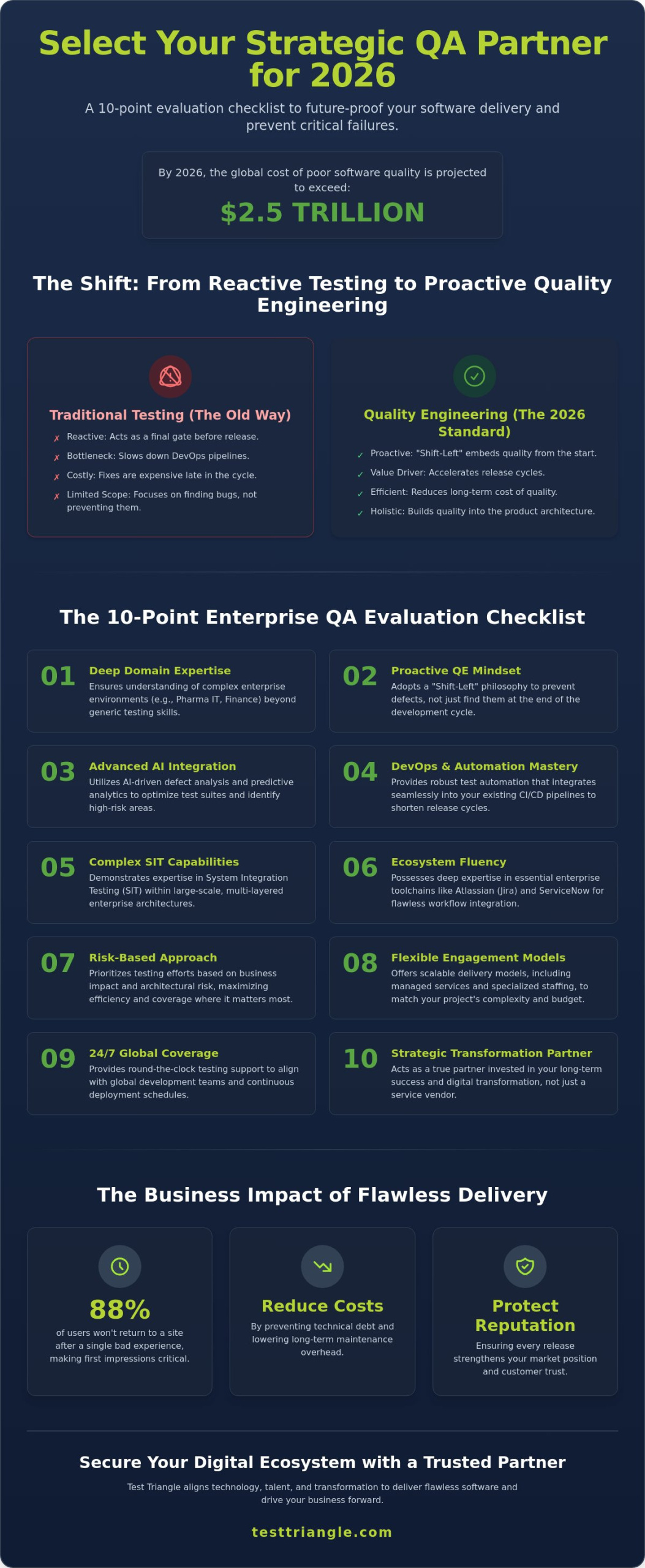
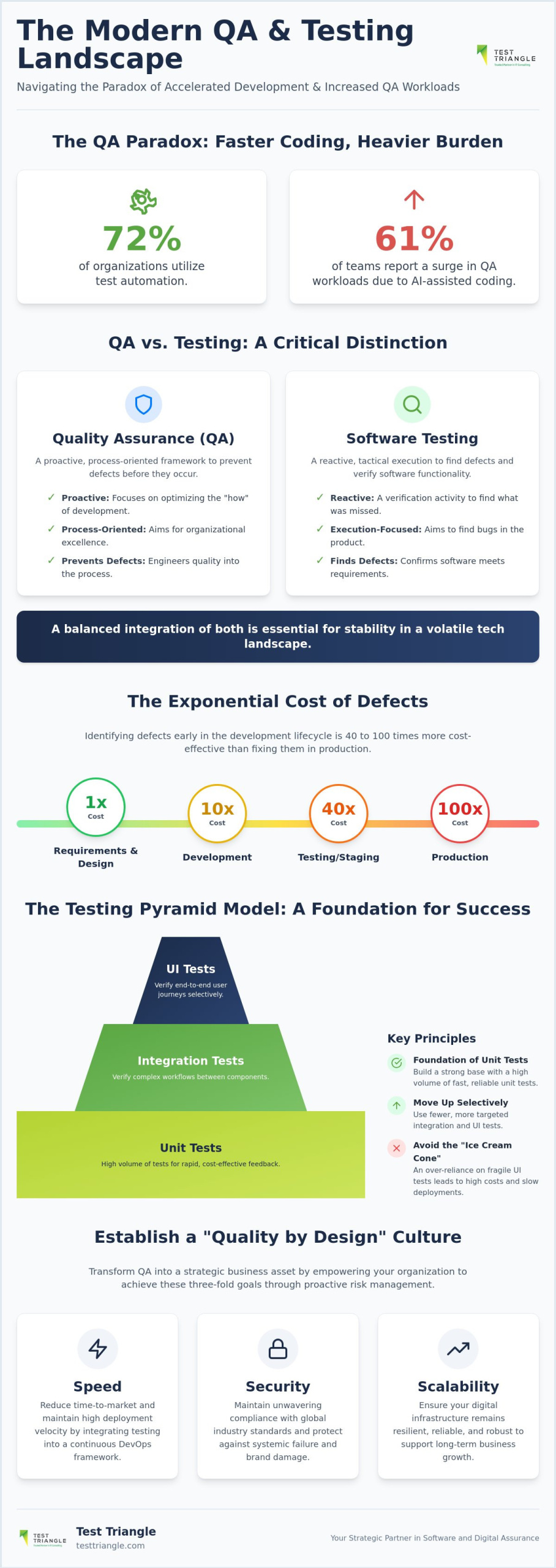
With 72% of organizations now utilizing test automation, you might expect the burden on development teams to be lifting, yet 61% of teams report a dramatic surge in QA workloads due to the rise of AI-assisted coding. This paradox often leaves global enterprises trapped between the need for rapid deployment and the risk of high defect rates in production. When you’re operating within highly regulated industries, the challenge of finding specialized talent to manage Testing and QA Software testing only compounds these operational bottlenecks. You likely feel that your current testing framework is a hurdle to clear rather than a foundation to build upon.
We’re here to change that perspective by showing you how to transform quality assurance into a strategic business asset that drives speed, security, and scalability. As a reliable long-term collaborator, we provide a comprehensive roadmap for integrating manual, automation, and performance testing into a unified DevOps strategy. By aligning technical execution with long-term business outcomes, you’ll discover how to reduce time-to-market, improve user experience, and maintain unwavering compliance with global industry standards. We will examine the specific methodologies, tools, and staffing models required to ensure your digital infrastructure remains resilient, reliable, and robust.
Key Takeaways
- Understand the critical distinction between process-oriented quality assurance and execution-focused software testing to optimize resource allocation and mitigate the exponential costs of late-stage defect remediation.
- Learn to deploy the Testing Pyramid model, which prioritizes unit and integration tests over UI-heavy suites to maintain high deployment velocity and operational efficiency.
- Discover how to integrate Testing and QA Software testing into a continuous DevOps framework, ensuring that quality becomes an intrinsic component of your digital transformation journey.
- Identify the strategic synergy between manual exploratory testing and automated performance checks to deliver a seamless user experience across complex, multi-platform environments.
- Establish a “Quality by Design” culture that empowers your organization to achieve the three-fold goals of speed, security, and scalability through proactive risk management.
Demystifying Testing and QA: A Strategic Business Imperative for 2026
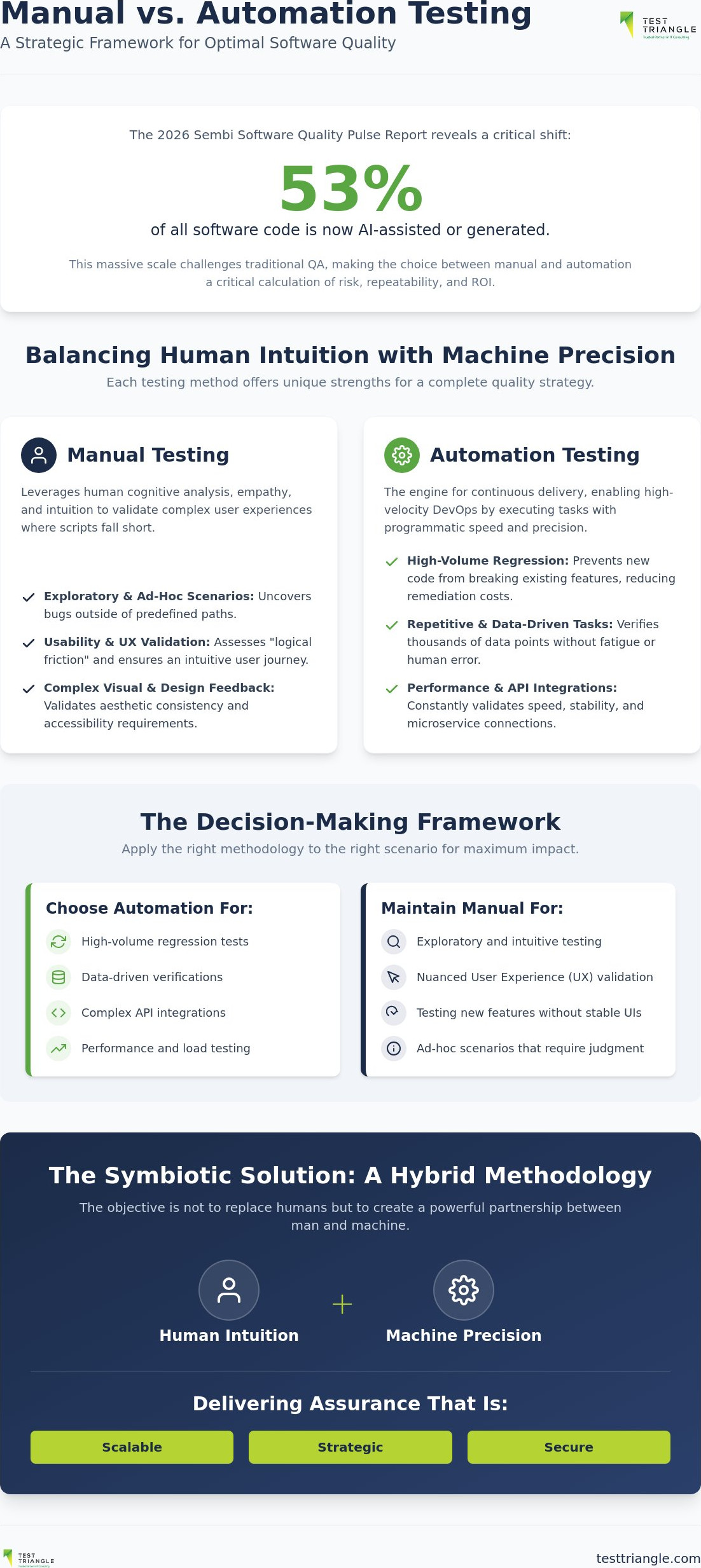
By 2026, the velocity of software delivery has reached a point where traditional, siloed validation methods are no longer sufficient to protect enterprise value. With over 53% of all code now being AI-generated or assisted, the sheer volume of output has created a paradox: development is faster, yet the risk of systemic failure is higher. This evolution has elevated Testing and QA Software testing from a tactical checkbox to a strategic pillar of digital resilience. For global organizations, quality is no longer just about finding bugs; it’s about engineering trust into every layer of the digital infrastructure.
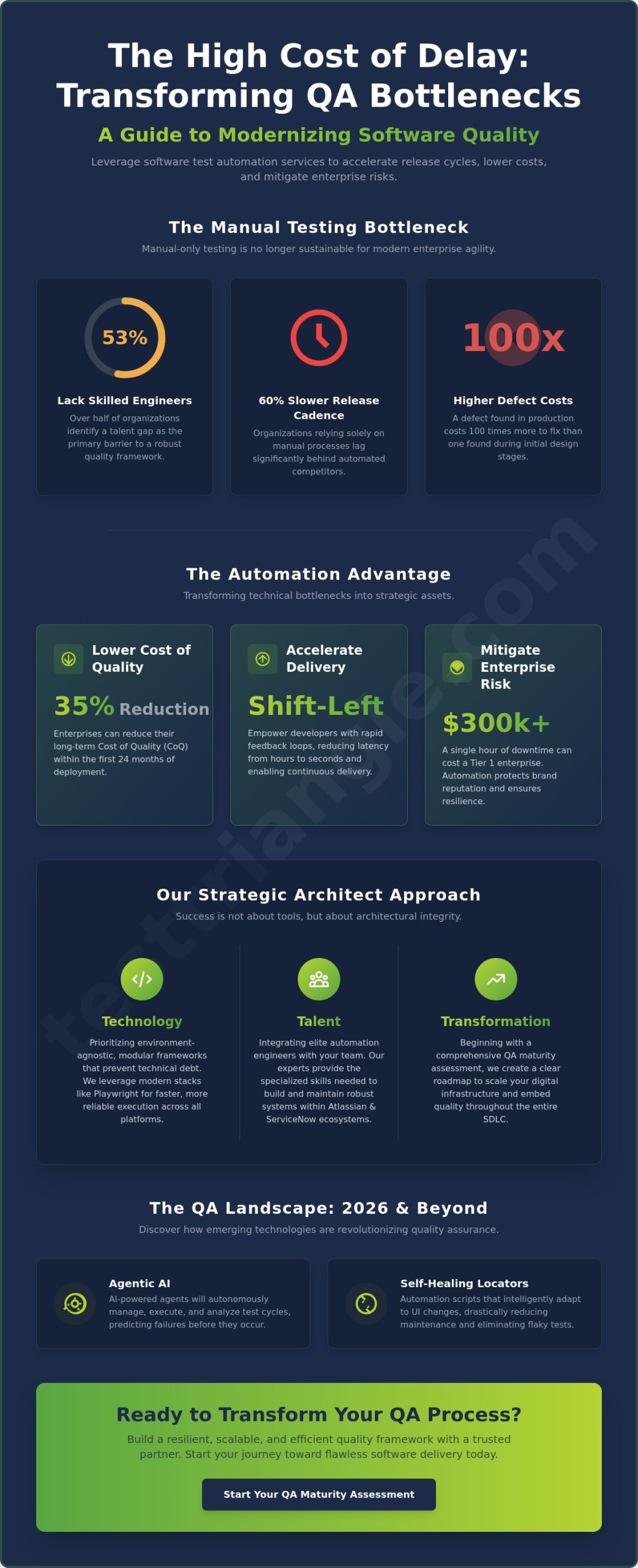
The financial implications of this shift are stark. Industry data consistently demonstrates that identifying a defect during the initial requirement or design phase is 40 to 100 times more cost-effective than remediating the same issue once it reaches production. When a defect escapes into the wild, the costs aren’t merely financial; they include technical debt, operational downtime, and the erosion of customer loyalty. By integrating a comprehensive overview of software testing into the earliest stages of the development lifecycle, businesses can achieve a state of precision, predictability, and progress.
The ROI of a Mature QA Strategy
A sophisticated approach to quality assurance serves as a powerful engine for value creation. By reducing technical debt, organizations free up their engineering talent to focus on innovation rather than fire-fighting. In a high-stakes marketplace, a single high-profile failure can lead to significant churn and permanent brand damage. We position our software and digital assurance testing services to align directly with your corporate strategic roadmaps, ensuring that every testing milestone supports a broader business objective. This alignment transforms QA from a cost center into a catalyst for digital transformation services, empowering you to scale with confidence.
QA vs. Testing: Understanding the Methodology
While often used interchangeably, Quality Assurance and Software Testing represent two distinct but complementary disciplines. QA is a proactive, process-oriented framework designed to prevent defects before they occur. It focuses on organizational excellence and the “how” of development. Conversely, testing is a reactive, tactical execution of verification activities aimed at confirming that the software meets specific requirements. Your organization doesn’t need to choose between them; it needs a balanced integration of both. A robust framework for Testing and QA Software testing ensures that while the process is optimized for prevention, the execution remains rigorous enough to catch the unexpected. This dual-layered defense is what allows global enterprises to maintain stability in a volatile technological landscape.
The Core Pillars of Software Testing: From Unit to System Integration
Establishing a resilient digital infrastructure requires a disciplined adherence to the Testing Pyramid model. This framework dictates that the foundation of your strategy should consist of a high volume of unit tests, which provide rapid and cost-effective feedback during the earliest stages of development. As we move up the pyramid, integration and UI tests are applied more selectively to verify complex workflows and end-to-end user journeys. By maintaining this structural balance, enterprises can avoid the “ice cream cone” anti-pattern, where an over-reliance on fragile UI tests leads to high maintenance costs and slow deployment cycles. This hierarchy is essential for successful Testing and QA Software testing, ensuring that your quality framework remains both scalable and sustainable.
Beyond the structural pyramid, a mature strategy must address both functional and non-functional requirements. While functional testing confirms that the application executes its intended business logic, non-functional testing evaluates critical attributes such as performance, usability, and security. Given that the security testing market is growing at a 24.7% CAGR toward a projected $43.9 billion by 2029, vulnerability assessments have become a non-negotiable pillar of modern assurance. Understanding the strategic business implications of QA allows executive leadership to see these non-functional pillars as essential risk-mitigation tools that protect the organization’s reputation and financial stability.
Regression testing serves as the vital heartbeat of continuous delivery pipelines. It ensures that new code enhancements don’t inadvertently disrupt existing functionality, a risk that’s significantly amplified in the age of AI-assisted development. By automating regression suites, organizations can maintain a clean, production-ready codebase even as release cycles accelerate. If you’re seeking to modernize your validation frameworks, you might consult with our strategic partners to align your technical execution with enterprise-grade standards.
System Integration Testing (SIT) and User Acceptance (UAT)
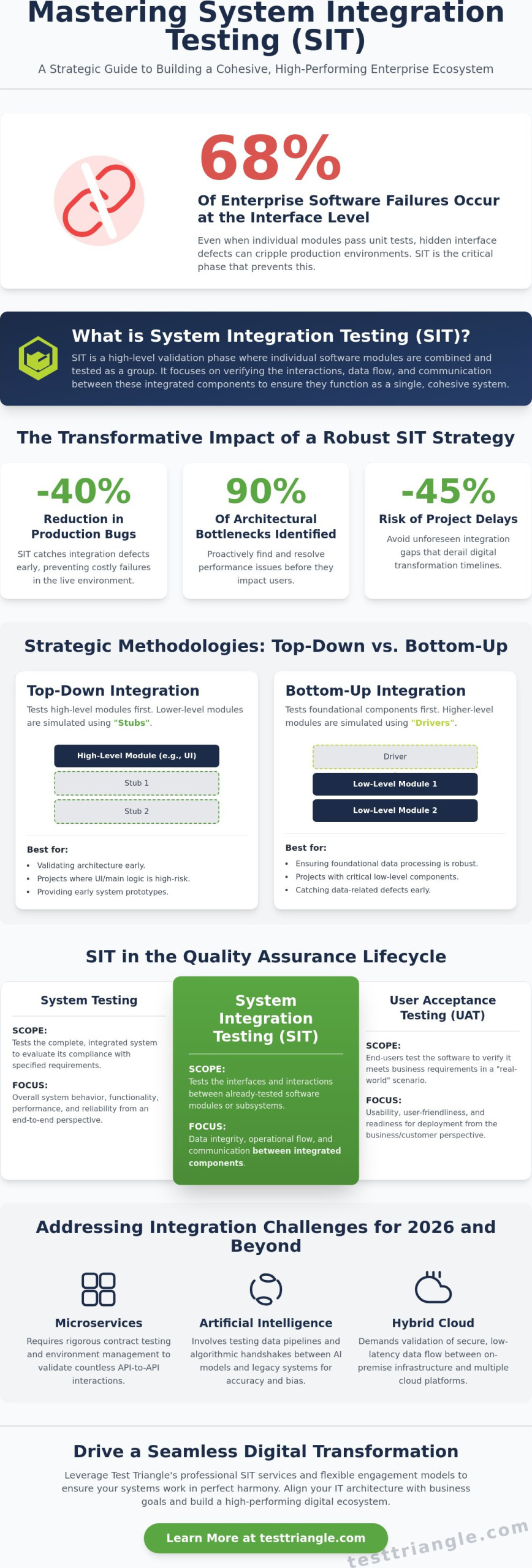
SIT functions as the critical bridge where individual modules are validated as a cohesive system, ensuring that data flows seamlessly across internal and external interfaces. In complex enterprise environments, managing these dependencies requires a meticulous approach to environment stability and data integrity. Once the system is technically sound, UAT provides the final validation from the end-user perspective, confirming that the solution delivers the intended business value. You can learn about SIT in testing through our specialized assurance frameworks designed for regulated industries.
Integrating QA with Atlassian and ServiceNow Ecosystems
Operational efficiency is maximized when Testing and QA Software testing activities are deeply embedded within the platforms your teams already use. By leveraging Jira for transparent defect tracking, teams gain real-time visibility into the quality lifecycle, while ServiceNow implementation allows for the automation of ITSM workflows. This integration ensures that testing results are directly connected to service management and incident response. You should explore Atlassian implementation strategies to see how these tools foster collaboration between development and operations.
Navigating the Spectrum: Manual, Automation, and Performance Testing
Execution is the ultimate proving ground for any quality strategy. While the previous sections established the structural pillars of quality, the actual delivery of Testing and QA Software testing involves navigating a spectrum that balances human intuition with algorithmic precision. Manual testing remains the indispensable human element for exploratory sessions and comprehensive UX assessments, allowing seasoned experts to uncover edge cases that scripted logic might overlook. This human-centric approach is vital for validating the nuances of user behavior and visual fidelity. For those seeking to understand the academic and practical foundations of these disciplines, reviewing a Software Testing and Quality Assurance syllabus provides a clear window into the rigorous standards required for professional validation.
Conversely, automation testing drives the speed and precision necessary for high-volume, repetitive tasks, enabling teams to maintain velocity without sacrificing accuracy. This is particularly critical when dealing with performance testing, which ensures that your digital infrastructure remains resilient under peak load and high-concurrency scenarios. By simulating real-world traffic, we identify architectural bottlenecks before they impact the end-user. This technical rigor is complemented by compatibility testing, which guarantees consistent experiences across an increasingly fragmented device ecosystem, ensuring that your application performs flawlessly regardless of the user’s hardware or operating system. We focus on delivering three core outcomes: stability, security, and scalability.
When to Automate and When to Stay Manual
A mature quality framework requires a strategic selection process to identify high-ROI automation candidates, such as stable regression suites and data-driven tests. Over-automation can lead to fragile test environments and high maintenance costs, which is why we advocate for a balanced approach that preserves the human perspective for complex usability challenges. You can explore our Manual Testing in 2026: A Strategic Guide to learn more about where human insight provides the greatest business value.
Performance and Load Testing for Enterprise Scalability
Enterprise-scale applications must be engineered to withstand seasonal spikes and global product launches without degradation. Our performance testing methodology involves rigorous stress testing to determine the absolute breaking point of your architecture, providing the data necessary for proactive capacity planning. For organizations looking to automate these complex checks within a CI/CD pipeline, our Software Test Automation Services for Scalable Quality offer a roadmap for sustainable growth and operational stability.
Establishing a Quality Culture: Implementation Strategies for Global Enterprises
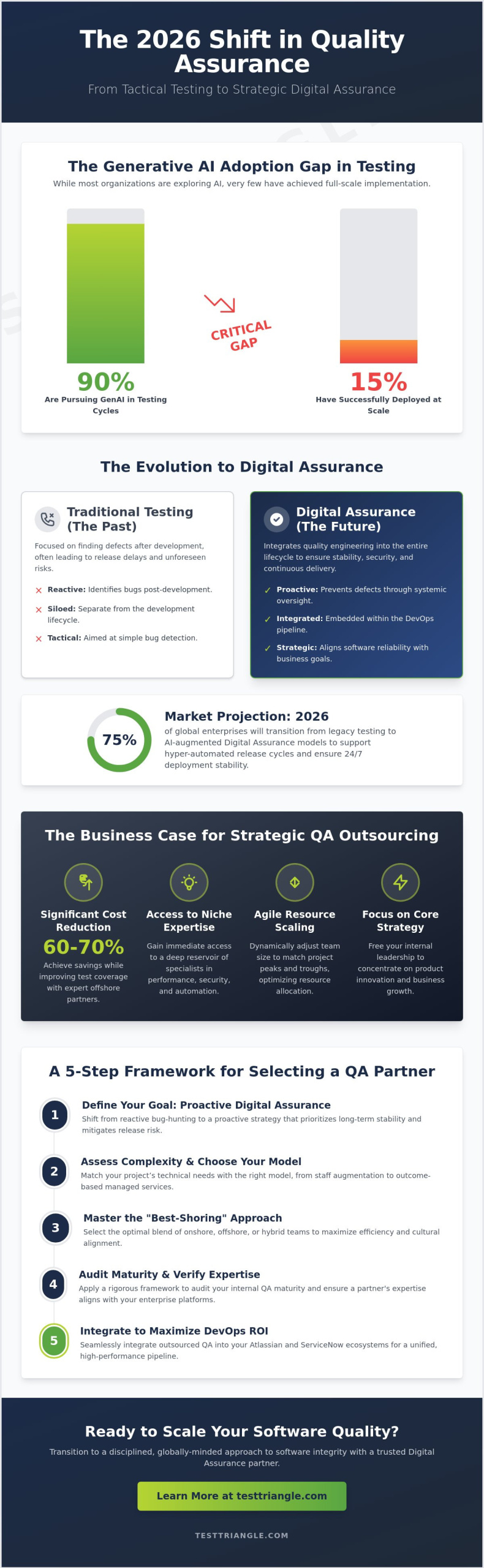
Shifting the organizational mindset from “testing as a phase” to “quality as a culture” is the hallmark of a mature digital enterprise. This transition requires a fundamental commitment to “Shifting Left,” a strategy where validation activities are integrated into the earliest stages of the software development lifecycle. By addressing potential failures during the requirements and design phases, organizations move away from a reactive “detect and fix” cycle toward a proactive “prevent and protect” philosophy. This cultural realignment ensures that every stakeholder, from product owners to architects, views Testing and QA Software testing as a shared responsibility rather than a final hurdle before release.
Building a cross-functional DevOps culture focused on “Quality by Design” allows for the seamless integration of automated checks within continuous delivery pipelines. This isn’t merely about technical tools; it’s about fostering collaboration between development, operations, and assurance teams to eliminate silos. When quality is baked into the architecture, the result is a resilient infrastructure that supports rapid deployment without compromising security or performance. For global organizations, this structural discipline is what transforms a functional necessity into a strategic business asset that empowers long-term growth.
Specialized QA for Regulated Industries
In sectors like pharmaceuticals and life sciences, the stakes of software failure extend beyond financial loss to include regulatory and safety risks. Navigating GxP compliance requires a rigorous approach to validated software testing, ensuring that every digital tool meets the exacting standards of global health authorities. Similarly, securing financial platforms demands a specialized focus on penetration testing and data integrity. We provide the technical rigor and institutional maturity needed to manage these complexities. You can explore the industries we support with specialized QA to see how we tailor our frameworks to meet specific regulatory mandates.
QA Outsourcing and Staffing Models
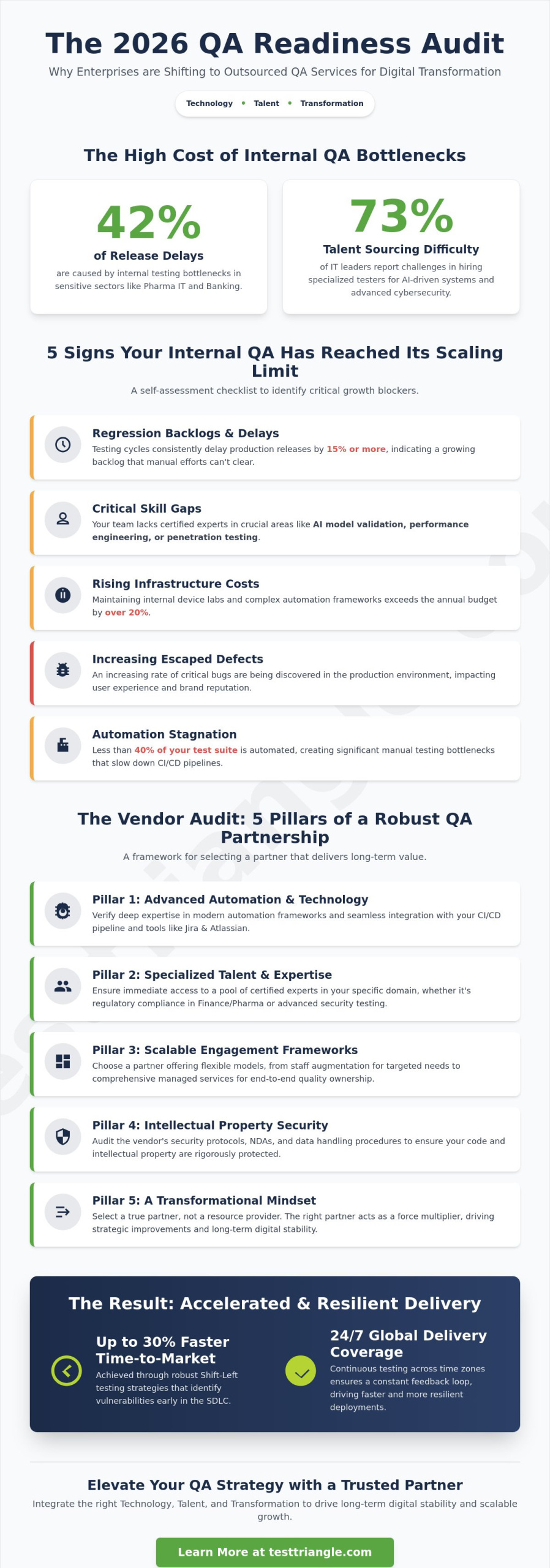
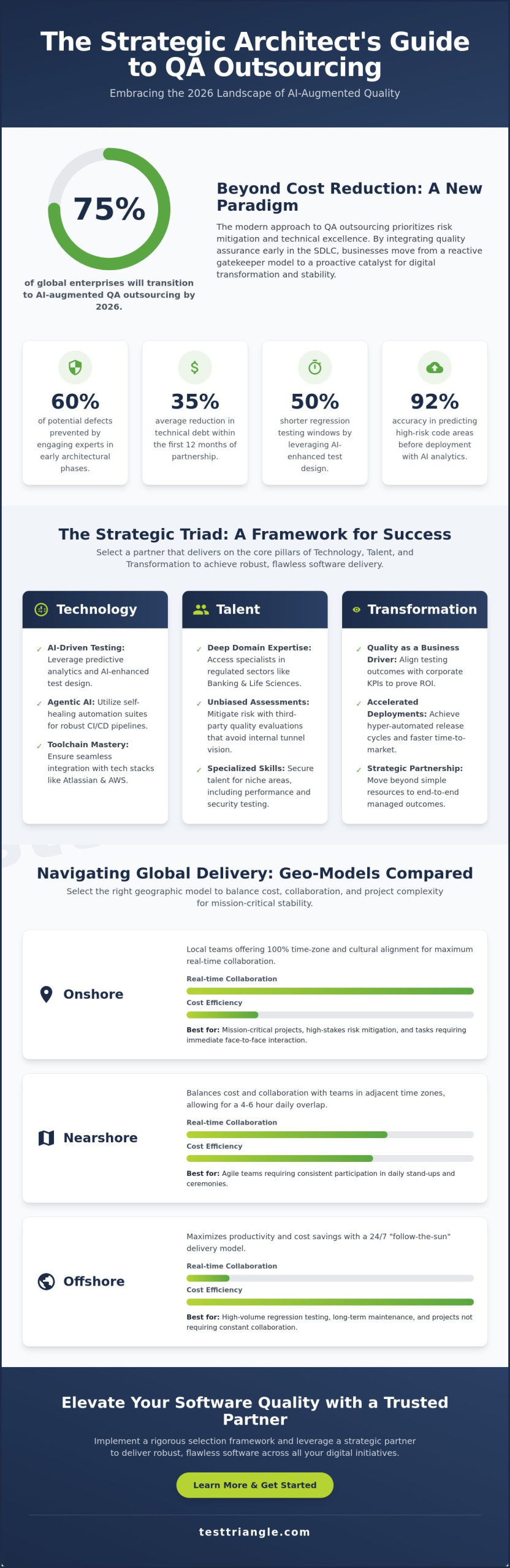
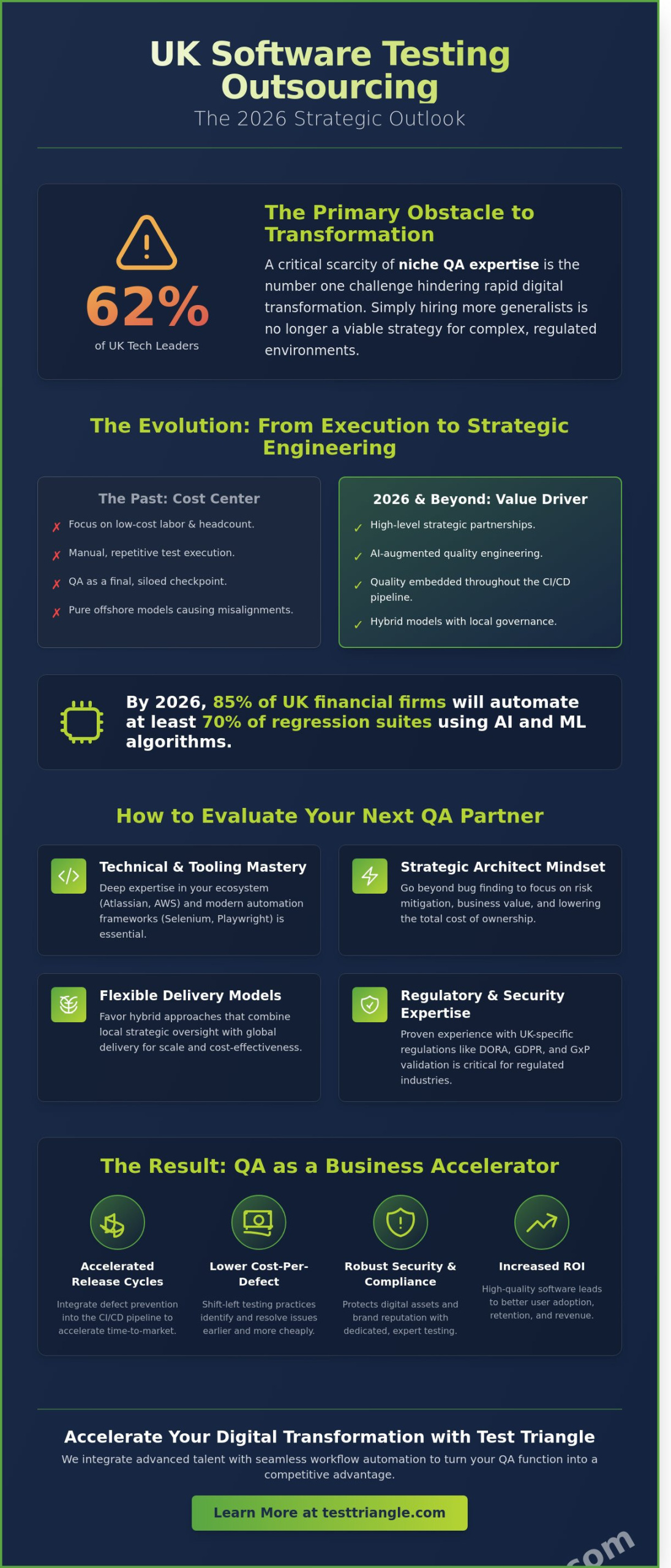
Structuring a high-performing quality department often involves balancing internal expertise with flexible external resources. Many enterprises find that a Managed Service Provider (MSP) model offers the most sustainable path to long-term stability, providing consistent oversight and technical evolution that individual staffing often lacks. Whether you’re considering offshore teams for cost-efficiency or permanent placement for core IP retention, the choice of model must align with your strategic roadmap. Our QA Outsourcing: A Strategic Comparison provides a detailed framework for evaluating these options. If you’re ready to optimize your department’s structure, you should connect with our strategic advisory team to discuss a customized staffing or managed service solution.
Test Triangle: Your Strategic Partner in Software and Digital Assurance
Achieving excellence in Testing and QA Software testing requires more than just technical proficiency; it demands a reliable long-term collaborator who understands the intersection of methodology, execution, and business value. We position ourselves as a high-level corporate partner for global organizations, providing comprehensive software and digital assurance testing that goes beyond basic bug detection. Our approach integrates strategic technology roadmapping with digital transformation services, ensuring that your quality framework evolves in lockstep with your broader organizational goals. By aligning our technical execution with your strategic vision, we empower your enterprise to navigate complex technological shifts with confidence and clarity.
Operational stability is further reinforced through our expert Atlassian and ServiceNow implementation services, which optimize your quality workflows and harmonize communication across departments. We recognize that every organization has unique resource requirements, which is why we offer highly adaptable IT staffing services. Whether your project requires specialized contract experts, remote/offshore development teams, or permanent placements to build internal IP, our flexible delivery models provide the technical rigor and scalability necessary for sustained success. We provide three core pillars for your digital journey: Precision, Progress, and Peace of mind.
Why Leading Enterprises Trust Test Triangle
With over a decade of institutional maturity and a global operational footprint across Europe, North America, and Asia, we bring a seasoned perspective to every engagement. Our deep expertise in DevOps consulting and AWS cloud migration allows us to manage complex digital infrastructures with unmatched discipline. By focusing on risk reduction and operational stability, we ensure that your technology stack remains a driver of growth rather than a source of liability. This commitment to excellence is why global leaders in finance, healthcare, and retail view us as an essential extension of their engineering departments.
Accelerate Your Quality Journey
We deliver customized IT service management services that are meticulously tailored to the specific demands of your industry. For those operating in highly regulated environments, our specialized talent provides the nuanced expertise required for pharmaceutical recruitment and life science resourcing projects. We don’t just provide services; we engineer the foundations of your future success. If you’re ready to transform your approach to quality assurance, you should Partner with Test Triangle for Strategic QA and discover the empowerment that comes from large-scale technological evolution.
Engineering Resilience for the Digital Future
The transition from a reactive validation model to a proactive, strategic business asset is the defining characteristic of a digitally resilient enterprise. By integrating the core pillars of the testing pyramid and fostering a cross-functional DevOps culture, organizations can significantly reduce technical debt while accelerating deployment velocity. This journey requires more than just technical tools; it demands a disciplined approach to Testing and QA Software testing that aligns technical execution with long-term corporate objectives. Whether you’re navigating the complexities of GxP compliance or scaling a global cloud infrastructure, the right framework provides the stability necessary for innovation.
As an Atlassian Gold Solution Partner with global delivery centers across Europe, North America, and Asia, we provide the institutional maturity and specialized expertise required for high-stakes digital environments. We’re committed to acting as your reliable long-term collaborator, offering the precision, protection, and progress your organization deserves. It’s time to transform your quality assurance from a functional necessity into a powerful engine for growth. We look forward to supporting your next phase of technological evolution.
Optimize your software quality with Test Triangle's strategic QA services
Frequently Asked Questions
What is the difference between QA and software testing in an enterprise context?
Quality Assurance (QA) focuses on the organizational processes designed to prevent defects before they occur, while software testing is the tactical execution of verifying that the code meets specific requirements. In an enterprise context, a mature strategy for Testing and QA Software testing integrates both to ensure systemic reliability and operational stability. This dual approach allows leadership to manage risk proactively rather than reacting to failures after deployment.
How much should a company invest in software testing and QA services?
Investment levels vary based on the complexity of the digital infrastructure and the regulatory requirements of the industry, though many global enterprises allocate a significant portion of their development budget to assurance activities. While specific costs depend on the service model, the focus should remain on the “cost of quality,” where early investment mitigates the 40 to 100 times higher expense of fixing production defects. A strategic partner helps balance these costs against the potential risk of brand damage.
Can you outsource software testing without losing control of project quality?
Outsourcing remains highly effective when managed through a strategic partnership model that emphasizes transparency, accountability, and shared goals. By utilizing a Managed Service Provider (MSP), organizations maintain oversight through integrated defect tracking and regular performance audits while benefiting from specialized technical expertise. This approach ensures that quality standards remain consistent across global delivery centers, allowing internal teams to focus on core innovation without sacrificing technical rigor.
What are the benefits of integrating QA with DevOps consulting?
Integrating quality assurance with DevOps consulting fosters a “Quality by Design” culture that accelerates release cycles through continuous testing and automated feedback loops. This synergy eliminates operational silos, enabling teams to identify vulnerabilities earlier in the software development lifecycle. The result is a resilient delivery pipeline that supports rapid deployment while maintaining high standards of stability, security, and scalability, which are essential for large-scale digital transformation.
Why is manual testing still necessary in an automation-first world?
Manual testing provides the indispensable human perspective required for exploratory sessions and complex user experience assessments that automated scripts cannot replicate. It allows seasoned experts to evaluate visual fidelity, intuitive navigation, and subtle edge cases that exist outside of predefined logical parameters. In a balanced Testing and QA Software testing framework, human insight acts as a critical safeguard, ensuring that the technology remains centered on the end-user’s needs.
How does Atlassian consulting improve the software testing lifecycle?
Atlassian consulting enhances the testing lifecycle by implementing industry-leading tools like Jira and Confluence to provide end-to-end traceability and transparent defect management. These platforms allow for the seamless synchronization of development and assurance tasks, ensuring that every stakeholder has real-time visibility into the project’s quality status. This structural discipline reduces communication gaps and streamlines the path from initial requirement to final deployment, fostering institutional maturity.
What is validated software testing for the pharmaceutical industry?
Validated software testing is a specialized assurance process designed to meet GxP compliance and other stringent regulatory mandates within the pharmaceutical and life science sectors. It involves rigorous documentation, comprehensive audit trails, and evidence-based verification to ensure that every digital tool performs consistently and safely. This level of technical rigor is essential for protecting patient safety and maintaining the legal integrity of the organization’s data in highly regulated global markets.
What is the typical ROI of implementing test automation services?
The return on investment for test automation is realized through significantly reduced regression cycles, improved bug detection rates, and the ability to execute high-volume tests with absolute precision. While initial implementation requires a strategic commitment, the long-term benefits include lower maintenance costs and a faster time-to-market for new features. Organizations that successfully deploy these services report a dramatic increase in operational efficiency, allowing their engineering talent to focus on high-value strategic initiatives.

Article by
Paul Guy
Paul serves as the Marketing Director at Test Triangle, where he leads a global team in driving growth through strategic B2B marketing and brand communications. With a strong emphasis on measurable outcomes and sustainable performance, he plays a pivotal role in aligning marketing functions to enhance customer engagement and accelerate business impact. Under his leadership, marketing initiatives have consistently delivered significant returns on investment, elevated brand visibility, and strengthened the company's presence across key markets.