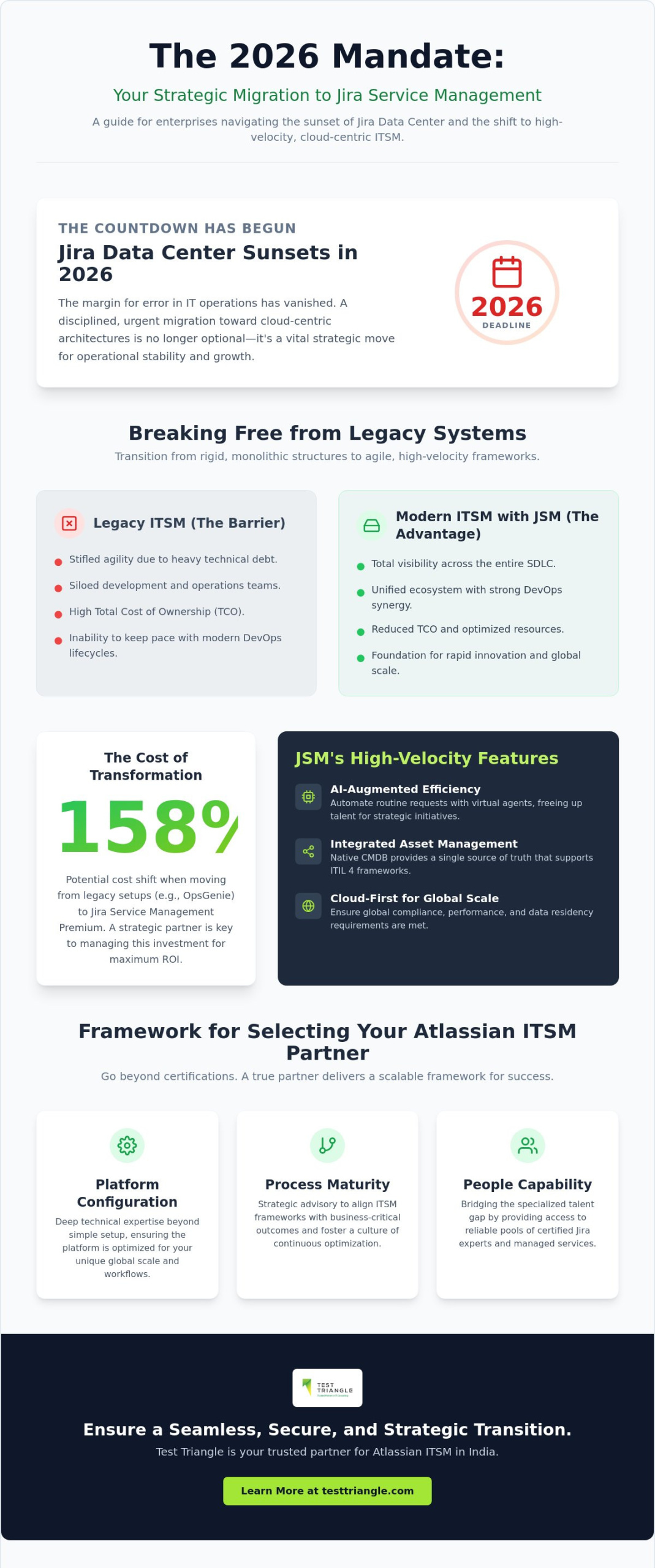
Is your IT infrastructure a catalyst for growth or a bottleneck for innovation? Many global enterprises find that simply deploying Jira Service Management isn’t enough to overcome the friction of legacy systems or the complexity of modern cloud migrations. Engaging a certified Atlassian ITSM partner isn’t just about technical implementation; it’s about securing a strategic collaborator who understands how to bridge the gap between high-velocity DevOps and enterprise-grade governance.

We recognize the pressure of managing escalating operational costs, particularly following the 32% increase in enterprise pricing seen in early 2026, and the legitimate fear of business downtime during critical transitions. This article provides a clear framework to evaluate and select a partner who’ll accelerate your service delivery and maximize your JSM investment. You’ll discover how the right expertise transforms fragmented workflows into a scalable service desk that reduces mean time to resolution and delivers transparent, predictable licensing costs through a methodology-driven approach.

Key Takeaways

  • Understand why the integration of DevOps and Jira Service Management is essential for replacing siloed, legacy frameworks with high-velocity service delivery.
  • Identify the critical benchmarks for selection, including why the “ITSM Specialized” badge is a non-negotiable requirement for a qualified Atlassian ITSM partner.
  • Learn a structured two-phase approach to legacy migration that prioritizes strategic roadmapping and robust governance to ensure seamless user adoption.
  • Explore how transitioning to managed services facilitates continuous platform optimization, allowing your internal teams to focus on core business innovation.
  • Discover the benefits of a holistic partnership model that combines technical rigor with scalable staffing and quality assurance solutions.

The Strategic Shift to High-Velocity IT Service Management

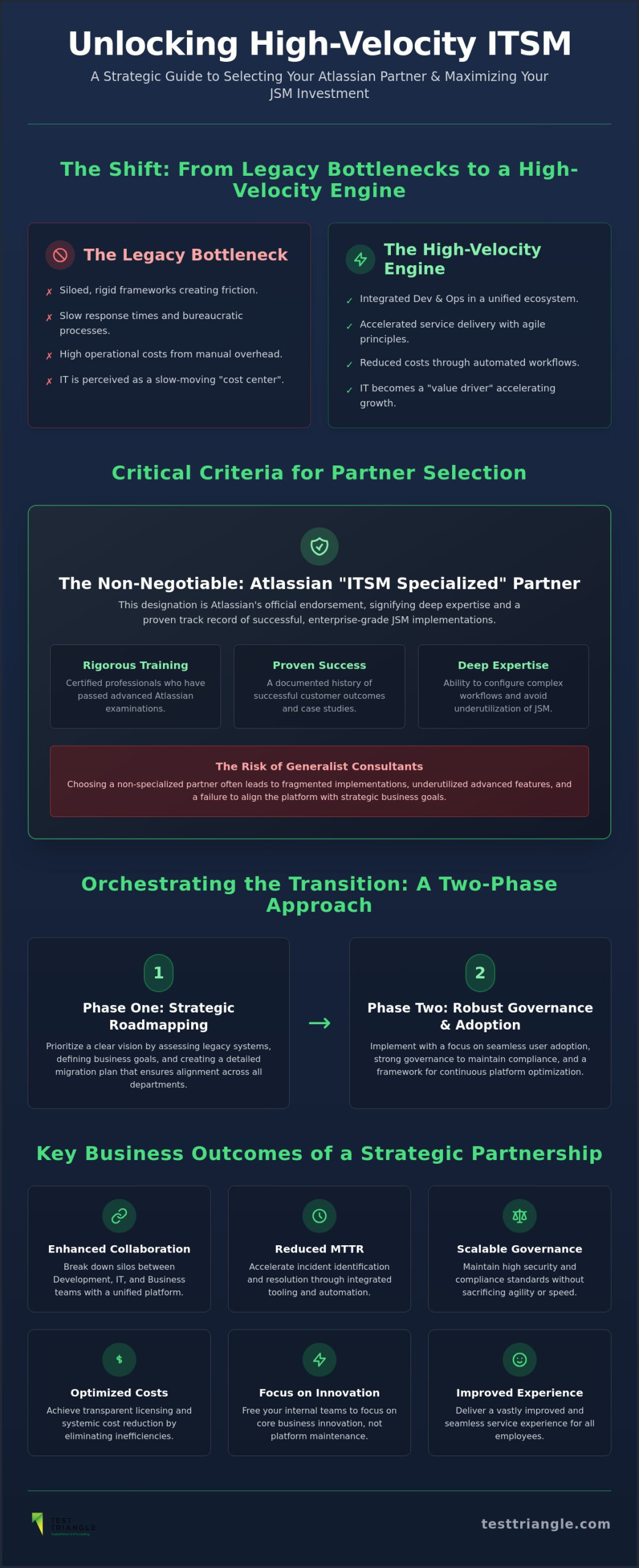
The modern landscape for IT Service Management (ITSM) has undergone a fundamental transformation, moving away from the rigid, siloed structures that once defined corporate IT. For global enterprises, legacy frameworks often become barriers to progress, creating friction between departments and slowing down response times in a market that demands instant resolution. High-Velocity ITSM is the integration of agile principles into traditional service governance, ensuring that speed doesn’t come at the expense of stability. By choosing a certified Atlassian ITSM partner, companies can bridge the gap between development and operations, ensuring that Jira Service Management (JSM) acts as a collaborative engine rather than just another ticketing tool.

A successful partnership focuses on three core business outcomes: operational efficiency, systemic cost reduction, and a vastly improved employee experience. When Dev and Ops teams work within a unified ecosystem, the friction of handoffs disappears, allowing for a seamless flow of information that drives value across the entire organization. This strategic alignment ensures that IT isn’t just supporting the business but is actively accelerating its growth.

Moving Beyond Legacy ITSM Frameworks

Traditional ITIL implementations were frequently criticized for being overly bureaucratic and slow, often failing to keep pace with the rapid deployment cycles of modern software development. An Atlassian ITSM partner helps organizations modernize these practices by implementing ITIL 4 principles, which prioritize flexibility and value streams over rigid adherence to process. This shift allows IT departments to move from being perceived as a “cost centre” to becoming a “value driver.” By optimizing the platform to support iterative improvements and faster feedback loops, businesses can reduce manual overhead and focus their resources on innovation rather than maintenance.

The Role of Jira Service Management in Digital Transformation

Jira Service Management serves as the unified platform that connects Dev, IT, and business teams, providing a single source of truth for all service-related activities. Leveraging Digital Transformation Services allows enterprises to align their IT infrastructure with broader commercial goals, ensuring that every technical adjustment contributes to the bottom line. Automated workflows play a critical role here, as they eliminate repetitive manual tasks and reduce the likelihood of human error. This automation doesn’t just save time; it empowers teams to handle complex requests with precision, ensuring that the service desk can scale alongside the business without a proportional increase in headcount.

Ultimately, the transition to a high-velocity model results in:

  • Reduced MTTR: Faster incident identification and resolution through integrated tooling.
  • Enhanced Collaboration: Breaking down silos between development and IT operations.
  • Scalable Governance: Maintaining compliance and security standards without sacrificing agility.

Critical Criteria for Selecting an Atlassian ITSM Partner

Selecting an Atlassian ITSM partner involves evaluating more than just a list of past clients; it requires a rigorous assessment of their ability to align technical architecture with long-term business strategy. As enterprises face increasingly complex digital environments, the distinction between a basic service provider and a strategic collaborator becomes clear through their technical depth and industry-specific insight. A partner’s role is to ensure that Jira Service Management doesn’t just function as a standalone tool but acts as a central nervous system for your entire service delivery model.

Atlassian Specialized Partner Status vs. Generalist Consultants

The “ITSM Specialized” badge serves as a non-negotiable baseline for any serious enterprise engagement. This designation isn’t merely a marketing label; it’s an official endorsement from Atlassian that the partner has achieved a high level of training, passed rigorous certifications, and demonstrated a track record of successful customer outcomes. Choosing a generalist consultant often leads to a fragmented implementation where the platform’s advanced features are underutilized. Specialized partners possess the deep subject matter expertise required to configure complex workflows that maximize ROI and ensure the platform scales alongside your organizational growth.

Technical Depth and Integration Capabilities

Effective service management requires a unified view of the entire technology stack. A proficient partner must demonstrate the ability to integrate JSM with existing CI/CD pipelines, ensuring that development and operations teams share a single source of truth. The importance of expert Atlassian Implementation cannot be overstated, as it directly reduces delivery risk and prevents the creation of technical debt. Beyond basic ticketing, you should assess their capabilities in Asset Management and the design of Configuration Management Databases (CMDB), which are essential for maintaining visibility in modern, hybrid-cloud environments.

In highly regulated sectors such as finance or life sciences, a partner’s understanding of compliance frameworks is paramount. They must ensure that data residency, audit trails, and security protocols are baked into the platform from day one to meet GxP or GDPR standards. This industry-specific lens prevents costly rework and ensures your infrastructure remains both agile and compliant. If you’re operating within these complex parameters, it’s often beneficial to begin by discussing your specific governance requirements with an expert who understands the intersection of technology and regulation.

When vetting potential collaborators, prioritize those who can demonstrate:

  • Ecosystem Breadth: Seamless integration across Confluence, Opsgenie, and Bitbucket.
  • Migration Proficiency: A proven methodology for moving legacy data into the Atlassian Cloud without loss of integrity.
  • Strategic Vision: The ability to translate technical features into tangible business outcomes like reduced MTTR.

Orchestrating the Transition: Legacy Migration to Jira Service Management

Transitioning from legacy ITSM tools to Jira Service Management is a high-stakes evolution that requires a disciplined, multi-phased methodology. For global enterprises, the objective isn’t merely to replicate old workflows in a new environment but to fundamentally improve service delivery speeds and organizational agility. A certified Atlassian ITSM partner orchestrates this transition through a structured roadmap that prioritizes business continuity and data integrity above all else.

The migration lifecycle follows a rigorous path designed to eliminate technical debt and align IT operations with broader business objectives. This process is broken down into four critical phases:

  • Phase 1: Discovery and Strategic Roadmapping. We align the technical platform with overarching organizational goals to ensure every configuration serves a commercial purpose.
  • Phase 2: Governance and Process Design. This stage establishes robust compliance frameworks and security protocols, ensuring the platform is ready for highly regulated environments.
  • Phase 3: Technical Migration and Data Integrity. We execute the data transfer with precision, mapping legacy information to new structures while maintaining full auditability.
  • Phase 4: Training and Enablement. This final stage empowers your internal teams to master their new high-velocity tools, ensuring a smooth transition and immediate productivity.

Mitigating Risk During Enterprise Cloud Migrations

Global enterprises operating across multiple time zones require zero-downtime strategies to prevent operational paralysis during a move to Cloud. A strategic Atlassian ITSM partner manages these complexities by addressing data residency requirements and security encryption standards throughout the transition. Platform stability is further reinforced through Software and Digital Assurance Testing, which identifies potential data discrepancies before they impact the live environment. This methodology ensures a steady hand during the most volatile stages of digital evolution.

Designing for User Adoption and Self-Service

A platform’s technical perfection means little if end-users find it difficult to navigate. Designing for adoption begins with building intuitive service portals that prioritize the employee experience and encourage self-service. By leveraging knowledge management within Confluence, organizations can empower users to resolve common issues independently, significantly reducing ticket volumes. We measure the success of these implementations through tangible outcomes, specifically focusing on reduced mean time to resolution (MTTR) and high customer satisfaction (CSAT) scores.

Beyond Implementation: Maximising Value through Managed Services

The successful deployment of Jira Service Management marks the start of a digital journey rather than its conclusion. For global enterprises, the real challenge lies in maintaining peak performance while navigating the relentless pace of technological change. An Atlassian ITSM partner provides the strategic oversight needed to transform a functional tool into a high-performance asset through continuous platform optimization. By moving beyond the initial setup, organizations can ensure their infrastructure remains resilient, responsive, and ready for future scale. This long-term collaboration ensures that your technical environment evolves in lockstep with your commercial objectives, providing a steady hand in a fast-changing landscape.

Leveraging Managed Outsourcing Services allows internal IT teams to step away from the burden of routine maintenance and focus on high-impact innovation. Proactive system monitoring and performance tuning are essential components of this model, as they identify potential bottlenecks before they escalate into service-disrupting incidents. Managed Service Provider models provide predictable monthly costs while ensuring high platform availability through dedicated support structures and rigorous performance standards.

Predictable Costs with MSP Subscription Models

Comparing the total cost of ownership between internal hiring and Managed Service Provider Subscription Fees reveals a significant advantage for the outsourced model. Building an in-house team requires substantial investment in recruitment, ongoing training, and retention, whereas a managed service provides immediate access to a pool of certified experts. This approach includes a dedicated helpdesk for Atlassian environment support, allowing your organization to scale its support capacity effortlessly as business demands grow without the complexity of managing additional headcount.

Continuous Improvement and Feature Adoption

Atlassian’s release cycle is rapid, frequently introducing sophisticated capabilities like the AI-powered Rovo and advanced automation triggers. Staying ahead of these updates requires constant vigilance and technical agility that internal teams often lack the bandwidth to maintain. Through Quarterly Business Reviews (QBRs), your partner aligns platform performance with your specific business KPIs, ensuring that new features are adopted strategically rather than haphazardly. These sessions provide a structured framework to evaluate system health, user adoption rates, and workflow efficiency. Ongoing training programs keep your internal teams proficient in the latest JSM capabilities, fostering a culture of excellence and ensuring you extract maximum value from your software investment. If your team is ready to offload the complexities of platform management, you can request a consultation to explore our managed service frameworks.
Scale Faster with a Certified Atlassian ITSM Partner

Test Triangle: Your Strategic Atlassian ITSM Partner for 2026

Test Triangle provides a sophisticated global perspective that balances local strategic support with offshore delivery efficiency, ensuring that complex digital infrastructures remain stable while scaling at pace. As a certified Atlassian ITSM partner, we don’t operate as a mere service provider; instead, we position ourselves as a reliable long-term collaborator dedicated to your operational stability and technological evolution. Our methodology integrates high-level business goals with technical rigor, allowing us to manage sophisticated environments in highly regulated sectors like finance and life sciences with absolute precision. We empower enterprises to achieve organizational progress through the seamless combination of human expertise and industry-leading technical tools.

A Comprehensive IT Ecosystem Approach

We bridge the critical gap between IT Service Management Solutions and technical execution by leveraging our deep understanding of the entire software development lifecycle (SDLC). This holistic expertise ensures that your ITSM framework isn’t an isolated silo but a central component of your DevOps and QA strategies. By supporting diverse industries through tailored Consulting and Training, we empower organizations to adopt high-velocity practices that drive measurable value. Our approach focuses on three core pillars: strategy, stability, and scalability. This unified framework allows technical managers and executive leadership to align their vision, ensuring that platform performance directly supports business KPIs.

Flexible Staffing and Expert Resourcing

Maintaining a high-velocity service desk requires more than just the right software; it requires immediate access to specialized talent who can navigate the complexities of the Atlassian ecosystem. Through our IT Staffing Services, enterprises can access top-tier talent to scale their internal teams with contract, remote, or offshore resources as needed. This flexibility allows you to adjust your support capacity without the long-term overhead of permanent hiring, ensuring your platform remains optimized even as your organization grows. We provide the versatile, disciplined, and globally-minded support necessary to maintain a steady hand in a fast-changing technological landscape.

Whether you’re navigating a complex cloud migration or seeking to optimize your existing Jira Service Management investment, our team provides the strategic vision and practical execution needed to ensure long-term success. We invite you to contact Test Triangle today to begin your high-velocity ITSM journey and discover the peace of mind that comes from a truly strategic partnership.

Empowering Your High-Velocity Future

Selecting the right Atlassian ITSM partner is the difference between a simple tool implementation and a total strategic transformation. By moving away from rigid legacy frameworks and embracing the convergence of DevOps and ITSM, your organization gains the agility needed to thrive in a fast-paced market. A disciplined approach to migration ensures that technical integrity and regulatory compliance are maintained, while managed services provide the continuous optimization required for long-term platform health.

As an ISO 9001:2015 and ISO 27001:2013 certified Atlassian Solution Partner with a global presence across Europe, North America, and Asia, Test Triangle is ready to support your digital evolution. Our team combines technical rigor with a deep commitment to your operational stability and scalable growth. It’s time to transform your service desk into a scalable engine for progress through the combination of human expertise and industry-leading technical tools.

Partner with Test Triangle for your Atlassian ITSM Transformation and take the first step toward a more efficient, collaborative, and secure future. We’re here to ensure your technology stack supports your long-term success.

Frequently Asked Questions

What is an Atlassian ITSM Specialized Partner?

An Atlassian ITSM Specialized Partner is a consultant who has earned an official designation by meeting rigorous training, certification, and customer success benchmarks specifically for Jira Service Management. This status ensures the partner possesses the technical depth required to handle complex enterprise configurations and strategic migrations. Engaging a specialized collaborator provides the peace of mind that your infrastructure is managed by experts who understand the nuances of high-velocity service delivery.

How does Jira Service Management compare to ServiceNow for enterprise ITSM?

Jira Service Management is often preferred for its superior integration with development teams and its faster time to value compared to traditional legacy platforms. While a 2024 Forrester report identifies both Atlassian and ServiceNow as dominant market leaders, JSM provides a more agile, cost effective alternative that bridges the gap between Dev and Ops. It’s particularly effective for organizations that want to eliminate silos and foster a culture of collaborative service management without the excessive complexity of older frameworks.

What are the typical phases of an Atlassian ITSM implementation?

A standard implementation begins with strategic discovery to align the platform with business goals, followed by a design phase focused on governance and process architecture. Once the foundation is set, the partner executes the technical migration and data transfer while maintaining full auditability. The final phase involves team enablement and training to ensure that end users and agents are fully proficient with the new high-velocity tools from day one.

Can an Atlassian partner help with JSM licensing and cost optimization?

Yes, an experienced Atlassian ITSM partner provides critical oversight for licensing to ensure your organization avoids overprovisioning and unnecessary marketplace app expenses. They help navigate the complexities of annual versus monthly billing and enterprise pricing tiers to ensure your budget is used effectively. By optimizing your license footprint, a partner ensures that you maximize your return on investment while maintaining full access to essential features.

How do Managed Services work for Atlassian platforms?

Managed services involve a long-term partnership where an external team of experts handles the day to day administration, monitoring, and optimization of your Atlassian environment. This model provides predictable operational costs and ensures high platform availability through proactive performance tuning and incident prevention. It allows your internal IT staff to move away from routine maintenance tasks and focus on high-impact digital transformation initiatives that drive business growth.

What is the role of DevOps in modern IT Service Management?

DevOps acts as the strategic bridge that connects software development cycles with IT operations to accelerate the flow of value to the customer. In a modern ITSM environment, this convergence allows for automated incident response, faster change management, and seamless feedback loops. By integrating these two disciplines within Jira Service Management, enterprises can achieve a high-velocity model that reduces friction and improves overall service reliability.

How does Test Triangle handle ITSM migrations for highly regulated industries?

Test Triangle utilizes a security-first methodology backed by ISO 27001:2013 and ISO 9001:2015 certifications to ensure the highest standards of data integrity and compliance. We implement rigorous audit trails and data residency protocols that are essential for clients in the finance, healthcare, and life sciences sectors. This disciplined approach minimizes risk during the transition to Cloud, ensuring that your organization remains compliant with global regulations like GDPR or GxP.

What metrics should we use to measure the success of an ITSM partner?

The success of an Atlassian ITSM partner should be measured through tangible improvements in operational efficiency, specifically focusing on reduced Mean Time to Resolution (MTTR) and increased Customer Satisfaction (CSAT) scores. You should also evaluate the partner’s impact on platform adoption rates and the reduction of manual ticket volumes through successful automation. A truly strategic collaborator will demonstrate how these technical improvements contribute to broader business outcomes and long-term stability.

Paul Guy

Article by

Paul Guy

Paul serves as the Marketing Director at Test Triangle, where he leads a global team in driving growth through strategic B2B marketing and brand communications. With a strong emphasis on measurable outcomes and sustainable performance, he plays a pivotal role in aligning marketing functions to enhance customer engagement and accelerate business impact. Under his leadership, marketing initiatives have consistently delivered significant returns on investment, elevated brand visibility, and strengthened the company's presence across key markets.

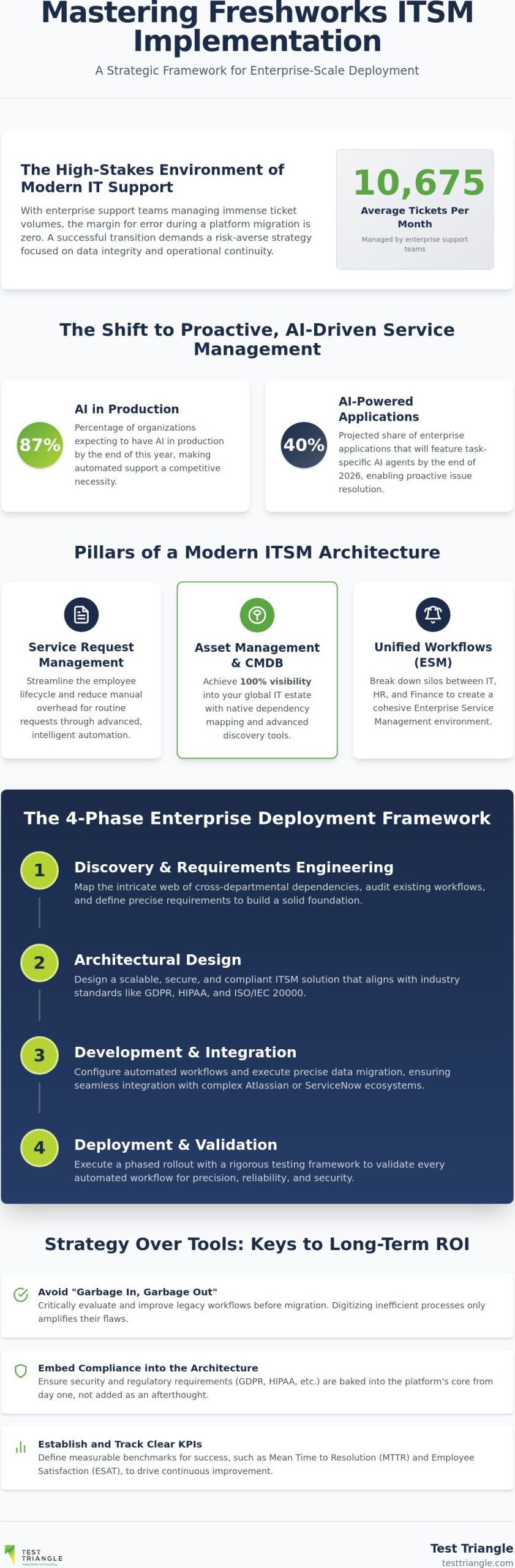
With research indicating that enterprise support teams now manage an average of 10,675 tickets monthly, the margin for error during a platform migration has effectively vanished. You’ve likely felt the tension between the necessity of modern automation and the legitimate fear that a Freshworks ITSM implementation might disrupt your existing Atlassian or AWS ecosystems. It’s a valid concern for strategic leaders who prioritize data integrity and operational continuity above all else. We recognize that a successful transition requires more than just a software configuration; it demands a steady hand to manage the evolution of your digital backbone.

This guide provides the authoritative framework you need to master these complexities and secure a substantial long-term ROI. By connecting rigorous deployment methodologies with specific architectural actions, we’ll demonstrate how to achieve a risk-averse transition that reduces manual overhead through intelligent, automated workflows. You’ll receive a comprehensive preview of the steps required to build a future-proof ITSM architecture that scales with your global ambitions. From navigating the new “Dew” user interface to leveraging native ITAM discovery tools, we’ll ensure your organization moves from legacy constraints to a state of empowered, scalable growth.

Key Takeaways

  • Understand why global enterprises view Freshworks deployment as a strategic realignment of IT services rather than a mere technical migration.
  • Master a phased implementation roadmap designed to identify cross-departmental dependencies and ensure absolute operational stability during the transition.
  • Secure your digital infrastructure by executing a Freshworks ITSM implementation that guarantees data integrity across complex Atlassian or ServiceNow ecosystems.
  • Implement a rigorous testing framework to validate automated workflows, ensuring that every integration performs with precision, reliability, and security.
  • Discover the value of a strategic partnership in achieving long-term ROI through continuous platform optimization and expert managed services.

Freshworks ITSM implementation represents a fundamental shift in how global organizations harmonize their technology stacks with overarching corporate objectives. In 2026, this process has evolved beyond simple ticket routing into a sophisticated realignment of IT services and business goals. Enterprises are increasingly abandoning rigid legacy systems in favor of Freshworks because it facilitates a seamless transition to AI-driven service management. This migration isn’t merely about adopting new software; it’s a strategic catalyst for broader digital transformation that empowers teams to move from reactive troubleshooting to proactive, automated employee experiences. By prioritizing stability, precision, and scalability, we help organizations turn their service desk into a high-performance engine of organizational progress.

The shift toward proactive support is driven by the rapid maturation of agentic AI. With 87% of organizations expecting to have AI in production by the end of this year, the ability to autonomously handle IT support tasks has become a competitive necessity. Freshworks provides the architecture required to deploy these task-specific AI agents, which are projected to be featured in 40% of enterprise applications by the close of 2026. This evolution allows IT departments to anticipate infrastructure bottlenecks before they impact the end user, ensuring that digital services remain resilient in a high-volume environment where support teams often handle over 10,000 tickets monthly.

The Core Components of Modern ITSM

A robust IT Service Management (ITSM) framework rests upon several foundational pillars that ensure operational stability and service excellence. While incident, problem, and change management remain the essential mechanisms for maintaining uptime, modern implementation also prioritizes the following areas:

  • Service Request Management: Streamlining the employee lifecycle through advanced automation that reduces manual overhead for routine requests.
  • Asset Management and CMDB: Achieving 100% visibility into the global IT estate through native application dependency mapping and advanced discovery tools.
  • Unified Workflows: Breaking down silos between IT, HR, and finance to create a cohesive Enterprise Service Management (ESM) environment.

Why Enterprise Strategy Supersedes Tool Configuration

Success in a Freshworks ITSM implementation is rarely determined by the software’s technical features alone, but rather by the strategic foresight applied before the first configuration step. Migrating legacy workflows without critical evaluation often leads to a “garbage in, garbage out” scenario, where inefficient processes are simply digitized rather than improved. We advocate for aligning platform capabilities with specific industry compliance standards, such as GDPR, HIPAA, or ISO/IEC 20000, to ensure that security and regulatory requirements are baked into the architecture. Establishing clear KPIs, such as Mean Time to Resolution (MTTR) and employee satisfaction (ESAT), provides a measurable benchmark for success. For organizations seeking to optimize these outcomes, engaging with specialized IT Service Management Services ensures that the deployment remains a disciplined, high-value evolution.

A Strategic Framework for Enterprise-Grade Deployment

Executing a successful Freshworks ITSM implementation requires a disciplined, phased approach that prioritizes long-term operational stability over rapid, superficial setup. By adopting a structured framework of Discovery, Design, Development, and Deployment, organizations can systematically address the complexities of modern digital infrastructure while ensuring that technical rigor never compromises the user experience. This methodology transforms the migration process into a series of intentional, value-driven actions that mitigate risk and maximize ROI. For global enterprises, this phased roadmap serves as a blueprint for institutional maturity, moving beyond basic tool configuration to establish a resilient service architecture.

Phase 1: Discovery and Requirements Engineering

Before any configuration occurs, a deep investigative phase is essential to map the intricate web of cross-departmental dependencies that define your service landscape. This involves conducting comprehensive stakeholder interviews to uncover hidden friction points in current service delivery that simple software settings often overlook. We recommend auditing existing data structures with extreme precision to ensure a validated migration that maintains historical audit trails. This level of rigor is a hallmark of professional IT Service Management, where the goal is to align technology with the specific operational needs of the institution. During this phase, the integration landscape is also defined, identifying exactly how Freshworks will interact with existing Atlassian, AWS, or ServiceNow environments to prevent data silos.

Phase 2: Workflow Design and Automation Strategy

Designing the “To-Be” state allows organizations to eliminate redundant manual steps and replace them with intelligent, automated sequences. Leveraging Freddy, the Freshworks AI engine, enables the creation of sophisticated incident routing and self-service capabilities that handle the increasing ticket volumes reported by 34% of support teams. With the May 5, 2026, update introducing advanced approval chains and groups, we can now build robust governance matrices that maintain security without introducing operational bottlenecks. Utilizing the latest sandbox environments, which were upgraded in May 2026 for enhanced performance and stability, allows for iterative development and stakeholder feedback in a secure environment before any changes hit production.

To ensure a seamless transition, we advocate for a phased “pilot” deployment that targets specific departments before a full-scale rollout. This strategy allows for real-world validation in a controlled environment, providing the peace of mind that comes from a risk-averse transition. If you’re looking to secure your digital backbone through an expert-led transition, our team is ready to discuss your specific implementation requirements.

Data Migration and Cross-Platform Integration Excellence

Achieving data integrity during a Freshworks ITSM implementation is a non-negotiable requirement for global enterprises that rely on historical audit trails for regulatory compliance and operational continuity. We treat migration as a high-stakes strategic operation where the objective is zero data loss while transitioning from legacy systems. This process requires a deep understanding of how information flows across your entire digital ecosystem to maintain continuity and security. By establishing a rigorous, reliable, and resilient validation framework, we ensure your institutional knowledge remains intact during the transition to an AI-driven platform. Our methodology prioritizes precision, performance, and progress to safeguard your data assets through every stage of the evolution.

Integrating with Atlassian and ServiceNow

In complex multi-platform environments, maintaining synergy between development and support teams is essential for operational efficiency. Integrating Freshservice with Atlassian tools like Jira Software allows for a unified view of the product lifecycle, where bug reports automatically sync with development backlogs. This creates a closed-loop system that accelerates resolution times and improves collaboration across technical silos. For organizations navigating phased enterprise mergers, bridging the gap between Freshworks and ServiceNow ensures that service delivery remains uninterrupted while platforms are consolidated. Specialized Atlassian implementation services can complement your Freshworks strategy by ensuring these two powerhouses work in perfect harmony rather than in isolation.

The Role of AWS in ITSM Scalability

Scalability is a cornerstone of enterprise-grade service management, and leveraging AWS cloud infrastructure provides the performance needed to support global operations. Optimizing platform performance through strategic AWS cloud migration allows organizations to handle spikes in ticket volume without any degradation in service quality. This regional hosting approach also ensures compliance with global data residency requirements, which is critical for highly regulated industries like finance or healthcare. By connecting Freshworks to enterprise security operations for real-time monitoring and logging, we create a transparent, secure, and future-proof ITSM environment. This integration ensures your service management platform isn’t just a support tool, but a vital component of your broader DevOps and security pipelines that facilitates faster incident resolution and systemic improvement.

Expert Freshworks ITSM Implementation: A Complete Guide

Quality Assurance: The Critical Pillar of ITSM Success

A sophisticated Freshworks ITSM implementation is often undermined by a lack of architectural validation, where organizations prioritize software configuration over rigorous quality assurance. While legacy approaches treat testing as a final, perfunctory step before go-live, we view it as a continuous strategic pillar that ensures every workflow, integration, and automated sequence performs with absolute precision. This disciplined approach to quality reduces the risk of service downtime and protects the integrity of your digital infrastructure. By establishing a comprehensive testing framework, global enterprises can move forward with the confidence that their service management platform is resilient, reliable, and ready for large-scale operation.

Validation and Software Testing Protocols

In the complex multi-tool environments we’ve previously discussed, System Integration Testing (SIT) becomes the primary mechanism for ensuring that data flows seamlessly between Freshworks, Atlassian, and AWS ecosystems. This phase validates that the API calls and webhooks powering your cross-platform workflows don’t fail under real-world conditions. Equally critical is User Acceptance Testing (UAT), which ensures that the frontline agents find the new “Dew” user interface, mandatory as of January 30, 2026, to be intuitive and efficient. Utilizing professional manual testing services is essential here to validate human-centric workflows and identify complex edge cases that automated scripts might overlook. This qualitative feedback loop ensures that the platform meets the practical needs of your global support teams.

Continuous Quality in ITSM

Maintaining a high-performance ITSM environment requires more than a successful initial rollout; it demands a long-term commitment to continuous quality. As Freshworks introduces updates, such as the May 5, 2026, enhancement to approval chains, regression testing becomes vital to prevent new configurations from disrupting existing core services. Implementing software test automation services allows for rapid, repeatable validation of the platform during every update cycle or feature rollout. This automation ensures that your service desk maintains peak speed even under heavy global load, providing the performance stability required for enterprise-grade service management. By fostering a “Culture of Quality,” we help you transition from a state of reactive troubleshooting to one of empowered, scalable growth where your ITSM architecture is always optimized for success.

Ensuring your platform is bug-free and fully optimized is the final step in a truly strategic deployment. If you’re ready to validate your service management architecture with a rigorous testing framework, contact our quality assurance experts today.

Maximizing ROI Through Strategic Implementation Partnership

A successful Freshworks ITSM implementation marks the beginning of a long-term strategic journey rather than the conclusion of a technical project. The complexity of managing these systems is reflected in Freshworks’ Q1 2026 financials, which show a 29% year-over-year increase in customers with an Annual Recurring Revenue exceeding $100,000. This growth highlights a clear trend: global enterprises are moving beyond basic setups to seek sophisticated, high-value configurations. Achieving a sustainable return on investment requires a disciplined approach that balances immediate operational stability with future-proof scalability. By positioning a strategic partner as a steady hand, organizations can reduce their total cost of ownership and ensure that their ITSM architecture remains a catalyst for organizational progress.

Long-Term Support and Managed Services

The transition from “go-live” to “steady-state” is a critical phase where many organizations lose momentum. Continuous platform optimization is essential because the technological landscape moves quickly. For instance, the July 9, 2026, deprecation of the fdk test command in favor of fdk unit-test demonstrates how developer tools and underlying architectures are constantly shifting. Professional managed outsourcing services provide the 24/7 oversight necessary to navigate these updates without disrupting service delivery. This partnership model allows for strategic technology roadmapping, ensuring that your Freshworks environment evolves alongside your business requirements and leverages new features like agentic AI as they mature.

Securing the Right Talent for ITSM

Addressing the talent gap is often the most significant hurdle in maintaining a high-performance service desk. Specialized industries, such as life sciences, require technical resources who understand both the software and the regulatory environment. Utilizing IT staffing agencies for the pharmaceutical industry ensures that you have access to compliant, expert talent capable of managing complex data residency and security protocols. Flexible staffing models, including offshore and contract placements, allow implementation projects to scale quickly without the overhead of permanent hires. This targeted approach to talent acquisition bridges the skills gap and empowers your internal teams to focus on high-level digital transformation while experts manage the technical rigor of the Freshworks ITSM implementation.

Ultimately, the value of an expert-led delivery model lies in its ability to deliver precision, performance, and peace of mind. As your organization grows, a reliable collaborator provides the institutional maturity needed to operate across diverse, highly regulated sectors. We remain committed to your long-term success, offering the technical depth and strategic visionary perspective required to turn your IT service management into a competitive advantage.

Securing Your Digital Future Through Strategic Service Evolution

Transitioning to a modern service architecture requires a disciplined fusion of technical rigor and strategic foresight. We’ve explored how a phased roadmap, anchored by exhaustive discovery and meticulous quality assurance, transforms the risk of service disruption into an opportunity for systemic improvement. By integrating your service management environment with existing Atlassian and AWS ecosystems, you establish a resilient, high-performance infrastructure that scales with your global ambitions. This methodical approach ensures that your Freshworks ITSM implementation isn’t just a technical deployment, but a cornerstone of your long-term digital maturity and operational stability.

As a reliable collaborator with a global presence across Europe, North America, and Asia, we bring deep expertise in highly regulated sectors like Pharma and Finance to every engagement. Our strategic partnerships with Atlassian, ServiceNow, and AWS allow us to manage complex digital infrastructures with the precision your enterprise demands. Optimize your IT service delivery with Test Triangle’s strategic ITSM consulting. We’re ready to help you navigate the complexities of technological evolution and achieve the scalable growth your organization deserves.

Frequently Asked Questions

What is the typical timeline for a Freshworks ITSM implementation?

Standard deployments in 2026 range from two to four weeks for straightforward configurations; however, complex global migrations typically require three to six months to complete. This duration accounts for the rigorous discovery and requirements engineering phases necessary to map intricate cross-departmental dependencies before the first configuration step occurs.

Can Freshworks integrate with my existing Atlassian Jira environment?

Yes, Freshworks maintains native synergy with the Atlassian ecosystem to provide a unified view of development and support lifecycles. This integration allows for automated synchronization between Jira Software and Freshservice, which ensures that technical teams remain aligned and informed without the need for manual data entry or duplicate ticketing.

How does Freshservice differ from legacy ITSM tools during migration?

Freshservice prioritizes a configuration-first approach that significantly reduces the reliance on the lengthy, custom development cycles common in legacy systems. This modern architecture facilitates a more agile Freshworks ITSM implementation by replacing rigid coding with flexible, automated workflows that are designed to scale with your digital infrastructure.

What are the key risks of a DIY ITSM implementation?

The primary risks of a DIY approach include the creation of technical debt through inefficient workflow design and the potential for significant data loss during the transition. Without professional oversight, organizations often digitize existing process flaws, which leads to a “garbage in, garbage out” scenario that compromises long-term operational stability and ROI.

Is data migration from ServiceNow to Freshworks complex?

Migrating from ServiceNow is a high-stakes operation that requires a strategic approach to maintain historical audit trails and complex data structures. While the technical transfer is manageable, the challenge lies in re-mapping sophisticated approval chains and dependencies to ensure absolute operational continuity and compliance with global data residency requirements.

How does Freddy AI improve the implementation ROI?

Freddy AI improves ROI by transitioning the service desk from reactive troubleshooting to proactive, autonomous task management. By leveraging agentic AI to handle routine requests, organizations can effectively manage the high ticket volumes reported by support teams without increasing headcount, thereby reducing the total cost of ownership.

Do I need a dedicated team to manage Freshworks after implementation?

While a dedicated internal team is an option, many global enterprises prefer utilizing managed services for ongoing platform optimization and 24/7 support. This partnership model ensures your Freshworks ITSM implementation evolves with your business requirements while addressing the common talent gap found in specialized IT service management.

What testing is required before a Freshworks go-live?

A successful go-live requires a rigorous framework that includes System Integration Testing (SIT), User Acceptance Testing (UAT), and comprehensive performance testing. These protocols validate that every integration performs under peak global load and that the user interface meets the practical needs of frontline agents across all regions.

Paul Guy

Article by

Paul Guy

Paul serves as the Marketing Director at Test Triangle, where he leads a global team in driving growth through strategic B2B marketing and brand communications. With a strong emphasis on measurable outcomes and sustainable performance, he plays a pivotal role in aligning marketing functions to enhance customer engagement and accelerate business impact. Under his leadership, marketing initiatives have consistently delivered significant returns on investment, elevated brand visibility, and strengthened the company's presence across key markets.


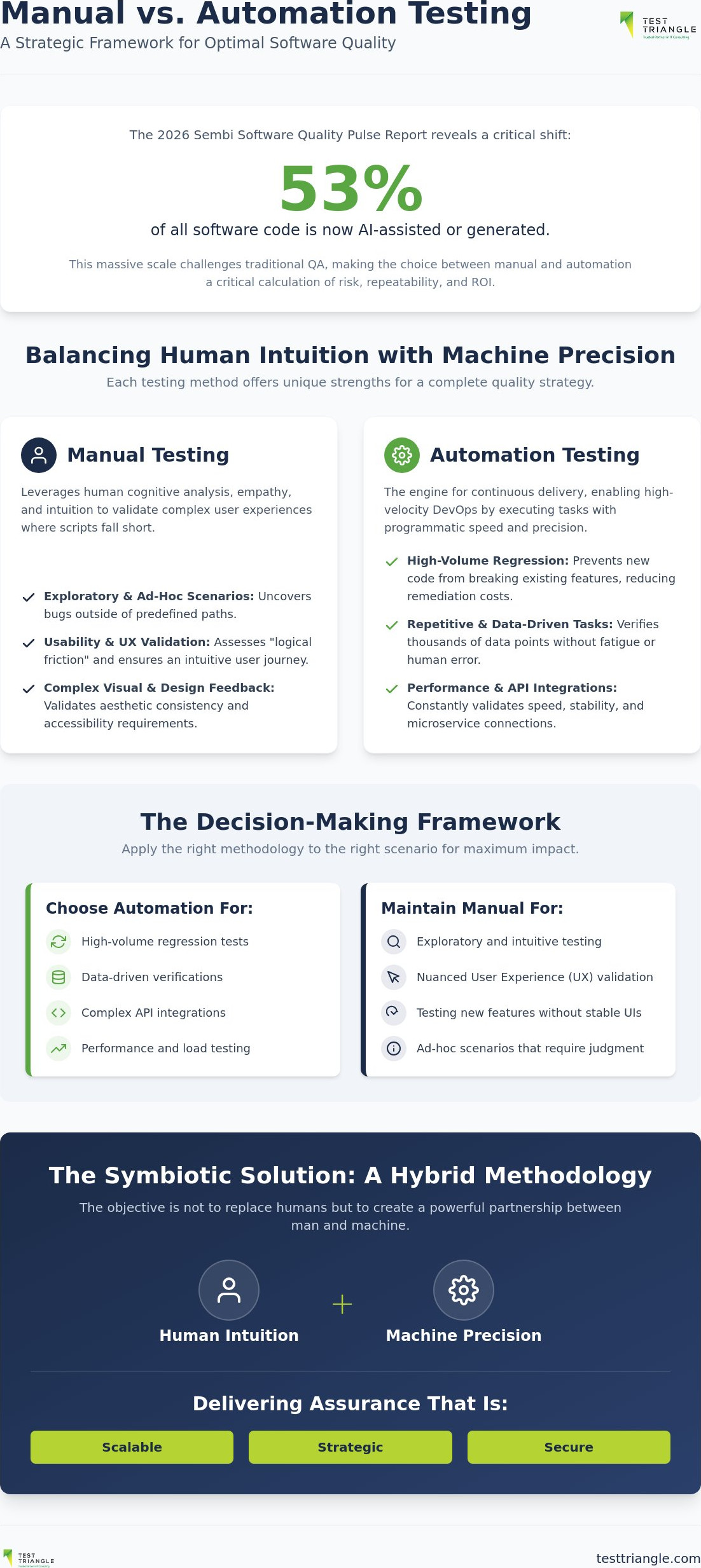
With 53% of all software code now being AI-assisted or generated according to the 2026 Sembi Software Quality Pulse Report, the sheer volume of digital output has reached a threshold where traditional quality assurance methods often falter under the weight of sheer scale. You likely recognize the mounting pressure of escalating regression costs and the persistent bottleneck of slow release cycles that threaten your organization’s competitive edge in a hyper-accelerated market. Determining exactly when to choose automation testing over manual is no longer a matter of simple preference; it’s a critical calculation of risk, repeatability, and ROI that defines modern digital maturity. This guide provides a sophisticated decision-making framework designed to help you balance human intuition with machine precision for optimal software quality and operational stability. By aligning your testing methodology with specific business outcomes, you’ll master a hybrid strategy that ensures faster time-to-market and reduced bug rates through precision, performance, and partnership.

Key Takeaways

  • Align your quality assurance strategy with the 2026 technological landscape by integrating AI-augmented tools that bridge the gap between programmatic precision and human intuition.
  • Identify the high-volume, repetitive regression scenarios where transitioning to automated scripts effectively mitigates human error and secures your release schedule.
  • Master the “Automation Break-even Point” formula to determine when to choose automation testing over manual based on a comprehensive analysis of initial investment, maintenance, and long-term ROI.
  • Protect your user experience by maintaining manual testing protocols for exploratory and ad-hoc scenarios that require the sophisticated judgment only a “human-in-the-loop” can provide.
  • Implement a hybrid delivery model that leverages an adaptable approach to service delivery, ensuring your digital infrastructure remains scalable, strategic, and secure.

Manual vs. Automation: Balancing Human Intuition with Machine Precision

The shift from manual execution to programmatic verification represents more than a tactical change in tooling; it signals a fundamental evolution in how enterprises perceive quality. By moving beyond the binary choice of “manually clicking” versus “writing code,” sophisticated organizations now treat the selection process as a strategic technology roadmapping exercise. In this 2026 digital ecosystem, where AI-augmented tools increasingly blur the distinction between human-led and machine-led processes, the core challenge is determining when to choose automation testing over manual to maximize both coverage and capital efficiency. This decision necessitates a disciplined evaluation of where human intuition provides a competitive advantage and where machine precision secures the release pipeline.

The Enduring Value of Manual Assurance

Human cognitive analysis remains an irreplaceable pillar of high-standard software delivery, particularly when validating complex usability and accessibility requirements that scripts simply cannot interpret. While machines excel at binary outcomes, they lack the empathy required to validate nuanced user experience (UX) benchmarks. Professional testers apply a layer of critical judgment that identifies “logical friction”—those subtle design flaws that technically function but practically frustrate the end-user. For a deeper dive into these human-centric methodologies, our Manual Testing 2026 Guide outlines how exploratory testing provides the peace of mind that automated scripts often miss by focusing solely on predicted paths.

The Strategic Mandate for Automation

The transition to Test automation serves as the primary engine for continuous delivery, enabling teams to operate within the high-velocity requirements of modern DevOps environments. By implementing a “Test Early, Test Often” methodology, organizations can identify regressions at the point of injection, which drastically reduces the cost of remediation. This systemic improvement is essential for maintaining operational stability as application complexity grows. Establishing a clear threshold for when to choose automation testing over manual allows leadership to allocate resources with surgical precision, ensuring that expensive human capital isn’t wasted on rote verification. Automating these predictable paths allows your engineering talent to focus on high-value exploratory work, ensuring that speed never comes at the expense of security or reliability.

Ultimately, the objective is to create a symbiotic relationship between man and machine. This hybrid approach ensures that your digital infrastructure is managed with the expertise required for large-scale technological evolution. By combining technical rigor with human insight, you achieve a level of assurance that is scalable, strategic, and secure.

Prime Scenarios for Automation: Accelerating Velocity and Verifying Reliability

The decision regarding when to choose automation testing over manual often rests on the physical and cognitive limitations of human testers. While human intuition is superior for identifying aesthetic inconsistencies, it remains susceptible to fatigue during high-volume, repetitive tasks. In the current enterprise landscape, where 72% of organizations now utilize test automation to manage growing complexity, scripts provide the unwavering precision necessary to verify thousands of data points without the risk of oversight. This programmatic rigor is particularly vital for data-driven testing and complex API integrations, where the interplay of microservices requires constant, simultaneous validation that exceeds manual capacity.

Adhering to Best Practices In Quality Assurance involves recognizing that automation is not a replacement for human thought but a tool for systemic improvement. By delegating rote verification to a machine, organizations empower their QA teams to focus on high-value exploratory work. This strategic allocation of resources ensures that your digital infrastructure remains resilient as it scales, providing a steady hand in an increasingly volatile technological environment.

Regression Testing and CI/CD Integration

Regression testing has emerged as the primary candidate for automation in 2026, serving as a protective shield for core functionality during rapid update cycles. By integrating automated suites directly into your CI/CD pipelines, you ensure that every code commit is validated against established benchmarks before it reaches production. Our Software Test Automation Services focus on creating these seamless feedback loops, utilizing deep integrations with the Atlassian and ServiceNow ecosystems. This approach ensures that reporting is transparent, actionable, and aligned with your broader IT service management goals, effectively reducing post-release bug rates through continuous, programmatic oversight.

Performance and Load Benchmarking

Manual testing protocols are fundamentally incapable of simulating the stress of 10,000 concurrent enterprise users interacting with a system. Automation provides the only viable path for performance, load, and stress testing, allowing organizations to identify systemic bottlenecks that could lead to catastrophic downtime and lost revenue. By executing these high-load scenarios in controlled environments, you gain the empirical data needed to optimize infrastructure and ensure a seamless user experience under any conditions. If you are currently evaluating your existing QA roadmap, you may wish to connect with our strategic consultants to discuss how to implement a scalable, secure performance framework that protects your long-term operational stability.

The Case for Manual Testing: Navigating Complexity and Validating User Experience

While the previous sections established the necessity of machine precision for high-volume tasks, a strategic framework must also account for the inherent limitations of scripted logic. Determining when to choose automation testing over manual is often about identifying where human oversight provides the final layer of institutional security. In highly regulated sectors like pharmaceuticals, manual validation serves as a critical compliance gate. Scripts verify if a field accepts a specific data type, but they cannot assess the clinical context or the procedural integrity required by global health authorities. This “Human-in-the-Loop” necessity ensures that complex business logic remains aligned with both technical specifications and regulatory mandates, providing a level of assurance that is perceptive, purposeful, and precise.

During early-stage product development, where user interfaces remain volatile and requirements shift rapidly, the cost of maintaining automated scripts often outweighs their utility. Human testers adapt instantly to these changes, providing immediate feedback that machines cannot replicate. Industry leaders frequently highlight various reasons for manual testing, particularly its unique capacity to assess user journeys and inclusivity through a lens of critical judgment. This approach allows organizations to manage risk while fostering the innovation necessary for successful digital evolution.

Exploratory Testing and Creative Problem Solving

Exploratory testing functions as a high-level cognitive hunt for unscripted defects that traditional automation typically ignores. Professional testers use their intuition to simulate erratic user behaviors, identifying “edge case” bugs that exist outside the predicted paths of a script. This methodology is essential for digital transformation services, where the integration of legacy systems with modern cloud architectures often creates unpredictable failure points. By applying creative problem-solving techniques, testers uncover deep-seated architectural flaws, ensuring that your digital infrastructure remains stable under real-world conditions.

Usability and Accessibility (a11y) Audits

Machines are fundamentally incapable of feeling if a user interface is intuitive or frustrating. While automation can check for the presence of alt-text, it cannot determine if that text provides meaningful context for a visually impaired user. Manual testing addresses these legal and ethical mandates by employing human auditors to validate accessibility against global standards. This ensures that your software is not only compliant with regulations but also provides a seamless experience for every user. By prioritizing human-centric validation, you demonstrate a commitment to quality that transcends simple code verification, positioning your brand as a reliable and responsible global partner.

Calculating the ROI: A Decision-Making Framework for Enterprise QA

For executive leadership and technical managers alike, the decision regarding when to choose automation testing over manual is fundamentally a capital allocation exercise. Achieving optimal software quality requires a disciplined understanding of the “Automation Break-even Point,” which occurs when the cumulative cost of manual execution—calculated as the sum of labor hours, hourly rates, and execution frequency—surpasses the total cost of automated ownership. While manual testing offers lower entry costs, it creates a linear expense model that scales poorly as application complexity increases. Conversely, automation requires a higher initial investment in tool licensing, cloud infrastructure, and specialized staffing, but it eventually flattens the cost curve through repeatability and speed.

Neglecting this transition often leads to significant “Technical Debt,” where the hidden costs of human error and delayed release cycles compound over time. To avoid these systemic bottlenecks, organizations must evaluate their projects through a qualitative lens, considering the lifespan of the application and the stability of its core features. A project intended to remain in production for more than six months, or one requiring weekly regression cycles, almost always mandates a shift toward programmatic verification to ensure long-term operational stability.

The Cost of Maintenance vs. The Cost of Execution

Analyzing the time-and-materials cost of manual testing reveals a persistent drain on resources as teams repeat the same verification steps across dozens of development cycles. While professional software test automation services require a sophisticated technical foundation, they eliminate the fatigue-induced errors that characterize high-volume manual work. Automation ROI is formally defined as the specific juncture where the cumulative expenses of manual labor across multiple release cycles exceed the total cost of automated ownership, including initial development and ongoing script maintenance. By identifying this point early, you can transition from a reactive posture to a proactive, scalable quality strategy.

Risk-Based Testing Allocation

Effective budget distribution relies on the “Testing Pyramid” methodology, which prioritizes automation for high-risk, high-frequency features while reserving manual oversight for the UI-heavy top layer. This strategic focus ensures that your most critical business logic is validated continuously without inflating the QA budget. Our IT consulting experts specialize in defining these roadmaps, helping global enterprises determine exactly when to choose automation testing over manual to protect their digital infrastructure. To align your testing methodology with your broader business objectives, we invite you to request a strategic QA audit with our senior advisors today.

When to Choose Automation Testing Over Manual: A Strategic Framework for 2026

Test Triangle’s Hybrid Methodology: Delivering Scalable, Strategic, and Secure Assurance

Test Triangle functions as a high-level corporate partner for global enterprises navigating the complexities of modern quality assurance. We recognize that the strategic decision regarding when to choose automation testing over manual is rarely a binary choice; it’s a sophisticated allocation of diverse resources based on risk and ROI. Our methodology emphasizes an adaptable approach to service delivery, ensuring that your digital infrastructure is managed with the precision and performance required for sustained growth. By integrating deep expertise in industry-leading platforms such as Atlassian and ServiceNow, we create unified QA workflows that bridge the gap between rapid development cycles and long-term operational stability.

This hybrid strategy allows organizations to move beyond the limitations of a single methodology. By combining human intuition with machine precision, we provide a steady hand in a fast-changing technological landscape. This approach focuses on risk reduction and the empowerment found in large-scale technological evolution, positioning your company as a leader in digital maturity. Our role is to act as a reliable collaborator, deeply invested in your long-term success and the stability of your complex digital environments.

Managed Outsourcing and Staffing Solutions

Securing the specialized talent required for advanced programmatic verification remains a significant hurdle for organizations facing budget constraints. Our staffing solutions provide immediate access to the technical expertise needed to build and maintain robust automation frameworks. For enterprises seeking a more comprehensive partnership, our managed outsourcing services offer long-term QA stability through a combination of on-site leadership and remote offshore resources. This hybrid staffing model allows you to scale your testing efforts with surgical precision, ensuring that your budget remains aligned with your current project demands. It provides the peace of mind that comes from knowing your mission-critical systems are managed by a disciplined, versatile, and globally-minded team.

Strategic Digital Transformation

Quality assurance serves as the foundational pillar for successful digital transformation services. We don’t view testing in isolation. Instead, we integrate security and performance validation directly into your automated pipelines to mitigate risk at every stage of the software lifecycle. This holistic view ensures that your technological evolution is not only fast but also secure and resilient. By helping you determine exactly when to choose automation testing over manual, we empower your organization to focus human expertise on innovation while machines handle the rote verification tasks. This synergy defines a mature digital enterprise that is prepared for the future.

The path to software excellence requires a collaborator who understands that quality is a continuous journey of systemic improvement. We invite you to partner with Test Triangle for a strategic QA assessment and discover how our hybrid methodology can transform your testing from a bottleneck into a competitive advantage.

Securing Your Digital Future Through Strategic Assurance

Mastering the transition from manual execution to programmatic verification is essential for maintaining a competitive edge in the 2026 digital ecosystem. By applying a disciplined ROI framework, you can determine exactly when to choose automation testing over manual to ensure your quality assurance remains scalable, strategic, and secure. This hybrid methodology allows your organization to protect core digital infrastructures through machine precision while reserving human ingenuity for the complex user experience challenges that define market leadership. As an Atlassian Gold Solution Partner with ISO 9001:2015 certified quality management, Test Triangle provides the institutional maturity required to manage complex global infrastructures. Our delivery centers across Europe, North America, and Asia offer a versatile, globally-minded approach to service delivery that adapts to your specific operational needs. We remain a steady hand in a fast-changing landscape, empowering your teams to achieve faster time-to-market without compromising reliability. Consult with our QA Strategic Visionaries Today to align your testing roadmap with your long-term business objectives. We’re ready to help you transform your QA from a cost center into a powerful engine for organizational growth.

Frequently Asked Questions

Is automation testing always better than manual testing?

Automation is not inherently superior; rather, its value is context-dependent. While it excels at high-volume regression and performance benchmarking, manual testing remains the definitive choice for exploratory, usability, and ad-hoc scenarios requiring human intuition. The strategic decision of when to choose automation testing over manual should be based on the project’s specific requirements for repeatability versus creative analysis.

How do I calculate the ROI of switching to automated testing?

ROI is determined by identifying the “Automation Break-even Point,” where the total cost of automated ownership, including initial scripting, tool licensing, and infrastructure, becomes lower than the cumulative expense of manual execution over multiple cycles. You must factor in the hourly rate of testers and the frequency of test execution. This quantitative approach ensures that your quality assurance budget is allocated with surgical precision to maximize long-term operational stability.

Can automation testing completely replace manual testers in 2026?

Total replacement is neither feasible nor desirable in the 2026 digital landscape. While AI-augmented tools manage a significant portion of code generation, human oversight is essential for validating complex business logic and ensuring accessibility compliance. A hybrid methodology creates a symbiotic relationship where machines handle rote verification while human experts focus on high-level strategy and exploratory bug hunting. This balance provides the peace of mind derived from comprehensive, multi-layered assurance.

What are the best test cases to automate first?

Priority should be given to stable, high-volume regression suites and smoke tests that protect core functionality during rapid release cycles. Additionally, data-driven scenarios and complex API integrations that require thousands of permutations are ideal candidates for early automation. By focusing on these repetitive, fatigue-prone tasks first, you immediately reduce the risk of human error and accelerate your time-to-market. This targeted execution serves as the foundation for a scalable, strategic testing framework.

What is the cost of maintaining automated test scripts?

Maintenance costs typically account for a significant portion of the total automation budget, often varying based on the volatility of the application’s user interface. As software evolves, scripts must be updated to reflect architectural changes, which requires continuous technical oversight. Selecting resilient frameworks like Playwright or Selenium 4 can help mitigate these expenses. Understanding these hidden costs is vital when evaluating when to choose automation testing over manual for long-term projects.

How does DevOps consulting impact the choice between manual and automated testing?

Professional DevOps consulting facilitates the seamless integration of quality gates directly into your CI/CD pipeline, which naturally shifts the balance toward automated verification. This strategic alignment ensures that testing isn’t a bottleneck but a continuous feedback loop that supports high-velocity delivery. Consultants help identify the optimal “Testing Pyramid” structure for your organization, ensuring that automated units and integration tests provide a stable foundation while manual efforts are reserved for high-value validation.

Which industries benefit most from a hybrid testing approach?

Highly regulated sectors, such as pharmaceuticals and financial services, derive significant value from a hybrid approach that combines programmatic rigor with strict human-in-the-loop validation. These industries require the precision of automation for data integrity and the perceptive judgment of manual testers for compliance and risk management. Similarly, complex e-commerce platforms use this duality to balance high-speed backend transactions with an intuitive, empathetic user experience that machines cannot fully evaluate.

What skills do manual testers need to transition to automation?

Transitioning testers must develop proficiency in programming languages such as JavaScript, Python, or Java, alongside a deep understanding of automation frameworks like Playwright or Appium. Beyond coding, they need to master the logic of test architecture and the mechanics of CI/CD integration within ecosystems like Atlassian or ServiceNow. This evolution from manual execution to quality engineering empowers professionals to contribute to large-scale technological progress through the sophisticated application of technical tools.

Paul Guy

Article by

Paul Guy

Paul serves as the Marketing Director at Test Triangle, where he leads a global team in driving growth through strategic B2B marketing and brand communications. With a strong emphasis on measurable outcomes and sustainable performance, he plays a pivotal role in aligning marketing functions to enhance customer engagement and accelerate business impact. Under his leadership, marketing initiatives have consistently delivered significant returns on investment, elevated brand visibility, and strengthened the company's presence across key markets.

With an average of 200 to 400 applications flooding every remote developer opening in 2026, the traditional interview process has become a bottleneck rather than a filter. Learning how to vet remote software engineers effectively is no longer just a recruitment task; it’s a strategic imperative for maintaining digital stability and operational excellence. You’ve likely felt the sting of high turnover when a candidate’s impressive interview performance fails to translate into actual output. This gap, coupled with the increasing complexity of data privacy mandates like the updated CCPA regulations, creates a landscape where hiring mistakes are both costly and risky.

We understand that enterprise growth relies on precision, performance, and partnership. This framework will empower you to master a multi-dimensional vetting strategy designed to secure elite talent while insulating your infrastructure from technical and operational risks. You’ll gain a repeatable process that reduces time-to-hire and ensures every new engineer possesses the remote-first soft skills necessary for long-term success. By prioritizing technical rigor alongside asynchronous communication, you can build a global team that is disciplined, versatile, and secure.

Key Takeaways

  • Replace abstract algorithmic testing with real-world take-home assignments and collaborative pair programming to accurately measure a candidate’s technical precision and practical output.
  • Evaluate critical “Remote-First” soft skills by utilizing written-only interview stages that rigorously test a candidate’s capacity for proactive, asynchronous communication.
  • Learn how to vet remote software engineers effectively through a multi-stage framework that balances technical expertise with operational security and hardware compliance.
  • Mitigate global recruitment risks by implementing standardized identity verification and infrastructure audits for offshore resources to maintain institutional stability.
  • Accelerate your digital transformation by partnering with a strategic collaborator who integrates recruitment outsourcing with technical consulting to deliver scalable, high-quality engineering talent.

The Evolution of Remote Engineering Vetting in 2026

In the current distributed environment, The Evolution of Remote Engineering Vetting in 2026 has transitioned from a simple talent acquisition task into a rigorous, multi-stage risk mitigation process. Global enterprises now recognize that technical proficiency alone is insufficient to guarantee project stability or security compliance. To understand how to vet remote software engineers effectively, leadership must view the process as a comprehensive audit of a candidate’s ability to operate within complex, often asynchronous, digital ecosystems. This shift requires moving beyond “skill-checking” syntax and toward “system-thinking” evaluations that measure how an engineer integrates their output into larger architectural frameworks and team workflows.

The rise of generative AI has fundamentally altered this landscape, as approximately 84% of developers now utilize AI tools in their daily work. This high adoption rate means that traditional coding assessments are often compromised by automated assistance. Modern vetting protocols must therefore pivot to evaluate a candidate’s capacity to validate, debug, and secure AI-generated code rather than merely assessing their ability to write it from scratch. By focusing on these high-level oversight capabilities, organizations ensure they are hiring engineers who provide strategic value rather than those who simply manage tool outputs.

Why Traditional Interviewing Fails Remote Talent

Standard 1:1 interviews often reward office-based charisma and verbal fluency, traits that rarely correlate with the deep work and self-direction required for remote success. High-pressure live coding sessions ignore the reality of modern engineering, where developers thrive in quiet, focused environments with access to documentation and collaborative tools. Relying on an elite university pedigree or past employment at “Big Tech” firms frequently results in a misalignment between interview performance and actual remote output. Remote Vetting Maturity is the institutional capacity to validate technical aptitude, asynchronous communication, and operational security through a standardized, data-driven framework that eliminates subjective bias.

The Risks of Poor Vetting in Distributed Teams

A failed hire in a remote setting carries significant financial and operational burdens, especially when the average U.S. remote software engineer salary has reached $147,524. Beyond the direct loss of capital, unvetted engineers can create “communication black holes” where lack of documentation and proactive updates stall entire sprint cycles. Security and compliance present even greater dangers. With new 2026 regulations like the updated CCPA requiring mandatory cybersecurity audits, hiring offshore talent without rigorous background checks and infrastructure verification can expose an enterprise to severe legal liabilities and data breaches. Integrating professional IT staffing services helps mitigate these risks by providing a steady hand in a fast-changing technological landscape.

Multi-Dimensional Technical Assessment Strategies

Mastering how to vet remote software engineers effectively requires a transition from isolated coding puzzles to holistic technical evaluations. In an era where over 50% of developers interact with AI tools daily, testing for syntax memorization has become obsolete. Instead, enterprises must deploy assessments that simulate the architectural complexity and legacy debt found in actual production environments. This multi-dimensional approach ensures that a candidate’s technical precision aligns with the long-term scalability goals of the organization, providing the peace of mind that comes from a resilient digital infrastructure.

Moving Beyond LeetCode: Real-World Problem Solving

Effective vetting prioritizes take-home assignments that mirror actual sprint tickets rather than abstract algorithmic challenges. These tasks should require the candidate to implement a feature while adhering to specific software and digital assurance testing standards, ensuring they prioritize quality, security, and performance from the first line of code. Clear expectations for documentation are essential; a remote engineer’s ability to explain their logic in writing is just as critical as the code itself. While AI-detection tools can provide useful context, they should be used to facilitate a discussion about how the candidate validates and tests AI-assisted output, reflecting the reality of modern development workflows where human oversight remains the final safeguard.

Code Review and Collaborative Debugging Exercises

Collaborative pair programming sessions within a remote-first tool environment reveal how an engineer navigates existing, complex codebases. This stage allows managers to evaluate the candidate’s ability to identify technical debt and communicate its impact to stakeholders who may not have a technical background. Proficiency with version control and CI/CD pipelines is non-negotiable for distributed teams where automated deployment is the standard for operational efficiency. Observing how a candidate gives and receives constructive feedback during a code review session provides deep insight into their professional maturity and potential for seamless team integration.

Securing top-tier talent involves more than just identifying skill sets; it requires a strategic partner who understands the nuances of global technical recruitment. If you are looking to refine your engineering pipeline with disciplined, versatile, and high-performing experts, you can connect with our strategic consulting team to explore tailored staffing solutions that prioritize stability, precision, and growth.

Evaluating ‘Remote-First’ Soft Skills and Cultural Synchronization

While technical precision forms the foundation of a successful hire, the ability to thrive in a distributed environment depends entirely on a specific subset of “remote-first” soft skills. In the 2026 landscape, where 53% of remote-capable workers operate in hybrid or fully remote models, the primary challenge is no longer just finding talent, but identifying engineers who possess the self-discipline and proactive nature required for isolated deep work. Understanding how to vet remote software engineers effectively involves a shift in focus from synchronous verbal fluency to asynchronous written mastery. This ensures that your global team maintains institutional stability through Clarity, Consistency, and Contribution, even when working across disparate time zones and cultural contexts.

Asynchronous Communication and Documentation Proficiency

In a distributed ecosystem, high-quality documentation is a non-negotiable requirement rather than an optional task. We recommend conducting a “Slack-style” interview stage where candidates must respond to technical prompts and project updates via written chat. This exercise allows hiring managers to gauge the candidate’s written clarity, professional tone, and ability to convey complex ideas without the aid of real-time verbal cues. Reviewing a candidate’s past contributions to README files or internal wikis provides tangible evidence of their “Documentation-First” mentality. By integrating these evaluations into your Atlassian consulting workflows, you can ensure that every new hire contributes to a searchable, scalable knowledge base that empowers the entire organization.

Self-Management and Proactive Problem Ownership

Vetting for high individual agency is critical for teams where direct supervision is minimal and project success relies on personal accountability. During behavioral assessments, focus on questions that reveal how a candidate “unblocks” themselves when they encounter a technical hurdle in isolation. You should look for a “Solve-and-report” mindset, where the engineer takes initiative to find a solution and documents the process, rather than a “Wait-and-see” attitude that leads to costly sprint delays. Red flags often include a lack of curiosity about the broader business impact or a history of relying on synchronous meetings to define daily tasks. An engineer who proactively manages their time and communicates progress without prompting is essential for maintaining the operational efficiency promised to your stakeholders.

Strategic growth in a global market requires engineers who are not only technically gifted but also culturally adaptable. Evaluating a candidate’s awareness of cultural nuances and their ability to synchronize with various time zones prevents the formation of communication silos. This disciplined approach to vetting ensures that your remote engineering team functions as a cohesive, versatile unit capable of driving long-term technological evolution.

Operational Vetting: Security, Compliance, and Infrastructure

Operational vetting serves as the critical final layer of defense for global enterprises looking to maintain digital integrity within a distributed workforce. While previous stages focus on technical aptitude and soft skill synchronization, learning how to vet remote software engineers effectively at the enterprise level demands a rigorous audit of the candidate’s physical and digital workspace. This phase mitigates the risks associated with data breaches and intellectual property theft, ensuring that every addition to your workforce aligns with established institutional standards for security, governance, and compliance.

Data Security and Intellectual Property Protection

Vetting for secure coding practices is no longer an elective skill; it’s a fundamental requirement for protecting sensitive customer data and maintaining the peace of mind derived from risk reduction. During this stage, managers must verify the candidate’s understanding of vulnerability management and encryption protocols to ensure alignment with global standards like GDPR and the 2026 CCPA updates. Implementing strict NDAs and IP assignment agreements before sharing any proprietary codebase is essential for long-term stability. Organizations can utilize IT Service Management solutions to establish secure remote access protocols, providing the oversight necessary to monitor resource activity without compromising the speed of digital transformation.

Verifying Remote Infrastructure and Tool Proficiency

A candidate’s technical brilliance is effectively neutralized if their remote infrastructure lacks the stability required for high-load engineering tasks. This requires a formal verification of internet redundancy, hardware security, and the ability to operate within secure virtual desktop environments or encrypted VPNs. Proficiency with industry-standard platforms is equally vital. Assessing a candidate’s familiarity with Atlassian implementation ensures they can navigate complex project tracking and documentation workflows from day one. This practical verification confirms that the engineer possesses the “tools of the trade” necessary for scalable growth in a fast-changing technological landscape.

Beyond the hardware, identity verification remains a cornerstone of offshore recruitment, especially as transparency obligations under the EU AI Act take full effect in August 2026. Conducting thorough background checks and verifying professional credentials through official channels protects the organization from the “black hole” effect of unvetted talent. By treating operational vetting as a strategic audit rather than a mere formality, technical leaders can build teams that are not only productive but also resilient and compliant. To ensure your engineering pipeline meets these rigorous security benchmarks, consult with our recruitment experts to implement a secure, globally-minded staffing strategy.

How to Vet Remote Software Engineers Effectively: The 2026 Enterprise Framework

Scaling Your Remote Engineering Team with Test Triangle

Scaling a distributed workforce in 2026 requires more than just a high volume of candidates; it demands a disciplined approach to talent integration that aligns with your institutional goals. While the previous sections outlined the complexities of technical and operational audits, executing this framework internally can strain HR resources and delay critical project timelines. Test Triangle provides a sophisticated alternative by offering staffing solutions that function as an extension of your own leadership team. We don’t just provide resources. We deliver strategic partners who are pre-vetted for technical precision and remote-first synchronization, ensuring your digital infrastructure remains resilient during periods of rapid growth.

Our methodology ensures that every engineer is equipped to integrate seamlessly into your established DevOps Consulting workflows. By combining deep technical consulting with recruitment expertise, we bridge the gap between initial hiring and long-term value creation. This dual approach allows your organization to maintain operational efficiency while pursuing large-scale digital transformation. When you understand how to vet remote software engineers effectively through a professional partner, you gain the freedom to focus on high-level strategy while we manage the intricacies of talent validation and technical alignment.

Our Managed Outsourcing and Staffing Methodology

Our proprietary vetting process exceeds standard recruitment by focusing on Precision, Performance, and Partnership. We leverage a global footprint to identify niche engineering talent across any time zone, ensuring that your team maintains 24/7 momentum without the friction of cultural or communication silos. Whether you require contract-based expertise for a specific project, remote/offshore teams for cost-efficiency, or permanent placements for long-term stability, our flexible staffing models adapt to your specific operational needs. Every candidate undergoes a rigorous pre-vetting phase that includes technical simulations and an audit of their remote-readiness, providing you with a shortlist of only the most qualified professionals.

From Vetting to Value: Ensuring Long-Term Retention

The journey doesn’t end once the contract is signed. We prioritize the long-term success of your engineering team by providing continuous performance monitoring and support, which significantly reduces the turnover risks common in remote roles. By handling the administrative burden of global compliance, payroll, and the evolving 2026 data privacy regulations, we empower your technical managers to focus on innovation rather than paperwork. This comprehensive support structure ensures that your remote engineers remain engaged, productive, and aligned with your corporate vision. Discover how Test Triangle vets and manages elite remote engineering teams.

Building a Resilient Remote Engineering Ecosystem

Securing elite talent in a distributed landscape requires a transition from traditional recruitment to a comprehensive, multi-dimensional audit of technical and operational readiness. By prioritizing real-world assessments and asynchronous communication proficiency, organizations can bridge the gap between interview performance and actual production output. Mastering how to vet remote software engineers effectively ensures that your digital infrastructure remains robust while mitigating the security and compliance risks inherent in global talent acquisition. This strategic approach provides the peace of mind necessary for sustainable growth in highly regulated sectors like Pharma and Finance.

As an Atlassian Gold Solution Partner with a global presence across Europe, North America, and Asia, Test Triangle serves as a reliable long-term collaborator for enterprises navigating complex digital transformations. Our disciplined methodology guarantees that every placement aligns with your specific technical benchmarks and security standards. We empower your organization to focus on high-level innovation by providing the steady hand needed to manage global engineering resources with Stability, Security, and Scalability. It’s time to optimize your distributed workforce with a partner who understands the nuances of enterprise-grade engineering.

Secure Vetted Remote Engineering Talent with Test Triangle

Frequently Asked Questions

How do you verify if a remote software engineer is using AI to cheat on a technical test?

Shift from assessing the final code output to evaluating the candidate’s logic and validation process. Since approximately 84% of developers now use AI tools, the goal isn’t to ban them but to ensure the engineer can debug, test, and explain the AI-generated logic. Use follow-up code review sessions where the candidate must justify architectural choices and explain technical debt. This approach reveals whether they truly understand the system or are simply managing tool outputs.

What are the most important soft skills for a remote software engineer in 2026?

Asynchronous communication, proactive agency, and “Documentation-First” mentalities are the most critical traits for distributed success. Engineers must be able to unblock themselves in isolation and provide clear, written updates that maintain institutional knowledge. This ensures project momentum continues even when team members are offline. Vetting for these skills is a vital part of learning how to vet remote software engineers effectively to prevent communication silos and costly sprint delays.

How long should a thorough remote vetting process take?

A comprehensive enterprise vetting process typically spans 10 to 20 business days from the initial screen to the final offer. This duration allows for multi-stage technical assessments, background checks, and operational infrastructure audits without compromising quality. While the average number of applications for remote roles has reached 200 to 400 in 2026, specialized partners can help reduce this time-to-hire by providing pre-vetted candidates who already meet your specific security and technical benchmarks.

What is the best way to conduct technical interviews for offshore engineers in different time zones?

Utilize a mix of asynchronous assessments and strategic, overlapping interview windows to accommodate global schedules. Start with written “Slack-style” technical prompts and take-home projects that mirror actual tickets. This allows you to evaluate their output in a real-world setting. When live interaction is required, use collaborative environments within platforms like Atlassian to observe their problem-solving process in real-time, ensuring they can synchronize with your existing DevOps workflows.

Should I use take-home assignments or live coding for remote vetting?

A hybrid strategy is most effective for modern enterprise requirements. Take-home assignments allow candidates to demonstrate deep work and documentation skills in a low-pressure environment, which is the reality of remote work. Conversely, short live coding or pair programming sessions are essential for vetting collaborative debugging and real-time communication. This balanced approach ensures you evaluate both the technical precision and the interpersonal versatility required for long-term project stability.

How do you vet for security and compliance when hiring remote engineers globally?

Conduct rigorous infrastructure audits and identity verification to ensure alignment with global standards like GDPR and the 2026 CCPA updates. You must verify that the candidate’s remote workspace meets hardware security requirements and that they can operate within encrypted VPNs. Implementing formal privacy risk assessments is mandatory as of January 1, 2026, for high-risk data activities. Professional staffing partners help mitigate these risks by managing the administrative burden of global compliance and payroll.

Paul Guy

Article by

Paul Guy

Paul serves as the Marketing Director at Test Triangle, where he leads a global team in driving growth through strategic B2B marketing and brand communications. With a strong emphasis on measurable outcomes and sustainable performance, he plays a pivotal role in aligning marketing functions to enhance customer engagement and accelerate business impact. Under his leadership, marketing initiatives have consistently delivered significant returns on investment, elevated brand visibility, and strengthened the company's presence across key markets.


Did you know that the gross salary on a candidate’s contract represents barely 70% of your actual organizational expenditure? In 2026, the “sticker price” for technical talent is a deceptive metric that often leads to significant budgetary shortfalls for global enterprises. You recognize that securing top-tier expertise requires more than just a competitive offer. It demands a sophisticated understanding of the fiscal realities within the Irish market. Calculating the true cost to hire a full time qa engineer in ireland now involves accounting for the “My Future Fund” pension mandates, updated PRSI adjustments, and the rising overhead of specialized recruitment.

This guide provides a meticulous breakdown of salary benchmarks, statutory contributions, and the hidden costs of equipment and onboarding. We’ll deliver a comprehensive 2026 budget framework alongside a strategic analysis of direct hiring versus managed services. By prioritizing precision, pace, and performance, you can ensure your quality assurance strategy remains compliant, scalable, and cost-effective. You’ll move beyond simple headcount to achieve operational stability through precise financial planning and expert resource allocation. This structured approach allows you to transition from basic recruitment to a high-level talent strategy that supports long-term growth.

Key Takeaways

  • Establish accurate 2026 salary benchmarks for Irish QA professionals by differentiating between manual testing roles and high-premium SDET or Automation positions.
  • Quantify the comprehensive cost to hire a full time qa engineer in ireland by integrating the 11.40% Employer PRSI rate and mandatory “My Future Fund” pension contributions into your fiscal planning.
  • Compare the long-term ROI of direct employment against managed staffing services to mitigate the hidden financial impact of recruitment fees and productivity losses during ramp-up.
  • Discover how to leverage hybrid delivery models and strategic automation to significantly reduce your cost per defect while maintaining high standards of software quality.
  • Utilize a proven framework for vetting specialized talent to ensure your organizational infrastructure remains secure, scalable, and resilient in a competitive national market.

The 2026 Landscape: Base Salary Expectations for QA Engineers in Ireland

Ireland’s technology sector has reached a level of maturity where quality is no longer a post-development afterthought. In 2026, the demand for sophisticated software testing has intensified, driven by the rapid adoption of AI-generated code and the necessity for continuous delivery. This surge in complexity has fundamentally altered the financial baseline for technical talent. When organizations evaluate the cost to hire a full time qa engineer in ireland, they must recognize that base salaries have adjusted to reflect both the scarcity of specialized skills and the increased cost of living in hubs like Dublin, Cork, and Galway. Current data indicates an average gross salary of approximately €70,715 per year, though this figure fluctuates significantly based on the candidate’s technical stack and strategic value.

Salary Breakdown by Specialisation

The market no longer views QA as a monolithic discipline. Manual QA Engineers, focusing on exploratory and functional validation, typically see ranges between €45,000 and €55,000 depending on the complexity of the industry. However, the true premium lies in Automation Testing. Engineers proficient in Selenium, Cypress, or Playwright command higher compensation due to their ability to accelerate release cycles. At the top of the pyramid, Software Development Engineers in Test (SDET) bridge the gap between development and quality, often exceeding the €85,000 mark. Their expertise in building custom test frameworks ensures long-term operational stability and risk reduction for enterprise-scale infrastructures. It’s a shift toward building quality in, rather than testing it at the end.

The Influence of Seniority on National Averages

Seniority remains a primary driver of compensation variance. Junior QA professionals with one to three years of experience enter the market at around €50,012, focusing on execution and basic bug reporting. The mid-level tier, spanning three to six years of experience, represents the most competitive hiring bracket. These engineers are expected to lead initiatives and integrate testing into DevOps workflows, with salaries in Dublin often ranging from €55,000 to €70,000. For QA Leads and Managers, the focus shifts toward strategic oversight and team mentorship. Senior-level engineers with over eight years of experience frequently earn €80,437 or more. Securing these leaders requires a deep understanding of the total cost to hire a full time qa engineer in ireland, as their impact on systemic improvement and organizational progress is profound. Companies seeking to navigate this competitive environment often leverage IT staffing services to access vetted talent without the traditional overhead of internal recruitment. This approach provides the flexibility, precision, and pace required to sustain growth in a volatile market.

Calculating the Fully-Loaded Cost: Beyond the Sticker Price

To accurately determine the cost to hire a full time qa engineer in ireland, strategic leaders must transition from basic salary accounting to a comprehensive evaluation of total organizational impact. While the base salary serves as a visible financial anchor, the fully-loaded cost encompasses statutory taxes, mandatory benefits, and the operational infrastructure required to sustain high-performance output. In the competitive Irish technology landscape, failing to account for these variables often results in significant budgetary discrepancies that can jeopardize project timelines and operational stability.

Statutory and Mandatory Contributions

Employer PRSI remains a critical, yet often underestimated, component of the Irish employment framework. From October 1, 2026, the employer PRSI rate is established at 11.40% for employees earning above the €441 weekly threshold. This statutory contribution, which supports the national social insurance system, applies to almost all QA engineering roles given current market rates. Additionally, the introduction of the “My Future Fund” auto-enrolment pension scheme on January 1, 2026, has introduced a new mandatory expense. During the initial phase, employers are legally obligated to contribute 1.5% of the employee’s gross earnings. When you factor in the statutory entitlement of 20 days annual leave and 10 public holidays, the cost of non-productive time alone accounts for approximately 12% of the annual budget. These mandatory elements form a non-negotiable baseline for compliance and fiscal planning.

Operational Overheads and Tooling

Beyond statutory requirements, the physical and digital infrastructure needed for specialized testing introduces further overheads. Equipping a QA professional with high-performance hardware and mobile testing devices typically requires an initial capital expenditure between €2,500 and €4,500. Furthermore, the recurring costs of software licenses for platforms such as Atlassian Jira or specialized automation suites must be integrated into the departmental budget. Recruitment fees also represent a substantial upfront investment; specialized agencies in Ireland typically command premiums ranging from 15% to 25% of the candidate’s first-year salary. For an engineer with a €70,000 base, this single fee can exceed €17,000. To ensure your financial projections align with current market realities, it’s often beneficial to consult with a strategic talent partner who can provide a granular breakdown of these variables. By synthesizing these direct and indirect expenses, organizations can achieve the clarity, compliance, and confidence required to build a resilient and cost-effective quality assurance function.

Direct Hire vs. Managed Staffing: A Strategic Comparison

Choosing between a permanent employee and a managed partner is a decision that defines an organization’s agility, scalability, and stability. While a direct hire offers long-term integration and cultural alignment, the total cost to hire a full time qa engineer in ireland often includes a significant period of negative ROI during the onboarding phase. In a market where specialized talent is highly mobile, leaders must evaluate whether the traditional employment model provides the necessary flexibility to handle project peaks without inflating permanent headcount. Strategic resource allocation requires a shift from viewing QA as a fixed cost to treating it as a dynamic capability that can be scaled based on immediate technical requirements.

Financial Comparison Framework

Evaluating engagement models requires a clear understanding of upfront investment versus long-term predictability. A direct hire involves high initial expenditures, including recruitment fees that typically range from 15% to 25% of the annual salary, alongside the statutory PRSI and pension obligations discussed previously. Conversely, contract staffing offers lower long-term commitment but often carries higher day rates that can strain operational budgets during extended projects. Managed QA services provide a middle ground of fixed-cost predictability. By shifting the burden of recruitment, training, and retention to a partner, organizations can mitigate the financial risks associated with attrition. This model ensures that the cost to hire a full time qa engineer in ireland is replaced by a transparent service fee that covers expertise, infrastructure, and delivery guarantees.

Operational Impact and Management Burden

The “Management Tax” is perhaps the most overlooked factor in the direct hire equation. Every permanent engineer requires dedicated time for 1:1 meetings, performance reviews, and career development. For senior leadership, these hours represent a significant diversion from high-level digital transformation initiatives. Furthermore, the infrastructure requirements for in-house teams, from secure hardware to specialized testing environments, add layers of complexity to internal IT operations. Utilizing managed outsourcing services allows enterprises to offload this administrative oversight. Instead of managing individuals, executive leadership can focus on managing outcomes. This approach reduces the hidden costs of “ramp-up time,” as managed teams often arrive with established methodologies and industry-standard tools already in place. By prioritizing results over headcount, organizations achieve a level of operational efficiency that supports rapid, sustainable growth in a competitive technological landscape.

Optimising QA ROI: Strategic Models for Modern Testing

Achieving a sustainable return on investment requires more than just managing the cost to hire a full time qa engineer in ireland; it demands a fundamental shift in how testing resources are deployed. As enterprises face a projected 15% CAGR in the global automation testing market through 2034, the focus must move toward systemic efficiency and risk reduction. By integrating advanced tooling with flexible resource models, organizations can maintain high standards of quality while insulating their budgets from the volatility of the national talent market. This structured approach ensures that every euro spent contributes directly to operational stability and product resilience.

Automation as a Cost-Saving Lever

Strategic automation serves as a powerful multiplier for organizational productivity. While the initial setup of frameworks requires a specific capital injection, the long-term reduction in repetitive manual testing hours provides a clear path to fiscal stability. Leveraging high-efficiency software test automation services allows teams to execute regression suites with a precision and pace that human testers cannot replicate. By 2026, organizations implementing comprehensive automation frameworks typically project a 40% reduction in manual regression cycles compared to traditional manual-only models. This “shift-left” methodology identifies defects earlier in the development lifecycle, which significantly lowers the complexity and expense of remediation before code reaches production.

Flexible Staffing and Augmentation

Hybrid delivery models offer a practical solution for managing the fluctuating demands of modern software development. By retaining in-house leadership to maintain institutional knowledge and partnering with specialized IT staffing services, companies can scale their testing capacity without the burden of permanent headcount. This versatility is particularly valuable when managing non-core applications through targeted QA outsourcing, allowing the internal team to focus on mission-critical features. Streamlining these workflows further requires a robust technical foundation; a professional Atlassian implementation ensures that requirements, test cases, and defects are synchronized across the entire DevOps pipeline. To explore how these strategic models can stabilize your technical budget and enhance delivery speed, connect with our consulting team for a tailored resource assessment. You’ll gain the clarity needed to transition from a reactive hiring cycle to a proactive, value-driven quality strategy.

The Fully-Loaded Cost to Hire a Full-Time QA Engineer in Ireland (2026 Guide)

Partnering with Test Triangle for High-Performance QA Talent

Navigating the fiscal complexities of the Irish technology market requires more than just a recruitment agency; it demands a strategic partner capable of aligning technical execution with broader organizational goals. When you evaluate the comprehensive cost to hire a full time qa engineer in ireland, the value of a proven methodology becomes clear. Test Triangle has established itself as a steady hand for national enterprises, providing the institutional maturity and technical rigor necessary to secure high-performance talent. Our approach is built on a foundation of reliability, resilience, and results, ensuring that your digital infrastructure remains secure and scalable in a volatile landscape.

We employ a rigorous vetting process that transcends basic resume screening. By combining deep technical assessments with cultural alignment evaluations, we ensure that every engineer we provide possesses the discipline and versatility required for enterprise-scale projects. This meticulous selection process mitigates the risks of attrition and underperformance, protecting your investment and maintaining operational stability. Whether your strategy requires a permanent placement to anchor a core team or managed services to handle project-specific surges, our engagement models are designed for adaptability. We bridge the gap between complex technical requirements and tangible business outcomes, allowing your leadership to focus on digital transformation while we manage the operational cadence of quality assurance.

Our Expertise in Quality Assurance

Our legacy is rooted in a comprehensive understanding of the software lifecycle, moving seamlessly from foundational manual testing services to the implementation of cutting-edge AI-driven automation. We adhere to global industry standards while maintaining a deep national reach, positioning ourselves as a reliable long-term collaborator for companies operating in highly regulated environments. This commitment to quality ensures that your testing function evolves alongside your technology stack, providing the precision, pace, and performance your customers expect. We don’t just provide headcount; we deliver a strategic capability that reduces risk and empowers technological evolution.

Next Steps for Your QA Strategy

Transitioning to a more efficient resource model starts with a clear assessment of your current capabilities and future needs. We provide expert consulting on your 2026 QA roadmap, helping you refine your budget to account for the true cost to hire a full time qa engineer in ireland while exploring high-ROI alternatives. Our pre-vetted talent pool is ready to support your next milestone with institutional maturity and technical expertise. Contact Test Triangle today for a bespoke staffing consultation to ensure your quality assurance strategy is built for sustainable growth and long-term success.

Secure Your Quality Strategy for 2026

The evolution of the Irish technology market requires a fundamental shift from reactive hiring to strategic resource management. It’s clear that understanding the true cost to hire a full time qa engineer in ireland is the first step in protecting your organizational budget from the combined impact of statutory increases and competitive talent demands. By integrating advanced automation with flexible staffing models, you can achieve a level of operational stability that traditional employment structures often fail to provide. This approach ensures that your complex digital infrastructure remains resilient while your leadership team focuses on high-level innovation and systemic growth.

Test Triangle brings over 10 years of expertise in Irish IT staffing, serving as a reliable long-term collaborator for global enterprises in highly regulated sectors like Pharma and Finance. As Atlassian and ServiceNow Platinum Partners, we provide the specialized talent and technical rigor required to sustain growth and mitigate risk. You can optimise your QA costs with Test Triangle staffing solutions to ensure your quality assurance function is both scalable and cost-effective. We’re ready to help you build a resilient testing strategy that supports your long-term success through precision, pace, and performance.

Frequently Asked Questions

What is the average base salary for a QA Engineer in Ireland in 2026?

The average gross salary for a Software QA Engineer currently stands at approximately €70,715 per year. Entry-level professionals typically earn around €50,012, while senior-level engineers with over eight years of experience can command €80,437 or more. In Dublin, the salary range for a Quality Engineer generally fluctuates between €55,000 and €70,000 depending on the specific technical stack required.

How much should I budget for Employer PRSI for a tech role?

Budget 11.40% for Employer PRSI contributions for any employee earning more than €441 per week. This rate, effective from October 1, 2026, is a mandatory statutory requirement for the majority of technical roles in the Irish market. For positions earning €441 or less per week, the rate is 9.15%. Incorporating these figures into the total cost to hire a full time qa engineer in ireland is vital for fiscal accuracy.

Does the 2026 pension auto-enrolment apply to all tech hires?

The “My Future Fund” auto-enrolment scheme applies to all eligible employees not already participating in a qualifying pension plan. Since its launch on January 1, 2026, employers are legally obligated to contribute a minimum of 1.5% of an employee’s gross earnings during the initial three-year phase. This mandate introduces a new fixed overhead that must be integrated into your annual payroll and compliance strategy.

Is it cheaper to hire a manual tester or an automation engineer?

Manual testers generally command lower base salaries, typically ranging from €45,000 to €55,000, compared to automation specialists who often exceed €70,000. However, automation engineers provide superior long-term value by significantly reducing manual testing hours and accelerating delivery cycles. While the initial investment is higher, the increased efficiency and reduced cost per defect often result in a higher overall return on investment.

What are the typical recruitment agency fees in Ireland?

Recruitment agency fees for specialized QA talent typically range from 15% to 25% of the candidate’s first-year gross salary. For international placements, these fees can span from €4,000 to over €12,000 depending on the role’s seniority and specialization. While direct recruitment platforms might offer lower upfront costs between €2,500 and €4,000, they often require a greater investment of internal HR resources and management time.

How long does it take to hire a qualified QA engineer in the current market?

Securing a qualified QA professional usually requires between four and eight weeks in the current competitive landscape. This timeframe includes sourcing candidates, conducting rigorous technical assessments, and navigating standard notice periods. High demand for specific expertise in tools like Selenium or Cypress can extend this duration. Strategic organizations often utilize staffing partners to bypass these delays and access pre-vetted talent immediately.

Can I save costs by using a managed QA service instead of a direct hire?

Managed QA services often provide significant cost advantages by eliminating the hidden overheads of recruitment, onboarding, and continuous training. This model allows organizations to offload the “management tax” and infrastructure costs to a specialized partner. By replacing the variable cost to hire a full time qa engineer in ireland with a predictable, outcome-based fee, companies can achieve greater operational stability and financial clarity.

What equipment and SaaS costs should I expect for a new QA hire?

Expect an initial expenditure between €2,500 and €4,500 for high-performance hardware and essential mobile testing devices. Additionally, recurring SaaS license fees for platforms such as Jira, ServiceNow, or specialized automated testing suites must be factored into the departmental budget. These tools are indispensable for maintaining the precision and pace required to support complex digital infrastructures and ensure long-term product quality.

Paul Guy

Article by

Paul Guy

Paul serves as the Marketing Director at Test Triangle, where he leads a global team in driving growth through strategic B2B marketing and brand communications. With a strong emphasis on measurable outcomes and sustainable performance, he plays a pivotal role in aligning marketing functions to enhance customer engagement and accelerate business impact. Under his leadership, marketing initiatives have consistently delivered significant returns on investment, elevated brand visibility, and strengthened the company's presence across key markets.
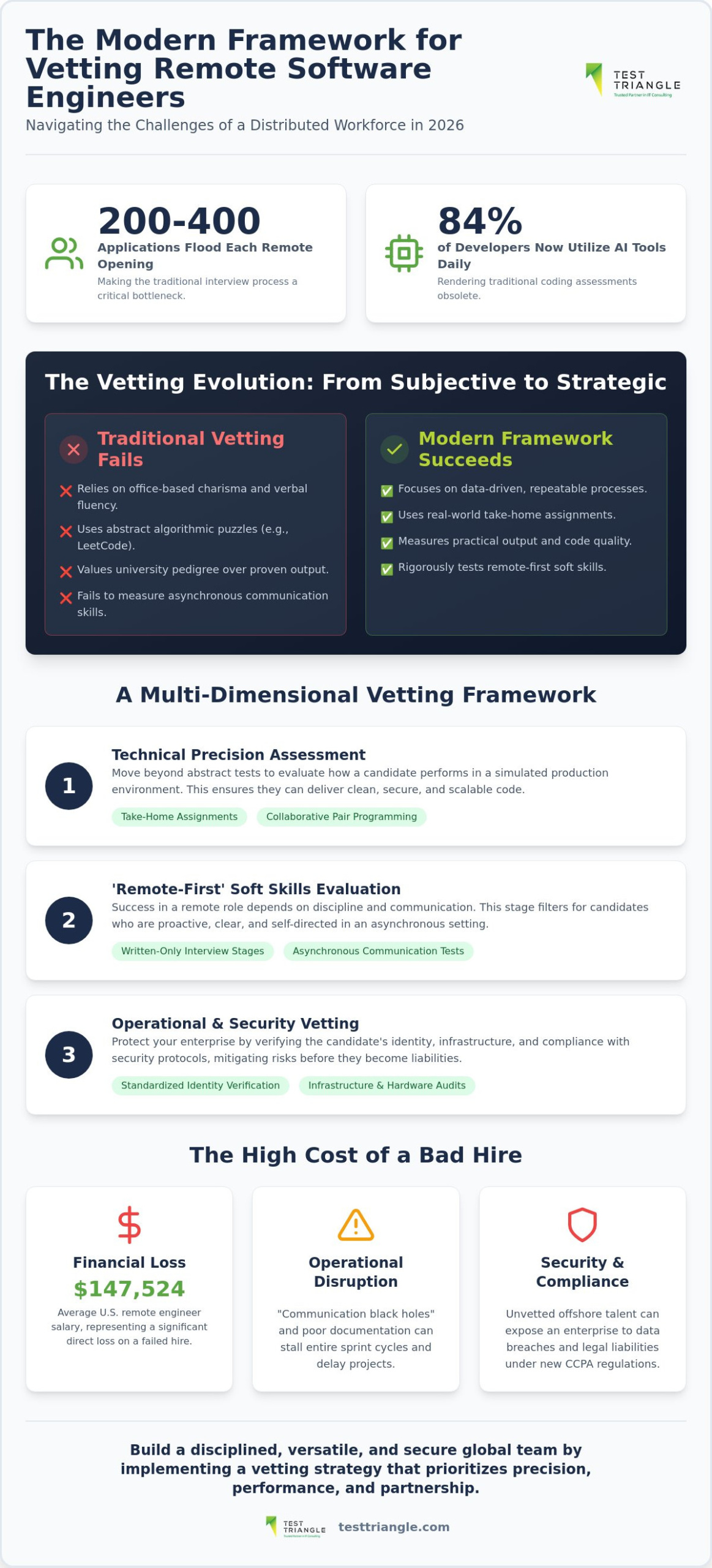

By 2026, the margin for error in enterprise IT operations has effectively vanished as the impending sunset of Jira Data Center necessitates a disciplined, urgent migration toward cloud-centric architectures. Identifying a sophisticated Atlassian ITSM partner India is no longer a simple procurement exercise; it’s a vital strategic move for organizations managing the complex 158% cost shift often associated with moving from legacy OpsGenie setups to Jira Service Management Premium. You’re likely aware that moving away from rigid platforms like BMC or ServiceNow is fraught with technical debt and the persistent challenge of finding elite Jira experts who understand the nuances of global compliance.

We’re here to ensure your transition remains seamless, secure, and strategic. This guide details how to select a collaborator who bridges the technical talent gap and empowers your team to modernize service delivery on a global scale. We’ll outline the roadmap for a successful Jira Service Management deployment, the fusion of DevOps with scalable ITSM frameworks, and the precise steps to access a reliable pool of certified professionals who prioritize your long-term operational stability and systemic growth.

Key Takeaways

  • Understand the transition from monolithic legacy ITSM to high-velocity, decentralized service delivery that prioritizes DevOps synergy and developer-centric workflows.
  • Evaluate potential collaborators using a strategic framework that prioritizes end-to-end advisory over simple certifications when choosing an Atlassian ITSM partner India.
  • Develop a robust roadmap for cloud migration that addresses the 2026 reality of sunsetting on-premise solutions and complex data residency requirements.
  • Bridge the specialized talent gap by accessing reliable pools of certified experts through integrated IT staffing and recruitment outsourcing managed services.
  • Implement a practical methodology that aligns technical execution with business-critical outcomes to ensure your digital infrastructure supports scalable global growth.

The Evolution of ITSM in India: Why Jira Service Management Dominates in 2026

The landscape of IT Service Management (ITSM) within India has undergone a fundamental transformation by 2026, moving away from the rigid, monolithic structures of the past toward agile, high-velocity frameworks. This evolution is driven by the necessity for decentralized service delivery, where development and operations teams no longer operate in siloes but function within a unified ecosystem. Engaging a specialized Atlassian ITSM partner India allows enterprises to navigate this transition with confidence, ensuring that their technical infrastructure supports rapid innovation rather than acting as a bottleneck. Strategy, stability, and scale are now the primary drivers for Indian CIOs who recognize that traditional, heavy-handed tools cannot keep pace with the modern DevOps lifecycle.

In 2026, the service desk is no longer just a repository for tickets; it’s an AI-augmented engine of efficiency. With the integration of virtual agents and sophisticated automation in Jira Service Management, Indian firms are automating a vast majority of routine requests, which frees up high-level talent for strategic initiatives. This shift is essential for organizations looking to scale, as it addresses the talent gap by optimizing existing human resources through technical precision and intelligent workflows. A strategic partner ensures these tools aren’t just installed but are aligned with the unique operational scale and cultural nuances of the Indian market.

Breaking Down the Legacy Tool Barrier

Outdated platforms like BMC or older versions of ServiceNow carry a heavy burden of technical debt that stifles organizational agility. By migrating to Jira Service Management, organizations achieve total visibility across the entire software development lifecycle, which is a 2026 mandate for any firm aiming for digital maturity. This integration reduces the total cost of ownership (TCO) significantly, especially when compared to legacy tools that require extensive, proprietary maintenance. A strategic Atlassian ITSM partner India provides the expertise needed to manage these complex migrations, ensuring data integrity and operational continuity throughout the transition.

High-Velocity Service Management for Global Scale

For Indian firms expanding into North American and European markets, a cloud-first mindset is mandatory for ensuring global compliance and performance. Jira Service Management natively integrates asset management and configuration management (CMDB), providing a single source of truth that supports ITIL 4 frameworks. This alignment facilitates faster response times and reliable service delivery, positioning the organization as a steady, capable partner in the global marketplace. The focus remains on precision, pace, and progress, allowing businesses to adapt their service delivery models as they enter more regulated and competitive international territories.

Evaluating an Atlassian ITSM Partner: A Framework for Selection

Selecting an Atlassian ITSM partner India requires a perspective that extends beyond the official tier badges or basic certification counts. While technical credentials serve as an essential baseline, they don’t guarantee the strategic foresight needed to manage a complex digital transformation. A high-level corporate partner must demonstrate a sophisticated understanding of how platform configuration, process maturity, and people capability intersect to drive long-term business value. This three-pillar evaluation ensures that the chosen collaborator doesn’t just deliver a tool; they deliver a scalable framework that reduces risk and empowers your global enterprise to evolve with precision.

Rigorous assessment of a partner’s ability to provide end-to-end digital transformation advisory is vital. You’re looking for an expert who acts as a steady hand in a fast-changing landscape, moving beyond simple ticket management to foster a culture of continuous optimization. This involves evaluating their track record in highly regulated industries and their capacity to bridge the gap between technical execution and executive-level business outcomes. Organizations that prioritize this level of institutional maturity gain the peace of mind that comes from knowing their infrastructure is managed by disciplined, globally-minded visionaries.

Strategic Advisory vs. Technical Implementation

True value lies in a partner who challenges your existing workflows rather than merely digitizing inefficient legacy processes. Effective Atlassian Consulting depth is revealed in the first 90 days, where a strategic technology roadmap should be established to align Jira Service Management with Confluence and Bitbucket. This holistic approach ensures that information flows seamlessly across development and operations, creating the unified visibility necessary for high-velocity delivery. Those seeking a steady hand in this transition should consider how a strategic consultation can define the specific path toward operational maturity.

Managed Services and Long-Term Stability

For Indian enterprises supporting global client bases, 24/7 support and zero downtime aren’t luxuries; they’re operational mandates. When comparing Managed Service Provider (MSP) Subscription Fees, it’s essential to weigh the cost against the inherent value of long-term stability and risk reduction. A reliable collaborator provides an adaptable approach to service delivery, offering the technical rigor needed to maintain complex digital ecosystems while remaining flexible enough to support your growth. This commitment to reliability ensures that your ITSM framework remains a stable foundation for your organization’s future success.

Cloud Migration and Strategic Roadmapping for 2026

By 2026, the transition from on-premise infrastructure to cloud environments has shifted from a strategic preference to an operational mandate. With the sunsetting of Jira Data Center licenses already underway and the full end-of-life scheduled for March 2029, organizations must recognize that legacy on-premise systems are no longer viable for long-term growth. A specialized Atlassian ITSM partner India provides the technical rigor required to navigate this shift, particularly for Indian firms in regulated industries where complex data residency requirements and RBI compliance are paramount. Moving to the cloud isn’t just about changing servers; it’s about adopting a platform that scales globally while maintaining the highest standards of security and precision.

Successful migration requires a disciplined approach that ensures business continuity throughout the transition. The journey from Data Center to Atlassian Cloud involves more than a simple data transfer. It demands a comprehensive audit of existing technical debt and a clear strategy for integrating security protocols directly into the migration roadmap. By partnering with a seasoned expert, enterprises can bridge the technical talent gap and ensure their digital infrastructure remains a stable foundation for large-scale technological evolution.

The Atlassian Cloud Migration Roadmap

A structured migration begins with a thorough Assessment and App Audit to identify which legacy components should be moved, archived, or replaced. During the Strategic Planning phase, your Atlassian ITSM partner India maps complex user permissions and security protocols to ensure seamless access in the new environment. The final Execution and Testing phase prioritizes data integrity, utilizing rigorous validation techniques before the final cutover to prevent any interruption to business-critical service delivery.

Optimising for Performance and Security

Once the migration is complete, the focus shifts to leveraging cloud-native capabilities like built-in AI for automated incident response and proactive problem management. Ensuring global compliance requires continuous Software and Digital Assurance Testing to verify that all workflows meet international security standards. Post-migration optimization allows firms to refine their ITSM frameworks, ensuring that every automated process contributes to the overarching goal of risk reduction and operational empowerment. This methodical approach leads from a general need for improvement to a specific, high-performance technical solution.

The Staffing Advantage: Solving the Talent Gap in India

The most sophisticated technical architecture remains vulnerable if the human element is neglected. While previous sections detailed the strategic roadmaps for cloud migration and process maturity, the ultimate success of these initiatives depends on the expertise of the people managing them. In the competitive Indian market, the challenge of finding and retaining certified Atlassian experts often becomes a significant hurdle for global enterprises. Even a perfectly configured Jira Service Management environment will eventually stagnate if the internal team lacks the technical depth to optimize workflows or manage complex integrations. This is why a hybrid Atlassian ITSM partner India provides a critical advantage, acting as a fail-safe by combining high-level consulting with agile staffing capabilities.

By integrating human expertise directly into the service delivery model, organizations can bypass the lengthy recruitment cycles that often delay digital transformation initiatives. A strategic partner offers flexible engagement models, ranging from project-based specialists who oversee the initial cutover to dedicated offshore resources who provide ongoing operational stability. This approach ensures that your complex digital infrastructure is managed with the same level of precision and rigor that characterized the initial implementation phase. A strategic collaborator understands that technical manager and executive leadership needs must both be addressed through disciplined resource allocation.

Bridging the Expertise Gap

Rapidly scaling your internal Jira capabilities is often more efficient when utilizing specialized IT Staffing Services. This model allows enterprises to access a reliable pool of talent without the long-term overhead of permanent hires, providing the flexibility needed to address fluctuating project demands. Contract-to-hire options further reduce risk, allowing you to evaluate a candidate’s technical and cultural fit before making a long-term commitment. A reliable collaborator also prioritizes continuous knowledge transfer, ensuring that your permanent staff gains the skills necessary to manage the ecosystem independently over time. This focus on institutional maturity creates a sustainable foundation for future growth.

Offshore and Remote Talent Integration

Leveraging remote offshore resources allows Indian firms to manage their Atlassian environments cost-effectively while maintaining high standards of quality and security. Success in this model depends on deep technical alignment and a shared commitment to organizational progress. By utilizing margin-based billing for temporary contract staff, enterprises can reduce operational overhead while ensuring they have the specialized skills required for advanced DevOps integration or automation testing. This versatile approach to service delivery ensures that your Atlassian ITSM partner India remains a reliable long-term collaborator, deeply invested in your operational stability. If you are ready to secure the specialized talent required to scale your operations, we invite you to connect with our strategic staffing experts today.

Top Atlassian ITSM Partner in India: Scale Your IT Ops

Test Triangle: Your Strategic Atlassian ITSM Partner in India

Positioned as a global strategic visionary with deep practical implementation roots, Test Triangle serves as the steady hand required to manage complex digital infrastructures within the Indian market. We recognize that modernizing your service delivery isn’t merely a matter of software acquisition; it’s a comprehensive evolution that requires a disciplined, versatile, and globally-minded approach. As a premier Atlassian ITSM partner India, we bridge the gap between technical execution and business outcomes, ensuring that your organization’s transition to Jira Service Management supports systemic improvement and long-term operational stability. Our methodology is built on the belief that large-scale technological progress is achieved through the intentional combination of human expertise and advanced technical tools.

We don’t just deploy tools. We empower your digital transformation by aligning technical execution with high-level business objectives. Our comprehensive service coverage spans the entire lifecycle of your IT operations, from initial Atlassian Implementation to sophisticated DevOps Consulting. This holistic perspective allows us to act as a reliable long-term collaborator, deeply invested in your ability to scale globally while maintaining the technical rigor necessary for 2026’s competitive landscape. By focusing on risk reduction and systemic growth, we provide the peace of mind that comes from knowing your complex digital ecosystem is managed with precision.

A Unified Approach to ITSM and Beyond

In many large-scale Indian organizations, the reality is a hybrid environment that requires a sophisticated integration of multiple platforms. We leverage our expertise in ServiceNow Consulting Services to ensure seamless interoperability between different enterprise tools, creating a unified visibility that is essential for modern operations. Our track record in highly regulated industries, such as finance and pharmaceuticals, demonstrates our institutional maturity and ability to meet rigorous compliance standards. This success is anchored in our defining alliterative signature: a commitment to optimizing Platform, Process, and People to ensure every digital initiative delivers tangible value.

Getting Started with Test Triangle

The journey toward a modernized service desk begins with a detailed initial consultation designed to identify your specific ITSM maturity and existing pain points. We move beyond general mission statements to craft a bespoke Atlassian roadmap that is specifically tailored for the unique operational scale of the Indian enterprise landscape. This methodical approach leads your organization from a general need for improvement to a specific technical solution that reduces overhead and accelerates delivery. If you’re ready to modernize your infrastructure with a reliable Atlassian ITSM partner India, we invite you to contact Test Triangle for a strategic ITSM assessment today.

Modernize Your Digital Infrastructure for Global Scale

The shift toward high-velocity, cloud-native service delivery is no longer optional for organizations aiming to remain competitive in 2026. By prioritizing a unified approach that integrates ITSM with DevOps, Indian enterprises can effectively manage the complexities of global expansion while reducing the technical debt associated with legacy tools. Success in this landscape requires a disciplined focus on the three pillars of platform, process, and people. Each element must be aligned to support your long-term success and operational stability.

Selecting a strategic Atlassian ITSM partner India ensures that your organization accesses the specialized expertise needed to navigate complex data residency requirements and bridge the persistent talent gap. As a Global Atlassian Partner with a proven track record in high-compliance sectors like Pharma and Finance, we provide the technical rigor and practical implementation roots necessary for large-scale technological evolution. We remain committed to your journey through our adaptable service delivery models and deep DevOps expertise.

Scale your service delivery with Test Triangle’s Atlassian ITSM solutions

We look forward to empowering your digital transformation and supporting your organization as it reaches new levels of institutional maturity and growth.

Frequently Asked Questions

What are the benefits of hiring an Atlassian ITSM partner in India vs. an in-house team?

Hiring a specialized Atlassian ITSM partner India provides immediate access to a deeper pool of technical expertise than most in-house teams can maintain. Partners offer a scalable framework that reduces the long-term risk of technical debt while ensuring your systems remain aligned with global benchmarks. This approach allows your internal leadership to focus on strategic visionary goals rather than the granular complexities of tool maintenance and platform updates.

How much do Atlassian consulting fees typically cost for an enterprise migration in 2026?

Consulting fees for an enterprise migration in 2026 depend on several variables, including the volume of data, the complexity of existing workflows, and the number of third-party marketplace integrations. A thorough assessment of your digital infrastructure is required to determine a precise budget. Organizations should prioritize the value of long-term operational stability and risk reduction over initial setup costs to ensure a sustainable technological evolution.

Can an Atlassian partner help with both Jira Service Management and ServiceNow integration?

A proficient partner can certainly manage hybrid environments that require both Jira Service Management and ServiceNow integration. This unified approach provides the necessary visibility across diverse enterprise tools, ensuring that different departments can collaborate within a single source of truth. Such integrations are vital for large organizations that need to maintain legacy records while transitioning toward more agile, developer-centric service delivery models.

How long does a typical Atlassian Cloud migration take for a large Indian enterprise?

A typical Atlassian Cloud migration for a large Indian enterprise generally spans between three and nine months. This timeline accounts for a disciplined assessment phase, rigorous app audits, and extensive performance testing before the final cutover. Precision is prioritized over speed to ensure that business-critical service delivery remains uninterrupted throughout the transition. The exact duration varies based on the specific technical debt and security requirements of the organization.

What certifications should I look for in an Atlassian ITSM partner?

You should prioritize partners who hold Atlassian Certified Professional (ACP) designations, particularly in Jira Service Management and Cloud migration. Official Solution Partner tiers, such as Gold or Platinum, serve as reliable indicators of institutional maturity and technical rigor. These endorsements reassure global enterprises that their digital infrastructure is managed by experts who adhere to the highest industry standards for quality and security.

Does Test Triangle provide ongoing staffing support after the JSM implementation is complete?

Test Triangle provides comprehensive staffing support through dedicated IT staffing services once the initial implementation is complete. We bridge the technical talent gap by offering flexible engagement models that include project-based specialists or dedicated offshore resources. This commitment to long-term collaboration ensures that your Atlassian environment remains optimized and scalable as your organization continues to grow in a competitive global landscape.

How does Jira Service Management compare to legacy tools for Indian businesses scaling globally?

Jira Service Management offers a significantly lower total cost of ownership and greater flexibility than legacy tools like BMC or older ServiceNow versions. Its native synergy with DevOps workflows allows Indian businesses to scale globally with faster response times and improved developer productivity. By choosing a qualified Atlassian ITSM partner India, firms can modernize their service delivery to meet the high standards required by North American and European markets.

What is the role of AI in ITSM service delivery for 2026?

AI in 2026 focuses on empowering service desks through virtual agents, predictive incident management, and automated root cause analysis. These tools move beyond basic ticket management to provide proactive solutions that reduce the burden on human staff. This systemic improvement allows technical teams to focus on high-value strategic initiatives while AI handles routine requests with consistent precision and speed.

Paul Guy

Article by

Paul Guy

Paul serves as the Marketing Director at Test Triangle, where he leads a global team in driving growth through strategic B2B marketing and brand communications. With a strong emphasis on measurable outcomes and sustainable performance, he plays a pivotal role in aligning marketing functions to enhance customer engagement and accelerate business impact. Under his leadership, marketing initiatives have consistently delivered significant returns on investment, elevated brand visibility, and strengthened the company's presence across key markets.