While enterprise Atlassian pricing has surged by 32.01% as of May 2026, the most successful global organizations aren’t scaling back; they’re fundamentally restructuring their approach to atlassian support. You likely recognize the friction of waiting on high-volume portals for critical fixes or the technical debt that accumulates when Jira isn’t seamlessly integrated with ServiceNow and AWS. It’s common to feel that your investment is being consumed by reactive troubleshooting rather than driving the digital transformation your roadmap requires.
This guide promises to move you beyond the limitations of standard maintenance into a strategic managed services model that secures your infrastructure and maximizes ROI. By aligning expert-led cloud migration with disciplined license management, you can transform your toolset into a predictable, high-performance engine for growth. We will examine the critical 2026 updates to Data Center pricing, the implications of Atlassian’s new AI data policies, and the methodology for achieving a 230% return on your ecosystem investment through proactive, SLA-backed partnership.
Key Takeaways
- Learn to transition from fragmented tool maintenance to a unified digital transformation strategy that aligns your technical infrastructure with long-term business objectives.
- Distinguish between basic software fixes and comprehensive atlassian support by understanding the strategic advantages of a Managed Service Provider in complex enterprise environments.
- Identify the financial and operational benefits of a proactive configuration approach designed to eliminate system bottlenecks and reduce the accumulation of technical debt.
- Utilize a structured audit framework to evaluate your current support health and uncover hidden inefficiencies in user adoption and cross-platform tool integration.
- Implement a methodology-driven partnership model that bridges the gap between technical execution and executive-level business outcomes to ensure scalable growth.
Navigating the Complexity of Enterprise Atlassian Ecosystems in 2026
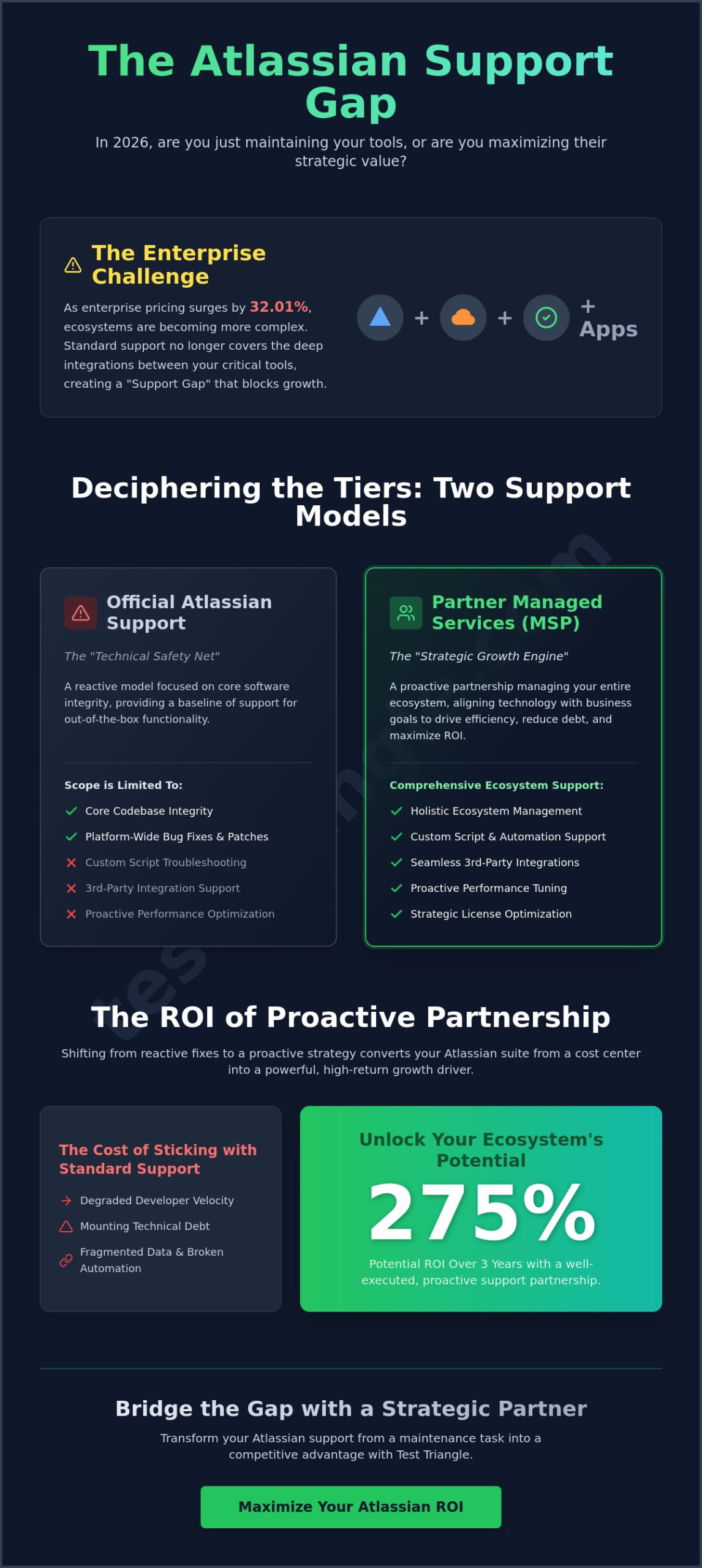
The evolution of the Atlassian Corporation software suite has transitioned from a collection of standalone project management tools into a foundational architecture for the modern enterprise. By 2026, the complexity of these environments has grown exponentially, driven by the necessity of deep integrations between Jira, AWS, and specialized marketplace apps that can increase base costs by up to 150%. Global organizations no longer view these tools as isolated silos; they are the central nervous system of digital transformation. However, as configurations become more bespoke, standard atlassian support often hits a ceiling. It focuses on the software’s functional uptime rather than the strategic health of the entire ecosystem. This creates a critical “Support Gap” where technical managers find themselves caught between vendor-level documentation and the unique requirements of their own complex, multi-platform workflows.
The Interconnected Enterprise: Beyond Jira and Confluence
Current enterprise digital strategies demand that Atlassian tools serve as the primary anchor for IT Service Management solutions. When Jira Service Management is expected to bridge the gap between HR, legal, and engineering, the challenge of maintaining cross-platform data integrity becomes a primary business risk. Relying on “business as usual” support models during periods of rapid scaling often leads to fragmented data and broken automation. True operational stability requires a support framework that understands how a change in a Confluence permissions scheme might ripple through a ServiceNow integration or an AWS-hosted database. Without this holistic oversight, the technical debt accumulated through quick-fix configurations can eventually stall the very agility these tools were meant to provide.
The High Cost of System Inefficiency
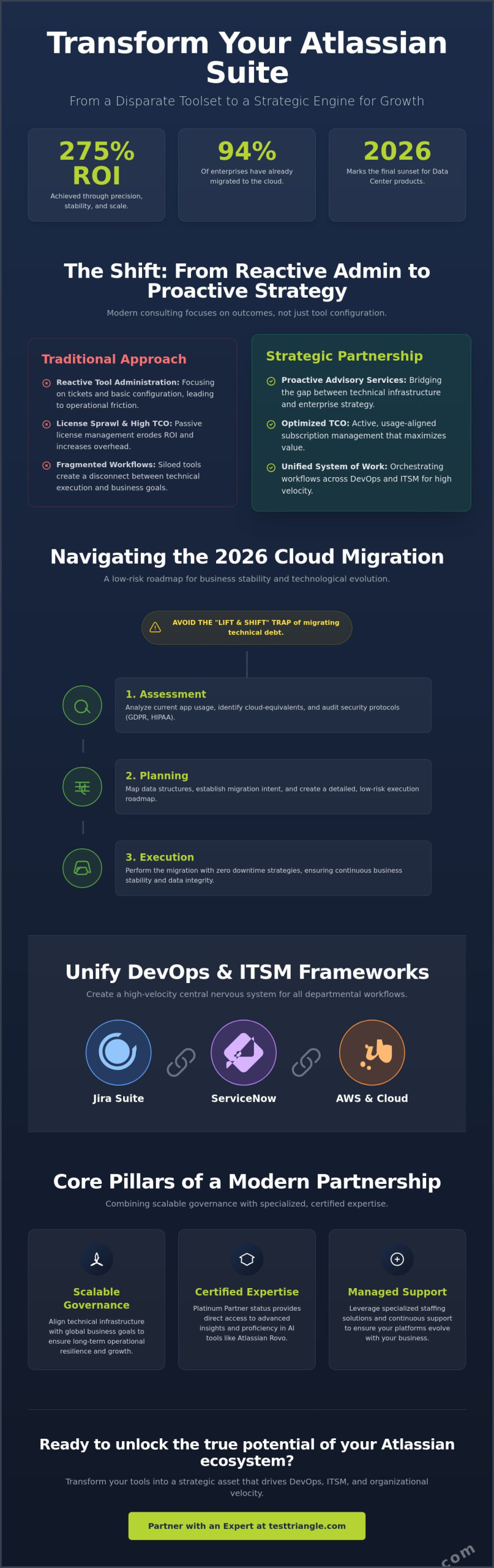
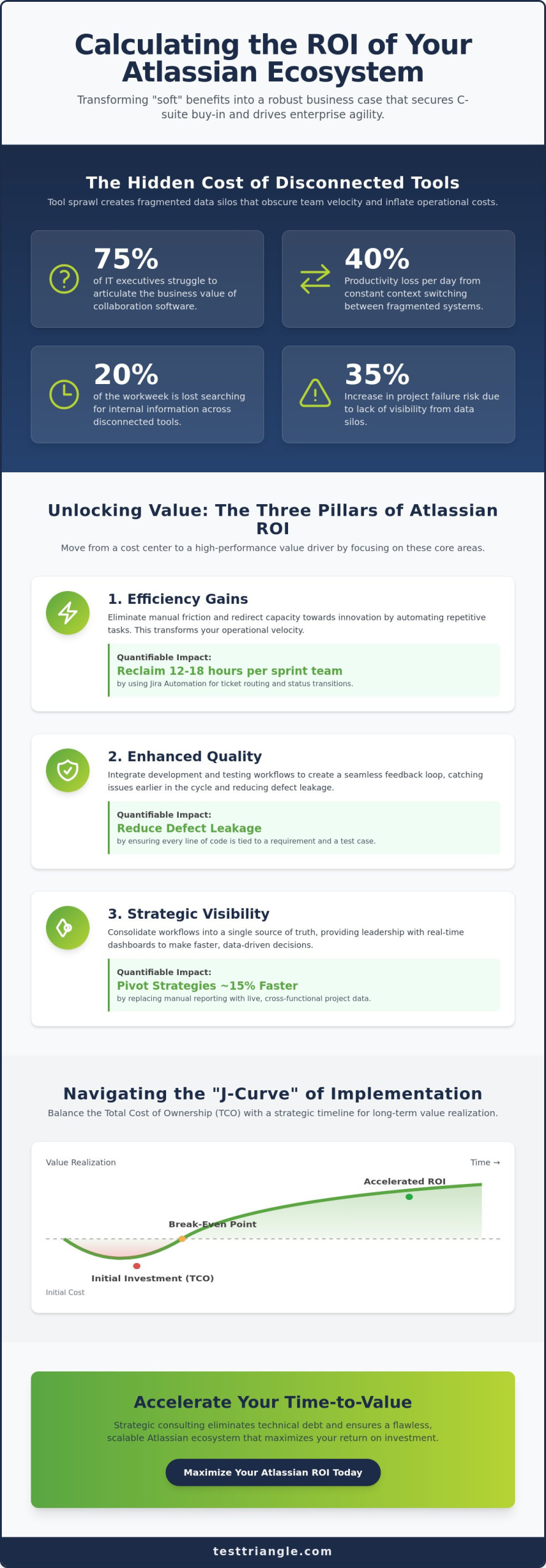
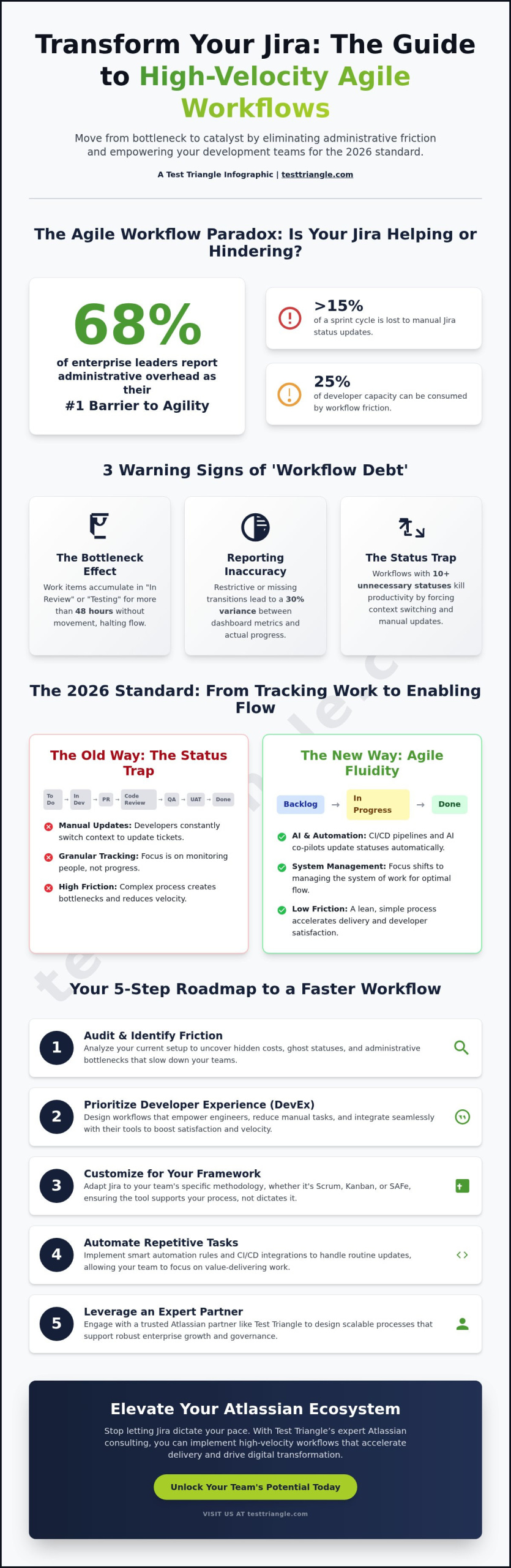
Systemic bottlenecks in your Atlassian stack are more than just an IT inconvenience; they are a direct drain on profitability. Slow ticket resolution and poor tool configuration significantly degrade developer velocity and team morale, leading to a measurable loss in organizational agility. While well-executed implementations can yield a 275% ROI over three years, achieving this requires a disciplined approach to atlassian support that prioritizes proactive optimization over reactive fire-fighting. By integrating robust support with expert DevOps Consulting, enterprises can ensure their tools accelerate rather than hinder the release cycle. This strategic alignment converts technical execution into tangible business outcomes, providing the precision, pace, and power needed to maintain a competitive edge in a fast-changing technological landscape.
Deciphering the Tiers: Official Support vs. Partner Managed Services
For global enterprises, the distinction between maintaining software and managing an ecosystem is often the difference between stagnation and scalable growth. While every subscription includes a baseline of atlassian support, many organizations mistakenly assume this vendor-level coverage includes the hands-on administration required for complex, bespoke environments. In reality, a clear hierarchy exists between the technical safety net provided by the software vendor and the strategic, proactive partnership offered by a Managed Service Provider (MSP). Understanding these boundaries is essential for leadership teams aiming to secure stability, scalability, and security across their digital infrastructure.
Official Atlassian Support: The Technical Safety Net
The primary mandate of official vendor support is to ensure the integrity of the core codebase. This includes delivering critical security patches, resolving platform-wide bugs, and maintaining high uptime for cloud services. While tiers like “Enterprise” offer accelerated response times for high-severity incidents, the scope remains strictly limited to the software’s out-of-the-box functionality. They won’t troubleshoot your custom Groovy scripts in Jira Service Management or optimize a convoluted Confluence permissions hierarchy that’s slowing down your global teams. When you submit a ticket to the global queue, you’re interacting with experts on the product, not experts on your specific business logic or your unique ServiceNow integration.
Managed Services: The Strategic Extension of Your IT Team
A Managed Service Provider acts as a highly disciplined extension of your internal operations, focusing on the systemic health of your entire stack. Unlike reactive ticketing systems, an MSP utilizes a methodology-driven approach to identify performance degradation before it impacts user productivity. This level of partnership provides access to specialized Atlassian Consulting for workflow automation, ensuring that your tools evolve alongside your business requirements. By assigning dedicated account managers who understand your long-term roadmap, an MSP bridges the gap between technical execution and executive goals. This results in predictable monthly costs and guaranteed SLAs that go beyond simple “uptime” to encompass actual operational efficiency. If your organization requires a more tailored approach to overcome specific architectural bottlenecks, it’s often beneficial to discuss your ecosystem’s specific requirements with a strategic partner who can provide the depth of expertise that community forums and standard documentation lack.
Overcoming the Reactive Trap: The ROI of Proactive Support
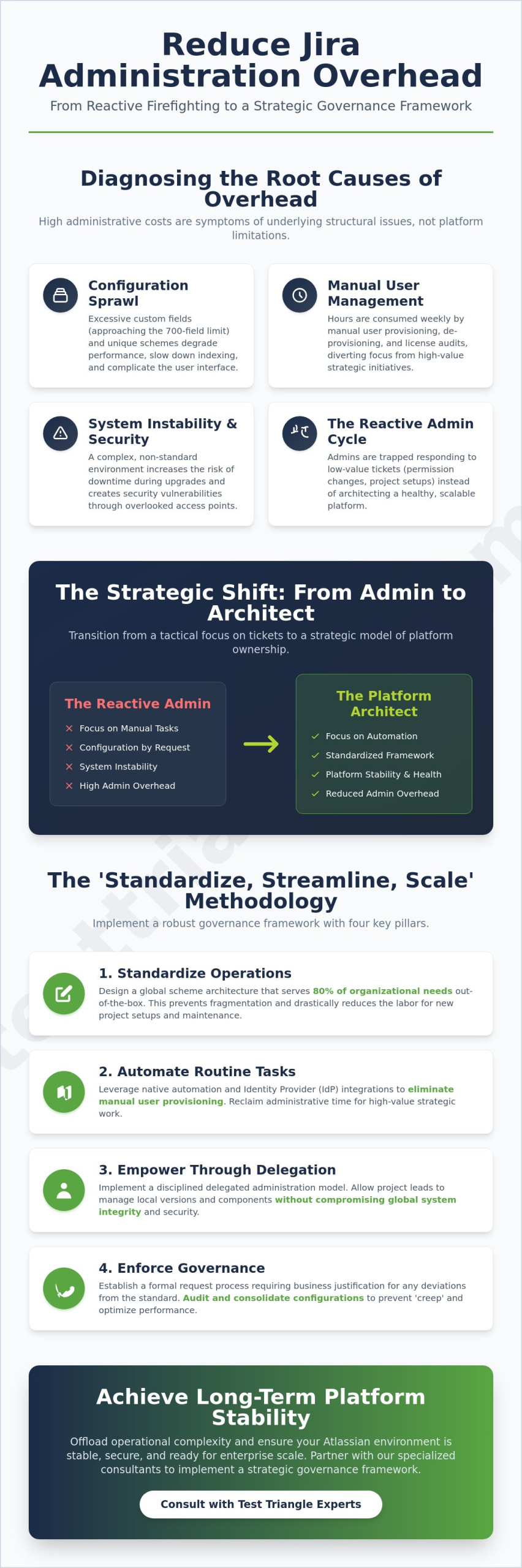
Operating an enterprise environment through reactive troubleshooting is a high-risk strategy that often results in compounding technical debt and unforeseen operational pauses. While many organizations treat atlassian support as a break-fix utility, the most resilient global firms leverage it as a strategic asset to drive visibility, velocity, and value. By shifting the focus from resolving active failures to preventing them, businesses can secure the 230% to 275% ROI typically associated with well-executed implementations. This proactive approach ensures that every configuration is “Right-First-Time,” eliminating the costly cycles of reconfiguration that occur when tools are scaled without a disciplined architectural blueprint.
Strategic oversight also extends to the financial health of the ecosystem. With enterprise pricing for Atlassian products increasing by 32.01% as of May 2026, and marketplace apps potentially adding up to 150% to base costs, proactive license management is no longer optional. A managed support model identifies underutilized seats and redundant plugins, ensuring that your expenditure remains lean and targeted. Furthermore, integrating continuous Software Test Automation Services into your support framework allows for the rapid validation of new workflows. This methodology ensures that system updates don’t disrupt established DevOps pipelines, maintaining a steady cadence of delivery across the organization.
Preventative Maintenance for Cloud and Data Center
Maintaining a healthy Atlassian instance requires regular, high-level audits to prevent “instance sprawl” and the formation of data silos. This is particularly critical for organizations in highly regulated sectors, such as pharmaceuticals, where data integrity and compliance are paramount. Proactive atlassian support involves security hardening that goes far beyond standard platform patches, implementing bespoke permission schemes and data contribution settings that align with the latest 2026 AI data sharing policies. This level of preventative care ensures that your infrastructure remains a secure, compliant, and high-performance environment for global collaboration.
Strategic Roadmapping and Cloud Migration
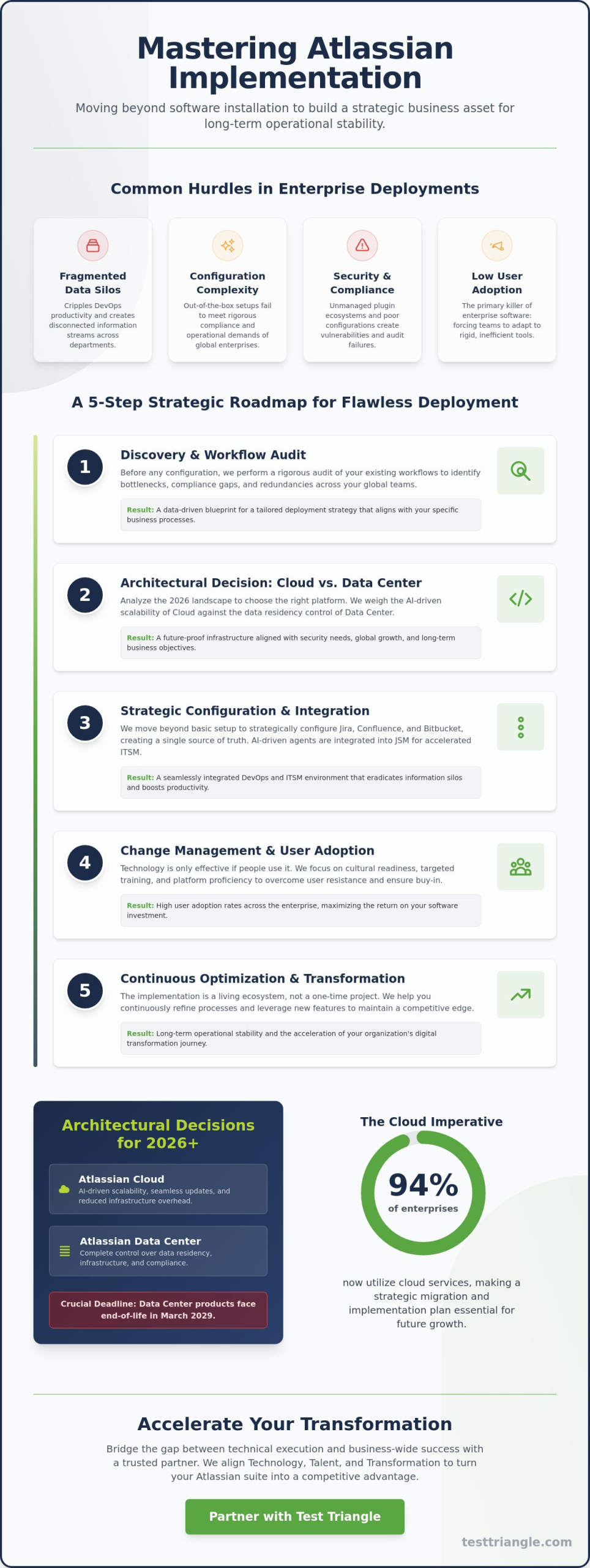
With the Data Center end-of-life approaching on March 28, 2029, and 94% of enterprises already operating in the cloud, strategic roadmapping has become a core component of modern support. Utilizing dedicated support hours for long-term planning allows organizations to execute complex Atlassian Cloud migrations without data loss or significant downtime. By aligning tool evolution with specific organizational growth targets, a managed service provider ensures that your technology stack remains a catalyst for progress. This forward-looking methodology transforms your support investment into a reliable engine for large-scale technological evolution and sustained business success.
Audit Checklist: Identifying Gaps in Your Current Support Infrastructure
To transition from a reactive posture to a strategic framework, enterprises must first conduct a rigorous diagnostic of their current ecosystem health. Evaluating your infrastructure involves more than checking server uptime; it requires a deep dive into the friction points that impede organizational velocity. Many global firms find their internal atlassian support desks overwhelmed by low-level administrative tasks, which prevents senior engineers from focusing on high-value digital transformation projects. By utilizing a structured framework to identify these gaps, leadership can determine whether their existing model supports long-term scalability or if it’s time to transition toward Managed Outsourcing Services to secure operational stability.
Technical Integrity: Operational Audit Points
A comprehensive audit begins with a review of average time-to-resolution (TTR) for internal tickets and an assessment of the complexity within third-party app integrations. If your team struggles to maintain data integrity between Jira and AWS, or if custom workflows are causing frequent system timeouts, your current support layer is likely insufficient. You should evaluate the scalability of your permission schemes and security protocols, especially as you navigate the regulatory requirements of 2026. These technical benchmarks provide the data necessary to justify a shift in your service delivery model. Identifying these bottlenecks early allows for a more disciplined approach to system optimization, ensuring that your tools aren’t just functional but are actively contributing to team morale and developer velocity.
Capacity Planning: Resource and Staffing Evaluation
Beyond the technical layer, organizations must honestly assess the burden placed on their human capital. If routine maintenance like license reconciliation or version upgrades consistently derails your roadmap, your internal team is overstretched. This often indicates a need for specialized IT Staffing Services to bridge specific expertise gaps without the overhead of permanent hires. The “Build vs. Buy” decision for Atlassian expertise hinges on whether you can maintain the required pace of innovation internally. Relying on a strategic visionary who remains deeply practical is often more cost-effective than attempting to recruit and retain a full-time, multi-disciplinary team. To gain a clearer understanding of how your current resources align with your 2026 growth targets, you should request a comprehensive infrastructure audit from a strategic partner who understands the nuances of global enterprise management.
Test Triangle: Elevating Atlassian Support into a Strategic Partnership
Test Triangle operates as a strategic visionary for global enterprises, moving beyond the transactional nature of standard vendor relationships to provide a high-level corporate partnership. Our proprietary Methodology-Action-Result framework ensures that every technical intervention is directly mapped to a specific business objective; this converts complex technical debt into measurable operational value. By aligning atlassian support with your broader digital roadmap, we bridge the gap between technical execution and executive-level outcomes. Our global delivery model offers unparalleled flexibility, providing contract, remote, and offshore support options that adapt to your unique organizational rhythm and time-zone requirements. This versatility, combined with deep multi-platform expertise across Atlassian, ServiceNow, and AWS, allows us to manage complex digital infrastructures with precision, pace, and power.
A Holistic Approach to IT Service Management
The seamless integration of atlassian support with our ServiceNow Consulting Services creates a unified IT Service Management layer that eliminates operational silos and drives systemic improvement. We deliver end-to-end digital transformation through strategic advisory, ensuring that your tools serve as a catalyst for organizational progress rather than a source of technical friction. For organizations operating within the pharmaceutical and financial sectors, we provide customized support packages specifically designed to navigate the rigorous compliance and security standards of 2026. This holistic oversight ensures that your technology stack remains secure, scalable, and stable, providing the peace of mind necessary for long-term innovation and large-scale technological evolution.
Your Long-Term Collaborator for Scalable Growth
We position ourselves as a reliable long-term collaborator, emphasizing a profound commitment to risk reduction and operational stability as the cornerstones of our identity. Our approach is built on a foundation of institutional maturity, where we operate as a steady hand in a fast-changing technological landscape to reassure global enterprises that their infrastructures are managed with expertise. By focusing on the combination of human expertise and technical precision, we empower leadership teams to achieve sustainable, scalable, and secure growth. We bridge the gap. This disciplined methodology transforms your support investment into a reliable engine for success. To begin transforming your infrastructure into a high-performance asset, you can optimise your ecosystem with Test Triangle Atlassian Support.
Securing Your Digital Future: The Path to Operational Excellence
The transition toward a proactive managed services model isn’t just a technical upgrade; it’s a strategic necessity for the modern enterprise aiming to offset rising costs and increasing technical complexity. By moving beyond the reactive trap, you unlock the potential for significant ROI while ensuring that your infrastructure remains resilient against the specific challenges of 2026. A disciplined approach to atlassian support ensures that your tools evolve alongside your business, turning project management software into a unified engine for digital transformation. This methodology ensures that every configuration contributes to your organization’s long-term stability, scalability, and security.
As an Atlassian Gold Solution Partner with a global presence spanning Europe, North America, and Asia, Test Triangle provides the specialized expertise required to manage ecosystems in highly regulated industries. We operate as a steady hand, focusing on risk reduction and technical precision to ensure your long-term success. Our Methodology-Action-Result framework bridges the gap between technical execution and executive goals, reinforcing our identity as a reliable long-term collaborator. Explore Strategic Atlassian Support Solutions to begin your journey toward a more efficient and scalable infrastructure. We’re ready to help you empower your teams and secure your digital future.
Frequently Asked Questions
What is the difference between Atlassian Standard and Partner Support?
Official Atlassian support focuses primarily on the functional integrity of the software codebase, providing reactive fixes for bugs and platform-wide outages. In contrast, a strategic partner provides a proactive managed service that encompasses your entire ecosystem, including custom workflow configurations, third-party integrations, and long-term architectural roadmapping. This partnership model ensures that your tools are optimized for your specific business logic rather than just maintaining basic uptime.
How much does managed Atlassian support typically cost?
The financial investment for managed atlassian support is determined by the complexity of your technical environment, your total seat count, and the specific service level agreements required by your organization. While licensing costs are fixed by the vendor, managed service fees are tailored to the depth of strategic oversight and administrative burden you choose to outsource. Most enterprises find this model more economical than recruiting a full-time, multi-disciplinary internal team to manage a scaling infrastructure.
Can a partner help with Atlassian Cloud migration support?
Yes, an expert partner manages the entire end-to-end migration lifecycle to ensure data integrity and minimal operational downtime. This includes performing pre-migration audits, resolving app compatibility issues, and executing the final transition with disciplined precision. By leveraging specialized Atlassian Consulting, organizations can navigate the complexities of cloud-native features and AI data sharing policies without risking their historical data or established DevOps pipelines.
Do I still need an internal Jira administrator if I have partner support?
Many global organizations choose to reallocate their internal resources toward core business innovation by utilizing a partner as their primary administrator. While you may retain a light internal touchpoint for high-level approvals, a managed service provider handles the routine maintenance, user provisioning, and performance tuning. This approach eliminates the institutional risk associated with “single point of failure” staffing and ensures your infrastructure is managed by a versatile team of experts.
What are the typical SLAs for enterprise Atlassian managed services?
Enterprise-grade SLAs are highly structured and typically categorize incidents by severity to ensure that critical system failures receive immediate prioritization. These agreements often guarantee specific response and resolution times, alongside commitments to system performance and security hardening. By establishing these benchmarks, enterprises gain the peace of mind that comes from predictable service quality and a reliable long-term collaborator invested in their operational stability.
How does Atlassian support integrate with ServiceNow workflows?
A strategic partner provides the technical bridge necessary to synchronize Jira Service Management with ServiceNow, ensuring a unified flow of data across your IT Service Management layer. This integration allows for automated ticket mirroring, consistent status updates, and centralized reporting across both platforms. This methodology eliminates data silos and provides leadership with a comprehensive view of organizational performance and resource allocation.
Is third-party support secure for highly regulated industries?
Managed support providers implement rigorous security protocols and compliance frameworks specifically designed for highly regulated sectors like pharmaceuticals and finance. This includes adhering to strict data residency requirements, implementing bespoke permission schemes, and ensuring all administrative actions are fully auditable. This level of security hardening goes beyond standard platform patches to protect your intellectual property and maintain regulatory alignment.
What happens to my official Atlassian subscription if I hire a partner?
Your official software subscription remains active and continues to provide you with the core platform and vendor-level security updates. The partner acts as an expert service layer on top of this subscription, managing your Atlassian Licences and providing the hands-on administration that the vendor does not offer. This relationship ensures you receive the best of both worlds: a world-class software foundation and the strategic expertise required to make it perform at scale.

Article by
Paul Guy
Paul serves as the Marketing Director at Test Triangle, where he leads a global team in driving growth through strategic B2B marketing and brand communications. With a strong emphasis on measurable outcomes and sustainable performance, he plays a pivotal role in aligning marketing functions to enhance customer engagement and accelerate business impact. Under his leadership, marketing initiatives have consistently delivered significant returns on investment, elevated brand visibility, and strengthened the company's presence across key markets.